

By [Your Name/Journalist Name]
The literary landscape of Northeast India has long been a terrain of paradoxes. While rich in oral traditions and vibrant vernacular literatures, the English-language representation of states like Assam has frequently been filtered through a narrow lens—one often focused exclusively on insurgency, state-sponsored violence, and the shadows of the Armed Forces (Special Powers) Act (AFSPA). However, a new voice is emerging to challenge this reductive "mainstream" gaze.
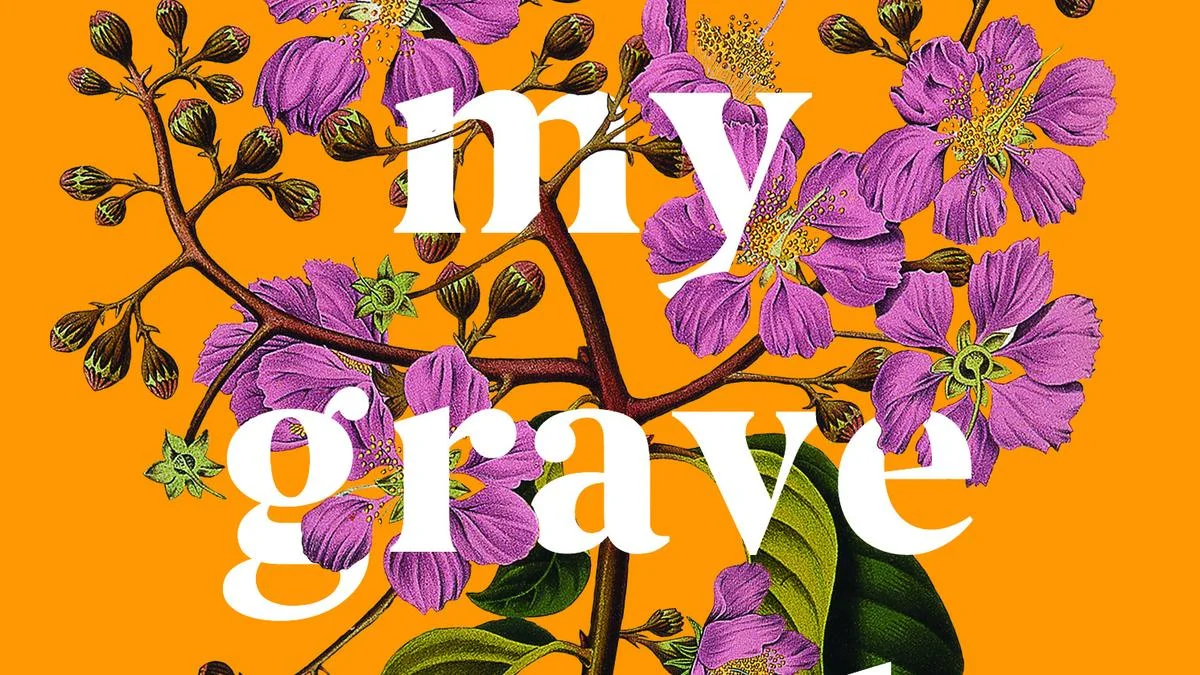
With the release of her debut short story collection, Colour My Grave Purple, published by Niyogi Books, author Shehnab Sahin offers a nuanced, multi-generational tapestry of Assam that transcends the "bait of pity." From the tea plantations of the colonial era to the modern human-elephant conflicts in Jorhat, Sahin’s work serves as both a "love letter" to her homeland and a sophisticated reclamation of identity.
Main Facts: A Debut Steeped in Heritage and Humanitarianism
Colour My Grave Purple is an anthology of ten short stories that traverse nearly 170 years of Assamese history. The collection is not merely a work of fiction but a deliberate cultural intervention. Sahin, a former humanitarian worker with experience in the conflict zones of Syria and Lebanon, brings a unique "outsider-insider" perspective to her writing. Having lived in the heart of global crises, she returns to her roots to document the quiet, often overlooked complexities of Assamese life.
The collection, released in late 2024, has already garnered attention for its stylistic breadth. Sahin moves seamlessly between the perspectives of a research scholar in a taxi, a British documentarian in the Naga Hills, and a grieving daughter navigating her father’s legacy. The book is published by Niyogi Books, a house known for its commitment to high-quality regional literature and historical narratives, further cementing the collection’s status as a significant addition to the Indian English literary canon.
Chronology: From the Treehouse to the Global Stage
To understand the impetus behind Colour My Grave Purple, one must look at the trajectory of its author. Sahin’s journey is one of navigating stereotypes and reconciling disparate worlds.
The St. Stephen’s Epiphany
During her orientation at the prestigious St. Stephen’s College in Delhi, Sahin encountered a question that would haunt her and eventually fuel her writing. A fellow student, upon learning she was from Assam, asked if she had "descended from a treehouse."
"You don’t forget these kinds of things," Sahin recalled in a recent interview. Her initial reaction was to defend her home by listing its modern amenities—Guwahati’s malls and paved roads. However, she soon realized that this defensive stance was, in itself, an apology for not conforming to a Westernized or mainland-Indian definition of "development." This realization planted the seed for a book that would show Assam on its own terms, neither apologizing for its rural beauty nor boasting of its urbanity.

A Legacy in Ink
The chronological roots of the book also lie in the life of Sahin’s late father, Khobir Ahmed. A dedicated police officer who balanced a rigorous career with a prolific literary life, Ahmed published seven novels and numerous short stories in Assamese. For Sahin, writing was an "inevitable" inheritance. After his passing, she found herself reading through his journals, seeking signs to navigate her grief—a process that is poignantly mirrored in one of the stories in the collection.
The Syrian Interlude
Before the book took its final form, Sahin spent years as a humanitarian worker in Syria and Lebanon. Witnessing the devastation of the Syrian civil work provided a stark contrast to the narrative of conflict in Assam. It was during the isolation of the COVID-19 pandemic and her subsequent stint in the Middle East that the stories finally coalesced. Writing became a tool for "sanity" amidst tumultuous global events, a three-year process that bridged the gap between her professional life in international aid and her personal identity as an Assamese woman.
Supporting Data: Themes and Historical Anchors
Sahin’s collection is meticulously researched, utilizing specific historical markers to ground her fiction. The stories are set in 1855, 1920, 1940, 1962, and 2019, creating a chronological survey of the region’s evolution.
1. The Plantation Economy: ‘Two Leaves and a Bud’
In a nod to the classic literature of the region, Sahin explores the tea plantation economy. However, she moves beyond the purely socio-economic critique to look at the human lives entwined with the "Camellia sinensis" plant. She examines how the tea industry shaped the demographics and the very soul of the state, influencing everything from class structures to the physical landscape.
2. The Anthropological Gaze: ‘Ursula’
One of the most compelling stories centers on Ursula Graham Bower, the British woman known as the "Jungle Queen." In the 1940s, Bower documented the lives of the Naga people and eventually led a band of scouts against Japanese forces during World War II. Sahin uses this historical figure to explore the complexities of the colonial gaze—how outsiders see the Northeast and how those perceptions often become the dominant, albeit flawed, history of the region.
3. Ecology and Conflict: ‘Animal Instinct’
Moving into the contemporary era, Sahin addresses the human-elephant conflict, a pressing issue in modern Assam. Through a conversation between a taxi driver and a scholar near Jorhat, she illustrates how the shrinking of natural corridors affects both the majestic "Hatis" (elephants) and the people who share their land. This story highlights Sahin’s ability to find profound meaning in the mundane, transforming a simple airport commute into a meditation on ecological loss.
Official Responses and Literary Context
The publication of Colour My Grave Purple has been met with praise from both the literary community and cultural commentators in Northeast India.
Publisher’s Perspective
Niyogi Books has emphasized that Sahin’s work fits into their mission of promoting voices that are often marginalized in the "big-city" publishing hubs of Mumbai and Delhi. A spokesperson for the publisher noted, "Shehnab’s voice is essential because it doesn’t rely on the tropes of trauma. It offers a holistic view of a culture that is too often reduced to its political struggles."

Critical Reception
Literary critics have noted the "meandering" quality of her prose—a trait Sahin herself compares to the Brahmaputra River. By choosing the short story format for her debut, Sahin allows for a kaleidoscopic view of Assam. Critics argue that this format is particularly effective for a region with such diverse ethnic, linguistic, and historical layers. Unlike a novel, which might feel pressured to provide a singular "Assamese experience," the anthology format allows for a plurality of truths.
Implications: Challenging the "Bait of Pity"
The broader implication of Sahin’s work lies in its refusal to be "typecast." For decades, literature from the Northeast that gained national or international traction often focused on what Sahin describes as "the violence, the AFSPA, the rape of our women, the secret killings."
While Sahin acknowledges the importance of documenting these atrocities, she argues that focusing only on them does a disservice to the people of Assam. "It’s not nice to be typecast," she says. By writing about history, love, grief, and ecology, she is effectively humanizing a population that is often seen only through the lens of a news headline or a human rights report.
The Future of the Narrative
Sahin is currently working on a piece of historical fiction that spans several geographies but remains anchored in Assam. Her success, and the success of Colour My Grave Purple, signals a shift in the Indian literary market. Readers are increasingly seeking "authentic" regional voices that offer more than just a tour of conflict zones.
Sahin’s message to the reader is clear: "Listen, this is who we are. If you’re interested, you might want to learn a bit more about the Northeast, particularly Assam." In doing so, she isn’t just telling stories; she is dismantling the "treehouse" myth, one page at a time, and replacing it with a reality as complex, beautiful, and turbulent as the river that defines her home.
Book Details:
- Colour My Grave Purple
- Author: Shehnab Sahin
- Publisher: Niyogi Books
- Genre: Short Story Collection/Contemporary Fiction
- Themes: Assam History, Ecology, Identity, Colonialism
