

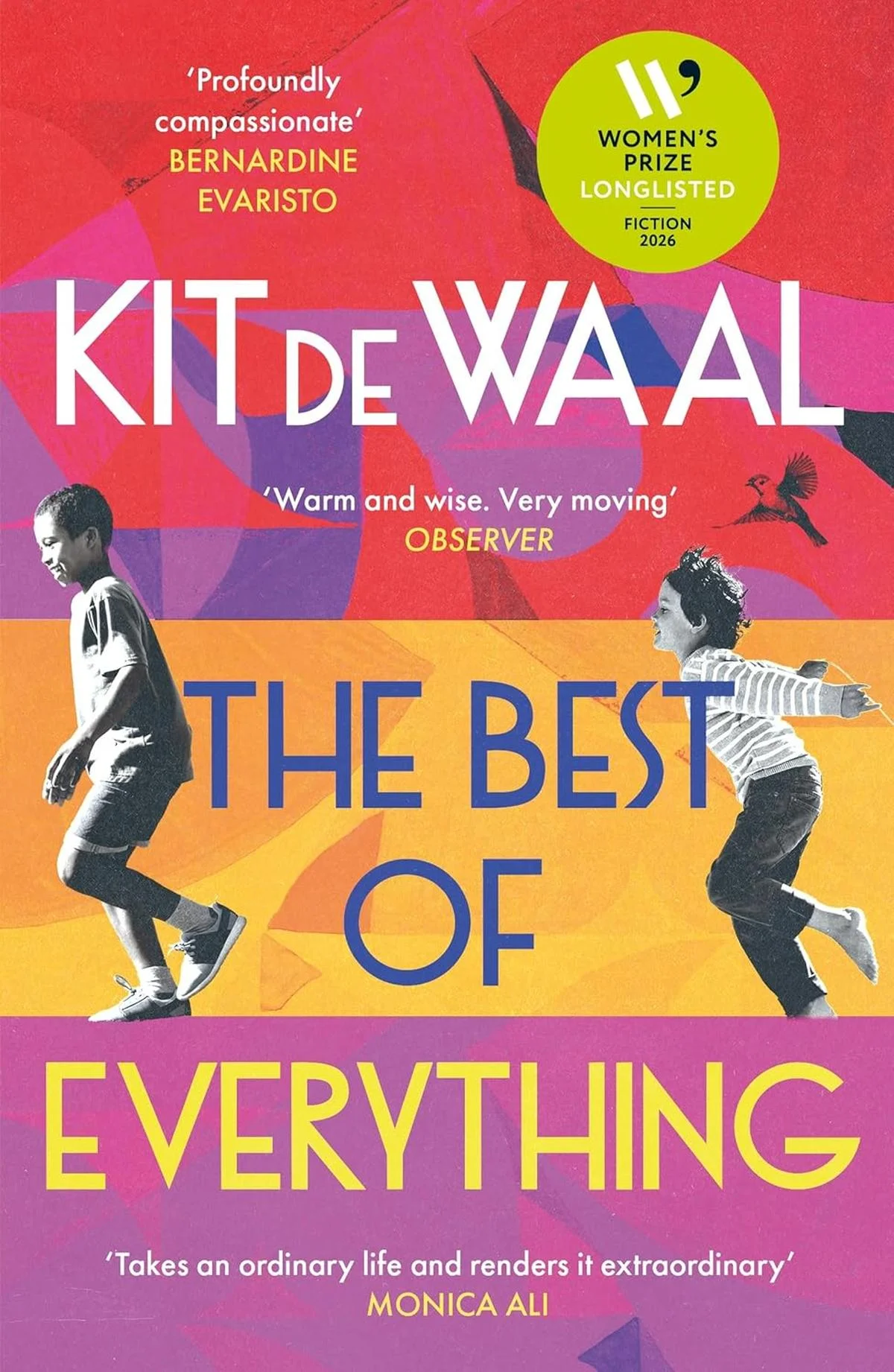
In the rarefied world of contemporary British literature, few trajectories are as compelling or as grounded in social realism as that of Kit de Waal. In 2025, de Waal stood at the pinnacle of institutional recognition, serving as the jury chair for the prestigious Women’s Prize for Fiction. It was a role that required her to adjudicate the finest nuances of prose and narrative structure from her peers. Fast forward to 2026, and the tables have turned with a poetic symmetry: de Waal herself has been named on the longlist for the very same prize for her latest novel, The Best of Everything (Tinder Press).
This transition from judge to competitor marks a significant moment in de Waal’s career, highlighting a writer whose work consistently bridges the gap between high-literary acclaim and the raw, unvarnished lived experiences of the British working class and immigrant communities. The Best of Everything is not merely a follow-up to her previous successes; it is a profound exploration of grief, the domesticity of care, and the intricate social tapestries of 1970s Birmingham.
Main Facts: A Narrative of Resilience and Redemption
The Best of Everything is a sprawling yet intimate portrait of Paulette, a 29-year-old Caribbean woman navigating the complexities of life in Birmingham during the early 1970s. Working as an auxiliary nurse—a role that demands constant emotional and physical labor—Paulette finds solace and hope in her relationship with Denton. However, the narrative takes a sharp, tragic turn when Denton’s life is ended in an accident.
What follows is a subversion of the traditional "revenge" trope. Rather than spiraling into a vendetta against the man responsible for Denton’s death, Paulette’s journey evolves into a meditation on the radical acts of kindness, forgiveness, and the formation of unconventional families. The novel centers on several key pillars:

- The Subjectivity of Aspiration: The title itself challenges the reader to redefine "the best," shifting the focus from material wealth to the dignity of a modest, stable life.
- The Labor of Care: Through Paulette’s profession and personal life, de Waal examines how caregiving can be both a superpower and a vulnerability.
- Intersectional Sisterhood: The relationship between Paulette and Maggie, a white immigrant, serves as a focal point for exploring shared "otherness" and class solidarity.
Chronology: From Windrush Legacy to 2026 Recognition
To understand the weight of The Best of Everything, one must look at the timeline of both the novel’s setting and the author’s professional evolution.
1972: The Setting Begins
The novel opens in 1972, a pivotal era in British history. For the Caribbean diaspora in Birmingham, this was a time of navigating systemic racism while building the foundations of a new home. By placing Paulette in this specific year, de Waal captures the atmospheric tension of a city in flux and the quiet heroism of those who kept the National Health Service (NHS) running.
2016–2022: Establishing a Voice
De Waal broke onto the scene with My Name Is Leon, a heartbreaking look at the foster care system, followed by The Trick to Time and her memoir Without Warning and Only Sometimes. These works established her as a champion of "working-class stories," a term she has often advocated for in the publishing industry.
2025: The Jury Chair
De Waal’s appointment as the Jury Chair for the Women’s Prize for Fiction was a recognition of her critical eye and her standing in the literary community. Her leadership was noted for its focus on inclusivity and the power of storytelling to transcend social barriers.
2026: The Longlist and the Interview
The announcement of the 2026 longlist brought de Waal back into the spotlight as a novelist. In a recent interview, de Waal reflected on the "moveable feast" of success and the technical challenges of capturing authentic West Indian diction on the page.

Supporting Data: The Architecture of Character and Voice
De Waal’s work is frequently praised for its "lived-in" quality, a result of her meticulous approach to character construction. In The Best of Everything, she draws heavily from her own biography and the lives of those in her orbit.
The Anatomy of Paulette
Paulette is described by de Waal as an "amalgam." The character’s professional life as an auxiliary nurse is a direct homage to de Waal’s mother. The author notes that Paulette’s "fault" is an excess of love—a trait that makes her an exceptional nurse but leaves her vulnerable in her private life. This psychological depth is supported by de Waal’s observations of her own sister, a foster carer, and friends who have survived domestic abuse and poverty.
Linguistic Authenticity
One of the most striking features of the novel is its use of voice. De Waal distinguishes between the "limited vocabulary" of Paulette and the "complicated sentences" of characters she refers to as "shirt & tie."
- West Indian Diction: De Waal utilizes specific cultural markers—"cutting her eye," "kissing her teeth"—to anchor Paulette in her heritage.
- The Constraints of Language: The author argues that playing within the limitations of a character’s vocabulary actually enhances the emotional resonance of the story, forcing the reader to find meaning in the "unspoken" and the "simple."
The Character of Nellie
Nellie, the child Paulette cares for, serves as the novel’s emotional North Star. Born to a mother with a brain injury, Nellie represents the "absence of love" that Paulette is uniquely equipped to fill. De Waal explains that the plot is always secondary to the character; she refused to make things "nice" for Nellie, choosing instead to stay true to the harsh realities of his situation to show how a "saved boy" eventually becomes a "saviour."
Official Responses and Cultural Context
The reception of The Best of Everything reflects a broader shift in the literary landscape toward stories that center on the "quiet" lives of the working class. While de Waal has not issued a formal "official statement" regarding her longlisting, her interview responses suggest a writer who is more concerned with the truth of the narrative than the prestige of the prize.

Critics have noted that de Waal’s perspective is particularly vital given her background. As the daughter of an Irish mother and a Caribbean father, she occupies a unique space in British letters. Her exploration of the "sisterhood" between Paulette and Maggie (a white immigrant) has been hailed as a nuanced take on how poverty and "otherness" can bridge racial divides. De Waal herself describes this bond as an "unspoken thing," a survival mechanism for those who have "nobody but each other."
The Women’s Prize for Fiction, by longlisting de Waal, reinforces its commitment to stories that offer a rigorous examination of the female experience across different eras and social strata.
Implications: The Legacy of Care and Future Horizons
The implications of de Waal’s current success extend beyond a single prize. Her work challenges the publishing industry to reconsider whose stories are deemed "literary." By centering a Caribbean auxiliary nurse in 1970s Birmingham, de Waal asserts that the domestic and the professional labor of women of color is a subject worthy of the highest artistic scrutiny.
The "Saved Boy" as a Saviour
De Waal’s thematic focus on the "saved boy" becoming a "saviour" suggests a cycle of generational healing. This theme is likely to resonate with readers who have followed her work since My Name Is Leon, as it deals with the long-term effects of trauma and the possibility of redemption through care.
Looking Ahead: The Return of Leon
Perhaps the most significant news for de Waal’s established fanbase is the announcement of her next project. She has confirmed that she has finished the sequel to her debut, My Name Is Leon.

- The Timeline: While Leon was only 10 years old in the first book, the sequel will find him at age 37.
- Expected Release: The book is slated for publication in May 2027.
This sequel promises to be a landmark event in British contemporary fiction, allowing readers to see how the "working-class hero" of her first novel has navigated adulthood, race, and identity in a changing Britain.
In conclusion, Kit de Waal’s journey from the head of the jury to the 2026 longlist is a testament to her enduring relevance. The Best of Everything is more than a novel; it is a cultural document that captures the "moveable feast" of the immigrant experience. As she continues to give voice to the voiceless, de Waal ensures that "the best of everything" remains a standard of truth, kindness, and literary excellence.
