

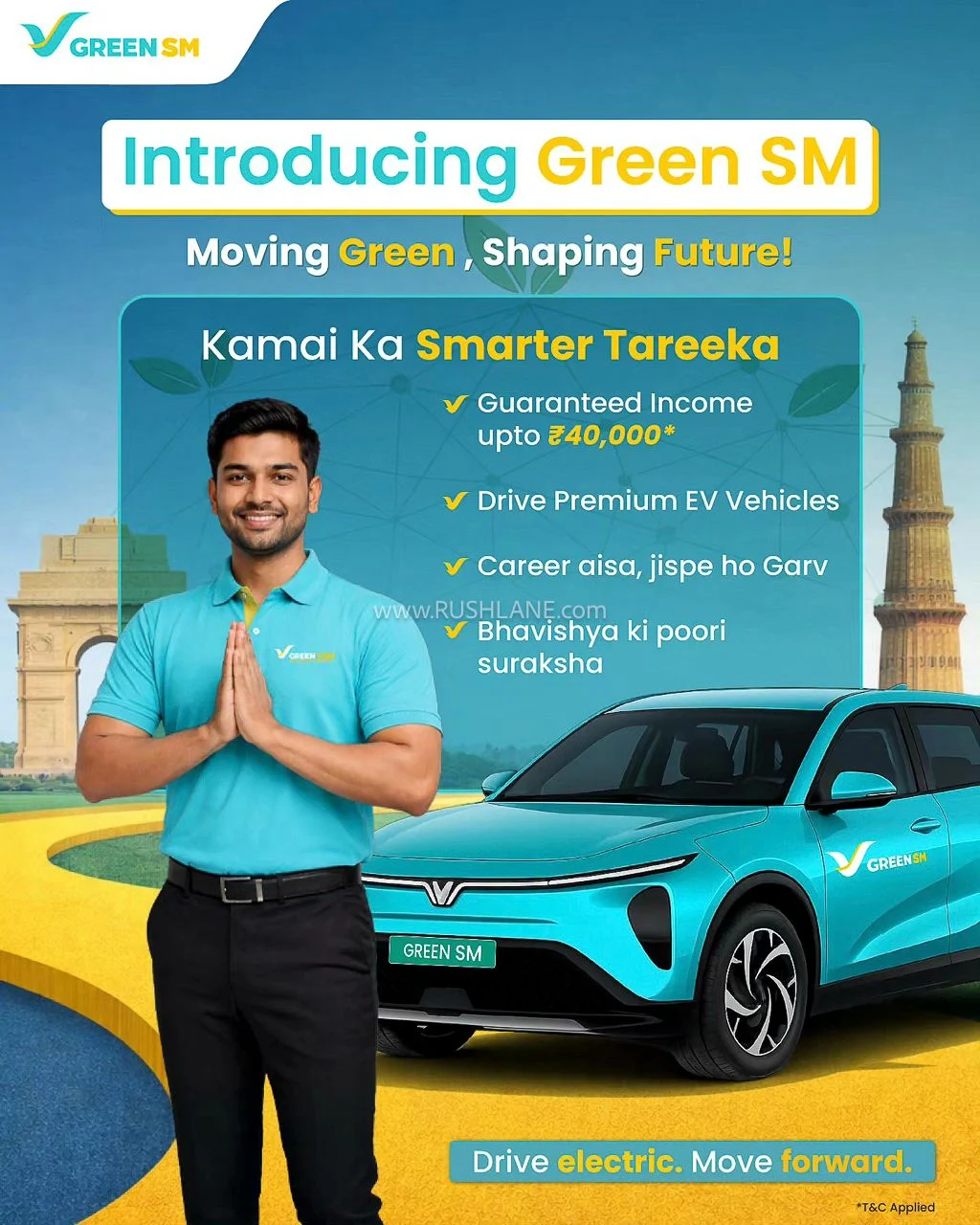
The ambitious entry of VinFast-backed Green SM into the Indian ride-hailing market was initially hailed as a paradigm shift for the country’s gig economy. Promising a fleet of premium electric vehicles (EVs), professionalized service, and a stable income for drivers, the platform sought to disrupt the long-standing duopoly of Ola and Uber. However, the honeymoon period appears to have met a significant roadblock. A viral video, which has amassed over 900,000 views across social media platforms, has brought to light a series of grave allegations from Green SM drivers, ranging from payment defaults to arbitrary policy changes.
As the company navigates its early-stage rollout in the Delhi-NCR region, these grievances raise critical questions about the sustainability of the "guaranteed income" model in a highly competitive and operationally complex market like India.
The Core Controversy: Viral Allegations and Driver Discontent
The controversy erupted when a group of drivers affiliated with Green SM took to social media to voice their frustrations. The primary catalyst for the unrest is a perceived breach of contract regarding the financial remuneration promised during the recruitment phase.
Main Facts of the Dispute
At the heart of the protest are three major grievances:
- Payment Delays: Drivers claim they have been operating the "Limo Green" electric MPVs for three to four weeks without receiving their scheduled payouts. In the gig economy, where cash flow is essential for daily sustenance, a month-long delay is often catastrophic.
- Discrepancy in Payout Amounts: The marketing collateral for Green SM promised a monthly guaranteed income of approximately ₹35,000 to ₹40,000. However, the video features drivers alleging they received pittance amounts. One driver claimed to have received only ₹700 after 20 days of full-time work, while another reported a credit of just ₹1,100.
- Commission Reductions: While the company reportedly promised a 35% commission per trip, drivers allege the actual payout has been slashed to 33%, with additional deductions that were not clearly communicated at the time of onboarding.
Chronology of Events: From Ambitious Launch to Public Outcry
To understand the current friction, it is necessary to trace the timeline of Green SM’s entry into the Indian market.
Phase 1: The Recruitment Blitz (Early 2024)
Following VinFast’s announcement of a multi-billion dollar investment in India, including a manufacturing plant in Tamil Nadu, the brand launched Green SM (GSM) to seed the market with its electric vehicles. The recruitment drive was aggressive, targeting existing Ola and Uber drivers with the promise of "fixed salaries" and "no surge pricing" for customers—a move designed to lure both the workforce and the consumer base.
Phase 2: Operational Rollout in Delhi-NCR
The service commenced in the National Capital Region (NCR), deploying the VinFast Limo Green (an electric 7-seater MPV). The value proposition was clear: commuters would get a premium, eco-friendly ride at a flat rate of approximately ₹8 per kilometer, while drivers would be shielded from the volatility of ride-sharing demand through a guaranteed income scheme.
Phase 3: The Tipping Point (Current)
After roughly a month of operations, the gap between corporate promises and ground reality began to widen. Drivers reported that the "minimum guarantee" was tied to increasingly complex eligibility criteria that were introduced post-launch. This led to the gathering of drivers captured in the viral video, signaling the first major labor dispute for the Vietnamese EV giant on Indian soil.
Supporting Data: Analyzing the Economic Friction
The friction between Green SM and its drivers stems from a fundamental disconnect in the "guaranteed income" model. Unlike the traditional commission-based model used by Uber and Ola, where the driver acts as an independent contractor, Green SM’s model leans closer to a structured employment contract, which brings higher expectations of stability.
The Remuneration Gap
| Promised Feature | Reported Reality (per Driver Allegations) | |
|---|---|---|
| Monthly Income | ₹35,000 – ₹40,000 | ₹700 – ₹1,100 (for 20 days) |
| Commission Rate | 35% per trip | 33% per trip |
| Payment Cycle | Weekly/Regular | 3-4 week delays |
| Operational Costs | Covered by Company | Out-of-pocket FASTag payments |
Operational Hurdles: The FASTag Issue
Beyond the base pay, drivers have complained about the lack of balance in the vehicles’ FASTag accounts. In many instances, drivers were allegedly forced to pay highway tolls from their personal funds to avoid being stranded with passengers. In a professional fleet management system, such overheads are typically automated; the failure of this system points to significant backend operational lapses during the scaling phase.
Policy Volatility
Drivers highlighted that the criteria for the ₹35,000 "guaranteed income" were changed without adequate notice. Initially, it was understood that this amount would be paid for the first two months to stabilize the workforce. However, drivers now claim that new "per-trip" quotas and "active hour" requirements have been retroactively applied, making it nearly impossible to hit the earning targets.

Official Responses and Company Stance
As of the current reporting period, VinFast and Green SM have not issued a comprehensive formal rebuttal to the specific claims made in the viral video. However, sources close to the company suggest that the issues may be localized teething problems rather than a systemic failure of the business model.
The "Teething Issues" Argument
Industry analysts suggest that in the initial weeks of a large-scale fleet rollout, technical glitches in the payroll software and GPS-tracking for trip verification can lead to payment discrepancies. In many global markets where VinFast operates Green SM (such as Vietnam), the company has successfully managed thousands of vehicles. The complexity of the Indian banking and tolling infrastructure (FASTag) may have presented unforeseen integration challenges.
The Professionalism Standard
Green SM’s internal communications have consistently emphasized a "corporate-style" service. This includes driver uniforms, strictly maintained EV fleets, and a "no-refusal" policy. The company’s stance remains that they are building a premium tier of transit that requires a disciplined workforce, which may be at odds with the more flexible, albeit volatile, work culture of traditional ride-sharing.
Broader Implications: The Future of EV Fleets in India
The outcome of this dispute will have far-reaching consequences for the EV transition and the gig economy in India.
1. Sustainability of the Fixed-Income Model
The "fixed-income" promise is the primary reason drivers switched to Green SM. If the company fails to honor these commitments, it could lead to a mass exodus of drivers back to traditional platforms. This would not only stall Green SM’s growth but also sour the sentiment toward EV-only fleet operators who rely on high driver retention to offset the high capital expenditure of electric cars.
2. Impact on VinFast’s Brand Reputation
VinFast is currently in the process of establishing its brand identity in India ahead of its consumer vehicle launches. The taxi service was intended to be a rolling advertisement for the reliability and comfort of VinFast vehicles. However, if the brand becomes associated with labor disputes and "unpaid drivers," it could significantly damage its premium positioning before the first passenger car is even sold to a private buyer.
3. Regulatory Scrutiny
The Indian government has been tightening regulations around gig worker rights and aggregator policies. The Ministry of Labour and Employment has been observing the "aggregator" versus "employer" debate closely. If Green SM is seen as exercising high levels of control over drivers (uniforms, fixed hours, fixed routes) while failing to provide the promised "salary," it could attract regulatory intervention or legal challenges under the Code on Social Security.
4. The Competition’s Advantage
Uber and Ola have moved toward "asset-light" models, where drivers own or lease their cars. Green SM’s "asset-heavy" model (where the company owns the fleet) gives them more control but also makes them responsible for every aspect of the driver’s experience. If Green SM falters, it reinforces the dominance of the existing players, potentially discouraging other international EV players from entering the Indian fleet market.
Conclusion: A Critical Juncture
The viral protests by Green SM drivers serve as a stark reminder that technology and green energy are only half the battle in the Indian transport sector; the human element remains the most volatile variable. While VinFast has the international experience and the financial muscle to rectify these issues, the speed of their response will be crucial.
For the commuters of Delhi-NCR, Green SM promised a future of silent, smog-free, and professional travel. For that promise to be kept, the company must first ensure that the individuals behind the wheel are not left behind in the transition to a greener future. An amicable resolution, involving transparent payment cycles and clear policy communication, is essential to restore faith in what could otherwise be a game-changing service for Indian urban mobility.
