

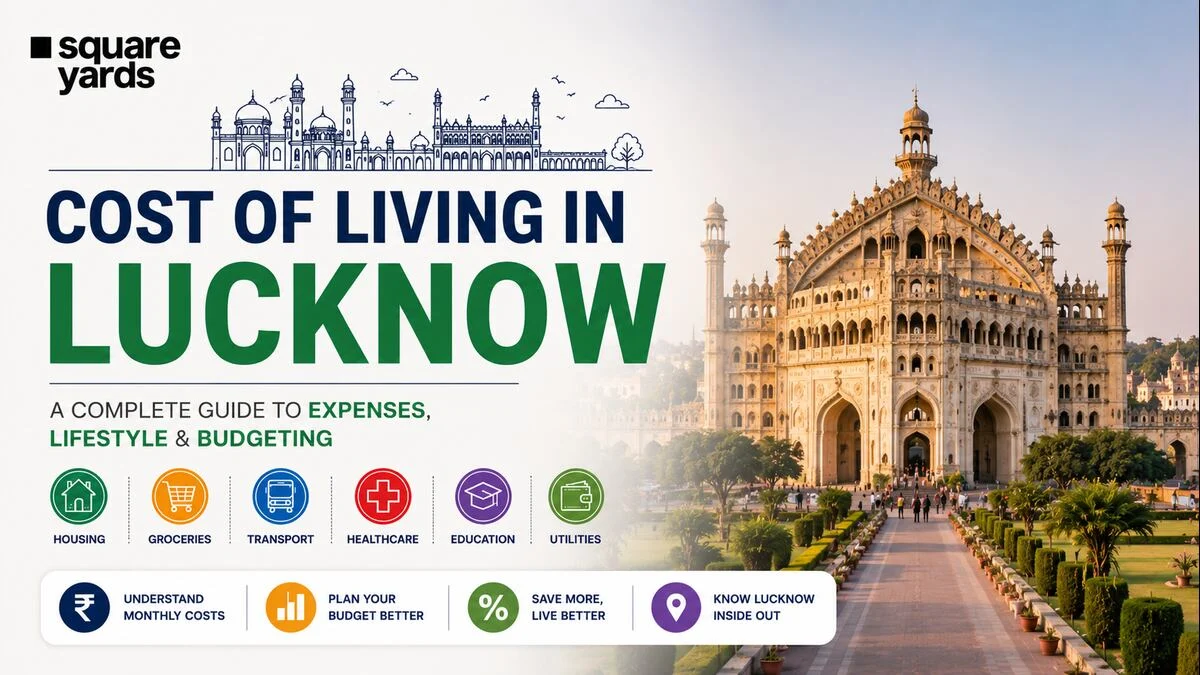
Executive Summary: The Lucknow Value Proposition
As of 2026, Lucknow has firmly established itself as a premier destination for "reverse migration" in India. For decades, the narrative of the Indian professional was defined by a move to the "Big Three"—Delhi, Mumbai, or Bengaluru. However, as those Tier-1 cities grapple with infrastructure saturation and exorbitant cost-of-living indices, Lucknow, the capital of Uttar Pradesh, has emerged as a formidable alternative.
The central thesis of the Lucknow economy in 2026 is simple: the "money goes further." Unlike other metropolitan areas that charge a heavy premium for modern amenities, Lucknow offers a high-tier lifestyle—complete with an operational metro system, world-class healthcare, and elite educational institutions—without the prohibitive price tag. With a population of approximately 3.4 million, it is officially the 10th largest urban agglomeration in India, yet it remains one of the top 3% most affordable cities globally.
Chronology: The Evolution of a Modern Metropolis (2016–2026)
To understand the current cost structure of Lucknow, one must look at the decade of rapid transformation that preceded 2026.
- 2016–2018: The Infrastructure Seed. The inauguration of the first phase of the Lucknow Metro and the expansion of the Shaheed Path transformed the city’s peripheral connectivity. This period saw the rise of Gomti Nagar Extension as a residential hub.
- 2019–2021: The Institutional Boom. The establishment of the IT City on Sultanpur Road and the expansion of private healthcare giants like Medanta shifted the city’s economic profile from purely administrative to a service-oriented economy.
- 2022–2024: Connectivity and Policy. The completion of the Lucknow-Kanpur Expressway and the outer ring road reduced logistics costs. State government policies incentivizing IT firms to set up "satellite offices" led to a surge in mid-level professional employment.
- 2025–2026: The Maturity Phase. By 2026, the city’s infrastructure—from the "Pink Booths" for women’s safety to the fully integrated metro corridors—reached a level of maturity that rivals NCR, while land and service prices remained regulated by the city’s vast geographical sprawl.
Supporting Data: The 2026 Monthly Expenditure Breakdown
For a professional or a family planning a relocation, the following figures represent the median monthly expenditure in Lucknow. These numbers assume a mid-range lifestyle that balances comfort with fiscal prudence.
Resident Expenditure Profiles (Including Rent)
| Resident Type | Estimated Monthly Cost (2026) |
|---|---|
| Single Working Professional (Bachelor) | ₹18,000 – ₹30,000 |
| Student (Hostel/PG) | ₹8,000 – ₹18,000 |
| Couple (1 BHK Flat) | ₹28,000 – ₹45,000 |
| Family of Four (2-3 BHK) | ₹50,000 – ₹85,000 |
| Single Person (Excluding Rent) | ~₹27,000 |
| Family of Four (Excluding Rent) | ~₹95,000 |
Real Estate and Housing: A Neighborhood Analysis
Housing remains the largest variable in any cost-of-living equation. In Lucknow, the market is bifurcated into the "Premium Belt" and the "Budget-Value Zones."
The Premium Belt: Gomti Nagar, Hazratganj, and Indira Nagar
These areas are the nerve centers of the city. Hazratganj serves as the heritage commercial hub, while Gomti Nagar is the modern face of Lucknow, housing the majority of the city’s tech parks and upscale malls like Phoenix Palassio.
- Rent for 1 BHK: ₹10,000 – ₹20,000
- Rent for 3 BHK: ₹28,000 – ₹50,000
The Budget-Value Zones: Alambagh, Jankipuram, and Rajajipuram
For those looking to maximize their savings, these areas offer robust infrastructure at a fraction of the cost. Alambagh is strategically located near the railway station and metro line, while Jankipuram has become the preferred destination for students and young families.
- Rent for 1 BHK: ₹5,500 – ₹10,000
- Rent for 3 BHK: ₹12,000 – ₹22,000
Comparative Rent Index (2026)
| Locality | 1 BHK (₹/month) | 2 BHK (₹/month) | 3 BHK (₹/month) |
|---|---|---|---|
| Gomti Nagar / Hazratganj | ₹10,000 – ₹20,000 | ₹18,000 – ₹32,000 | ₹28,000 – ₹50,000 |
| Indira Nagar / Aliganj | ₹9,000 – ₹18,000 | ₹15,000 – ₹28,000 | ₹25,000 – ₹40,000 |
| Alambagh / Jankipuram | ₹6,000 – ₹10,000 | ₹9,000 – ₹14,000 | ₹13,000 – ₹22,000 |
| Rajajipuram / Ashiyana | ₹5,500 – ₹9,000 | ₹8,000 – ₹13,000 | ₹12,000 – ₹19,000 |
Food, Logistics, and Essential Services
Lucknow’s fame as a culinary capital is not just a matter of taste but also of economics. The city’s proximity to the fertile Gangetic plains keeps the cost of fresh produce significantly lower than in coastal or arid metropolitan cities.
Gastronomy and Groceries
A resident can enjoy a world-class Awadhi Biryani at a local institution for ₹150, while a three-course dinner for two at a mid-range restaurant in Gomti Nagar averages around ₹1,000.
- Monthly Groceries (Single): ₹2,500 – ₹4,500
- Milk (1 Litre): ₹55 – ₹65
- Chicken (1 Kg): ₹200 – ₹260
Transport and Connectivity
The Lucknow Metro remains the backbone of the city’s commute, with a monthly pass costing roughly ₹1,200. For "last-mile connectivity," the city’s fleet of e-rickshaws provides a sustainable and cheap alternative, typically charging ₹10–₹15 for short hops.
| Mode of Transport | Typical Cost (2026) |
|---|---|
| Metro Ride (One-way) | ₹10 – ₹50 |
| Auto-Rickshaw (5 km) | ₹40 – ₹80 |
| Petrol (Per Litre) | ₹96 – ₹100 |
| Monthly Fuel (Two-wheeler) | ₹800 – ₹1,500 |
Healthcare and Education: Institutional Pillars
One of the primary reasons families relocate to Lucknow is the accessibility of high-quality social infrastructure.
Healthcare
Lucknow is home to KGMU and SGPGI, institutions that provide specialized medical care at government-subsidized rates. Furthermore, the Jan Aushadhi scheme has been highly successful here, with generic pharmacies in nearly every neighborhood offering medicines at 50-80% discounts compared to branded alternatives. Private consultations at hospitals like Medanta or Sahara range from ₹500 to ₹1,500.
Education
The city is an educational powerhouse. From the City Montessori School (CMS)—the world’s largest school—to IIM Lucknow, the city offers a full spectrum of learning.
- Top Private School Fees: ₹80,000 – ₹2,00,000 per annum.
- University of Lucknow (Graduation): ₹10,000 – ₹40,000 per annum.
Official Perspectives and Social Safety
The Uttar Pradesh government has taken a proactive stance in making Lucknow "liveable." According to urban planning officials, the focus has been on the "Safe City Project."
Safety and Inclusivity:
Residents highlight the "Pink Booths"—police kiosks staffed by female officers—as a major factor in the city’s safety rating. The Women’s Power Line (1090) has become a model for other states. Journalistic surveys of residents who moved from Delhi often mention the "Tehzeeb" (culture of politeness) as a non-monetary benefit that reduces the "social cost" of living in a crowded city.
Economic Implications: Salary vs. Expenditure
In 2026, the average take-home salary in Lucknow across the IT, Banking, and Government sectors stands at approximately ₹34,000 per month.
When compared to Mumbai, where a 1 BHK in the city center can cost ₹60,000, the Lucknow financial reality is starkly different. In Lucknow, an entry-level software engineer earning ₹40,000 can afford a comfortable apartment, a two-wheeler, and a social life while still saving 30% of their income. In Bengaluru, that same professional would likely be "rent-poor."
| City | Monthly Cost (With Rent) | 1 BHK Rent (City Centre) |
|---|---|---|
| Mumbai | ₹55,000 – ₹80,000 | ₹55,000 – ₹70,000 |
| Delhi / NCR | ₹35,000 – ₹55,000 | ₹22,000 – ₹40,000 |
| Lucknow | ₹18,000 – ₹30,000 | ₹10,000 – ₹20,000 |
Conclusion: The "Pehle Aap" Economy
Lucknow in 2026 is a city that refuses to sacrifice its soul for the sake of urbanization. It offers a unique "Nawabi" lifestyle where the cost of entry is low, but the quality of life is high. For the modern Indian professional, Lucknow represents a strategic hedge against the inflation and chaos of Tier-1 megacities. It is a city where the "Pehle Aap" (after you) culture extends to the economy—offering a space where the resident’s financial well-being comes before the city’s drive for profit.
Frequently Asked Questions (FAQ)
1. What is the average monthly cost for a family of four in 2026?
Including rent in a mid-range area like Aliganj or Indira Nagar, a family of four can live comfortably on a budget of ₹50,000 to ₹85,000.
2. Is Lucknow a good choice for IT professionals?
Yes. With the development of the IT City and various tech parks in Gomti Nagar, many firms offer salaries ranging from ₹25,000 to ₹45,000 for entry-level roles, which provides a high standard of living given the city’s low costs.
3. How does the healthcare system compare to other cities?
Lucknow is a medical hub for North India. It offers a mix of elite government institutions (KGMU, SGPGI) and high-end private hospitals (Medanta, Apollo), with costs generally 30-40% lower than in Delhi.
4. Is the city safe for women working late hours?
Lucknow has seen significant investment in the "Safe City" initiative. With integrated CCTV, Pink Booths, and a highly active 1090 helpline, it is considered one of the safer metropolitan cities in India.
5. Why are food costs so low in Lucknow?
The city is surrounded by agricultural belts, reducing transportation and middleman costs for vegetables, grains, and dairy. Additionally, the street food culture is highly competitive, keeping prices affordable for daily meals.
