

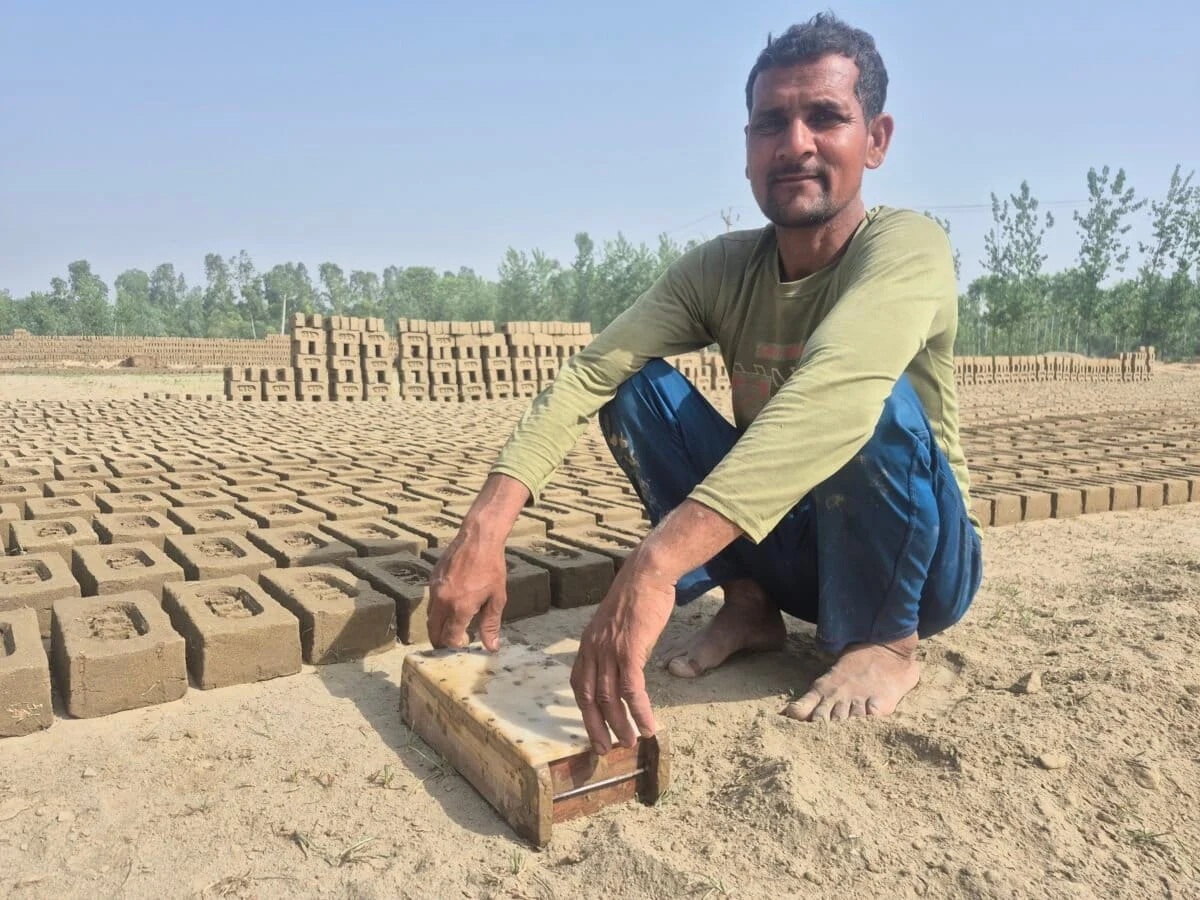
BAREILLY, UTTAR PRADESH — At 3:00 a.m. in the rural stretches of Bareilly, the world is usually silent, save for the rhythmic chirping of crickets. But in an open field near Kurka village, the silence is broken by the wet thud of mud hitting wooden moulds. Under the harsh, blue-white glare of a small solar-powered LED, Reena Kashyap, 30, and her husband, Jagdish, are already three hours into their workday.
This is the new face of labor in India’s warming climate: a shift to a nocturnal existence. As record-breaking heatwaves make daytime labor life-threatening, millions of informal workers are being forced to work through the night. However, this "adaptation" comes at a devastating cost—a phenomenon experts are calling "sleep poverty," where the combination of extreme heat and grueling work hours leaves workers with less than four hours of rest, shattering their health and economic stability.
Main Facts: A Crisis of Heat and Survival
The crisis facing India’s brick kiln workers is a confluence of environmental extremity and economic necessity. In May 2024, Bareilly recorded peak temperatures of 46°C (114.8°F). On that same day, data revealed a staggering reality: 97 of the world’s 100 hottest cities were located in India.
For the estimated 2.5 million people working in Uttar Pradesh’s 19,718 brick kilns, these temperatures are not just a discomfort; they are an existential threat. The workers, largely internal migrants, operate on a piece-rate wage system. At the Adarsh Brick Industry where Reena works, the rate is ₹400 (approximately $4.80) for every 1,000 bricks moulded.

Because productivity drops by nearly 50% during the scorching afternoon hours—and the risk of heatstroke becomes a certainty—workers have moved their shifts to the midnight hours. But because their living quarters are unventilated tin shacks that act as ovens during the day, restorative sleep has become impossible. The result is a cycle of chronic exhaustion, reduced earnings, and mounting medical debt.
Chronology of a Nocturnal Shift: The 21-Hour Cycle
The daily routine of Reena and Jagdish Kashyap illustrates the brutal timeline of climate adaptation in the informal sector.
- 12:30 a.m. – 11:00 a.m.: The couple begins moulding bricks under solar lights to avoid the sun. This 10.5-hour shift is the primary window for earning.
- 11:00 a.m. – 2:00 p.m.: As the sun reaches its zenith, Reena transitions to domestic labor—fetching water, bathing, washing clothes, and cooking for their four children.
- 2:00 p.m. – 5:00 p.m.: The family attempts to sleep. However, their shelter—built of raw mud and topped with a tin roof—retains heat so intensely that internal temperatures often exceed the outside air. "The entire body feels restless," Reena says. They manage, at best, one to two hours of fitful sleep.
- 5:00 p.m. – 9:00 p.m.: The couple returns to the kiln to stack the dried bricks and prepare the clay (mud) for the next day’s moulding.
- 9:00 p.m. – 12:30 a.m.: A brief window for dinner and the only "solid" block of sleep they receive before the cycle repeats.
Dinesh Rajput, another moulder in Bareilly, notes that this cycle was not always the norm. "Previously, our work cycle had four months of winter and four months of summer," he explains. "Now, the heat begins as early as February. We have two months of winter and six months of summer."
Supporting Data: The Economics of Heat Stress
The impact of rising temperatures on labor is now being quantified by global and domestic research bodies, painting a grim picture of the future of manual labor.

1. The Productivity Gap
Research on female brick kiln workers indicates a direct correlation between Celsius and capital. A study conducted in West Bengal found that work output falls by approximately 2% for every 1°C rise in temperature above 34.9°C. In the field, workers like Priyanka Jatav in Amroha district confirm this. In pleasant weather, she can mould 2,500 bricks a day; in the current heat, that number drops to 1,200—effectively halving her daily income.
2. The Global Context
The Lancet Countdown on Health and Climate Change Report 2025 estimates that heat exposure wiped out a record-breaking 247 billion potential labor hours globally in 2024. In India, this averages out to 419 hours lost per person annually. For a worker earning ₹400 per unit of production, these lost hours represent the difference between subsistence and debt.
3. The Medical Poverty Trap
The heat does more than just reduce hours; it actively drains savings. Raees Ahmed, a worker from Rampur, recounts how a dizzy spell in May led to a 1,200-rupee medical bill for intravenous drips. "My earnings from three days vanished in one go," he said. This "heat tax"—the cost of recovering from climate-induced illness—is a primary driver of cycle-of-poverty traps in the informal economy.
Physiological Impact: The "Maladaptation" Trap
Health experts are increasingly concerned that the shift to night work is a "maladaptation"—a strategy that solves one problem (heatstroke) while creating more complex, long-term health crises.

Associate Professor Subhasis Sahu of the University of Kalyani explains that while night work avoids direct UV exposure, it disrupts the body’s circadian rhythm and recovery processes. "This creates hidden health risks: fatigue, impaired cognition, and chronic physiological stress," Sahu notes. His research shows that cardiovascular load increases significantly during heavy physical labor in high ambient temperatures, even at night, because the body cannot effectively cool down in the humid, warm nighttime air of the Indo-Gangetic plain.
Apekshita Varshney, founder of the research non-profit Heat Watch, describes "sleep poverty" as a form of occupational injustice. "Rising ambient temperatures prevent restorative sleep even when workers try to rest. True adaptation should reduce overall vulnerability, not create new risks like chronic exhaustion and cardiovascular strain."
Official Responses: Policy on Paper vs. Reality on the Ground
On paper, the State of Uttar Pradesh is prepared. The Uttar Pradesh Heat Wave Action Plan (UPHWAP) 2025 explicitly identifies brick kiln workers as a high-risk demographic. The plan mandates that employers:
- Shift outdoor work away from the 12:00 p.m. – 4:00 p.m. window.
- Provide adequate shelters and clean drinking water.
- Supply electrolytes (ORS) and emergency medical support.
- Ensure proper ventilation in worker housing.
However, the chasm between policy and practice is vast. Sumeri Lal Yadav, who operates a kiln in the region, admits the difficulty of implementation. While he acknowledges the "increasing problems" due to heat, he argues that small-scale kiln owners cannot afford to provide electricity, fans, or high-capacity solar panels without government subsidies. "We have not received any written instructions or regulatory orders from officials concerning heatwave management," Yadav claimed.

In Bareilly, Deputy Labour Commissioner Anurag Mishra recently stated that inspections would be conducted, promising that "appropriate steps will be taken." Yet, for workers like Reena, these promises feel distant. She had to purchase her own 40-watt solar panel just to have enough light to work at 2:00 a.m.
Implications: The Broadening Gap of Climate Injustice
The plight of the Kashyap family highlights a critical flaw in India’s labor framework. The Factories Act and the current Labour Codes lack specific, enforceable mandates regarding heat stress, cooling, and hydration for informal, outdoor workers.
As the planet continues to warm, the "nocturnalization" of labor may become a permanent fixture of the Global South. This shift suggests a future where the working class is divided not just by income, but by their access to the "cool"—those who can afford to sleep in climate-controlled environments and those who must trade their sleep and health for the ability to feed their families.
The situation in Uttar Pradesh’s brick kilns serves as a warning: without systemic intervention—including heat-resilient housing, mandatory rest breaks, and social security for heat-related income loss—millions of workers will continue to be crushed between the "scorching afternoon heat" and the "exhaustion of the night."
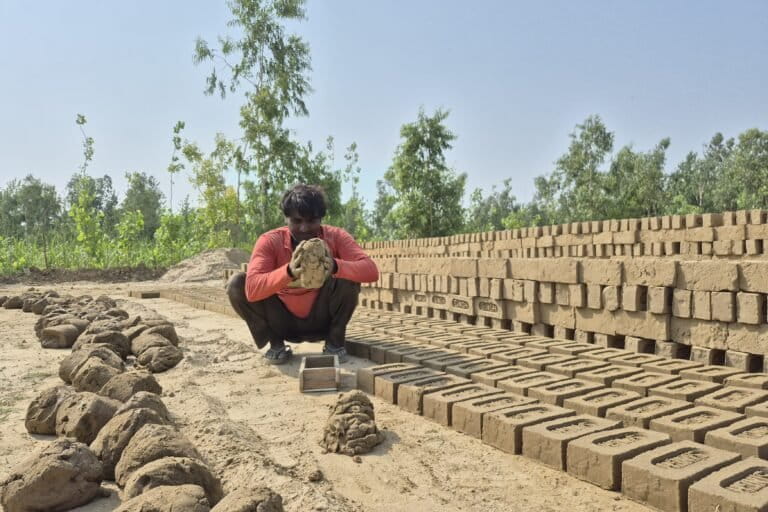
For Reena Kashyap, the choice remains binary and brutal. "We can either think about getting enough sleep or feeding our families," she says, her hands moving mechanically in the 3:00 a.m. darkness. "We cannot do both."
