

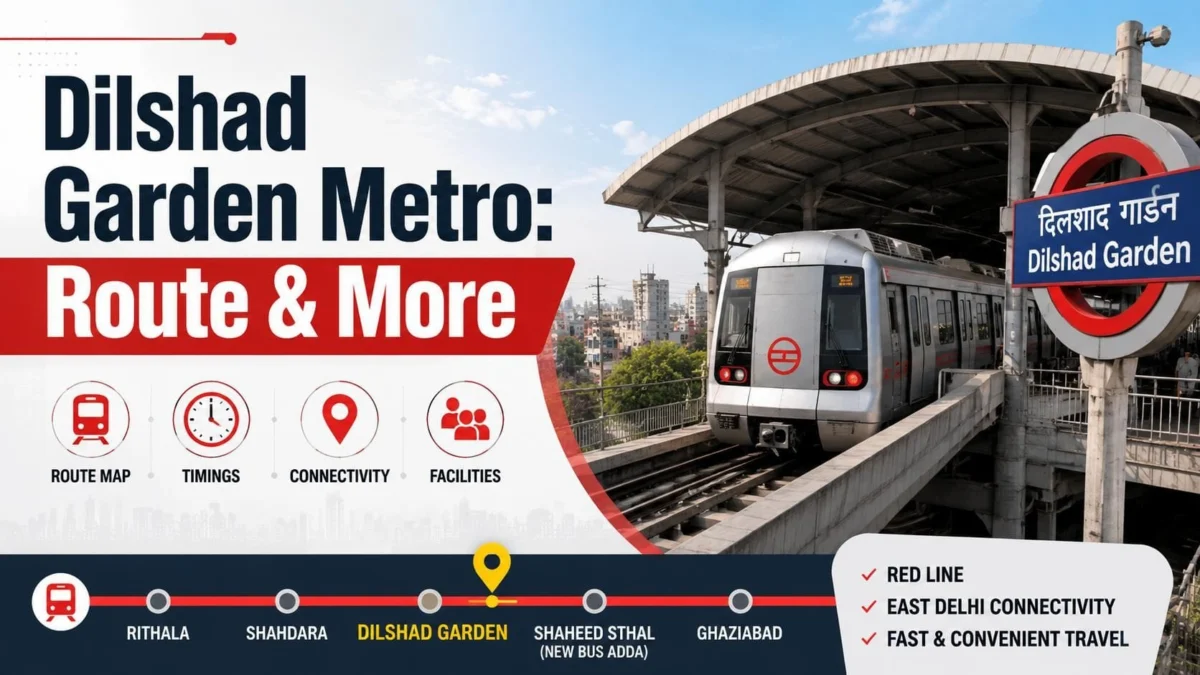
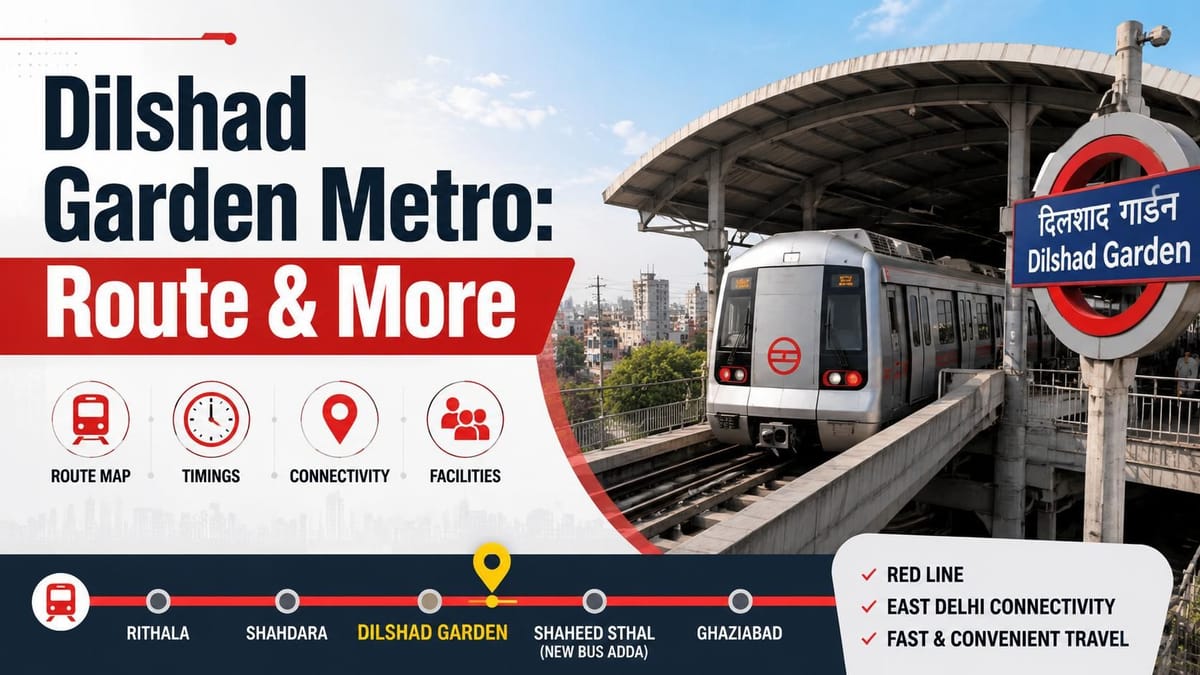
New Delhi – In the sprawling urban landscape of the National Capital Region (NCR), the Delhi Metro’s Red Line stands as a pioneering testament to modern engineering and urban planning. At the heart of the Red Line’s eastern operations lies the Dilshad Garden Metro Station, a facility that has evolved from a terminal point into a critical transit artery. Since its inception, the station has not only bridged the geographical gap between East Delhi and Uttar Pradesh but has also served as a catalyst for unprecedented socio-economic and real estate growth in the Trans-Yamuna region.
This comprehensive report examines the station’s operational significance, its historical evolution, and the profound impact it continues to have on the lives of thousands of daily commuters and the local economy.
1. Main Facts: The Anatomy of a Transit Hub
Dilshad Garden Metro Station (Station Code: DSG) is a vital component of the Delhi Metro Rail Corporation (DMRC) network. Located on the bustling Grand Trunk (GT) Road, it serves as a high-capacity elevated station designed to handle the dense population of East Delhi.
Technical Specifications and Layout
The station is architecturally designed as an elevated structure, a common feature of the Red Line (Line 1). It utilizes a side-platform configuration, where two tracks run between two separate platforms. This layout is optimized for high-frequency boarding and deboarding, essential for a station that serves as a primary link for residents of Dilshad Garden, Jhilmil, and the neighboring colonies of Ghaziabad.
| Key Station Details at a Glance: | Feature | Information |
|---|---|---|
| Line | Red Line (Line 1) | |
| Station Structure | Elevated | |
| Platform Type | Side Platforms | |
| Operational Date | June 4, 2008 | |
| Station Code | DSG | |
| Preceding Station | Jhilmil (Towards Rithala) | |
| Succeeding Station | Shaheed Sthal / New Bus Adda (Towards Ghaziabad) | |
| Interchange Capability | None (Direct Line) |
Strategic Geographic Positioning
Situated on the edge of the Delhi-Uttar Pradesh border, the station is strategically positioned to capture commuter traffic from both states. Its proximity to the GT Road ensures that it is easily accessible via road-based transport, making it a multimodal hub where the Delhi Metro integrates seamlessly with the Delhi Transport Corporation (DTC) bus network and various paratransit services.
2. Chronology: From Terminal Station to Connectivity Bridge
The history of the Dilshad Garden Metro Station is intrinsically linked to the expansion phases of the DMRC.
Phase II Expansion (2008)
The station was inaugurated on June 4, 2008, as part of the Phase II expansion of the Red Line. At the time, it served as the eastern terminus of the line, extending the reach of the metro from Shahdara into the heart of East Delhi. For over a decade, Dilshad Garden remained the final stop for passengers traveling toward the border, making it one of the busiest terminal stations in the country.
The Shift to Phase III (2019)
The most significant milestone in the station’s chronology occurred on March 8, 2019. Prime Minister Narendra Modi inaugurated the 9.63-km extension of the Red Line from Dilshad Garden to Shaheed Sthal (New Bus Adda) in Ghaziabad. This transformation shifted Dilshad Garden from a "dead-end" terminal to an "intermediate" through-station.
This extension was a game-changer. It removed the bottleneck at the Delhi-UP border, allowing for a "one-train" journey from the residential hubs of Ghaziabad to the industrial and commercial sectors of North and West Delhi.
3. Supporting Data: Operational Efficiency and Commuter Demographics
The Dilshad Garden Metro Station is designed to cater to a diverse demographic, ranging from office-going professionals and university students to small-scale traders and industrial workers.
Operational Hours and Frequency
The station operates with a high degree of reliability, mirroring the DMRC’s global reputation for punctuality.
- First Train: Typically commences at 05:30 AM, catering to early-morning laborers and long-distance travelers.
- Last Train: Concludes around 11:30 PM, ensuring safe passage for late-shift workers.
- Peak Frequency: During rush hours (08:30 AM – 11:00 AM and 05:30 PM – 08:00 PM), trains arrive every 3 to 4 minutes.
- Off-Peak Frequency: Intervals vary between 6 to 10 minutes.
Accessibility and Last-Mile Connectivity
Data suggests that the success of the Dilshad Garden station is largely due to its robust last-mile connectivity. The station is a focal point for:
- E-Rickshaws and Auto-Rickshaws: Hundreds of these vehicles operate in a 5-km radius, connecting the station to interior pockets like Seemapuri, Vivek Vihar, and Shalimar Garden.
- Bus Integration: The station is adjacent to major DTC bus stops, facilitating travel to ISBT Anand Vihar and ISBT Kashmiri Gate.
- Pedestrian Access: Dedicated foot overbridges (FOBs) and well-paved walkways allow local residents of Dilshad Garden—one of Asia’s largest planned housing colonies—to walk to the station.
4. Facilities and Commuter Experience: A Modern Transit Ecosystem
The DMRC has equipped the Dilshad Garden station with a comprehensive suite of amenities designed to enhance the passenger experience, focusing on safety, inclusivity, and convenience.
Layout and Navigation
The station is divided into three distinct levels:
- Ground Level: Entry/Exit gates and street-level access.
- Concourse Level: This area houses the ticket counters (both manual and automated vending machines), security checkpoints, and retail outlets.
- Platform Level: The top level where the trains arrive and depart.
Commuter Amenities
- Retail and Refreshments: The station concourse features several kiosks, including food outlets and convenience stores, catering to the "grab-and-go" needs of commuters.
- Banking: ATM facilities are available within the station premises.
- Accessibility (Divyangjan Friendly): In line with the Rights of Persons with Disabilities Act, the station features tactile flooring for the visually impaired, braille-enabled elevators, and wide gates for wheelchair access.
- Sanitation: Maintained washrooms are available on the concourse level.
- Security: A 24/7 security presence by the Central Industrial Security Force (CISF) and extensive CCTV coverage ensure a safe environment for women and children.
5. Official Responses: The DMRC’s Vision for the Red Line
While specific daily statements are reserved for operational emergencies, the DMRC’s long-term strategy for the Dilshad Garden segment emphasizes sustainability and technological upgrades.
Official reports from the DMRC highlight that the Red Line was the first line to be commissioned in Delhi, and stations like Dilshad Garden are part of a continuous "Mid-Life Refurbishment" program. This includes:
- Energy Efficiency: The installation of solar panels on the station roof to offset energy consumption.
- Digital Integration: The promotion of the DMRC Smart Card and mobile QR ticketing to reduce paper waste and wait times at counters.
- Maintenance: Periodic structural audits of the elevated tracks to ensure the longevity of the infrastructure.
Transit experts often cite Dilshad Garden as a model for "Transit-Oriented Development" (TOD), where the presence of the metro has dictated the urban fabric of the surrounding three kilometers.
6. Implications: Real Estate and Socio-Economic Transformation
The presence of the Dilshad Garden Metro Station has had a profound impact on the local economy, most notably in the real estate sector.
Residential Real Estate Boom
Dilshad Garden was originally developed by the Delhi Development Authority (DDA). Before the metro, it was considered a quiet, somewhat isolated residential pocket. Post-2008, property values saw a meteoric rise.
- Builder Floors and Apartments: There has been a significant shift from traditional DDA flats to modern builder floors. Investors have targeted the area due to the high rental demand from professionals working in Central Delhi and Noida.
- Rental Yields: The area offers some of the most stable rental yields in East Delhi, driven by its proximity to Guru Teg Bahadur (GTB) Hospital and University College of Medical Sciences (UCMS), with students and medical staff preferring to live near the metro.
Commercial Growth
The station has revitalized local markets. The Dilshad Garden market and nearby Jhilmil industrial area have seen increased footfall. Businesses that were once localized now serve a much larger catchment area, as people from Ghaziabad can easily travel to East Delhi for shopping and services.
Impact on Ghaziabad
The station acted as the "front door" for Ghaziabad for 11 years. Even after the line was extended, Dilshad Garden remains a preferred boarding point for many because of its established parking facilities and better road access compared to some of the newer, more congested stations in UP.
7. Conclusion: The Lifeline of the Trans-Yamuna Region
The Dilshad Garden Metro Station is far more than a collection of concrete platforms and steel tracks. It is a socio-economic bridge that has successfully integrated the suburban fringes of the NCR into the heart of the capital.
From its early days as a Phase II terminal to its current status as a bustling intermediate hub, the station has consistently delivered on its promise of reliable, safe, and efficient transport. As the DMRC continues to innovate with green energy and digital ticketing, Dilshad Garden remains a shining example of how infrastructure can transform a neighborhood, stabilize property markets, and improve the quality of life for millions of citizens.
For the daily commuter, it represents time saved; for the investor, it represents growth; and for the city of Delhi, it represents the successful execution of an urban vision that continues to move the nation forward.
Disclaimer: This article is based on current operational data and historical records provided by the DMRC and local real estate market trends. Schedules and facilities are subject to change based on official DMRC policy and urban development projects.
