

AHMEDABAD — In a move that signals a paradigm shift in urban planning and economic strategy, the Ahmedabad Municipal Corporation (AMC) has unveiled an ambitious Rs 853-crore expansion plan for the Sabarmati Riverfront. Detailed within the Draft Budget for the 2026-27 fiscal year, the proposal outlines a comprehensive vision to transform the riverfront from a recreational landmark into a global-standard commercial, transit, and cultural hub.
The proposed investment targets the diversification of the riverfront’s utility, introducing high-capacity convention facilities, pioneering water-based transit feasibility, and a massive extension of the river’s developed banks toward the Narmada Canal. This latest phase aims to solidify Ahmedabad’s status as a "World Heritage City" while simultaneously boosting its "MICE" (Meetings, Incentives, Conferences, and Exhibitions) tourism potential and real estate value.
The Financial Blueprint: Breaking Down the Rs 853-Crore Allocation
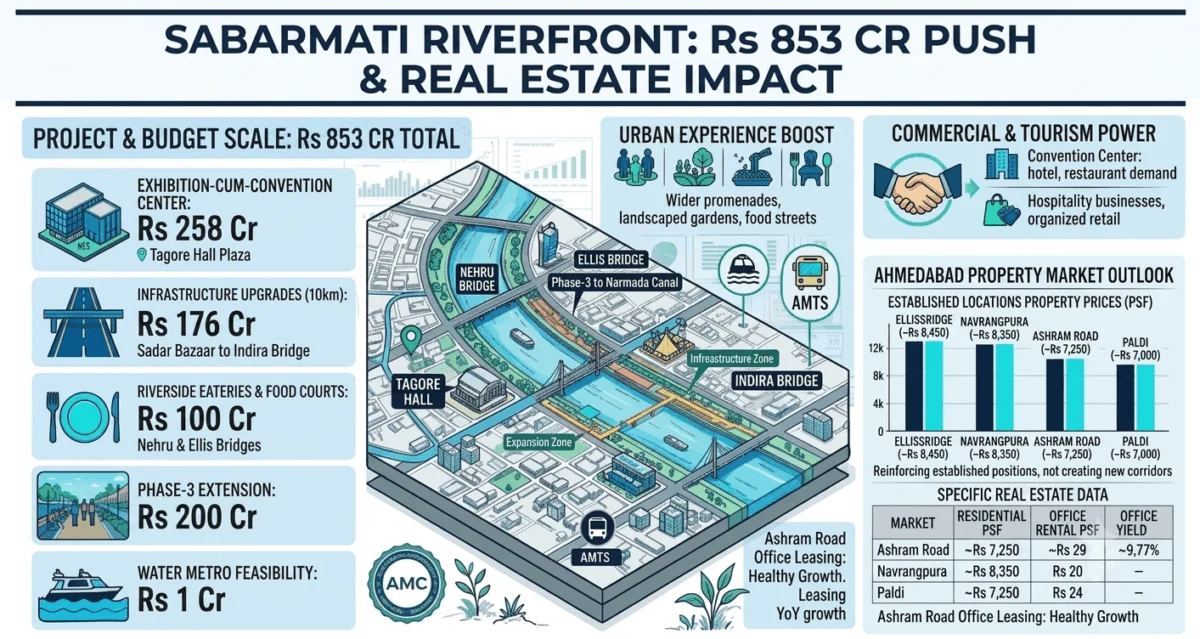
The AMC’s Draft Budget 2026-27 provides a granular look at how the funds will be deployed. The scale of the investment reflects the city’s intent to move beyond basic beautification toward high-value infrastructure.
- Exhibition-cum-Convention Center (Rs 258 Crore): The crown jewel of the proposal, this center is slated for development near Tagore Hall Plaza on the western bank. It is designed to host international summits, trade fairs, and large-scale cultural events, filling a critical gap in the city’s commercial infrastructure.
- Phase-3 Extension (Rs 200 Crore): This allocation focuses on extending the riverfront’s reach toward the Narmada Canal. This includes the development of an "active middle promenade," ensuring that the northern reaches of the city are integrated into the riverfront’s ecosystem.
- Peripheral Infrastructure (Rs 176 Crore): A 10-kilometer stretch of the riverfront will see a massive overhaul. This includes new road networks, upper promenades, and public facilities spanning from Sadar Bazaar to Indira Bridge on the eastern bank, and from the Railway Bridge to Indira Bridge on the western bank.
- Hospitality and Leisure (Rs 100 Crore): Recognizing the riverfront as a social destination, the budget proposes dedicated riverside eateries and organized food courts in the high-traffic zone between Nehru Bridge and Ellis Bridge.
- Future Mobility (Rs 1 Crore + AMTS Integration): While the amount for the Water Metro feasibility study is a modest Rs 1 crore, it marks the beginning of a transit revolution. Additionally, the proposal includes dedicated AMTS (Ahmedabad Municipal Transport Service) bus routes along the riverfront corridors to enhance east-west connectivity.
Chronology: The Evolution of the Sabarmati Riverfront (1997–2027)
To understand the significance of the 2026-27 proposal, one must look at the project’s multi-decade trajectory:
- The Conceptual Phase (1997–2002): The Sabarmati Riverfront Development Corporation Limited (SRFDCL) was formed to reclaim the river’s banks, which were previously prone to flooding and occupied by informal settlements.
- Phase 1 (2005–2014): This phase saw the construction of the main concrete embankments, lower promenades, and the introduction of basic parks and gardens. It turned the riverfront into a functional public space.
- Phase 2 (2015–2023): Focus shifted toward connectivity and iconic landmarks. The Atal Footbridge, the Flower Park, and the Biodiversity Park were completed, making the riverfront a major tourist attraction.
- Phase 3 & The 2026-27 Pivot: The current proposal marks the transition from "Leisure and Reclamation" to "Economic Integration." By extending the project to the Narmada Canal and building a convention center, the AMC is now positioning the riverfront as a central business district (CBD) extension.
Supporting Data: Real Estate and the Economic Ripple Effect
The Sabarmati Riverfront has historically acted as a catalyst for property appreciation in the surrounding micro-markets. Unlike new suburban developments, the riverfront influences established neighborhoods, driving "redevelopment" and "premiumization."
Current Market Indicators (June 2026):
| Locality | Average Property Price (per sq ft) | Average Rental (psf) | Rental Yield |
|---|---|---|---|
| Ashram Road | Rs 7,250 | Rs 59 | 9.77% |
| Navrangpura | Rs 8,350 | Rs 20 | 2.87% |
| Ellisbridge | Rs 8,450 | Rs 22 | 3.12% |
| Paldi | Rs 7,000 | Rs 24 | 4.11% |
Analysis of the Data:
Ashram Road, which runs parallel to the riverfront, has emerged as a powerhouse for commercial real estate. With a rental yield nearing 10%, it outpaces most other commercial districts in Gujarat. The proposed Convention Center is expected to further drive demand for "Grade A" office spaces and hospitality projects.
In residential sectors like Navrangpura and Ellisbridge, the high capital values (exceeding Rs 8,300 per sq ft) reflect the scarcity of land and the high demand for homes with riverfront proximity. Experts suggest that the Phase-3 extension toward the Narmada Canal will likely trigger a similar surge in northern Ahmedabad, where land is currently more available for large-scale residential townships.
Official Responses and Urban Vision
While the budget remains a "Draft" subject to final approvals, AMC officials have signaled a clear intent to move toward "smart mobility" and "sustainable urbanism."
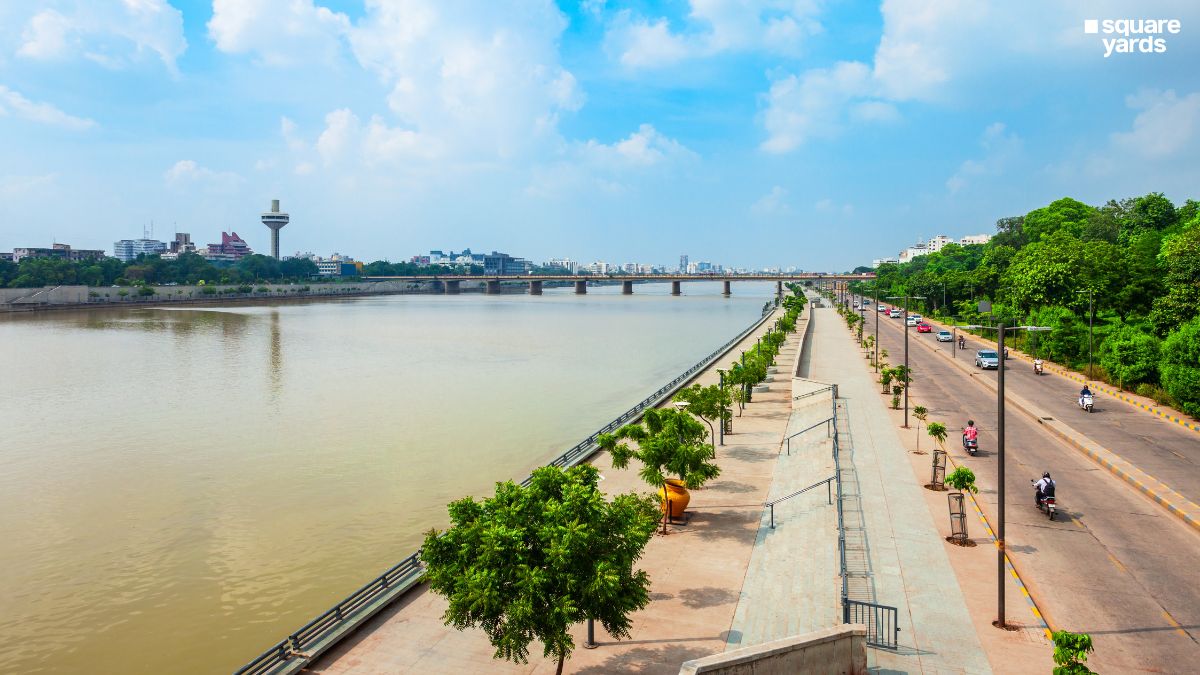
According to municipal sources, the inclusion of the Water Metro feasibility study is inspired by the success of similar projects in Kochi. "The goal is to reduce the burden on the city’s arterial roads by utilizing the river as a secondary transit corridor," an AMC planning official stated off the record. "If the feasibility study is positive, the Sabarmati could see electric ferries connecting the northern and southern tips of the city within the next decade."
Furthermore, the emphasis on AMTS bus connectivity along the riverfront is a strategic move to ensure the space is accessible to all socio-economic strata, preventing it from becoming an "exclusive" enclave for the wealthy. The "active middle promenade" in Phase-3 is also being touted as a green initiative to increase the city’s per-capita forest cover.
Strategic Implications: Beyond the Concrete
The Rs 853-crore investment carries implications that extend far beyond infrastructure.
1. The "MICE" Tourism Surge
By building a dedicated Exhibition-cum-Convention Center, Ahmedabad is positioning itself to compete with Mumbai, Delhi, and Hyderabad for international corporate events. This is expected to create a "multiplier effect" for the local economy, benefiting hotels, retail sectors, and local artisans.
2. Connectivity and the "Divide"
Historically, the Sabarmati River was a physical barrier between the "Old City" (East) and the "New City" (West). The new bridge projects, AMTS routes, and the potential Water Metro are designed to blur these lines, creating a more integrated urban fabric where movement between the two banks is seamless.
3. Environmental and Social Sustainability
The extension toward the Narmada Canal involves significant landscaping and public space development. For a city that experiences extreme summer heat, these "green lungs" and water-cooled corridors are essential for climate resilience. The proposal for food courts and eateries also aims to formalize the street food economy, providing better hygiene and organized spaces for vendors.
4. Real Estate: From Speculation to Value
For investors, the message is clear: the Sabarmati Riverfront is no longer a speculative "future" project; it is an established value-driver. The shift from "raw land appreciation" to "yield-based commercial growth" indicates a maturing market. Ashram Road and Paldi are likely to see a surge in mixed-use developments where residential, office, and retail spaces coexist in high-density skyscrapers.
Conclusion: A New Chapter for the "Manchester of the East"
The AMC’s Rs 853-crore proposal for the 2026-27 budget is more than just a fiscal document; it is a manifesto for the future of Ahmedabad. By blending futuristic transit (Water Metro), commercial ambition (Convention Center), and social infrastructure (Promenades and Food Courts), the city is ensuring that the Sabarmati River remains its most vital asset.
As the city expands toward the Narmada Canal, the riverfront will cease to be a "destination" and instead become the "spine" of Ahmedabad—a continuous corridor of movement, commerce, and culture. For residents, it promises a higher quality of life; for investors, it offers sustained growth; and for the city itself, it secures a place on the map of the world’s most progressive urban centers. The next phase of the Sabarmati Riverfront is not just about building walls against the water, but about building bridges to a more prosperous future.
