

When the legendary British mountaineer George Mallory was famously asked why he felt compelled to scale the treacherous heights of Mount Everest, he responded with three words that have since defined the spirit of exploration: "Because it’s there." Today, over a century after Mallory’s disappearance on the slopes of the world’s highest peak, a similar sentiment drives a new generation of travelers toward the Earth’s southern extremity.
Antarctica, once the exclusive and lethal domain of professional explorers and rugged researchers, has become the ultimate "bucket list" destination. It is "there," and it is more accessible than ever before. However, much like Everest—which now grapples with "traffic jams" in the death zone—the White Continent is being "loved to death." As visitor numbers skyrocket from a few thousand to over a hundred thousand per season, the global community faces a daunting question: Can one of the world’s last true wildernesses survive its own popularity?
Main Facts: The Great White Surge
The scale of the transformation in Antarctic travel is nothing short of staggering. For most of the 20th century, the continent was a silent expanse of ice, home only to penguins, seals, and a handful of scientists living in isolated outposts. The modern era of commercial tourism is a relatively recent phenomenon, but its growth has been exponential.

In the 2023-2024 season, Antarctica recorded approximately 125,000 visitors. To the casual observer, this may seem like a modest figure compared to the millions who flock to Paris or New York. However, in the context of the Antarctic ecosystem—the most fragile and pristine environment on the planet—this number is alarming. Unlike traditional destinations, Antarctica has no permanent infrastructure, no sewage systems, no hospitals, and no native human population to manage the influx.
The surge is driven by a "perfect storm" of factors:
- Post-Pandemic Appetite: A global "revenge travel" trend where affluent travelers are seeking remote, once-in-a-lifetime experiences.
- The Influencer Effect: Social media platforms like Instagram and TikTok have transformed the silent glaciers into backdrops for viral content, moving the destination from the niche to the mainstream.
- Last-Chance Tourism: A paradoxical and somber motivation where travelers rush to see the ice before it disappears due to climate change, inadvertently contributing to the very carbon footprint that accelerates its demise.
Chronology: From Heroic Exploration to Mass Expeditions
To understand the current crisis, one must look at the timeline of human interaction with the frozen continent.

The Heroic Age (Late 19th Century – 1922)
This era was defined by names like Roald Amundsen, Robert Falcon Scott, and Ernest Shackleton. Exploration was a matter of national pride and scientific discovery, often resulting in tragedy. There was no concept of "tourism"; the goal was survival and the attainment of the South Pole.
The Diplomatic Era (1959)
Recognizing the potential for conflict over the resource-rich but uninhabited land, 12 nations signed the Antarctic Treaty in 1959. It declared the continent a "natural reserve, devoted to peace and science," effectively banning military activity and mineral mining.
The Birth of Tourism (1966)
The transition to commercial travel began when American entrepreneur Lars-Eric Lindblad led the first layperson’s cruise to Antarctica. He took 57 travelers on a converted vessel, arguing that by seeing the continent, people would become its protectors. This "Lindblad Model" focused on education and small-group landings.

The Turning Point (2000 – 2020)
At the turn of the 21st century, fewer than 8,000 people visited Antarctica annually. By the mid-2010s, that number had tripled. The introduction of "fly-cruise" options—where tourists fly over the treacherous Drake Passage to join a ship in the South Shetland Islands—dramatically lowered the barrier to entry, making the trip shorter and more palatable for those prone to seasickness.
The Modern Explosion (2023 – Present)
Post-COVID-19, the numbers jumped from 74,000 in the 2019-2020 season to 125,000 in 2023-2024. Current projections suggest that if current trends remain unchecked, the continent could see 500,000 visitors annually by 2033.
Supporting Data: The High Stakes of Melting Ice
The environmental stakes in Antarctica are global. The Antarctic ice sheet is the largest single body of fresh water on Earth, containing an estimated 90% of all the planet’s ice.

- Sea Level Rise: Scientists estimate that if the Antarctic ice sheet were to melt completely, global sea levels would rise by approximately 60 meters (nearly 200 feet). This would submerge every major coastal city on the planet, from Mumbai to New York.
- Biosecurity Risks: Every tourist is a potential vector for invasive species. Seeds stuck to Velcro, microbes on boot soles, or even avian flu carried on clothing can devastate local penguin colonies that have no natural immunity.
- Black Carbon: Research shows that soot (black carbon) from cruise ship chimneys settles on the snow. This darkens the surface, causing it to absorb more sunlight and melt faster than pure white snow.
- Wildlife Disruption: Studies have shown that increased human presence can lead to elevated stress levels in breeding penguins and seals, potentially impacting their reproductive success.
Official Responses: Regulating a Land Without a Government
Because Antarctica belongs to no single nation, it lacks a traditional government to pass laws or police its borders. Regulation is a complex web of international cooperation and voluntary industry standards.
The International Association of Antarctica Tour Operators (IAATO)
Founded in 1991, IAATO is a member-based organization that sets the "gold standard" for responsible travel. Most major cruise lines are members. IAATO’s regulations include:
- Ship Size Limits: Vessels carrying more than 500 passengers are prohibited from making landings.
- Landing Protocols: Only 100 people are allowed on shore at any given time at a specific site.
- Biosecurity: Strict "boot washing" and vacuuming of pockets are required before and after every shore excursion.
The Chilean and Boutique Perspective
Juan Cristóbal Del Pedregal Bravo, Senior Commercial Director at Antarctica21, a Chile-based boutique operator, emphasizes that the industry must move toward a "quality over quantity" model. His company specializes in fly-cruise expeditions that use smaller ships to minimize the physical footprint.

"Antarctica is one of the last truly untouched wildernesses, and it is also one of the most scientifically important," Bravo notes. He argues that small-scale tourism can be a "force for good" by creating "Antarctic Ambassadors"—wealthy, influential individuals who return home and lobby for climate action.
The Expeditionary Mindset
Bhawna Rao, founder of the upscale travel company Encompass Experiences, believes the responsibility also lies with the travel designers. Rao, who visited the continent in December 2024, insists on vetting her clients’ motivations.
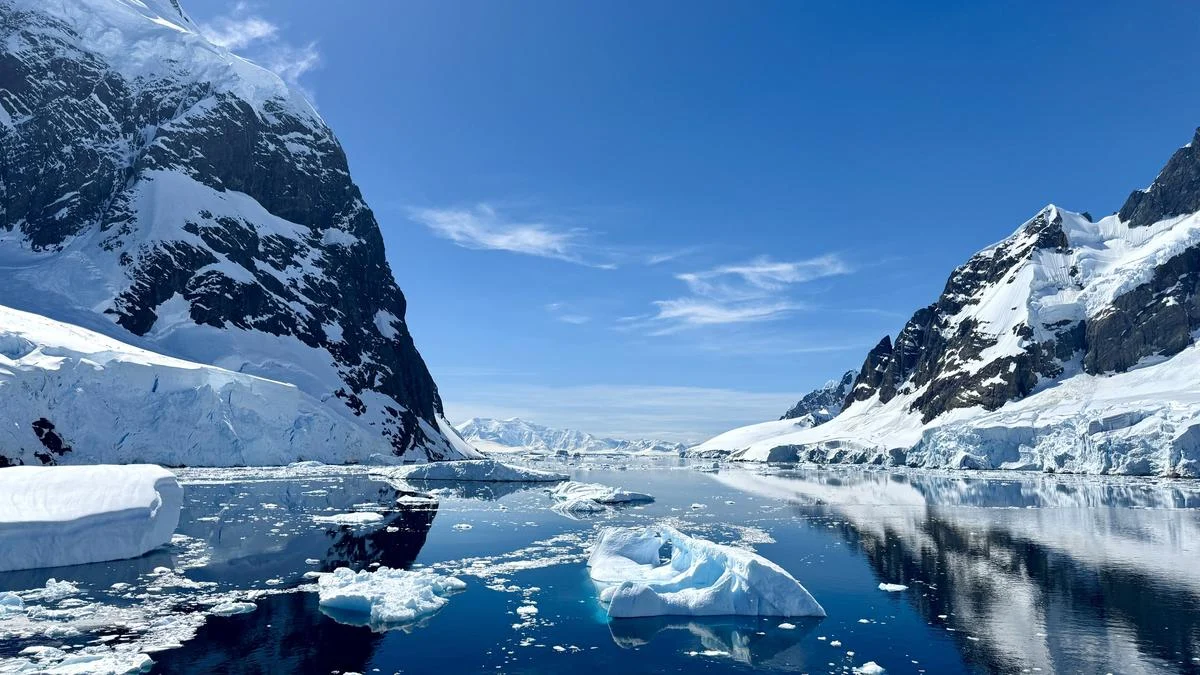
"It’s important that travelers understand this is not a typical holiday. It’s an expedition," Rao explains. She recalls her first iceberg sighting as a humbling moment: "Massive, silent, almost surreal. In that moment, you realize how small we are in the grand scale of nature." For Rao, the goal is to shift the narrative from a "luxury cruise" to a "discovery mission."

Implications: The Future of the White Continent
The rapid growth of Antarctic tourism brings the world to a crossroads. There are three primary implications for the future:
1. The Necessity of Hard Caps
While IAATO has done a remarkable job with voluntary guidelines, critics argue that "voluntary" is no longer enough. There is growing pressure within the Antarctic Treaty Consultative Meetings (ATCM) to implement hard legal caps on visitor numbers and to ban the construction of any permanent land-based tourism infrastructure (such as hotels).
2. The "Destination Dupe" Dilemma
As the most popular landing sites on the Antarctic Peninsula become crowded, operators are looking for new, even more remote spots. This spreads the human footprint to previously untouched areas, potentially disturbing new wildlife colonies and making search-and-rescue operations even more difficult in the event of an accident.

3. The Moral Paradox of Travel
The most significant implication is the carbon paradox. To reach Antarctica, most travelers must fly to South America and then board a ship, creating a massive carbon footprint per capita. The irony is that the very act of visiting the ice to "witness its fragility" contributes to the warming that destroys it. The industry is currently experimenting with hybrid-electric ships and carbon-offset programs, but these are incremental steps against a systemic problem.
Conclusion: A Call for Conscious Exploration
Antarctica remains a place of transformative beauty. From the rusting remnants of whaling stations on Deception Island—a stark reminder of humanity’s past capacity for destruction—to the "National Geographic" views of gentoo penguins navigating blue-hued glaciers, the continent offers a perspective found nowhere else on Earth.
However, the era of "casual" Antarctic travel must end. For the continent to survive, the industry must transition into a model of extreme regulation and education. Potential visitors should keep three criteria in mind when choosing an operator:

- Passenger Count: Opt for ships with fewer than 100 passengers to ensure minimal impact and maximum educational engagement.
- Scientific Integration: Support operators that host "citizen science" programs, where travelers assist in collecting data on whale sightings or phytoplankton levels.
- Educational Focus: Choose expeditions that prioritize lectures by glaciologists and biologists over high-end luxury amenities.
In the end, the goal is not to stop humans from seeing Antarctica, but to ensure that those who do see it return as its fiercest protectors. If we continue to treat the White Continent as just another notch on a social media bucket list, we risk losing the very thing we traveled so far to admire. As the ice continues to whisper its warnings, the world must decide if it is willing to listen.
