

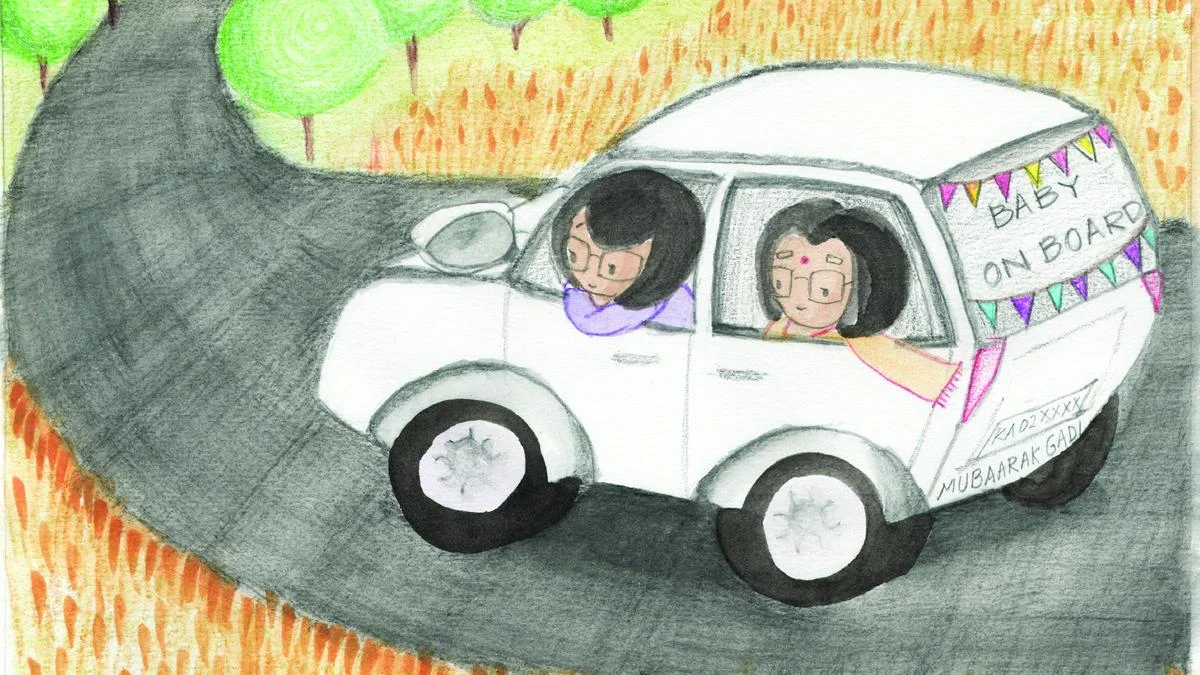
The definition of family has long been anchored in biological heritage, but a new literary work from Bengaluru is challenging this ancient paradigm. Sujatha Balakrishnan, a seasoned theatre practitioner, has transitioned from the stage to the page with her debut picture book, We Are Family. Published by Parth Prakashan and illustrated by Apoorva Lakshmi, the book is more than a children’s story; it is a manifesto for the modern, diverse family unit.
Inspired by her own family’s journey—specifically her daughter Sai’s decision to adopt her granddaughter, Sufi—Balakrishnan’s work arrives at a critical juncture in Indian social discourse. As adoption remains a complex, often stigmatized, and legally rigorous process in India, We Are Family seeks to provide a gentle, heartwarming entry point for children and parents alike to discuss what it truly means to belong.
The Genesis of a Dream: A Thirty-Year Chronology
The story of We Are Family did not begin with a pen and paper in 2026; its roots stretch back over three decades. The narrative arc of this book is inextricably linked to the personal conviction of Balakrishnan’s daughter, Sai.
1994: A Teenage Declaration
The journey began approximately 32 years ago. Sujatha Balakrishnan recalls a pivotal conversation with her then 15-year-old daughter. During a routine discussion about the various structures families can take, Sai made a declaration that would shape the next three decades of their lives: she intended to become a mother through adoption.
At the time, Balakrishnan admitted to viewing the statement with the skepticism often reserved for teenage idealism. "I thought it was just a fleeting thought," she reflects. However, what seemed like a passing whim to the mother was a foundational life goal for the daughter. Sai’s commitment to this path never wavered as she transitioned into adulthood.
2020: The Arrival of Sufi
The conviction expressed in the mid-90s reached its fruition in 2020, a year marked globally by isolation but defined for the Balakrishnan family by expansion. Sai navigated the rigorous legal and emotional landscape of the Indian adoption system to bring home a little girl named Sufi.
The arrival of Sufi transformed the family dynamic, turning Sujatha into a grandmother and providing the lived experience that would eventually necessitate the book. The transition was not merely about welcoming a new member but about evolving the family’s shared language regarding identity and love.
2023–2026: From Experience to Literature
As Sufi grew, Balakrishnan recognized a void in contemporary Indian children’s literature. When Sufi turned three, the need to explain her origins and the nature of her family became a practical necessity. Balakrishnan began conceptualizing a story that would not only mirror Sufi’s life but also serve as a tool for other families in similar positions.
The book’s formal launch was strategically set for July 29, 2026—a date of profound sentimental value, marking the sixth anniversary of the day Sufi officially joined the family. Balakrishnan describes the book as a "gift" to her granddaughter, a permanent record of the love that brought them together.

Supporting Data: The Landscape of Adoption in India
To understand the significance of Balakrishnan’s book, one must look at the broader context of adoption in India. While We Are Family focuses on the emotional warmth of the process, the backdrop is one of significant bureaucratic and social hurdles.
The Statistical Reality
According to data from the Central Adoption Resource Authority (CARA), the statutory body of the Ministry of Women and Child Development, thousands of parents remain on waiting lists across India. As of recent years, the gap between the number of Prospective Adoptive Parents (PAPs) and the number of children legally available for adoption remains wide.
- Waiting Times: PAPs often wait between 24 to 36 months to be matched with a child.
- Legal Framework: The Juvenile Justice (Care and Protection of Children) Act, 2015, and the Hindu Adoptions and Maintenance Act (HAMA), 1956, govern the legalities, which were further streamlined in 2022 to empower District Magistrates to issue adoption orders.
- Social Stigma: Despite legal progress, social scientists note that "bloodline purity" remains a significant cultural hurdle in many Indian communities, making books like Balakrishnan’s essential for shifting the cultural needle.
The Role of Representation
In the Indian publishing market, children’s books have historically leaned toward mythology, folk tales, or traditional nuclear family setups. We Are Family joins a small but growing movement of "inclusive literature" that addresses non-traditional families, including single-parent households and adoptive families. By featuring a grandmother, a mother, a child, and even a kitten named Bekku, the book reflects the reality of many urban Indian households where the extended family provides the primary support system.
Artistic Collaboration and Narrative Structure
The impact of a picture book relies heavily on its visual language. For We Are Family, Balakrishnan collaborated with illustrator Apoorva Lakshmi to create a world that feels both specific to Bengaluru and universal in its emotional resonance.
Visual Storytelling
Apoorva Lakshmi’s illustrations are described as heartwarming and engaging, designed to capture the attention of toddlers and early readers. The inclusion of Bekku, the kitten, serves as a narrative device to make the concept of "home" and "belonging" more relatable to young children. The imagery emphasizes warmth, physical proximity, and the everyday joys of domestic life, reinforcing the idea that an adoptive home is indistinguishable from a biological one in its capacity for comfort.
The Core Message
The narrative of the book revolves around the simplicity of love. Balakrishnan emphasizes that the "core" of the book is the belief that family is defined by loving, sharing, and caring. The story does not shy away from the idea that Sufi’s family is "different," but it frames that difference as a choice rather than a deficiency. "Sufi chose her mother and grandparents, and we chose her. Nothing else matters," Balakrishnan asserts.
Perspectives: Advocacy and Normalization
Sujatha Balakrishnan’s foray into writing is backed by nearly eight years of active involvement in the adoption advocacy space. Her perspective is shaped by the "deep learning curve" she experienced as she supported her daughter through the CARA process and subsequent years of parenting.
The "First Years" Philosophy
Balakrishnan’s advocacy focuses heavily on the initial bonding period. She suggests that the most critical element during the first few years of an infant’s arrival is the "showering of love." Her experience suggests that while the legal and procedural aspects of adoption are taxing, the emotional integration is where the real work—and the real reward—lies.
Normalizing the Conversation
One of the primary goals of the book is to "normalize" adoption. In many social circles, adoption is still discussed in hushed tones or framed as an act of charity. Balakrishnan’s work seeks to flip this narrative, presenting it instead as a legitimate, joyful way of building a family. By placing the book in prominent Bengaluru bookstores like Bookworm, Turning Pages, and Kadhaigal, the author intends to make these conversations accessible to the general public, not just those currently in the adoption pipeline.

Implications for the Future of Indian Families
The publication of We Are Family carries several implications for the literary and social landscape of India.
1. Bibliotherapy for Children
Psychologists often use "bibliotherapy"—the use of books as a therapeutic tool—to help children process complex life changes. For adopted children, seeing their own story reflected in a book can be a powerful tool for self-esteem and identity formation. It provides them with a vocabulary to explain their family to peers and teachers, reducing the potential for feelings of alienation.
2. Shifting Parental Perspectives
For prospective parents, the book serves as a beacon of hope. By documenting a successful, happy adoption story that spans three generations, Balakrishnan provides a counter-narrative to the "challenging" and "difficult" labels often attached to adoption. It highlights the role of grandparents as vital pillars of support in the adoption journey.
3. Broadening the Scope of "Diverse Families"
As Indian society continues to evolve, the definition of family is expanding to include single parents by choice, LGBTQ+ parents (though legal hurdles remain), and multi-generational adoptive homes. We Are Family contributes to a more inclusive cultural fabric where "blood" is no longer the sole arbiter of kinship.
Conclusion
Sujatha Balakrishnan’s We Are Family is a testament to the power of a long-held conviction. What began as a 15-year-old girl’s dream in 1994 has blossomed into a literary contribution that may help thousands of other families find their voice.
By chronicling the story of Sufi, Sai, and their life in Bengaluru, Balakrishnan has provided a roadmap for navigating the emotional complexities of adoption with grace and honesty. As the book finds its way into the hands of readers, it carries with it a simple yet profound reminder: that families are not just born; they are built, chosen, and nurtured through a commitment to love that transcends biology.
In the heart of Bengaluru’s vibrant literary scene, We Are Family stands as a reminder that while the legal journey of adoption may be a marathon of paperwork and patience, the destination—a home filled with love and a kitten named Bekku—is worth every step.
