

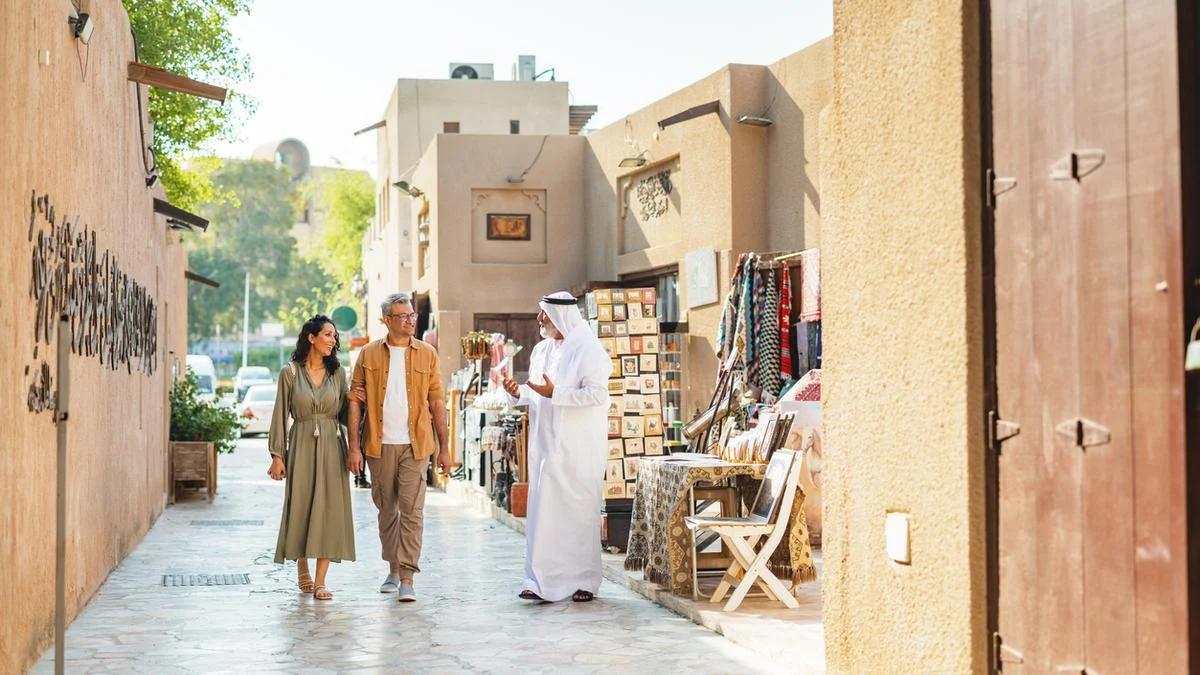
DUBAI — In the complex geopolitical landscape of West Asia, where conflict frequently disrupts the flow of international commerce and aviation, the Emirate of Dubai has emerged not merely as a survivor, but as a blueprint for institutional resilience. As the temporary closure of Dubai International Airport (DXB)—the world’s busiest gateway for international passenger traffic—sent shockwaves through global markets, the focus shifted to how the city would safeguard its vital tourism sector.
The ripple effects were felt most acutely in India, a nation bound to the UAE by deep-rooted historical, economic, and familial ties. However, as the dust settles and the city’s skyline continues to welcome travelers, the narrative is shifting from crisis management to strategic evolution. In an exclusive dialogue, Issam Kazim, CEO of the Dubai Corporation for Tourism and Commerce Marketing (DCTCM), detailed the emirate’s sophisticated response to shifting traveler behaviors and its long-term vision for a "future-proofed" tourism economy.
Main Facts: A Record-Breaking Foundation for Recovery
Despite the regional volatility that marked the beginning of the mid-2020s, Dubai’s tourism sector entered this period of uncertainty from a position of unprecedented strength. The sheer scale of the city’s tourism machinery provides a necessary cushion against external shocks.
Unprecedented Visitation Milestones
In 2025, Dubai achieved a historic milestone by welcoming 19.59 million international overnight visitors. This figure represented the third consecutive year of record-breaking growth, signaling that the city had moved well beyond its pre-pandemic performance levels. This growth was not incidental; it was the result of a deliberate diversification of source markets, ensuring that the city was never overly reliant on any single geographic region.

Macroeconomic Tailwinds
The tourism surge has been a primary engine for the broader economy. In the final quarter of 2025, Dubai’s GDP grew by a robust 6.4%, bringing the annual GDP to a staggering AED 937 billion. These fundamentals are critical because, as Kazim notes, economic momentum is the most effective catalyst for a rapid recovery. When the "prevailing demand" is high, the friction caused by temporary regional disruptions is significantly minimized.
Chronology: A Proactive Response to Regional Flux
The timeline of Dubai’s response to the West Asia conflict and the subsequent travel disruptions reveals a government that prioritizes agility and business liquidity over bureaucratic hesitation.
Late 2025 – Early 2026: Identifying Behavioral Shifts
As headlines regarding regional instability dominated global news cycles, DCTCM’s data-driven monitoring systems identified a "natural behavioral response" among travelers. While structural intent to visit Dubai remained high, the "booking lead times" began to shorten. Travelers were still coming, but they were booking much closer to their departure dates and demanding greater flexibility in cancellations and rescheduling.
March 2026: The First Economic Incentive Package
Recognizing that the hospitality and commerce sectors needed immediate breathing room, Dubai’s leadership approved an initial AED 1 billion stimulus package. This intervention included:

- Full deferrals of hotel sales fees.
- Suspension of food and beverage charges.
- A three-month waiver of the "Tourism Dirham" fee.
These measures were designed to ensure that hotel operators could maintain service standards without being strangled by short-term cash flow constraints.
May 2026: Expansion of Relief Measures
By May, a second, more comprehensive package of AED 1.5 billion was implemented. This phase covered 33 distinct initiatives across nine sectors. Crucially, it provided:
- Full exemptions from permit and licensing fees for the MICE (Meetings, Incentives, Conferences, and Exhibitions) sector through the end of 2026.
- Reduced fees for specialized operators, including tour guides and desert safari companies.
June 2026: Restoration of Global Connectivity
By early June 2026, Emirates Airline had successfully resumed flights to more than 135 destinations, effectively restoring the city’s status as a global transit hub and a primary destination for the Indian diaspora.
Supporting Data: The Indian Connection and Market Diversification
The relationship between India and Dubai remains the cornerstone of the emirate’s tourism strategy. India is not just a source market; it is a vital organ in Dubai’s economic body.
The Indian Market’s Enduring Strength
In 2025 and 2026, India remained a top contributor to Dubai’s international visitation. The reasons are multifaceted:

- Connectivity: Massive air links connect Dubai to dozens of Tier-1 and Tier-2 Indian cities.
- VFR Segment: The "Visiting Friends and Relatives" (VFR) segment provides a recession-proof and conflict-resilient stream of travelers.
- Cultural Affinity: Proximity and cultural resonance make Dubai a "second home" for the Indian elite and middle class alike.
The Power of MICE and Infrastructure
The resilience of Dubai’s tourism is also bolstered by its world-class events infrastructure. In 2025, the Dubai World Trade Centre (DWTC) hosted 401 events with a total of 2.97 million attendees. This high-volume business travel provides a stable floor for hotel occupancy rates, even when leisure travel might see temporary fluctuations.
Real Estate and FDI as Confidence Indicators
Beyond hotel check-ins, the broader economy serves as a proxy for traveler confidence. Strong real estate transactions and the continued issuance of new business licenses in 2026 indicate that both investors and consumers view the current regional tensions as a temporary hurdle rather than a long-term deterrent.
Official Responses: Strategic Communication and Leadership
Issam Kazim emphasizes that Dubai’s strategy is "not reactive, but deliberate." The city’s approach to the conflict has been characterized by a unique blend of high-tech communication and high-touch leadership.
Countering Misinformation
In an era where "information travels faster than context," the Dubai government prioritized transparency. The Dubai Info Hub on WhatsApp became a central pillar for disseminating fact-based updates to travelers and residents. By filling the information void with official data, the city prevented rumors and headlines from dictating the narrative.

Visible Leadership
A standout element of Dubai’s strategy was the visibility of its leaders. Rather than retreating to boardrooms, officials were seen in public spaces, local restaurants, and community gatherings. This "presence" fostered a sense of shared solidarity and sent a clear message to the world: the city is functioning, safe, and open for business.
The Integrated Ecosystem
Kazim points out that Dubai’s success stems from its "deeply integrated public-private ecosystem." Aviation (Emirates), hospitality, retail, and government entities do not operate in silos. When a crisis hits, the coordination is seamless, allowing for the rapid resumption of flights and the immediate implementation of financial relief.
Implications: Building the "D33" Future
The current response to regional conflict is part of a much larger vision: the Dubai Economic Agenda (D33). The objective is not just to return to 2025 levels, but to double the size of Dubai’s economy over the next decade and position it among the top three global cities for business and tourism.
Infrastructure as a Long-Term Anchor
Dubai is doubling down on massive infrastructure projects that signal long-term confidence:

- Al Maktoum International Airport: A USD 35 billion expansion is underway to transform it into the world’s largest aviation hub, capable of handling 260 million passengers annually.
- The Gold Line Metro Extension: A newly approved 42-kilometer underground line will connect 15 districts, enhancing urban mobility for tourists.
- The Blue Line: Scheduled for a 2029 debut, further integrating the city’s hospitality hubs.
The Shift to Wellness and Lifestyle
The second half of 2026 will see a pivot toward "active-lifestyle tourism." The Dubai Fitness Challenge will celebrate its 10th edition in October, marking a decade of investment in wellness. By diversifying the "reason to visit" beyond shopping and luxury, Dubai is insulating itself against shifts in consumer spending.
Digital and Sustainable Evolution
The "New Dubai" tourism model is increasingly digitally enabled and sustainability-driven. By leveraging real-time data to track market shifts, DCTCM can adjust its outreach on a "market-by-market" basis. This allows for a surgical marketing approach—increasing focus on India or Europe when other regions might be facing headwinds.
Final Outlook
As Dubai looks toward the remainder of 2026, the outlook is one of "cautious optimism." The city has proven that its tourism sector is not a fragile luxury, but a resilient, diversified, and strategically managed engine of growth. For India and the rest of the world, Dubai remains a constant—a bridge between East and West that refuses to let regional headlines define its destiny. Through decisive leadership and a relentless focus on the "D33" goals, the emirate is not just navigating the current storm; it is building a harbor designed to withstand any future turbulence.
