

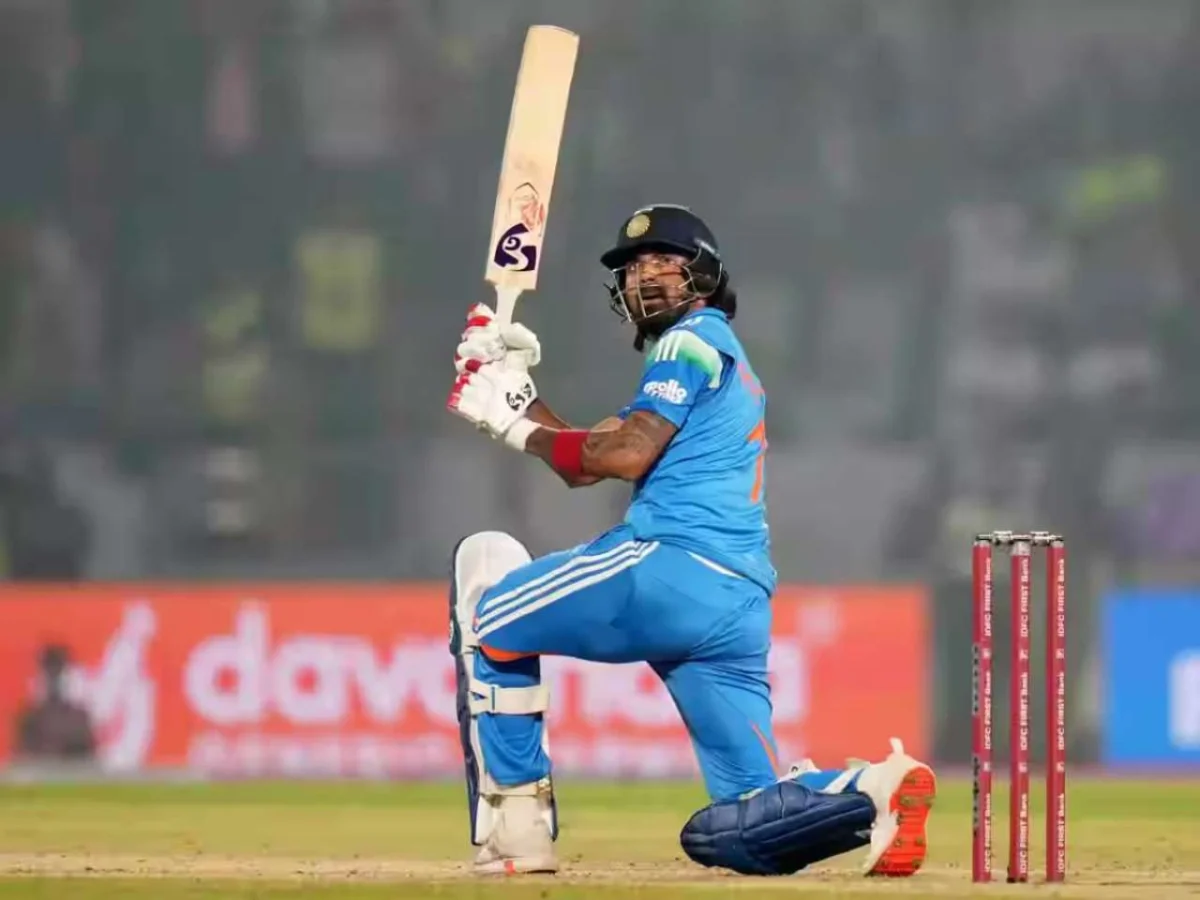
MANCHESTER, UK – The Indian cricket team finds itself in an unenviable position, reeling from a string of disheartening defeats on their UK tour. Following consecutive losses to England in the ongoing T20 International series, coupled with earlier setbacks against Ireland, the Men in Blue’s batting lineup has come under intense scrutiny. Amidst this growing crisis, a prominent voice from India’s cricketing past, former opener S. Ramesh, has made a compelling case for the immediate return of seasoned campaigner KL Rahul to the T20I squad, asserting that his experience and composure are precisely what the struggling side desperately needs.
India’s recent performances have painted a bleak picture, highlighting a fragility that has led to a desperate fight for survival in the current series against England. The call for Rahul, who last featured in T20Is in 2022, underscores a deep-seated concern among former players and analysts regarding the team’s ability to navigate high-pressure situations and build resilient innings, especially against top-tier bowling attacks. As the team grapples with the task of reversing its fortunes, Ramesh’s endorsement of Rahul signals a potential shift in tactical thinking, emphasizing stability over an all-out aggressive approach that has, at times, backfired spectacularly.
The Immediate Crisis: India’s Batting Falters
The primary catalyst for this impassioned plea is India’s dismal showing in recent white-ball encounters. The tour of the UK began with a two-match T20I series against Ireland, which India unexpectedly lost 0-2, raising initial alarm bells. These concerns have only amplified during the high-profile series against England. The opening T20I was washed out due to inclement weather, but the subsequent matches have been nothing short of disastrous for the touring side.
In the second T20I, India succumbed to a four-wicket defeat, failing to post a competitive total despite promising starts. However, it was the third T20I that sent shockwaves through the cricketing fraternity. England utterly dominated, thrashing India by a staggering 125 runs. This comprehensive defeat exposed glaring weaknesses in India’s batting, which seemed incapable of both setting a formidable target and chasing one under pressure. The repeated collapses and the inability of batsmen to convert starts into significant scores have ignited a fervent debate about the optimal batting strategy and personnel for India’s T20I setup. It is against this backdrop of instability and underperformance that the calls for KL Rahul’s reinstatement have gained significant traction, positioning him as a potential beacon of stability in turbulent waters.
)
Rahul’s T20I Journey: A Rollercoaster of Form and Fortune
KL Rahul’s T20 International career has been a fascinating blend of breathtaking highs and perplexing lows, marked by both prolific scoring and persistent scrutiny. His journey in the shortest format for India has been a significant one, yet it abruptly halted after the 2022 T20 World Cup, leaving many to wonder about his future in the format.
Rahul was an integral part of India’s T20I squad for several years, often serving as a linchpin at the top of the order. His elegant strokeplay, ability to find gaps, and powerful hitting made him a formidable opener on his day. He amassed 2,265 runs in 72 T20Is at an impressive average of nearly 38 and a strike rate hovering around 140, statistics that include two centuries and 22 half-centuries. These numbers firmly establish him as one of India’s leading run-scorers in the format. His best performances often showcased his capacity to anchor an innings while simultaneously accelerating when required, a skill highly valued in T20 cricket.

A significant highlight of his T20I career was his role as vice-captain during the 2022 T20 World Cup in Australia. India’s campaign, however, ended disappointingly in the semi-finals, where they suffered a heavy ten-wicket defeat to England. Despite being a key member of the leadership group, Rahul’s individual performance in that tournament, particularly his strike rate in crucial matches, came under the scanner. Following this tournament, the national selectors made the decisive call to drop him from the T20I squad, signalling a strategic shift towards blooding younger, more aggressive talents. Since then, Rahul has largely been out of the discussion for a T20I spot, with the focus seemingly shifting towards other openers.
His T20I career, despite the strong statistics, is often viewed by many as having reached a natural conclusion. The narrative around him frequently revolved around his strike rate, particularly in the IPL, where he consistently scored heavily but was sometimes criticized for consuming too many deliveries in powerplays or slowing down in the middle overs. This perception, whether entirely fair or not, contributed to his eventual exclusion from the T20I setup.
)
However, it is crucial to note that Rahul’s cricketing journey has not been limited to the shortest format. He remains a vital component of India’s Test and One Day International (ODI) teams. In the longer formats, he has continued to demonstrate his class, adaptability, and resilience. Recently, he made a strong comeback to the leadership group in Tests, even being named vice-captain again, underscoring the trust the team management places in his experience and leadership qualities in the traditional formats. This dual existence – being a crucial figure in Tests and ODIs while being sidelined from T20Is – adds a layer of complexity to the current debate about his potential return.
The Rationale for a Comeback: S. Ramesh’s Detailed Argument
Former India opener S. Ramesh’s call for KL Rahul’s return is not merely an emotional appeal but a carefully articulated argument rooted in strategic foresight and an analysis of India’s current T20I frailties. Ramesh, sharing his insights on Instagram, outlined several key reasons why Rahul’s presence is indispensable, particularly with an eye on future major tournaments.
)
1. Preparing for Challenging Conditions: Ramesh highlighted the forthcoming 2026 T20 World Cup, which is anticipated to be played on challenging pitches in Australia and New Zealand. His assertion is that these conditions will demand batters who possess not just power but also a robust technique and mental fortitude to tackle top-class fast bowling. "India needs batters who are comfortable against top-class fast bowling," Ramesh stated emphatically. He specifically alluded to facing bowlers of the calibre of Jofra Archer, emphasizing the need for players who can handle pace, bounce, and movement effectively, rather than just relying on brute force. The current crop of Indian batters, while aggressive, has at times appeared vulnerable against sustained high-quality fast bowling, a concern Ramesh clearly shares.
2. The Need for Stability and Composure: One of the most critical aspects Ramesh underlined was the urgent need for stability and composure in India’s batting lineup. India’s recent struggles have been characterized by rapid collapses and an inability to build significant partnerships. Ramesh warned against the perils of an overly aggressive, one-dimensional approach that solely focuses on "swinging for sixes and fours." He cautioned that such an approach, while exciting, often carries the risk of repeating low totals, citing instances of teams getting bowled out for "70 or 80." In his view, Rahul brings a much-needed anchoring presence, a batsman capable of steadying the innings under pressure, absorbing periods of tight bowling, and then accelerating intelligently. "That’s why players like KL Rahul are so important," he stressed, advocating for a balanced approach where calculated aggression is paired with solid batting principles.
)
3. IPL Performance as a Counter-Argument to Strike Rate Criticism: A significant hurdle in Rahul’s T20I comeback discussion has always been the persistent criticism regarding his strike rate. While he consistently piled up runs in the Indian Premier League (IPL), the perception often lingered that he wasn’t scoring quickly enough, especially during crucial phases. However, Ramesh pointed to Rahul’s performance in the most recent IPL season as a definitive answer to this criticism. "He’s answered criticism about his strike rate with his performance in this IPL," Ramesh asserted. In that past season, Rahul not only maintained his prolific scoring but significantly enhanced his strike rate, crossing the 150-mark for the first time since 2018. He amassed an impressive 593 runs at a blistering strike rate of 174.41. This performance showcased a clear evolution in his game, demonstrating his ability to combine prolific run-scoring with a high rate of scoring, thereby debunking the long-held notion of him being a ‘slow’ T20 batter. This remarkable statistical improvement provides a strong foundation for Ramesh’s argument, suggesting that Rahul has adapted his game to meet the demands of modern T20 cricket.
Analyzing India’s Current T20I Batting Dynamics
To fully appreciate the weight of S. Ramesh’s argument, it’s essential to scrutinize the current state of India’s T20I batting lineup and identify the specific gaps that Rahul’s inclusion might fill.
)
Current Openers and Their Performance: India has experimented with a variety of opening combinations in T20Is since Rahul’s exclusion. Young talents like Yashasvi Jaiswal, Ruturaj Gaikwad, and Shubman Gill have been given opportunities, alongside established stars like Rohit Sharma and Virat Kohli, albeit the latter two are often rotated or rested in this format. While these players have shown flashes of brilliance and aggressive intent, consistency, especially under extreme pressure or on challenging pitches, has been a recurring issue.
Jaiswal, for instance, is an explosive left-hander but is still relatively new to international cricket and can be susceptible to high-quality swing and pace early on. Gaikwad and Gill, while technically sound, have sometimes struggled to maintain a high strike rate against disciplined bowling attacks or when wickets fall around them. The recent collapses against England and Ireland underscore a collective vulnerability when the opposition bowling unit gains momentum. There appears to be a lack of a designated ‘anchor’ or a player who can absorb pressure, rotate strike effectively, and then launch an attack in the later overs, allowing more aggressive batsmen to play freely around them.
)
Perceived Weaknesses: The primary weaknesses observed in India’s recent T20I batting performances include:
- Lack of stability in collapses: When one or two wickets fall quickly, the entire batting order often crumbles, unable to stem the flow of wickets or rebuild the innings.
- One-dimensional aggression: While ‘intent’ is crucial in T20s, a relentless pursuit of boundaries without proper shot selection or situational awareness has led to rash dismissals.
- Vulnerability against pace and bounce: On pitches with extra zip, Indian batsmen have at times appeared uncomfortable, particularly against bowlers who can consistently hit hard lengths or generate steep bounce.
- Inexperience in high-pressure chases/setters: The relatively young batting core, while talented, may lack the seasoned composure required to navigate complex scenarios in knockout matches or crunch situations.
How Rahul Fits In: KL Rahul, with his extensive experience and refined technique, could address several of these issues.
)
- Anchoring Role: He possesses the ability to play a traditional anchoring role, soaking up pressure and ensuring the innings doesn’t derail prematurely. This allows more aggressive hitters to bat around him with greater freedom.
- Versatility: Rahul is comfortable opening the innings or batting in the middle order, providing tactical flexibility to the team management. His experience as a wicketkeeper-batsman also adds another dimension, potentially allowing for an extra specialist bowler or batsman.
- Pace Hitting: His improved IPL strike rate and Ramesh’s specific mention of his comfort against fast bowling suggest he could be a crucial asset on pitches that favor pacers.
- Composure: Having played numerous high-stakes matches, including a T20 World Cup as vice-captain, Rahul brings a calmness and experience that could be invaluable in stabilizing a rattled batting lineup.
Expert Opinions and the Intent vs. Anchor Debate: The debate between aggressive ‘intent’ and a stable ‘anchoring’ approach has been central to modern T20 cricket. Many teams, including England, have found immense success by adopting an ultra-aggressive, boundary-hitting philosophy from ball one. India, too, has tried to emulate this, particularly with its younger brigade. However, the recent results suggest that without a safety net or a player who can adapt to different situations, this approach can lead to spectacular failures.
Cricket analysts widely acknowledge that while aggression is vital, T20 cricket also demands smart batting. A good T20 innings often involves a blend of calculated risks, smart rotation of strike, and the ability to accelerate in phases. Rahul, with his recent IPL form demonstrating both high scoring and high strike rate, embodies this hybrid approach. His return could signify a pragmatic recalibration of India’s T20I batting philosophy, aiming for a more resilient and adaptable unit rather than one solely focused on all-out attack.
)
The Silence from Official Quarters: Selection Philosophy Under Scrutiny
Despite the compelling arguments put forth by former cricketers and the evident struggles of the team, there has been a conspicuous absence of official statements from the Board of Control for Cricket in India (BCCI), the national selection committee, or the team management regarding KL Rahul’s potential return to the T20I squad. This silence, while typical of selection matters, speaks volumes about the current strategic direction and the pressure mounting on the decision-makers.
Reasons for Exclusion and Selection Philosophy: Rahul’s initial exclusion from the T20I setup post-2022 World Cup was widely interpreted as a clear signal from the selectors to move towards a younger, more dynamic squad with an emphasis on aggressive batting. The prevailing philosophy seemed to prioritize players who could deliver explosive starts and maintain a high strike rate throughout the innings, irrespective of the match situation. This approach was perhaps a reaction to India’s perceived conservatism in past ICC tournaments. Rahul, despite his runs, was often seen as embodying a more classical, slightly less frenetic style of T20 batting.
)
Furthermore, Rahul has also battled injuries, which have intermittently kept him out of action, potentially impacting his continuity and consideration for selection across formats. While he has successfully navigated these challenges to return to the Test and ODI setups, the T20I door has remained shut.
The Role of Captain and Coach: The captain and head coach play a pivotal role in shaping the team’s philosophy and influencing selection decisions. Their vision for the T20I squad would undoubtedly weigh heavily on whether a player like Rahul, with his specific skillset and past history, fits into their immediate or long-term plans. With recent defeats, the pressure on the current leadership group to deliver results is immense, and every selection decision will be scrutinized under a magnified lens.
)
Pressure on Selectors: The back-to-back defeats against England, coupled with the Ireland series loss, have significantly intensified the pressure on the national selectors. Their choices for the T20I format, particularly at the top of the order, are now under intense public and media scrutiny. The current batting collapses demand a reassessment, and ignoring calls for experienced players who have demonstrated strong form could be perceived as stubborn adherence to a failing strategy. The selectors are in a tight spot: continue with the current crop and hope for a turnaround, or make bold changes, potentially recalling an experienced campaigner like Rahul, which might be seen as an admission that their previous strategy needed adjustment. The immediate task of fighting to stay alive in the ongoing series against England adds an acute sense of urgency to these considerations.
Implications: What’s at Stake for India and Rahul
The discussion surrounding KL Rahul’s potential T20I comeback carries significant implications, not just for the player himself, but for the immediate future of the Indian team and its long-term aspirations, particularly concerning the 2026 T20 World Cup.
)
Immediate Impact on the Ongoing Series: Should the selectors decide to recall Rahul for the remaining matches against England (the 4th T20I being particularly crucial), it would represent a significant statement of intent. His inclusion would likely mean a shuffling of the top order, with one of the incumbent openers making way. This decision would be aimed at injecting immediate stability and experience into a rattled batting lineup, hoping to stem the tide of defeats and salvage some pride from the tour. Rahul’s presence could potentially provide the calm head needed to navigate pressure situations, allowing other batsmen to play with more freedom.
Long-Term Implications for the T20 World Cup (2026): Beyond the immediate series, the bigger picture revolves around the 2026 T20 World Cup. Ramesh’s argument explicitly links Rahul’s return to the specific demands of a major tournament, particularly on challenging pitches. If Rahul does make a successful return, it would signify a reassessment of India’s T20I strategy, acknowledging that a purely aggressive approach might not be sustainable in all conditions or against all opponents. It would suggest a move towards a more balanced team composition, valuing experience and composure alongside youthful exuberance.
)
This shift could trigger a broader debate within Indian cricket about the ideal blend of players for T20Is – the perennial dilemma of form versus reputation versus experience. Rahul’s consistent performances in other formats and his recent IPL form provide a strong case for him to be considered across all formats, challenging the notion that his T20I career was "all but done." Reclaiming a spot in the T20I squad would be a testament to his resilience and adaptability, solidifying his status as a multi-format player.
Public and Fan Reaction: A potential recall of KL Rahul would undoubtedly elicit a mixed reaction from the passionate Indian cricket fanbase. A segment of fans, frustrated by the recent losses and valuing stability, would welcome his return, seeing him as a reliable option. Others, however, might prefer to see the team continue investing in younger talent, fearing that a return to older players might stifle the progress of new blood and lead to a regression in aggressive intent. This internal debate among fans reflects the broader strategic dilemma facing Indian cricket.
)
The Broader Picture: India’s ICC Trophy Ambition: Ultimately, India’s consistent struggles in ICC tournaments, despite often being a formidable bilateral side, underscore the need for a settled, confident, and tactically astute T20I squad. The quest for an elusive ICC trophy, particularly in the shortest format, places immense pressure on every selection and strategic decision. The call for KL Rahul’s return is more than just about one player; it is about addressing fundamental weaknesses in the team’s approach and ensuring that India fields the strongest possible unit capable of competing and winning on the global stage. The unfolding events in England will undoubtedly shape the discourse and potentially redefine the composition of India’s T20I future.
Also read| IND vs ENG, 4th T20I Live Streaming: When and where to watch India vs England match live on TV and online?
