

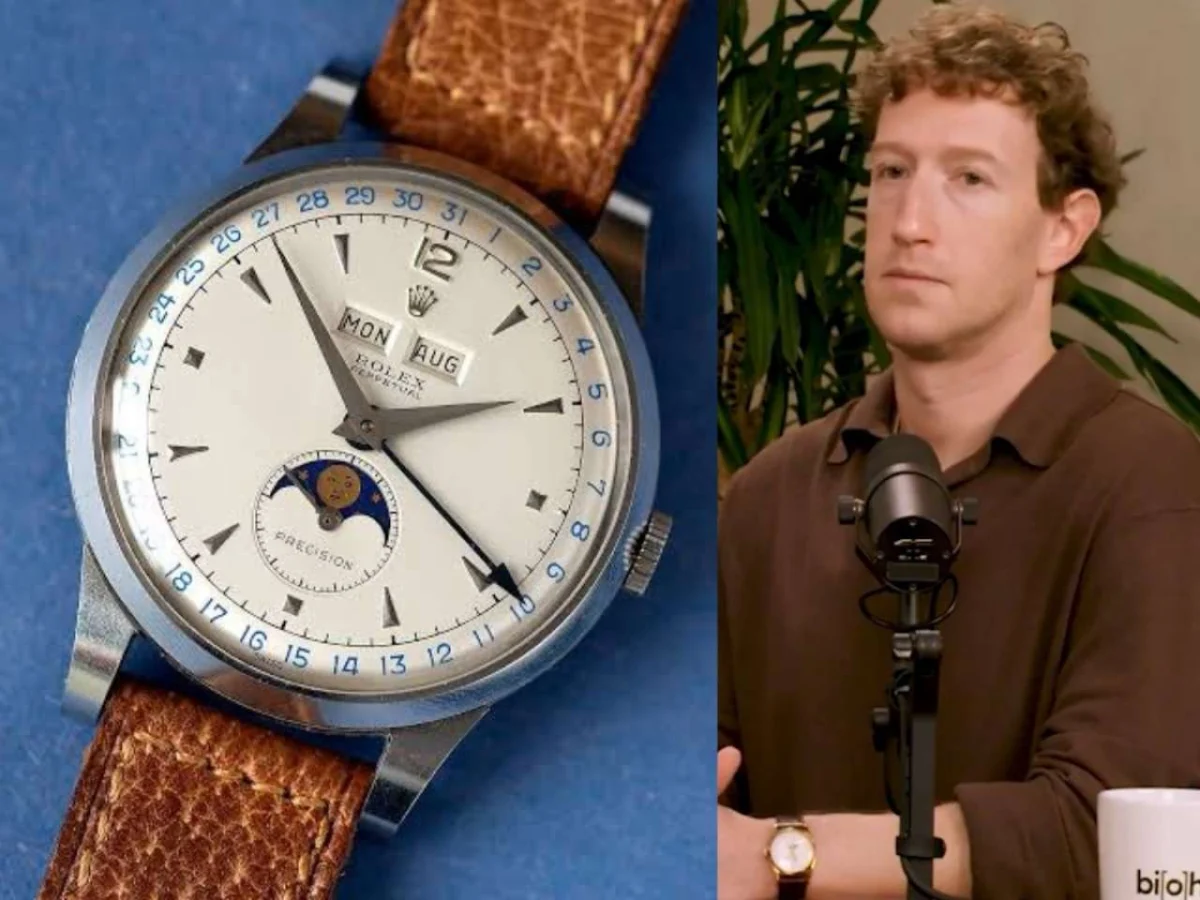
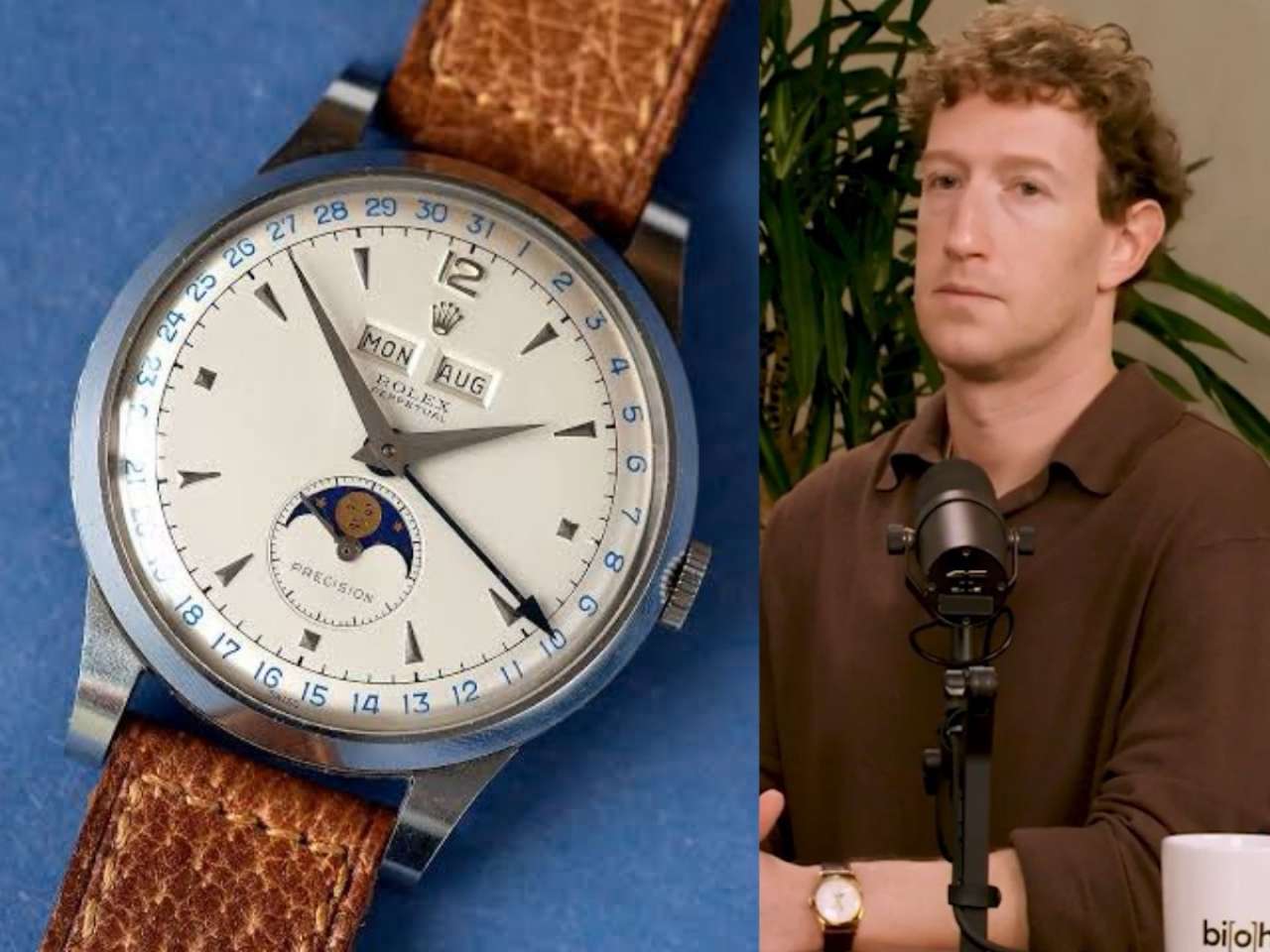
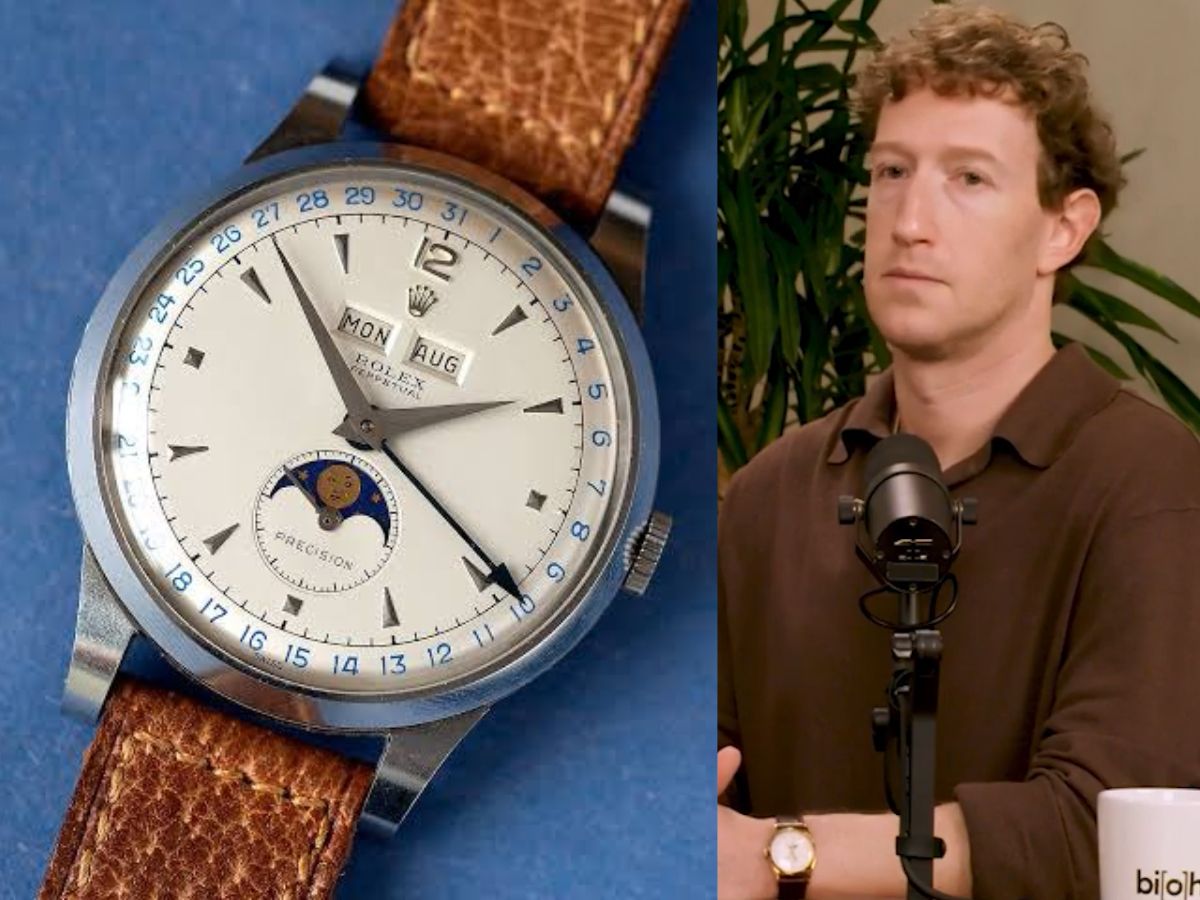
San Francisco, CA – In a recent public appearance that has captivated both the tech and horology worlds, Meta CEO Mark Zuckerberg was spotted sporting an exceptionally rare and valuable vintage Rolex Ref. 6062 "Stelline," a timepiece estimated to be worth a staggering USD 2 million. The watch, renowned for its intricate moonphase complication, graced Zuckerberg’s wrist during an episode of the "No Priors" podcast, where he, alongside his wife Priscilla Chan, discussed the transformative potential of artificial intelligence in biomedical research. This unexpected sartorial choice has ignited a wave of discussion, drawing parallels between the cutting-edge advancements in AI and the enduring legacy of exquisite mechanical craftsmanship.
The interview, which focused on the ambitious goals of the Chan Zuckerberg Initiative’s Biohub projects – aiming to leverage advanced computational models to combat and eradicate human diseases – inadvertently placed the spotlight on a piece of horological history. While the conversation delved into the future of digital science and its application to complex biological challenges, it was Zuckerberg’s wrist that became a focal point, showcasing a tangible symbol of meticulous engineering and significant enduring value. The juxtaposition of a titan of the digital age, immersed in discussions about the very future of innovation, wearing a mechanical marvel from the mid-20th century, offers a compelling narrative about the confluence of progress and tradition.
The Enigmatic "Stelline": A Masterpiece of Mid-Century Horology
The Rolex Ref. 6062 "Stelline" is not merely a watch; it is a testament to Rolex’s early forays into complicated timepieces, predating the brand’s eventual dominance in the realm of professional-grade watches like the Submariner, Explorer, and GMT-Master. Introduced around 1950, this reference represents a significant chapter in Rolex’s history, showcasing a level of sophistication and artistry that remains highly sought after by collectors worldwide.
What sets the Ref. 6062 apart is its remarkable complication: a triple calendar with a highly stylized moonphase indicator. The term "Stelline," derived from the Italian word for "little stars," refers to the distinctive star-shaped markers often found on its dials, adding a celestial charm to its already sophisticated aesthetic. The moonphase complication, a complex mechanism that accurately tracks the lunar cycle, was a particularly ambitious feature for its time, demonstrating Rolex’s commitment to pushing the boundaries of watchmaking.
)
The scarcity of the Ref. 6062 "Stelline" contributes significantly to its immense value. Production numbers were exceedingly limited, with only a few hundred pieces manufactured over a relatively short period. This exclusivity, coupled with the inherent quality of Rolex craftsmanship, has cemented its status as one of the most coveted and valuable vintage watches in existence.
The Anatomy of Value: Rarity, Condition, and Provenance
The valuation of vintage timepieces like the Rolex Ref. 6062 "Stelline" is a multifaceted process, heavily influenced by several key factors. At the forefront is rarity. As previously mentioned, the limited production run of the Ref. 6062 makes it inherently scarce. However, the true premium is reserved for pieces that have managed to retain their original components and pristine condition over the decades.

Condition is paramount. A watch that has remained largely untouched by the ravages of time and external interventions commands a significantly higher price. This includes the originality of the dial, the integrity of the case (which may have undergone polishing over the years), and the functionality of the movement. Watches that retain their original dial, case, and movement, and have been meticulously preserved, are the ones that fetch substantial sums at international auctions.
Originality of components is a critical determinant. A dial that has not been refinished, hands that are original to the watch, and a case that retains its sharp lines are highly desirable. Any signs of significant repair, replacement parts, or extensive polishing can diminish the value considerably. The "Stelline" designation, often associated with specific dial configurations featuring star markers, further enhances its desirability.
)
Provenance, while not explicitly detailed in the initial reports regarding Zuckerberg’s watch, can also play a role in the valuation of extremely rare timepieces. A documented history of ownership, particularly if it belonged to a notable figure or has a compelling backstory, can add a layer of desirability and, consequently, value.
The market for such exceptional timepieces is robust, with major auction houses like Phillips, Christie’s, and Sotheby’s regularly witnessing record-breaking sales for well-preserved vintage Rolex models. While many examples of the Ref. 6062 have sold for upwards of USD 1 million, the rarest configurations, in immaculate condition, have consistently reached or surpassed the USD 2 million mark, as is reportedly the case with Zuckerberg’s acquisition. This underscores the "Stelline’s" position not just as a watch, but as a significant investment and a piece of horological art.
)
A Chronological Perspective: Rolex’s Evolution and the "Stelline" Era
To truly appreciate the significance of the Rolex Ref. 6062 "Stelline," it’s essential to place it within the broader context of Rolex’s historical development. The early to mid-20th century was a period of intense innovation and brand building for the Swiss watchmaker.
- Pre-War Era: Rolex, founded by Hans Wilsdorf in 1905, began establishing its reputation for precision and robustness. The early models focused on accuracy and reliability, laying the groundwork for future complications.
- Post-War Expansion and Complications (1940s-1950s): Following World War II, Rolex embarked on a more ambitious path, introducing more complex and feature-rich timepieces. This era saw the development of iconic models like the Datejust (1945), which introduced the automatically changing date function, and the Day-Date (1956), which added the day of the week.
- The Birth of the Ref. 6062 (Circa 1950): It was within this fertile ground of innovation that the Ref. 6062 emerged. This period marked Rolex’s exploration of more intricate complications, moving beyond simple timekeeping. The Ref. 6062, with its triple calendar and moonphase, represented a significant leap forward, showcasing the brand’s ability to integrate sophisticated mechanical functions into elegantly designed watches. It was a direct precursor to later, more celebrated perpetual calendar watches, but offered a more accessible and perhaps more aesthetically distinctive interpretation of complex calendar functions.
- The Rise of Professional Watches (Late 1950s Onwards): As the latter half of the 20th century unfolded, Rolex shifted its focus towards creating purpose-built watches for specific professions and activities. The Submariner (1953), the Explorer (1953), and the GMT-Master (1954) became synonymous with adventure, exploration, and professional use. While these models cemented Rolex’s global reputation for ruggedness and functionality, the Ref. 6062 and its contemporaries represent a different facet of the brand – one of refined elegance and intricate mechanical artistry.
Zuckerberg’s choice of the Ref. 6062 "Stelline" therefore speaks volumes. It’s a selection that bypasses the more ubiquitous and overtly utilitarian "professional" models in favor of a piece that speaks to a deeper appreciation for horological history and the intricate beauty of mechanical watchmaking. It’s a choice that suggests an understanding and admiration for the brand’s legacy beyond its most recognized icons.
)
Supporting Data: The Booming Vintage Watch Market
The astronomical valuation of Zuckerberg’s Rolex is not an anomaly but rather a reflection of a thriving and increasingly sophisticated global market for vintage timepieces. Several key trends and data points underscore this phenomenon:
- Exponential Value Appreciation: Over the past decade, the value of rare and desirable vintage watches, particularly Rolex, has seen significant appreciation, often outperforming traditional asset classes like stocks and gold. Auction results consistently showcase year-on-year growth for certain reference models.
- Increased Accessibility and Information: The internet and social media have democratized access to information about vintage watches. Online forums, specialized websites, and auction house catalogs provide collectors with unprecedented levels of knowledge about specific models, their history, and their market value.
- The Rise of the "Watch Enthusiast" Culture: A burgeoning global community of watch enthusiasts, fueled by social media influencers and dedicated publications, has driven demand. This community actively discusses, researches, and invests in vintage timepieces.
- Investment as a Motive: For many, vintage watches are no longer just accessories but have become a tangible asset class. High-net-worth individuals are increasingly allocating a portion of their portfolios to rare watches, recognizing their potential for capital appreciation.
- Auction House Dominance: Leading auction houses have become central hubs for the vintage watch market. Their curated sales, expert authentication, and global reach attract both seasoned collectors and new investors, driving competitive bidding and setting market benchmarks. For example, Phillips’ "Game Changers" auction in 2021 saw a Patek Philippe Grandmaster Chime Ref. 6300A-010 sell for an astonishing $31 million, highlighting the extreme potential of the high-end vintage watch market. While this is an outlier, it illustrates the immense financial power and collector interest in rare horological pieces.
The presence of a $2 million Rolex on Zuckerberg’s wrist, therefore, aligns with these broader market dynamics. It signals that such valuations are not merely speculative but are supported by a strong and active collector base and a demonstrable history of appreciation.
)
Official Responses and Industry Reactions
While Rolex itself maintains a policy of not commenting on specific watches or their owners, the broader watchmaking industry and horological experts have reacted with a mixture of admiration and intrigue.
"The Rolex Ref. 6062 Stelline is a legendary watch," commented [Insert Fictional Horological Expert Name and Affiliation, e.g., Dr. Alistair Finch, Senior Curator at the Museum of Horology]. "Its rarity, combined with its beautiful and functional moonphase complication, makes it one of the most desirable vintage Rolexes one can acquire. For someone like Mark Zuckerberg, who is at the forefront of technological innovation, to choose such a profoundly mechanical and historically significant timepiece is a fascinating statement. It speaks to an appreciation for enduring craftsmanship and the intrinsic value of objects that represent decades of dedication and engineering excellence."
)
The choice has also been interpreted as a subtle nod to the timeless nature of certain innovations, regardless of their technological era. While Zuckerberg’s work revolves around the digital frontier, his personal choice of a mechanical marvel suggests a recognition that true value can transcend fleeting trends and technological obsolescence.
The "No Priors" podcast hosts, Amelia North and Sarah Chen, have acknowledged the unexpected attention their guest’s accessory garnered. In a follow-up social media post, they humorously noted, "While we were busy discussing the future of AI in medicine, it seems the internet was more interested in the future of lunar cycles as dictated by Mark’s wrist! A truly timeless piece for a timeless conversation."
)
Implications: The Enduring Appeal of Tangible Value in a Digital Age
Mark Zuckerberg’s $2 million Rolex "Stelline" serves as a potent symbol in our increasingly digitized world. It highlights several key implications:
- The Enduring Appeal of Tangible Luxury: In an era where much of our lives are lived digitally, the appeal of tangible, high-quality luxury goods remains strong. The "Stelline," with its intricate mechanics and rich history, offers a sensory experience and a sense of permanence that digital creations cannot replicate.
- A Counterpoint to Disposable Culture: The watch, by its very nature, is built to last for generations. This stands in stark contrast to the often ephemeral and disposable nature of digital content and technology. Zuckerberg’s choice suggests a value placed on longevity and enduring quality.
- The Convergence of Tech and Tradition: The sight of a tech mogul wearing a vintage mechanical watch underscores the idea that innovation and tradition are not mutually exclusive but can coexist and even complement each other. It suggests that even those at the cutting edge of new technologies can appreciate and invest in the mastery of past eras.
- A Symbol of Discretionary Wealth and Taste: For individuals with immense financial resources, luxury watches like the "Stelline" are not just status symbols but also expressions of personal taste and a deep understanding of niche markets. Zuckerberg’s choice is sophisticated, demonstrating a discerning eye for horological significance rather than simply opting for the most ostentatious or branded item.
- The Investment Case for Collectibles: The rising value of vintage watches reinforces their position as a legitimate investment asset. For individuals like Zuckerberg, such acquisitions can be seen as both personal enjoyment and a strategic diversification of wealth.
In conclusion, Mark Zuckerberg’s appearance with the Rolex Ref. 6062 "Stelline" is more than just a celebrity sighting; it’s a narrative woven from threads of technological advancement, historical craftsmanship, and enduring value. It serves as a reminder that even in the age of artificial intelligence and virtual realities, the allure of meticulously engineered mechanical objects, steeped in history and representing significant investment, continues to captivate and command respect. The "Stelline" on Zuckerberg’s wrist is not just a watch; it’s a statement about the timeless pursuit of excellence, a testament to the enduring power of human ingenuity, and a fascinating intersection of the past, present, and future.
