

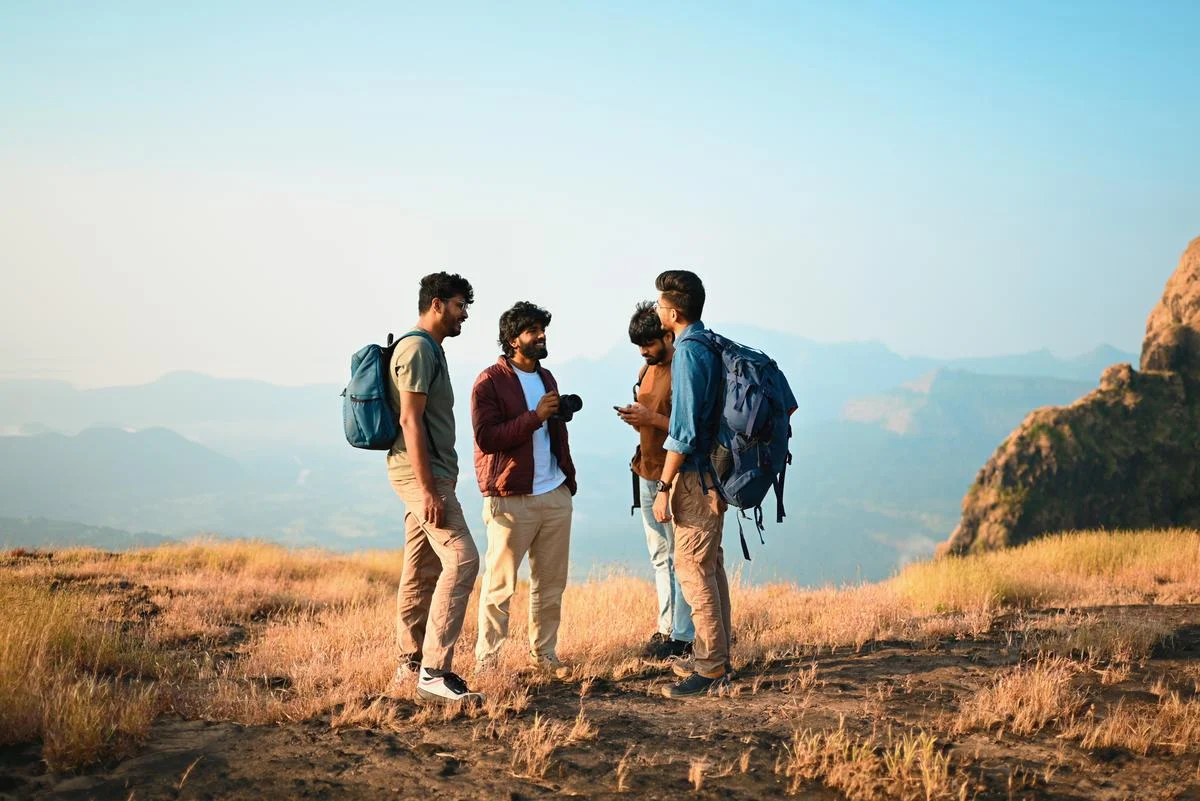
For a nation whose travelers are currently among the most sought-after in the global tourism market, Indians seem to spend an inordinate amount of time being told how poorly they travel. This dichotomy—between the economic necessity of the Indian tourist and the social media-driven caricature of the "unruly" visitor—has created a complex tension in international travel. As India ascends to become a primary engine of global tourism growth, it is grappling with a "reputation tax" that is as much a product of viral algorithms as it is of cultural friction.
Main Facts: The Economic Powerhouse vs. The Policy Pushback
According to the Mastercard Economics Institute’s Travel Trends 2025 report, India has solidified its position as one of the world’s fastest-growing outbound travel markets. Destinations across Southeast Asia and the Middle East—specifically Thailand, Vietnam, Japan, Indonesia, and the UAE—have reported a historic surge in Indian arrivals. In 2024 alone, Thailand welcomed more than 2.1 million Indian visitors, cementing India’s status as one of its most valuable source markets.
However, this economic embrace has recently been met with a surprising policy pivot. In a notable U-turn, Thailand rolled back its 60-day visa-free scheme for 93 countries, including India. Travelers who recently enjoyed seamless entry are now being moved back to a paid "Visa-on-Arrival" category. This shift requires a fee of 2,000 Thai Baht (approximately ₹5,500–₹6,000) and the introduction of the Thailand Digital Arrival Card (TDAC).

While Thai authorities officially cite concerns regarding overstays, illegal employment, and the misuse of long-term tourist permissions, the move underscores a broader global tension. Countries are desperate for the spending power of a booming middle class but are simultaneously struggling to manage the sheer volume of visitors and the socio-cultural "footprint" they leave behind.
Chronology: The Evolution of the "Problematic" Traveler
The current scrutiny of Indian travelers is not a unique phenomenon; rather, it is the latest chapter in a long history of global tourism tropes. Every major economic boom that has minted a new class of international travelers has been accompanied by a period of intense cultural friction.
The British and the "Stag Do" Era
For decades, the British tourist set the gold standard for notoriety. In the late 20th century, as budget airlines made Europe accessible, cities like Prague, Budapest, and Ibiza became the stage for "stag dos"—large groups of young British men whose vacations were characterized by binge drinking and public indecorum. Entire stretches of the Spanish and Greek coastlines were redefined by this demographic, creating a lasting stereotype of the "rowdy Brit" that persists today.

The Japanese and "Paris Syndrome"
In the 1980s, it was the Japanese. As Japan’s economic miracle allowed millions to travel, Western media focused on the "tightly organized group" stereotype—tourists with cameras slung around their necks, rushing from one landmark to another in a feverish blur of photography. This era gave rise to "Paris Syndrome," a psychological state of extreme disappointment experienced by Japanese tourists when the reality of the French capital failed to meet their highly romanticized expectations.
The Chinese Decade
In the 2000s and 2010s, as China’s outbound travel exploded, the spotlight shifted. International headlines focused on public etiquette at heritage sites and the sheer scale of Chinese tour groups. Much like the current discourse around Indians, the Chinese traveler was viewed as an economic savior but a cultural challenge.
The Indian Present
"We are not the exception," says Sumir Nagar, a behavioral specialist and performance coach with three decades of experience across Asia-Pacific and Europe. "We are the latest occupant of a chair the Japanese sat in, then the Chinese. Someone else will inherit it the moment a new economy puts a few hundred million first-time passport-holders on planes."

Supporting Data: From Volume to Value
Despite the social media noise, the data suggests that the Indian traveler is evolving rapidly. Keyur Joshi, founder of the eco-resort Tipai and a veteran of India’s online travel industry, argues that the conversation online bears little resemblance to the reality of the market.
- Spending Power: Indian travelers have spent upwards of US$40 billion (approximately ₹3,35,000 crore) overseas annually.
- Market Scale: India has reached a milestone of more than 30 million international departures per year.
- The Shift to Value: The "volume story" (mass tourism) is transitioning into a "value story." Indian travelers are increasingly spending on luxury accommodations, wellness retreats, and curated gastronomic experiences rather than just "ticking off" landmarks.
- South African Growth: South African Tourism reports that India is now among its top 10 source markets. Between January 2025 and March 2026, over 82,500 Indians visited the country, with a specific focus on high-value wildlife and cultural immersions.
"Social media amplifies isolated incidents, while the travel industry looks at growth, spending, and long-term value," Joshi notes. The industry isn’t focused on a viral reel of a dance at an airport gate; it is looking at a traveler who is staying longer and spending more per capita than many of their Western counterparts.
Official Responses and the "Social Media Trial"
The disconnect between economic value and public perception is fueled largely by social media. Viral videos—such as a group performing garba beside a parked aircraft in Vietnam or travelers unpacking theplas (Indian flatbreads) on Swiss mountains—frequently trigger a wave of self-flagellation among Indians.

Prathap Nair, a journalist based in Germany, suggests that this obsession with the "unruly Indian" is often more intense within India than it is abroad. "One viral video does not an unruly Indian traveler make," he says. Nair observes that the vast majority of Indian travelers in Europe are polite, eager to follow rules, and desperate to blend in.
However, social media algorithms do not reward the "polite and invisible." They reward the exceptional and the disruptive. Mansi Shah, a Mumbai-based journalist, recalls a recent holiday in Georgia where a traveler from West Asia cut a queue for a buggy. "What struck me was that if the person involved had been Indian, someone would have filmed it and turned it into a national conversation about our behavior. Because it wasn’t an Indian, it remained an individual act of rudeness."
This "category-based" judgment is a unique burden. As Sumir Nagar puts it, "The German behaving badly by the pool gets read as an individual. We get read as a category."

Implications: The Sociological Roots of Friction
To understand why friction occurs, one must look at the sociological underpinnings of Indian life. Rahul Jagtiani, a luxury travel specialist, points out that some behavioral issues are rooted in the environment of the home country.
"We’ve not learned how to respect public space because there is very little public space in India," Jagtiani explains. "We’re 1.4 billion people packed tightly together. Certain habits—like loud talking or a lack of personal space—are survival mechanisms in Mumbai or Delhi, but they don’t translate well in a quiet Swiss village."
Furthermore, there is a class and hierarchy dimension. An IT consultant from Bengaluru noted that the entitlement sometimes seen abroad is often a reflection of how affluent Indians travel within India. In domestic hubs like Ladakh or Mussoorie, locals often complain about the "big city" entitlement of tourists who disregard local silence zones or environmental norms.

"India is a deeply hierarchical society," the consultant says. "Class, status, and power shape our interactions. Sometimes those assumptions travel with us. There can be an unconscious tendency to be more deferential in places we perceive as ‘powerful’ (like London or New York) and less mindful in places where we feel our money buys more ‘ownership’ (like parts of Southeast Asia)."
The Future of the Indian Passport
The "reputation tax" is likely a temporary phenomenon. As the Indian traveling population matures and second- and third-generation travelers become the norm, the "newcomer" friction will likely dissipate, just as it did for the Japanese.
For now, the Indian traveler carries a double burden. They are the financial lifeline for many global destinations, yet they are the primary targets of a hyper-vigilant digital culture that treats every minor breach of decorum as a diplomatic crisis.

The real challenge for the Indian traveler is not just navigating foreign customs, but navigating the weight of representation. As the Mastercard report suggests, the "Indian Summer" of global travel is only just beginning. The world wants the Indian tourist’s wallet; whether it eventually learns to accept the Indian tourist’s culture—theplas, garba, and all—remains to be seen. In the meantime, the Indian traveler remains a figure of profound importance, caught between the reality of their economic might and the shadow of a viral reel.
