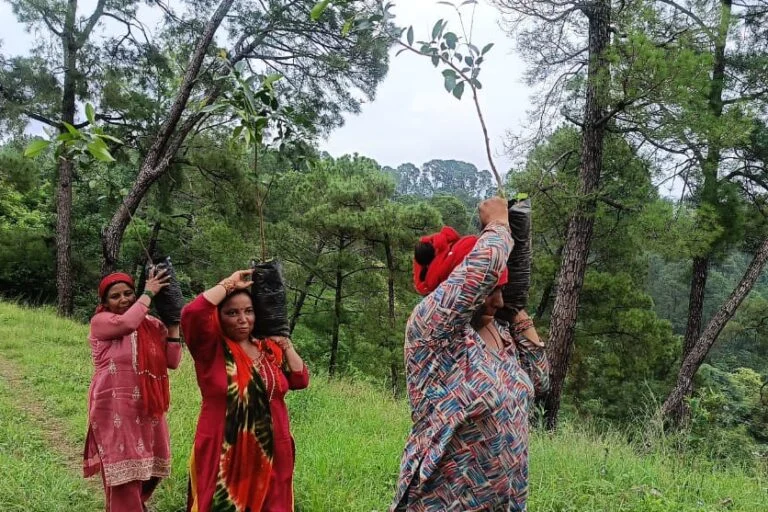
In the rugged, high-altitude terrain of Himachal Pradesh, a quiet revolution is taking place—one that replaces guesswork with algorithms. For decades, tree-planting initiatives across India have been criticized for their "plant and forget" approach, often resulting in dismal survival rates and wasted public funds. However, a new wave of digital tools, led by the innovative "WhereToPlant Bot," is attempting to bridge the gap between ambitious ecological targets and ground-level reality.
By leveraging machine learning and extensive environmental datasets, restoration practitioners are now able to predict the survival probability of a sapling before a single spade hits the earth. This shift from quantity-based metrics to quality-driven outcomes marks a pivotal moment in India’s quest to meet its international climate commitments.
Main Facts: The Digital Guardian of Himachal’s Forests
The centerpiece of this technological shift is the "WhereToPlant Bot," a decision-support tool developed to optimize reforestation efforts. Unlike traditional bureaucratic methods, which often rely on ad-hoc site selection, this tool provides scientific rigor to the frontline of forest management.
The Bot and Its Interface
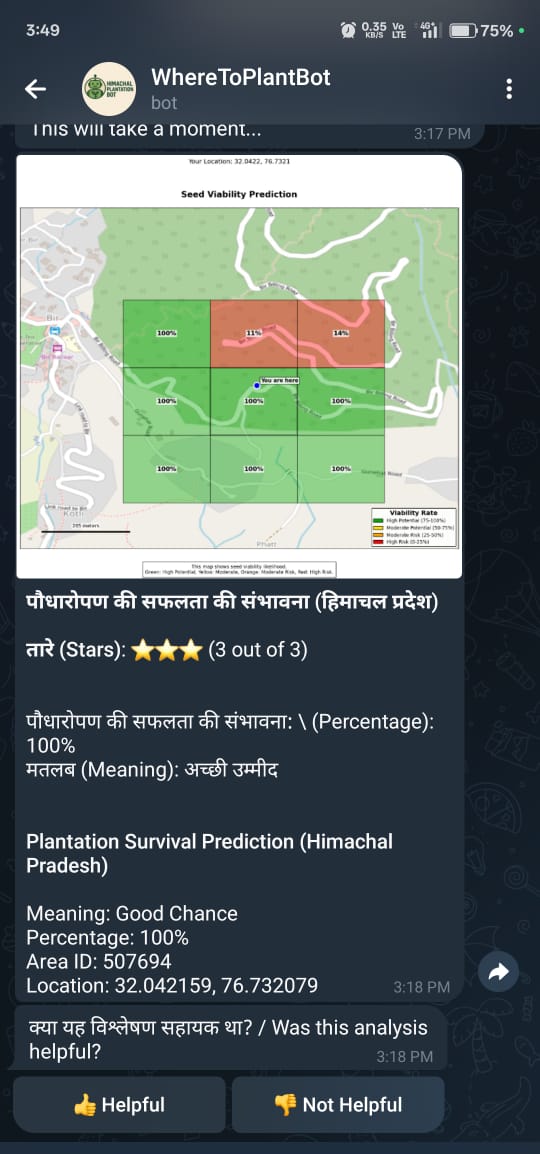
Developed by Pushpendra Rana, a serving Indian Forest Service (IFS) officer, in partnership with the New Delhi-based AI firm RootIQ Labs Pvt. Ltd., the tool is remarkably accessible. It functions as a chatbot via Telegram, allowing ground workers—often in remote areas with limited technical infrastructure—to receive instant data.

By sharing a GPS location pin, users receive a survival probability score (0-100) and a corresponding star rating for potential plantations. These ratings range from "no chance" to "high chance," providing an intuitive guide for forest guards, women’s collectives (mahila mandals), and youth groups (yuvak mandals).
Scope and Accuracy
The tool has divided the entire landscape of Himachal Pradesh into approximately 795,000 "tiles," each covering seven hectares. For every tile, the bot sifts through over 300 environmental and landscape parameters, including soil composition, elevation, historical vegetation patterns, and climate data. According to Rana, the tool currently operates with an impressive 87% accuracy rate.
Current Implementation
During the 2025 monsoon plantation season, the Himachal Pradesh Forest Department utilized the tool to guide site selection for over 500 hectares across 250 locations. This was integrated into the Rajiv Gandhi Van Samvardhan Yojana, a US$10.14 million community-driven plantation scheme. More than 200 women’s groups and 50 youth clubs have already incorporated the bot into their field operations, representing a significant democratization of ecological data.
Chronology: From Academic Warning to Field Solution
The journey of the WhereToPlant Bot began not in a lab, but in the pages of a high-impact academic journal.

- 2022: The Catalyst. Pushpendra Rana and his colleagues published a study in World Development that sent shockwaves through the forestry sector. Using machine learning models, they projected that Himachal Pradesh was on track to waste $100 million (approx. ₹830 crore) between 2020 and 2030 by planting trees in locations where they were unlikely to survive. The study highlighted the "wrong trees in the wrong places" syndrome.
- 2022–2024: Development Phase. Recognizing that identifying the problem was only the first step, Rana spent the next four years collaborating with AI specialists at RootIQ Labs. The goal was to translate complex predictive modeling into a user-friendly interface that could be used by non-scientists.
- 2024: Pilot and Launch. The chatbot was launched exclusively for Himachal Pradesh. It underwent rigorous testing to ensure the "committee of machine-learning models" (including Random Forest and Gradient Boosting) could handle the state’s diverse micro-climates.
- 2025: Scale-up. During the July-September monsoon season, the bot became a standard part of the toolkit for the state forest department and various self-help groups. It was used to guide a substantial portion of the 3,000-hectare plantation target for the year.
- Late 2025 (Projected): Developers are currently working on a beta version of a "species recommendation" feature, which will move the bot from advising where to plant to advising what to plant.
Supporting Data: The Science of Survival
The efficacy of these tools is rooted in their ability to process "Big Data" in ways human practitioners cannot. India’s restoration goals are massive: under the Paris Agreement, the country aims to create a carbon sink of 3.5 to 4.0 billion tonnes of CO₂ equivalent by 2035. Additionally, India has pledged to restore 26 million hectares of degraded land by 2030 under the Bonn Challenge.
Machine Learning vs. Traditional Models
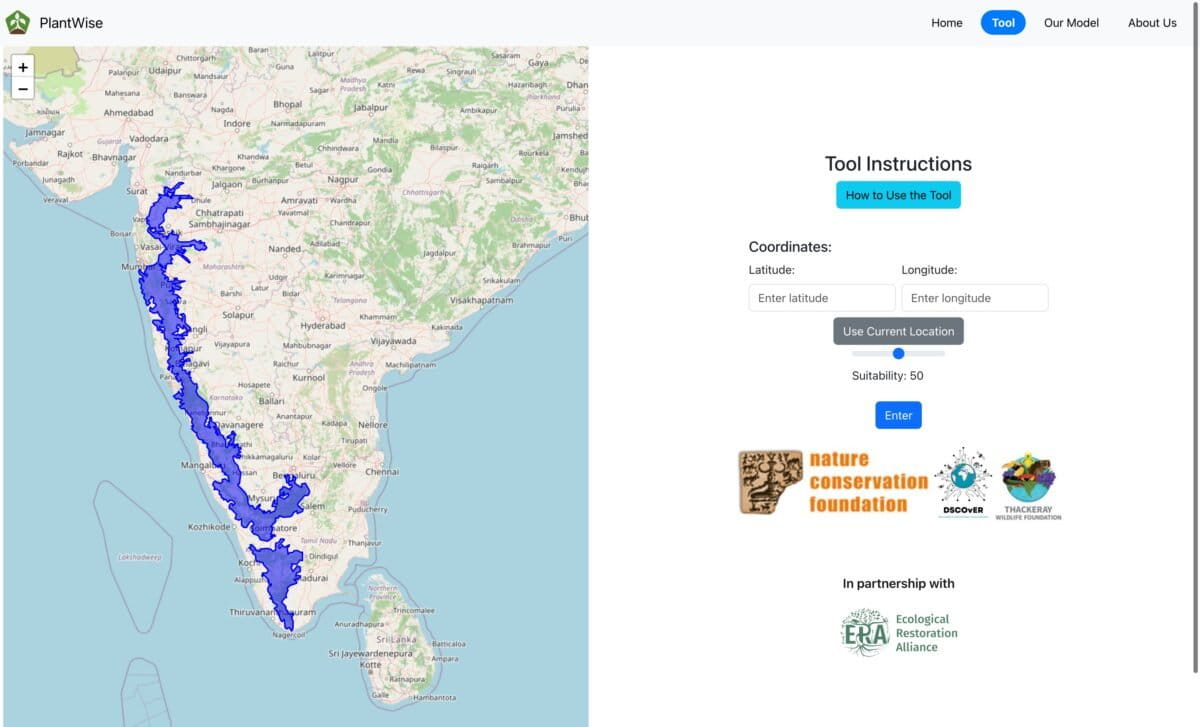
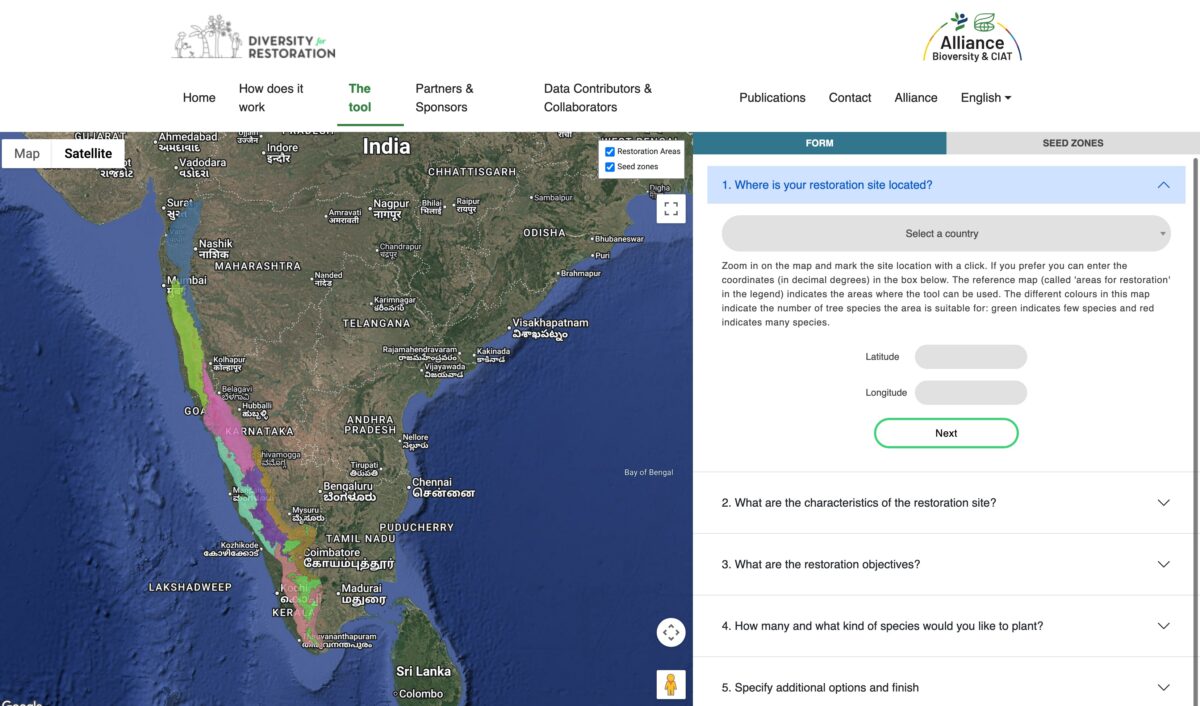
While the WhereToPlant Bot uses a "committee" of machine learning models to adapt and learn from new data, other tools like Plantwise and Diversity for Restoration (D4R) use Species Distribution Models (SDMs).
- Plantwise: Focused on the Western Ghats, this tool uses 14,067 location data points for 368 species. It relies on algorithm-based rules written by humans to predict suitability based on precipitation, temperature, and soil.
- D4R: This tool, led in India by the Ashoka Trust for Research in Ecology and Environment (ATREE), incorporates climate change projections into its recommendations. It allows users to set specific objectives, such as "pollination support" or "seed sourcing," to refine its species lists.
The Problem of "Ad-Hoc" Planting
Supporting data from Rana’s research indicates that the traditional "lowest-level" decision-making process is a major failure point. In the standard hierarchy, funds flow from Divisional Forest Officers (DFOs) to Range Officers, and finally to Beat Officers. Without scientific tools, the Beat Officer often makes an ad-hoc decision on where to plant based on convenience rather than ecological suitability. Furthermore, because forest officers are frequently transferred every three to four years, there is often zero continuity in monitoring the long-term survival of these saplings.
Official Responses: Expert Perspectives and Practical Critiques
The introduction of AI into Indian forestry has met with both praise and constructive skepticism from the scientific community.
Pushpendra Rana (IFS): "On paper, we are planting a lot. But the problem comes when the funds go to the lowest level… There is no scientific criterion for identifying sites for restoration." He emphasizes that while the bot provides a score, it doesn’t claim absolute certainty; rather, it provides "actionable decisions" for frontline staff.
Debojyoti Chakraborty (Austrian Research Centre for Forests): While praising the ease of use of the Telegram bot, Chakraborty noted a critical limitation: "A decision based only on survival is not so useful." He argues that without species-specific guidance, the tool only solves half the problem.
Rohit Naniwadekar (Nature Conservation Foundation): As a lead for the Plantwise program, Naniwadekar views these tools as aspirational but necessary. "One day we will have enough data… to predict bioclimatically suitable species down to every one square kilometer." He highlights the generosity of field botanists who share occurrence data as the backbone of these systems.
Navendu Page (Thackeray Wildlife Foundation): Page emphasizes the labor-intensive nature of the data behind the digital screens. "Field botanists spent days performing plot-based sampling… Once you know more of these locations, you can build a species distribution model."
Implications: The Future of Forest Governance
The shift toward AI-assisted restoration has profound implications for environmental policy, fiscal responsibility, and community engagement in India.
1. From Quantity to Quality
For decades, the success of Indian forestry was measured by the number of saplings planted. AI tools are forcing a shift toward "survival-based" metrics. If the WhereToPlant Bot can prevent even 20% of the projected $100 million waste in Himachal Pradesh, it represents a massive saving of taxpayer money that can be reinvested into higher-quality nursery stock or better protection measures.
2. Continuity Amidst Transfers
One of the most significant "soft" benefits of the WhereToPlant Bot is its ability to provide a digital record. Because the bot requires users to share location pins and photos via WhatsApp and Telegram groups, it creates a "digital trail" that persists even after a Beat Officer or DFO is transferred. This provides the institutional memory that has historically been lacking in Indian forest management.
3. AI as a Supplement, Not a Substitute
A recurring theme among experts is that technology cannot fix broken governance. "AI can assist, but it cannot replace good governance," Rana warns. The long-term success of these forests still depends on socio-economic factors: grazing rights, fire protection, and community "buy-in." If a local community does not feel a sense of ownership over a plantation, no amount of AI-optimized soil data will prevent the saplings from being grazed or cleared.
4. Scaling the Model
The success of the Himachal Pradesh pilot suggests a roadmap for other states. However, scaling requires massive data collection. The Western Ghats have Plantwise and D4R because of decades of work by field botanists. For other regions—like the central Indian highlands or the Northeast—to benefit from similar AI tools, India must invest in primary ecological data collection.
In conclusion, the WhereToPlant Bot and its contemporaries represent a bridge between the high-level "green" rhetoric of international summits and the muddy reality of a monsoon planting season. By putting the power of a "committee of machine-learning models" into the pocket of a village forest guard, India is finally beginning to treat its forests not just as numbers on a ledger, but as complex ecosystems that require precision, patience, and science to thrive.