

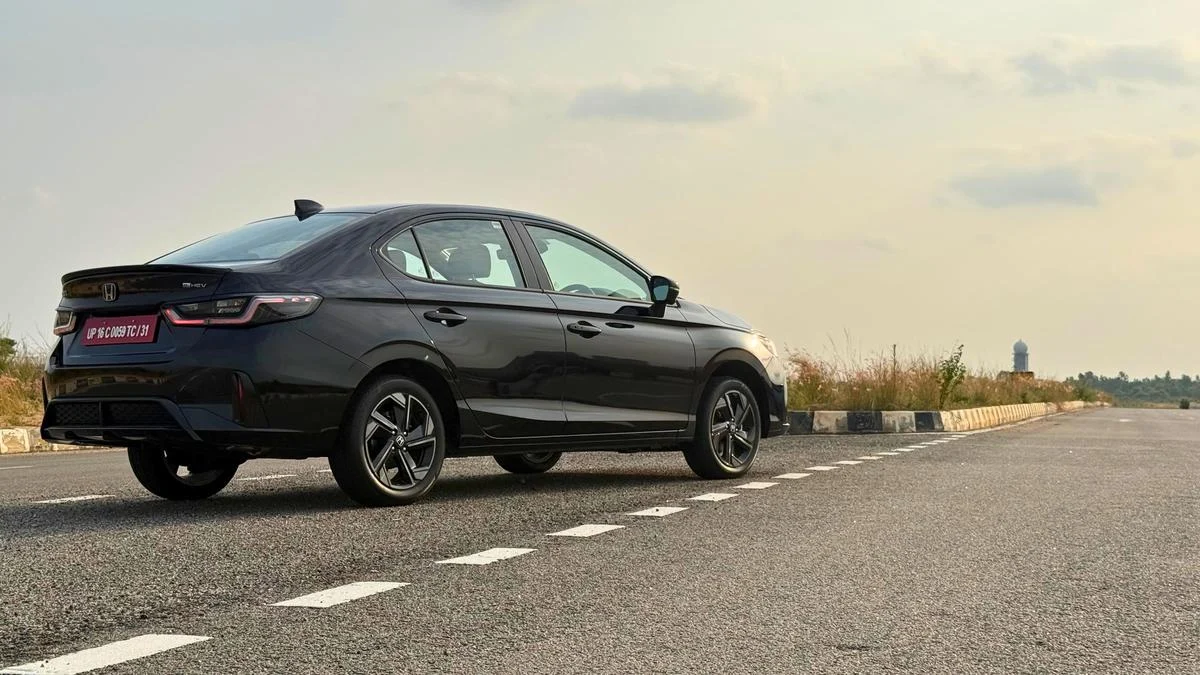
For over two decades, the Honda City has been more than just a car in the Indian market; it has been a symbol of aspiration, reliability, and engineering finesse. However, the last few years have seen a tectonic shift in the midsize sedan segment. The conversation, once dominated by Japanese efficiency, shifted toward European brawn with the arrival of the Volkswagen Virtus and the Skoda Slavia. These "performance-first" sedans, with their punchy turbocharged engines and taut driving dynamics, became the darlings of the enthusiast community.
While the competition grew louder, the Honda City quietly maintained its presence, relying on its legacy. But with the unveiling of the 2026 Honda City, the "quiet" era is over. By blending a refreshed aesthetic, a tech-heavy cabin, and a sophisticated strong-hybrid powertrain, Honda is making a definitive statement: the original king of the segment has no intention of abdication.
I. Main Facts: The 2026 Proposition
The 2026 Honda City arrives at a critical juncture for the Indian automotive industry. As consumers begin to weigh the pros and cons of full electrification against the rising costs of traditional internal combustion engines (ICE), the City’s strong-hybrid variant offers a "best-of-both-worlds" solution.
Pricing and Positioning
The 2026 lineup is strategically priced to cater to a wide demographic. The range starts at INR 11.99 lakh for the entry-level petrol variants and scales up to INR 20 lakh (ex-showroom) for the top-of-the-line hybrid trim. This pricing structure positions the City against a formidable array of rivals, including the aforementioned European twins and the feature-packed Hyundai Verna.
Core Philosophy
Honda’s approach to the 2026 update is one of "Refined Maturity." Rather than chasing the aggressive, polarizing design languages seen in some competitors, Honda has doubled down on understated sophistication. The focus is on three pillars: Efficiency, Space, and Seamless Technology.
II. Chronology: The Evolution of a Midsize Icon
To understand the 2026 model, one must look at the trajectory of the City’s development. The nameplate has evolved through several generations in India, transitioning from a low-slung, enthusiast-focused machine in the late 90s to a premium, chauffeur-driven favorite in the 2010s.
The Shift to Hybridization
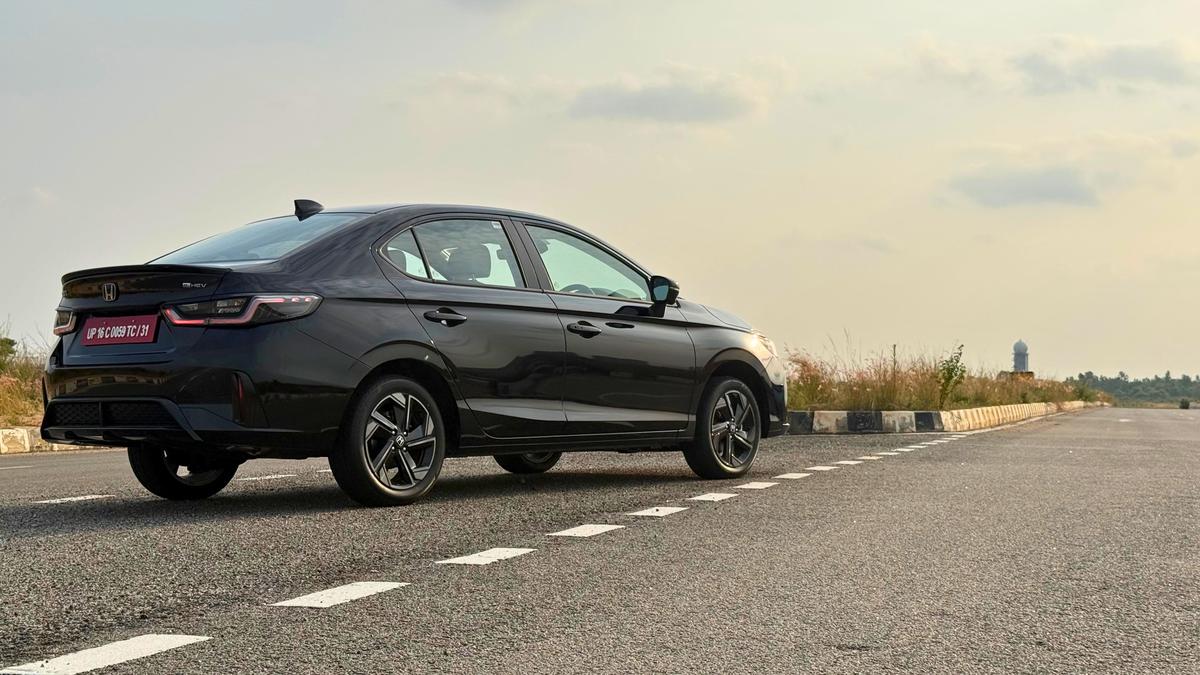
The 2026 model represents the culmination of Honda’s "e:HEV" journey. While previous iterations focused solely on the naturally aspirated i-VTEC engine, the current generation marks the first time a hybrid powertrain has been integrated as a core component of the City’s identity rather than a niche experiment.
The 2026 Refresh Timeline
The development of this specific update focused on addressing the "youth gap." Market research indicated that while older buyers loved the City for its comfort, younger buyers were being lured away by the tech-laden cabins of rivals. Consequently, the 2026 update introduces:
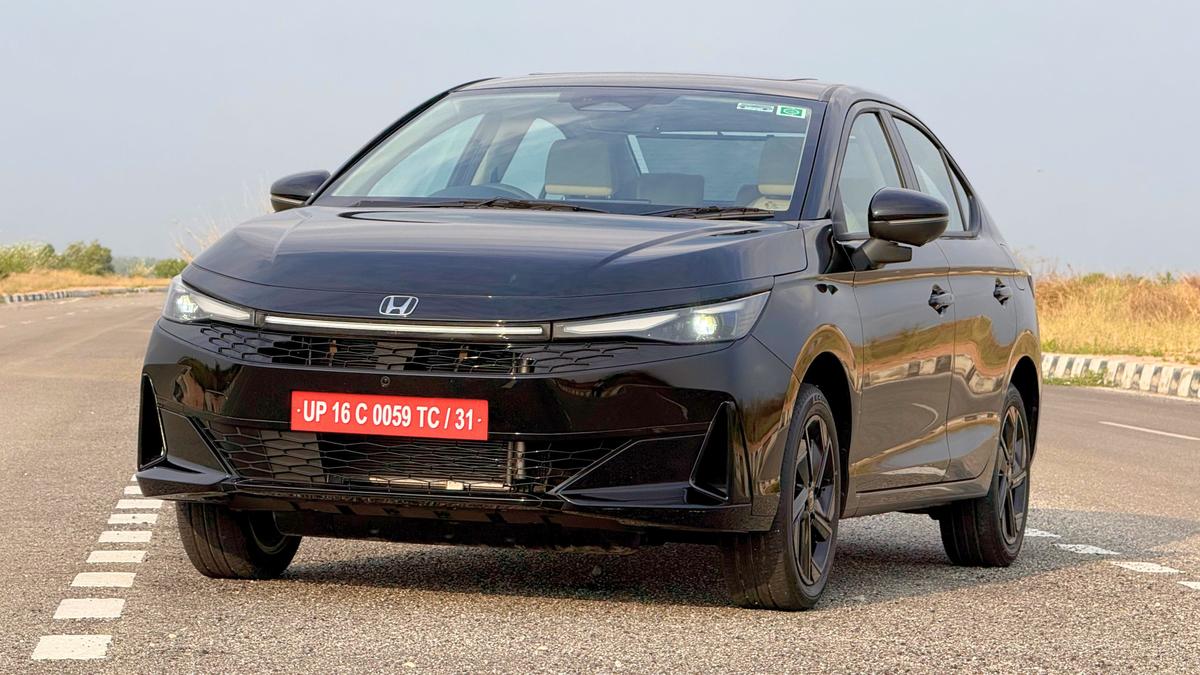
- Phase 1: Aesthetic Modernization – Slimmer LED optics and a more aggressive front fascia.
- Phase 2: Tech Integration – The inclusion of the "Honda Sensing" ADAS suite across more variants.
- Phase 3: Performance Calibration – Refining the hybrid system for better real-world responsiveness.
III. Supporting Data: Engineering and Performance Analysis
The heart of the 2026 Honda City, particularly the hybrid variant, is a masterclass in modern engineering.
The Powertrain Specs
The "Self-Charging Strong Hybrid" system is a complex but elegant arrangement. It utilizes:
- Engine: A 1.5-litre Atkinson-cycle i-VTEC petrol engine.
- Electric Motors: Two electric motors—one acting as a generator and the other as a traction motor.
- Output: A combined 126 PS of power and a staggering 253 Nm of torque.
- Transmission: An e-CVT (electronic continuously variable transmission) that manages the power flow between the engine and the wheels.
Performance Metrics
In real-world testing, the City Hybrid demonstrates surprising athleticism. It clocks a 0-100 km/h sprint in just 7.9 seconds. While it lacks the "kick-in-the-pants" feeling of a Volkswagen 1.5 TSI turbo, its power delivery is linear and immediate, thanks to the instant torque provided by the electric motor.
Efficiency: The Game Changer
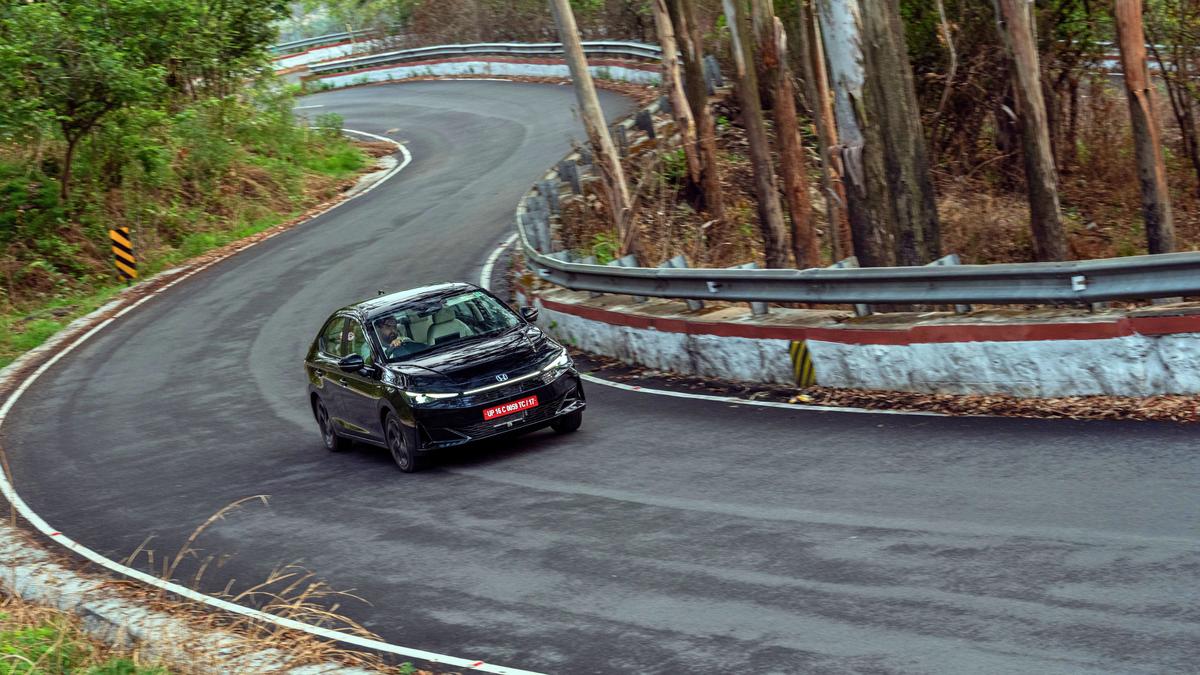
Perhaps the most significant data point is the fuel economy. During a rigorous test drive through Bengaluru’s outskirts—encompassing congested urban corridors, open highways, and the steep, winding inclines of Nandi Hills—the City Hybrid returned a fuel efficiency figure of 23.5 km/l. In a segment where 12-15 km/l is the norm, these figures represent a massive leap in cost-of-ownership value.
Dimensions and Capacity
- Length: 4,594 mm (making it one of the longest in its class).
- Boot Space (Petrol): 506 Litres.
- Boot Space (Hybrid): Slightly reduced due to the battery pack, but still sufficient for family weekend luggage.
IV. The Cabin Experience: Comfort vs. Technology
Stepping into the 2026 Honda City reveals a cabin that prioritizes "human-centric" design.
Space: The Ultimate Luxury
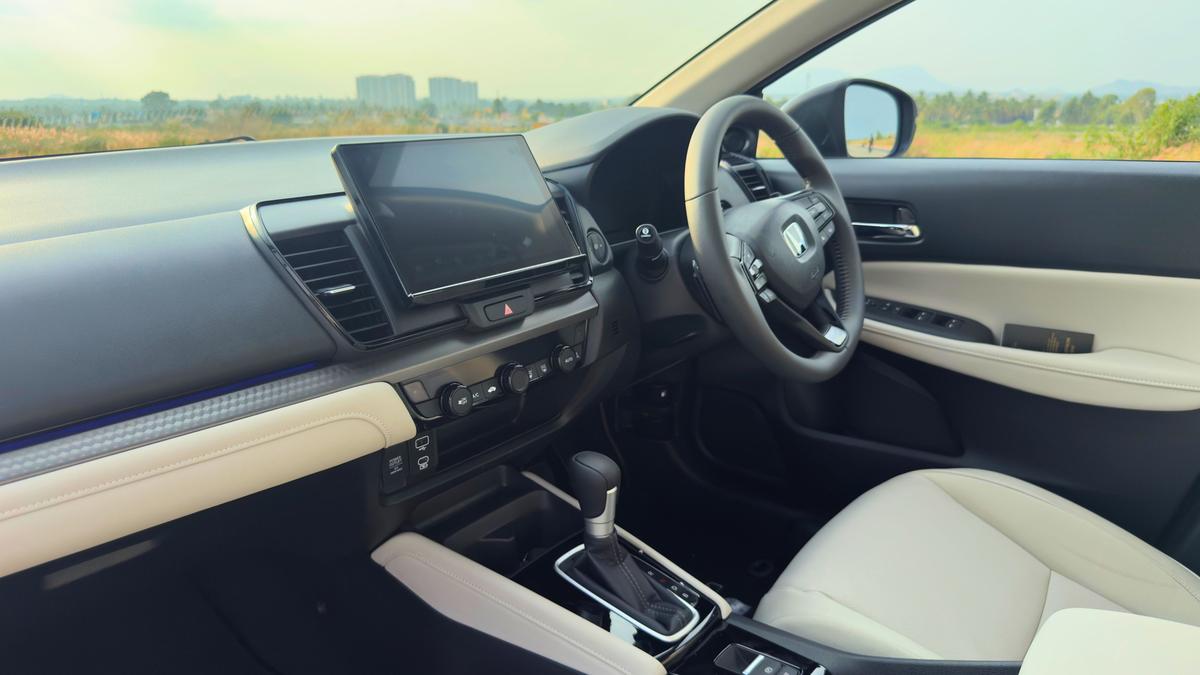
The City remains the benchmark for interior packaging. The rear seat experience, often referred to as "couch-like," offers legroom and shoulder room that rival entry-level luxury sedans from brands like BMW or Audi. The ivory-and-black color palette enhances the sense of airiness, a stark contrast to the cramped, all-black interiors often found in sportier rivals.
Features and Connectivity
Honda has significantly updated the feature list to stay competitive:
- Ventilated Seats: A must-have for the Indian climate.
- Connectivity: Wireless Apple CarPlay and Android Auto are now standard on higher trims, complemented by a wireless charging pad.
- Visibility: A 360-degree camera system assists in tight parking maneuvers. However, journalists have noted that while functional, the camera resolution lags behind the ultra-sharp displays found in the Hyundai Verna.
The Infotainment Hurdle
If there is a chink in the City’s armor, it is the infotainment interface. While the screen is larger and more responsive than in previous years, the UI/UX feels a generation behind the slick, smartphone-like interfaces offered by European and Korean competitors. It is a functional system, but it lacks the "wow factor" that tech-savvy buyers often seek.
V. Safety: The "Honda Sensing" Suite
Safety is no longer an optional luxury but a core requirement. The 2026 City comes equipped with six airbags as standard and the "Honda Sensing" ADAS (Advanced Driver Assistance Systems) suite.
ADAS Functionality
The system uses a high-performance front camera with a wide-angle view to monitor the road. Key features include:
- Adaptive Cruise Control (ACC): Now includes "Low-Speed Follow" in the hybrid variant, allowing the car to maintain distance even in stop-and-go traffic.
- Lane Keep Assist (LKAS): Gently nudges the steering to keep the car centered in its lane.
- Collision Mitigation Braking (CMBS): Automatically applies brakes if a collision is imminent.
- Auto High Beam: Switches between high and low beams based on oncoming traffic.
VI. Official Positioning and Driving Dynamics
Honda’s official stance on the City is that it is a "complete" car. During the media drive in Bengaluru, the car’s suspension tuning was a highlight.
Ride Quality
The City’s suspension is tuned for "composed comfort." It manages to iron out highway expansion joints and broken country roads with a level of maturity that is rare in this price bracket. Unlike the Virtus, which can feel stiff over sharp bumps, the City remains plush without feeling "floaty" or unstable at high speeds.
Handling
While the steering is light and effortless for city commutes, it gains enough weight at highway speeds to inspire confidence. It may not be a "corner carver" in the traditional sense, but for 95% of driving scenarios, its balance between comfort and control is near-perfect.
VII. Implications: The Future of the Midsize Sedan
The arrival of the 2026 Honda City has several broader implications for the Indian automotive market.
1. The Hybrid vs. Turbo Debate
For years, the choice was between a fuel-efficient but slow car, or a fast but thirsty one. The City Hybrid breaks this dichotomy. It proves that performance (7.9s to 100km/h) can coexist with extreme efficiency. This may force competitors like Volkswagen and Skoda to eventually consider hybridizing their 1.5 TSI engines for the Indian market.
2. The Persistence of the Sedan
In an era dominated by SUVs (Creta, Seltos, Elevate), the City makes a strong case for the "three-box" silhouette. Its superior aerodynamics, lower center of gravity, and executive road presence offer a distinct alternative to the boxy, upright stance of SUVs.
3. The Shift in Consumer Value
The 2026 City suggests a shift in what "premium" means. It isn’t just about the number of speakers or the size of the sunroof; it is about the refinement of the drive, the silence of the cabin (thanks to the EV mode), and the peace of mind provided by advanced safety tech.
Conclusion
The 2026 Honda City is a masterfully balanced machine. It may not be the loudest car in its segment, nor is it the most "aggressive." Instead, it is arguably the smartest. By focusing on real-world usability—space, comfort, and an incredibly efficient powertrain—Honda has ensured that the City remains the "default" recommendation for the discerning buyer.
The Virtus and Slavia will continue to win the hearts of those who live for the weekend drive. But for the buyer who wants a car that excels every single day of the week, the 2026 Honda City remains the gold standard. At a price point of INR 11.99 to 20 lakh, it offers a level of sophistication that was once the exclusive domain of luxury brands, proving that in the world of sedans, class is indeed permanent.
