

Introduction: The Modern Homeowner’s Dilemma
In the contemporary landscape of residential construction and home renovation, few decisions are as deceptively simple yet critically impactful as the selection of a water storage tank. As urbanization accelerates and climate patterns become increasingly erratic, the demand for efficient, durable, and hygienic water storage solutions has reached an all-time high.
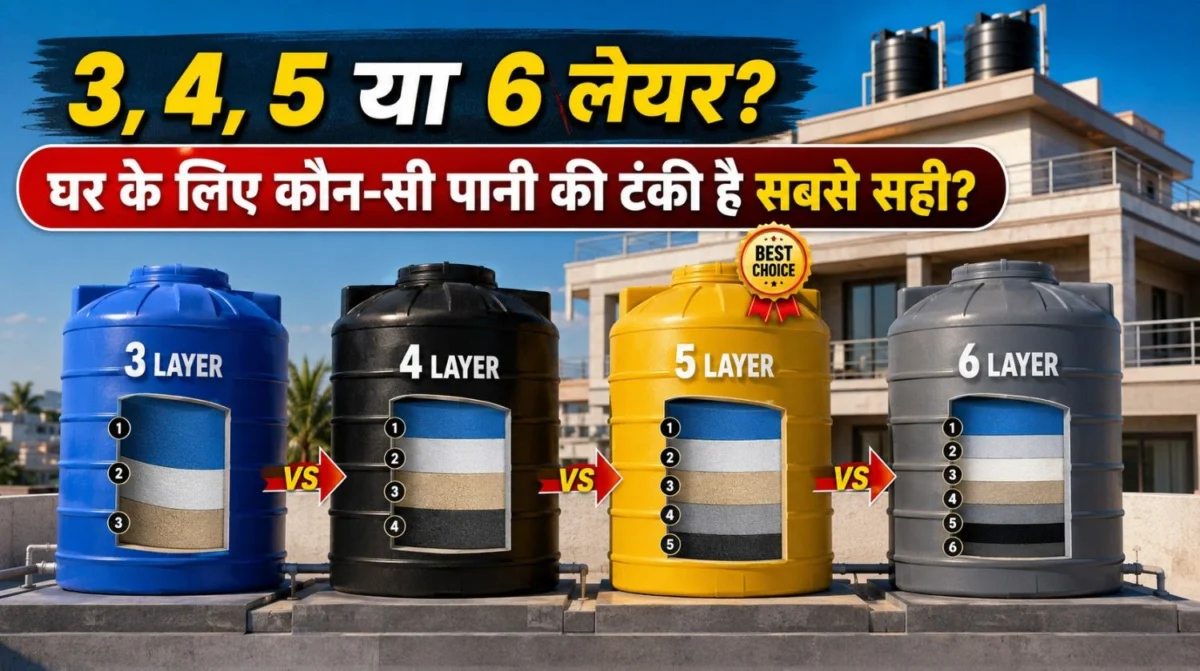
For decades, the humble black plastic tank was a ubiquitous sight on skylines. However, the market has undergone a radical transformation, introducing a confusing array of options categorized by "layers"—ranging from the standard 3-layer models to premium 6-layer variants. Homeowners are frequently confronted by aggressive marketing tactics and shopkeeper recommendations that prioritize higher layer counts, often without explaining the underlying technical benefits or necessities. This comprehensive report investigates the engineering, health implications, and economic factors involved in choosing the right water storage system, moving beyond the "more is better" fallacy to provide a data-driven guide for the modern consumer.
Main Facts: Decoding the "Layer" Technology
To understand the significance of layers in a water tank, one must first dismantle the misconception that these layers are merely for thickness. In the world of polymer engineering, each layer serves a distinct, specialized function designed to protect the water from environmental stressors.
- The Inner Layer (Hygienic Frontier): Usually white or light-colored, this layer is crafted from "Food Grade" plastic. Its primary purpose is to ensure that the plastic does not leach chemicals into the water and to provide a smooth surface that prevents the buildup of sediment.
- The Middle Layer(s) (Thermal Barrier): This is where the 4, 5, and 6-layer tanks differ. These layers often consist of foam or specialized insulation materials designed to resist heat transfer, keeping water cool in the summer and preventing freezing in the winter.
- The UV Protection Layer: Typically an intermediate or outer layer, this contains stabilizers (like Carbon Black or specialized chemical additives) that prevent ultraviolet rays from penetrating the tank.
- The Outer Layer (Structural Shield): This provides the tank with its color and initial defense against physical impact and environmental degradation.
The primary drivers for choosing a specific layer count are thermal insulation, UV resistance, and structural longevity.
Chronology: The Evolution of Water Storage Systems
The transition from traditional methods to high-tech multi-layered polymers reflects a broader shift in material science and public health awareness.
Phase 1: The Masonry and Metal Era (Pre-1980s)
Before the plastic revolution, water was primarily stored in underground cement cisterns or overhead galvanized iron (GI) tanks. While sturdy, cement tanks were prone to seepage and cracks, leading to groundwater contamination. GI tanks, on the other hand, suffered from heavy corrosion and rusting, which compromised water quality.
Phase 2: The Single-Layer PVC Revolution (1980s–1990s)
The introduction of Polyvinyl Chloride (PVC) and Linear Low-Density Polyethylene (LLDPE) tanks revolutionized the industry. These tanks were lightweight, easy to install, and rust-proof. However, being single-layered and often black, they absorbed massive amounts of solar heat, leading to scalding water in summers and rapid plastic degradation due to UV exposure.
Phase 3: The Birth of the 3-Layer Standard (2000s–2010s)
As consumers demanded better hygiene and durability, manufacturers introduced the 3-layer tank. This became the industry standard, separating the UV protection, structural body, and food-grade interior.
Phase 4: The Modern High-Insulation Era (2015–Present)
The last decade has seen the rise of "Premium" and "Luxury" tanks. With global temperatures rising, the 4, 5, and 6-layer tanks were developed to provide "thermos-like" properties, utilizing advanced foam insulation and antimicrobial coatings to meet the needs of extreme climates.
Supporting Data: A Comparative Analysis of Layers
To make an informed decision, consumers must look at how each configuration performs under specific stressors.
| Feature | 3-Layer Tank | 4-Layer Tank | 5-Layer Tank | 6-Layer Tank |
|---|---|---|---|---|
| Structural Integrity | High | Enhanced | Superior | Maximum |
| Thermal Insulation | Basic | Moderate | Advanced | Professional Grade |
| UV Protection | Standard | High | High-Density | Full Spectrum |
| Algae Resistance | Good | Very Good | Excellent | Anti-Microbial |
| Average Lifespan | 10–15 Years | 15–20 Years | 20–25 Years | 25+ Years |
| Best Use Case | Shaded areas/Budget | Rooftops/Hot cities | Extreme heat/Health-focus | Commercial/Luxury |
1. The 3-Layer Tank: The Economical Workhorse
The 3-layer tank is designed for the cost-conscious consumer. It typically features an outer colored layer, a middle UV-sunshield layer, and a white food-grade inner layer.
- Ideal for: Ground-floor installations, stilt parking areas, or regions with temperate climates where the tank is not exposed to direct sunlight for more than 4 hours a day.
2. The 4-Layer Tank: The Middle-Class "Sweet Spot"
The fourth layer is usually an additional insulation layer. This significantly reduces the temperature fluctuations of the water inside.
- Scientific Impact: In a 45°C summer, water in a 3-layer tank can reach 40°C, while a 4-layer tank might maintain it at a more bearable 30-32°C.
3. The 5-Layer and 6-Layer Tanks: The Premium Frontier
These tanks introduce specialized "Foam Layers" and "Antimicrobial Layers."
- Antimicrobial Technology: Many 6-layer tanks use silver ion technology in the innermost layer to actively kill 99.9% of bacteria and fungi, preventing the "slimy" biofilm often found in older tanks.
- Extreme Insulation: These are essential for regions like the Middle East or Northern India, where summer temperatures can exceed 48°C.
Official Responses and Industry Standards
Regulatory bodies and industry experts emphasize that while layers are important, the quality of the resin is the true determinant of safety.
Bureau of Indian Standards (BIS) Perspective:
The BIS (specifically IS 12701) sets the standards for rotational moulded polyethylene water storage tanks. Experts from the board suggest that a "Food Grade" certification is non-negotiable. An official spokesperson for a leading polymer association noted, "A 6-layer tank made from recycled or low-grade plastic is far more dangerous than a 3-layer tank made from 100% virgin food-grade LLDPE. Consumers must ask for the ‘Virgin Plastic’ certificate."
The "Marketing Gimmick" Warning:
Civil engineers often warn that some local manufacturers simply add color pigments to create the appearance of layers without adding the actual functional materials (like foam or UV stabilizers). They recommend sticking to reputable brands that provide a documented warranty of 10 to 20 years.
Implications: Health, Finance, and Environment
Health Implications
The primary danger of low-quality or insufficient layering is Algae Growth. Sunlight penetration facilitates photosynthesis inside the tank, leading to algae blooms which become breeding grounds for bacteria like E. coli. High-layer tanks (4+) with "extra-opaque" properties effectively "black out" the interior, making algae growth biologically impossible. Furthermore, the use of BPA-free, food-grade materials in higher-end tanks prevents endocrine disruptors from entering the domestic water supply.
Financial Implications (The ROI of Layers)
While a 6-layer tank can cost 40-60% more than a 3-layer tank, the Return on Investment (ROI) is realized through:
- Longevity: Fewer replacements over a 30-year period.
- Energy Savings: If your water is already at a moderate temperature, your geysers (in winter) and water coolers (in summer) work less, leading to lower electricity bills.
- Maintenance: Anti-algae and antimicrobial layers reduce the frequency and cost of professional tank cleaning.
Environmental Impact
Durability is a form of sustainability. A tank that lasts 25 years represents half the plastic waste of two tanks that last 12 years each. Moreover, advanced multi-layer tanks are often 100% recyclable at the end of their long lifecycle, provided they are made from virgin LLDPE.
Conclusion: How to Choose?
Selecting the right water tank requires a move away from the "more layers are always better" mentality toward a "needs-based" assessment.
- Choose a 3-Layer Tank if: You are on a strict budget and the tank will be placed in a shaded area or a basement.
- Choose a 4-Layer Tank if: You live in a standard urban environment with the tank on the roof, and you want a balance of cost and temperature control.
- Choose a 5 or 6-Layer Tank if: You live in an area with extreme heat, have sensitive health requirements (needing antimicrobial protection), or are building a "forever home" where long-term durability outweighs initial cost.
Ultimately, a water tank is not just a container; it is a critical component of a home’s health infrastructure. Prioritize Virgin Food Grade Plastic and UV Stabilization over the mere number of layers, and always verify the manufacturer’s credentials to ensure your most precious resource—water—remains safe, cool, and clean.
Disclaimer: This report is based on current industry standards and material science data. Consumers are advised to consult with a local plumbing expert or civil engineer to assess specific site conditions before purchase.
