

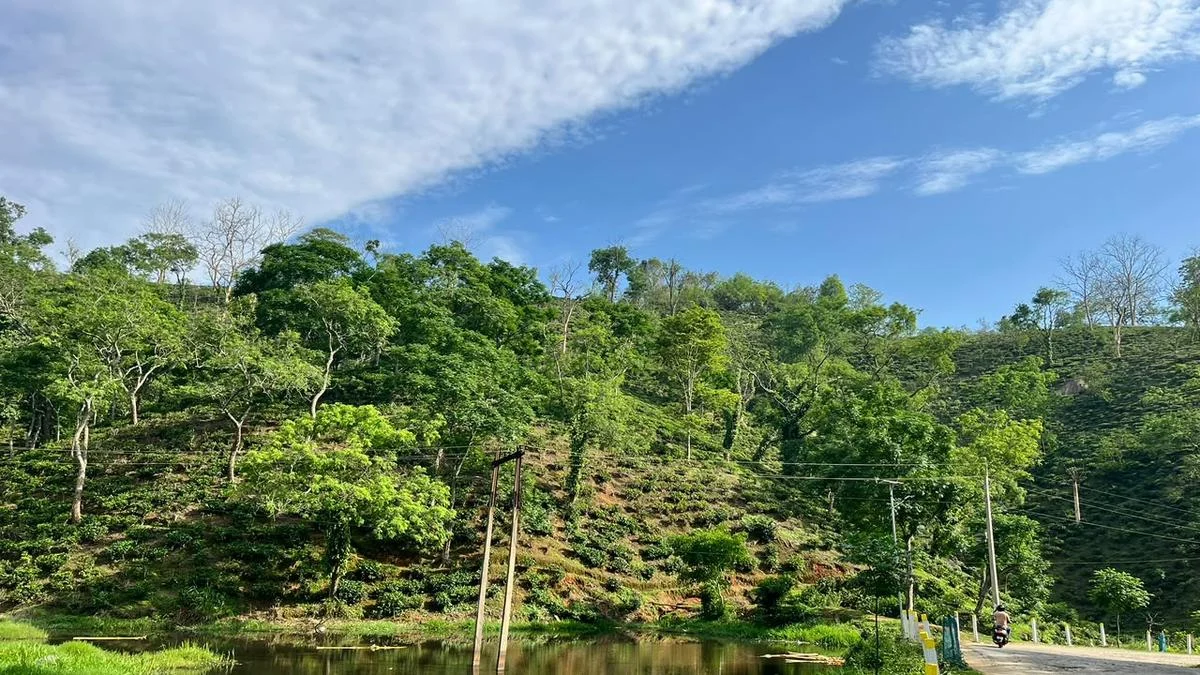
GUWAHATI — In the landscape of Indian agriculture, few symbols are as potent as the sprawling tea gardens of Assam. For two centuries, these emerald blankets have defined the Brahmaputra Valley’s economy and identity. However, as the industry marks its 200th anniversary, a significant shift is occurring: the transition from industrial commodity production to immersive experiential tourism. At the forefront of this metamorphosis is the Amchong Tea Estate. Located on the eastern fringes of Guwahati, this 68-year-old estate has recently unveiled "Amchong Leaf," a comprehensive "Tea Walkthrough Experience" designed to bridge the gap between the traditional planter’s life and the modern traveler’s quest for authenticity.
Main Facts: The Rebirth of a Heritage Estate
Amchong Tea Estate, spanning a massive 1,782 acres, has long been a quiet guardian of the city’s outskirts. While many tea gardens are located hours away in Upper Assam, Amchong offers the unique advantage of being just 40 minutes from Guwahati’s central hub of Chandmari. This proximity has allowed the estate to position itself as a premier destination for "micro-tourism"—short, intensive bursts of cultural immersion for locals and transit tourists alike.

The centerpiece of this new era is "Amchong Leaf: A Tea Walkthrough Experience." Launched in early 2026, the program is a curated sensory journey. It is not merely a factory tour but a multi-tiered exploration of the tea ecosystem. Visitors are invited to participate in everything from the physical labor of plucking "two leaves and a bud" to the sophisticated chemistry of tea blending and professional cupping.
The estate’s infrastructure has been overhauled to support this vision. The "Tea Leaf" restaurant provides a culinary anchor, serving traditional Assamese delicacies alongside global fare, while "Steep House" offers a more casual setting for wood-fired pizzas. The facility also includes an experiential center featuring projection-mapping technology and a high-tech viewing gallery that allows guests to observe the rhythmic hum of the processing unit without disturbing the workflow.
Chronology: From Amsoi to Amchong
The history of Amchong is a microcosm of the broader Assamese tea narrative. To understand its current state, one must look back at the layers of time that shaped the estate.

The Pre-Digital Era: The Mystery of Amsoi
Decades ago, the estate was known to locals and school-goers as "Amsoi." For many who grew up in the 1980s and 90s, it was a mythical picnic spot characterized by rolling hills and orange orchards. In the pre-GPS era, its exact location often faded into memory, remembered only by the sensory markers of mulberry trees and the freedom of its sprawling slopes.
1958: The Founding
Sixty-eight years ago, the estate was established, carving out a niche within the city’s peripheral limits. Over three generations, the Bhauram Jodhraj group maintained the estate as a primary production unit, focusing on CTC (Crush, Tear, Curl) and Orthodox varieties that fueled both domestic and international markets.
2024–2025: The 200-Year Milestone
As the Assam tea industry celebrated its bicentenary—marking two centuries since Robert Bruce first documented the indigenous Camellia sinensis var. assamica—the leadership at Amchong recognized a need for change. The industry was facing pressures from climate change and fluctuating global prices. The solution lay in diversification.

February 2026: The Launch of Amchong Leaf
Following years of planning and infrastructural investment, "Amchong Leaf" was officially launched. The initiative sought to move beyond the "bungalow stay" model of tea tourism, which is often exclusive and expensive, and instead create a day-trip experience that was accessible to the general public.
Supporting Data: Economics and Logistics of Tea Tourism
The scale of Amchong’s operations and its new tourism venture is reflected in the numbers. The estate’s 1,782 acres serve as a massive carbon sink and a biodiversity hotspot on the edge of a rapidly expanding urban center.
Visitor Metrics
Since its launch, the estate has seen a significant surge in footfall, averaging approximately 10,000 visitors per month. This demographic includes:

- Local Residents: Seeking a weekend escape from Guwahati’s congestion.
- Corporate Groups: Utilizing the estate for team-building and "off-site" retreats.
- International Travelers: Often on their way to Kaziranga or Meghalaya, stopping for a professional introduction to Indian tea.
Pricing and Packages
The estate has implemented a tiered pricing strategy to ensure inclusivity while maintaining the quality of the "premium" experience:
- Entry-Level (₹599): Provides access to the garden walks, the viewing gallery, and the experiential center.
- Mid-Tier: Includes guided factory tours and the "T-Journ" historical exploration.
- Premium (₹2,499): A full "Blend n Sip" session, where guests work with tea masters to create their own blends, combined with a 4×4 gypsy safari to the estate’s highest vantage points.
The Culinary Component
The "Tea Leaf" restaurant bridges the gap between the traditional and the contemporary. While wood-fired pizzas cater to the younger demographic, the menu highlights indigenous flavors such as khorikat diya maas (fish smoked on skewers), maas pitika (mashed fish with herbs), and til chicken (chicken cooked with black sesame).
Official Responses: The Visionaries Behind the Leaf
The transformation of Amchong is driven by a leadership team that views tea not just as a crop, but as a living heritage.

Ananya Khemka, Director of Bhauram Jodhraj and Amchong Leaf
Khemka emphasizes that the initiative is born out of a desire for transparency and education. "Rather than simply talking about tea, we wanted visitors to walk through the gardens, see how fresh leaves are transformed into finished tea, and interact with the people behind every harvest," Khemka stated. "Today’s travelers are looking for authentic, immersive experiences. Assam—with its tea heritage, natural beauty, and culture—is uniquely placed to offer them. We are not just selling a beverage; we are sharing a 200-year-old legacy."
Zameer Sodhi, Head of Tea Experience
For Sodhi, the "Blend n Sip" sessions are about elevating the consumer’s palate. "One can choose from CTC, orthodox black, green, and oolong teas," Sodhi explained. He notes that the brewing process is a precise science, utilizing borosilicate kettles to showcase the "theatrical" swirl of the leaves. "The goal is to teach people that tea is as complex as wine or coffee. We explain each tea’s flavor profile, the importance of water temperature, and the specific characteristics of seasonal flushes."
Implications: The Future of the "Tea City"
The success of Amchong Leaf carries significant implications for the future of Guwahati and the broader tea industry.

Urban Sustainability and Green Belts
As Guwahati expands, the pressure on land for residential and commercial development increases. By turning the tea estate into a viable tourism hub, Amchong provides a powerful economic argument for the preservation of green belts. It proves that large-scale agricultural land can coexist with urban growth if it offers value beyond the harvest.
The Democratization of the Tea Experience
Historically, the "tea garden life" was a cloistered world, hidden behind the gates of manager bungalows. Amchong’s model democratizes this experience. By offering packages starting at ₹599, it invites the average citizen to take ownership of their regional heritage. This "leaf-to-cup" transparency fosters a deeper appreciation for the labor-intensive nature of tea production, potentially leading to a more ethical and supportive consumer base.
Educational and Historical Preservation
The use of projection-mapping and a dedicated experiential center ensures that the history of tea—including the more controversial aspects like the smuggling of saplings from China and the colonial labor structures—is not lost. It serves as a living museum, educating the next generation about the industry that built modern Assam.

A Blueprint for Other Estates
As other estates in Assam struggle with aging bushes and rising costs, the Amchong model offers a blueprint for survival. Diversification into "agro-tourism" and "educational tourism" provides a secondary revenue stream that is less volatile than the global tea auction prices.
In conclusion, Amchong Tea Estate has successfully navigated the transition from a nostalgic memory of "Amsoi" to a cutting-edge destination for 2026. It stands as a testament to the resilience of the Assam tea industry, proving that while the methods of consumption may change, the soul of the leaf remains as vibrant as ever. For the visitor, it is no longer just a drive to the outskirts; it is a journey into the heart of what makes Assam unique.
