

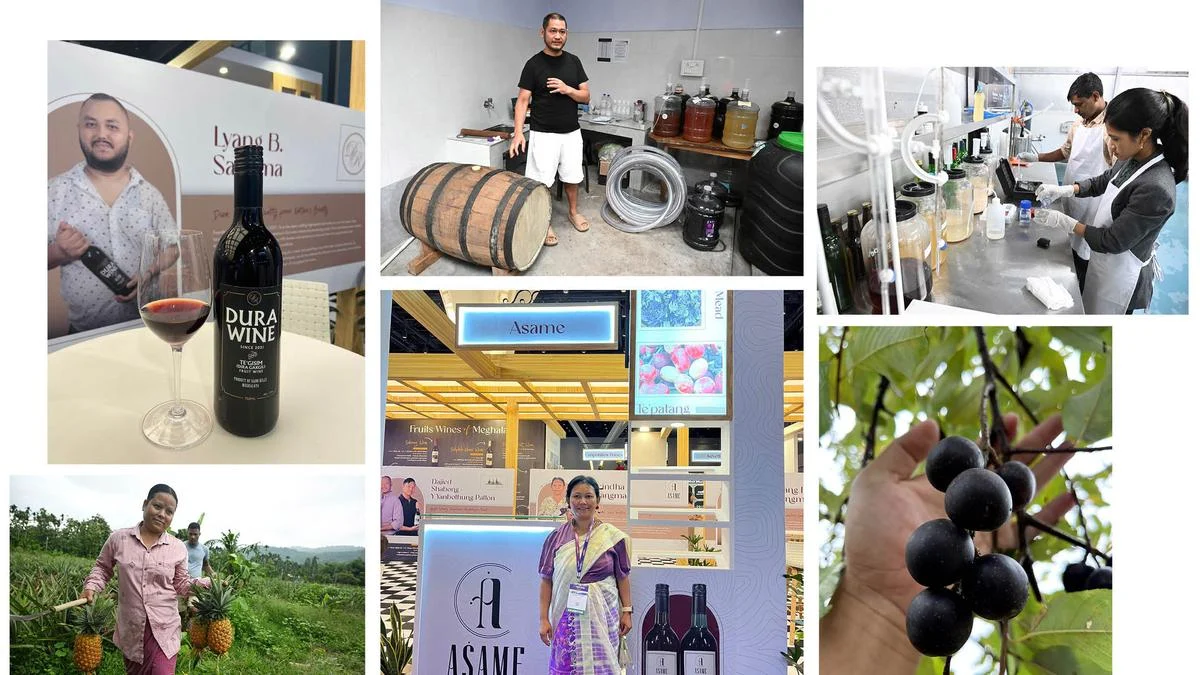
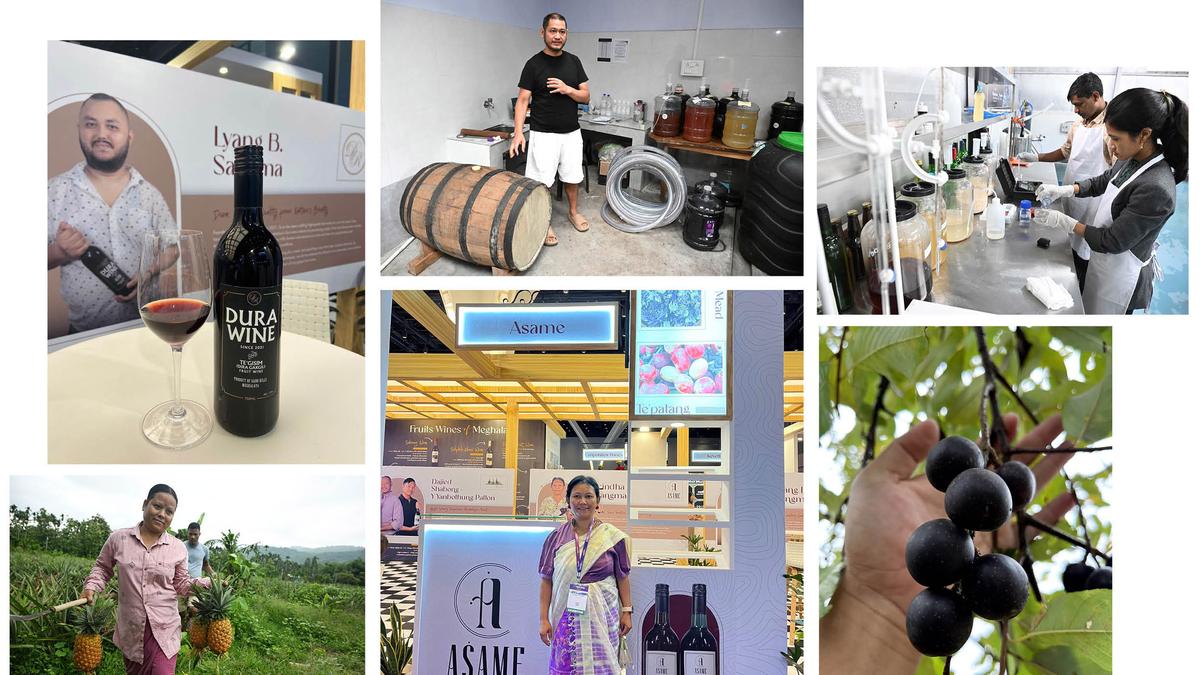
In the misty, verdant hills of Meghalaya, a quiet revolution is fermenting. It is a movement defined not by the traditional grape, but by the wild, exotic, and often overlooked fruits of the Himalayan foothills. Leading this charge is a fruit known as te.gism—the "fruit with a dot in its name." Known to botanists as the Himalayan cherry (Prunus jenkinsii), this small, dark-red berry was largely undocumented until less than a decade ago. Today, it serves as the vanguard for a burgeoning fruit winemaking industry that is transforming the socio-economic landscape of India’s Northeast.
Main Facts: The Emergence of a Non-Grape Elixir
Meghalaya’s transition from traditional home-brewing to a sophisticated, commercial wine industry is one of the most significant agricultural shifts in the region’s recent history. Currently, the state boasts approximately 30 dedicated fruit winemakers, primarily centered in the hubs of Shillong and Tura. Of these, 17 have fully transitioned to commercial production, utilizing modern, scientific equipment to scale their operations.
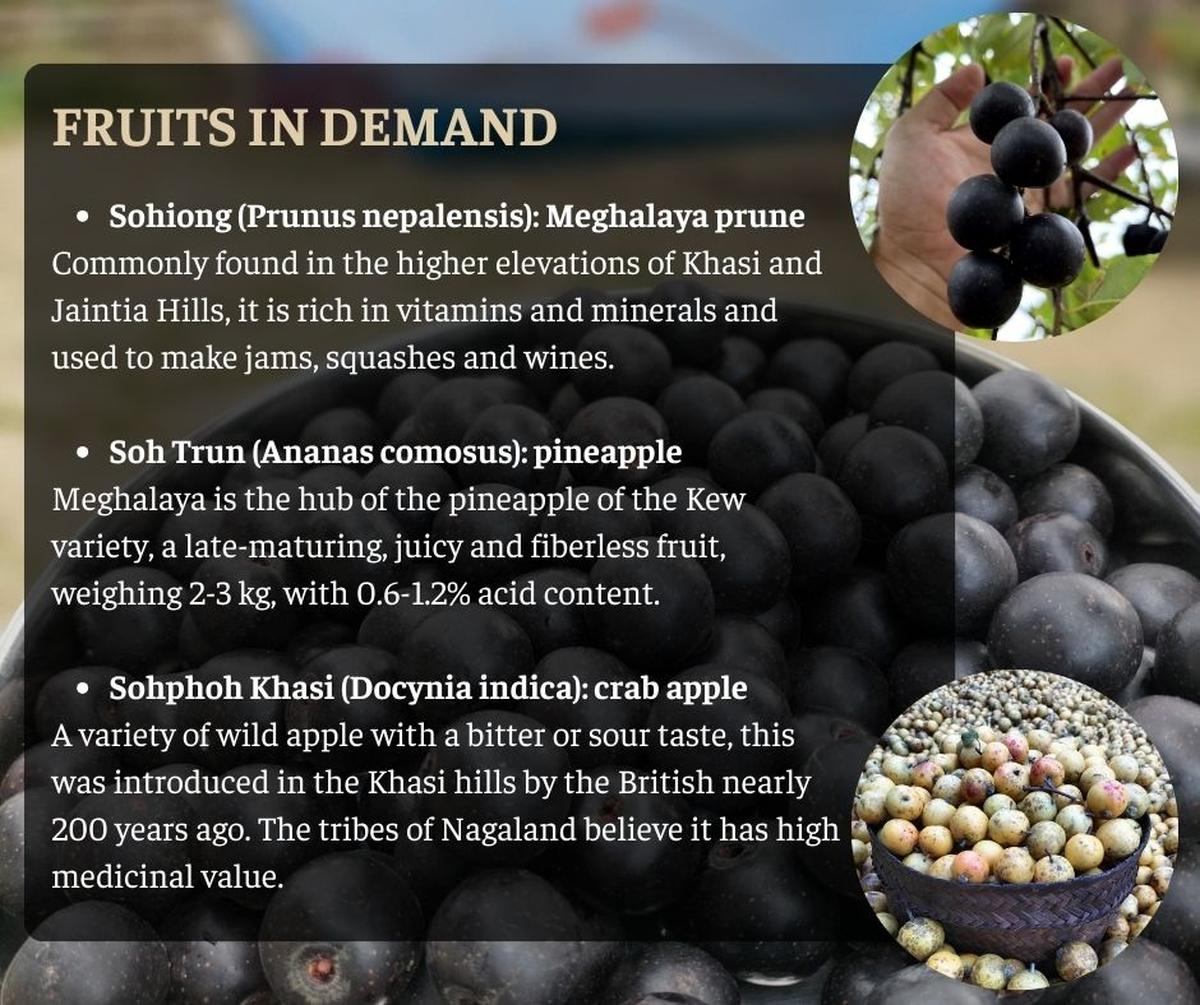
The industry is unique because it eschews the traditional wine-grade grapes found in regions like Nashik or Tuscany. Instead, it relies on indigenous fruits that grow naturally in the wild or in small-scale orchards. These include:
- Sohiong (Prunus nepalensis): A local prune rich in vitamins.
- Te.patang (Haematocarpus validus): A sweet and sour blood fruit.
- Sohphie (Myrica esculenta): Known for its tartness.
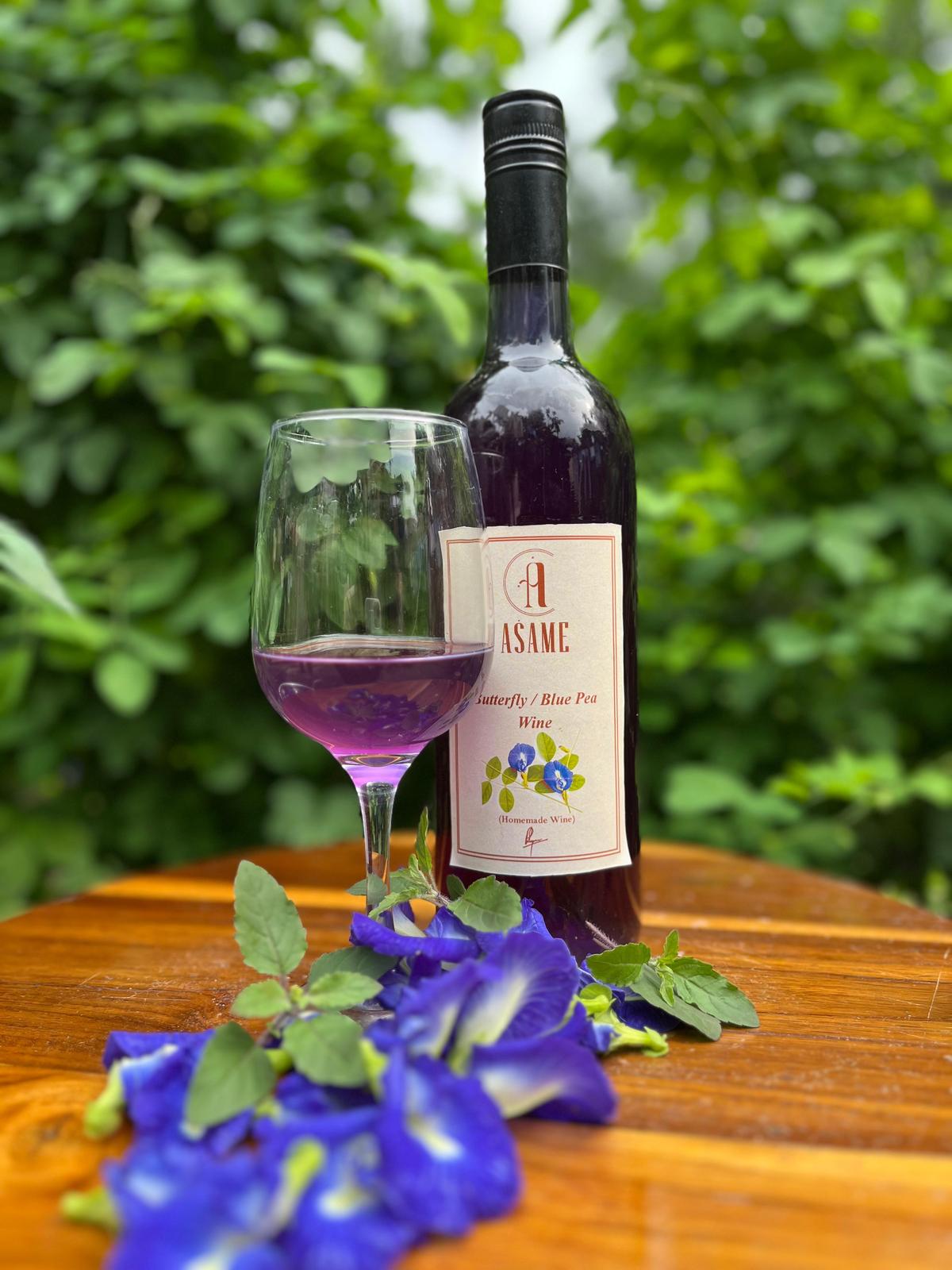
- Other varieties: Silverberry, bayberry, black plum, jackfruit, and even the butterfly pea flower, which produces a striking blue wine.
This industry is not merely about alcohol; it is a strategic economic pillar. About 400 families, including winemakers, farmers, and laborers, are now directly or indirectly employed by licensed wineries. With an average setup cost of ₹50 lakh for a 5,000-litre winery, the state is seeing a significant influx of capital and technology into the rural economy.

Chronology: From Sacred Groves to Global Showcases
The history of winemaking in Meghalaya is a blend of colonial legacy, indigenous tradition, and modern policy.
The Colonial Foundation (1947–1980s)
The story begins with Captain Harold Douglas Hunt, an officer of the British army often cited as the "father of wine" in Meghalaya. Settling in the village of Mawphlang—famous for its ancient sacred groves—Hunt established India’s first winery in 1947. He utilized local fruits like sohiong to create the "Mawphlang cherry wine," which became a household name. His operation created a blueprint for local coordination between farmers and producers that lasted until his death in the 1980s.

The Festival Movement (2004–2019)
For decades after Hunt’s winery closed, winemaking remained a small-scale, domestic activity. In 2004, Michael Syiem of the Shillong-based Forever Young Club organized the city’s first wine festival. This annual event was crucial in shifting public perception, making exotic fruit wines "cool" for millennials who found traditional grape wines too formal or associated with older generations.
The Policy Shift (2019–2021)
The real "push" came with the establishment of the Meghalaya Farmers Empowerment Commission (MFEC) in 2019. In September 2020, the state government amended the Meghalaya Excise Rules to legalise home-made wines and provide a clear path for local winemakers to obtain commercial licenses. This legislative change was the catalyst that allowed entrepreneurs like Lyang B. Sangma (Dura Wines) and Keenan Marak (7 United) to move from gifting bottles to friends to selling them on retail shelves.

The Modern Era (2024 and Beyond)
In September 2024, the industry reached a milestone when six exotic fruit wines and meads from Meghalaya were showcased at Vinexpo India 2024 in Mumbai. This international exposure confirmed that wines made from te.gism and te.patang had the potential to compete on a national and global stage.
Supporting Data: The Economics of Fermentation
The growth of the industry is backed by substantial financial and technical investment. The North East Centre for Technology Application and Reach (NECTAR) has been instrumental, providing machinery grants—such as the ₹25 lakh provided to Lyang B. Sangma—to modernize production.
Production and Pricing
- Average Capacity: 5,000 to 10,000 litres per winery.
- Alcohol Content: Standardized at approximately 10% ABV (Alcohol by Volume).
- Retail Price: A 750 ml bottle typically retails for around ₹600.
- Yield: It takes approximately one tonne of fruit to produce 200 litres of wine.
Comparison with Other Regions
While Himachal Pradesh currently leads India with 22 licensed fruit wineries, Meghalaya has rapidly climbed to second place with 17. The quality has also seen a marked improvement. According to professional wine and spirit taster Rajesh Swarnakar, the balance of sugar and alcohol in Meghalaya’s wines is now approaching the standards set by Himachal’s established apple wine industry.
Official Responses: A Proactive Government Stance
The Meghalaya government has adopted an unusually supportive stance toward the industry, viewing it as a solution to agricultural wastage and a driver of rural prosperity.
Tax Incentives
In a move that sets it apart from almost every other Indian state, the Meghalaya government imposes zero Value Added Tax (VAT) on fruit wines. In contrast, other states levy VAT ranging from 4% to 53%. The only state charges are an ad valorem fee of ₹100 per case (12 bottles) and a retailer’s lifting fee of ₹10 per case. This policy significantly lowers the barrier to entry for local entrepreneurs.
Institutional Support
B.K. Sohliya, Chairman of the MFEC, emphasizes that the commission serves as the voice of the farmer. The MFEC established the North East Fruit Wine Incubation Centre at the Institute of Hotel Management (IHM) in Shillong. This facility, with a capacity of 1,000 litres per cycle, has trained 137 people in the "art and science" of winemaking, taking them from raw fruit to a bottled beverage in a 90-day cycle.
"The enabling atmosphere and the entrepreneurial drive of a few are making it possible," says Michael Syiem, reflecting on the government’s role in streamlining the industry.
Implications: Checking Waste and Boosting Farmer Income
Beyond the bottle, the most profound impact of the wine renaissance is felt in the jungles and farms of the Garo, Khasi, and Jaintia Hills.
Reducing Agricultural Waste
India loses roughly 40% of its fruits and vegetables across the supply chain due to poor infrastructure and the perishable nature of the produce. In Meghalaya, where the terrain makes large-scale transport difficult, this wastage was historically high. Winemaking has provided a "value-added" solution. By processing fruits into shelf-stable wine, the industry has effectively created a safety net for seasonal surpluses.
Transforming Rural Incomes
The shift from gathering wild fruits to structured farming has seen dramatic increases in farmer earnings:

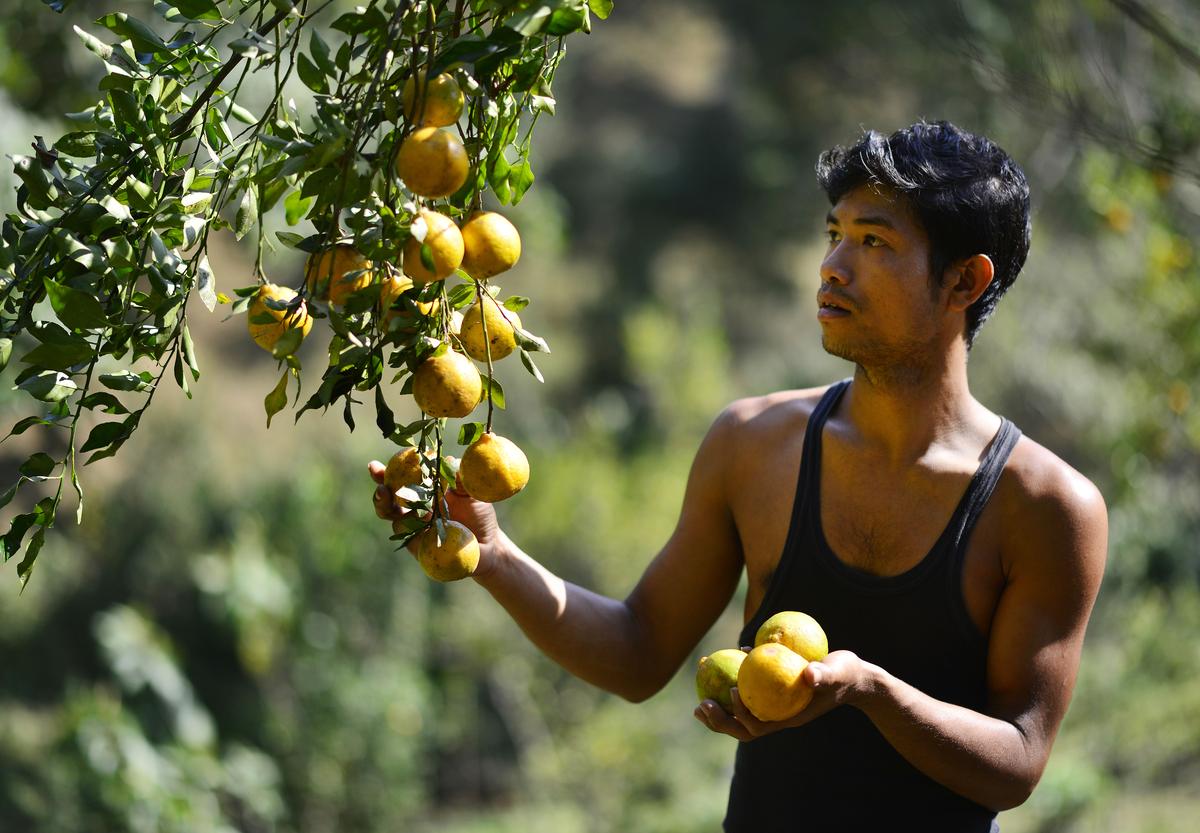
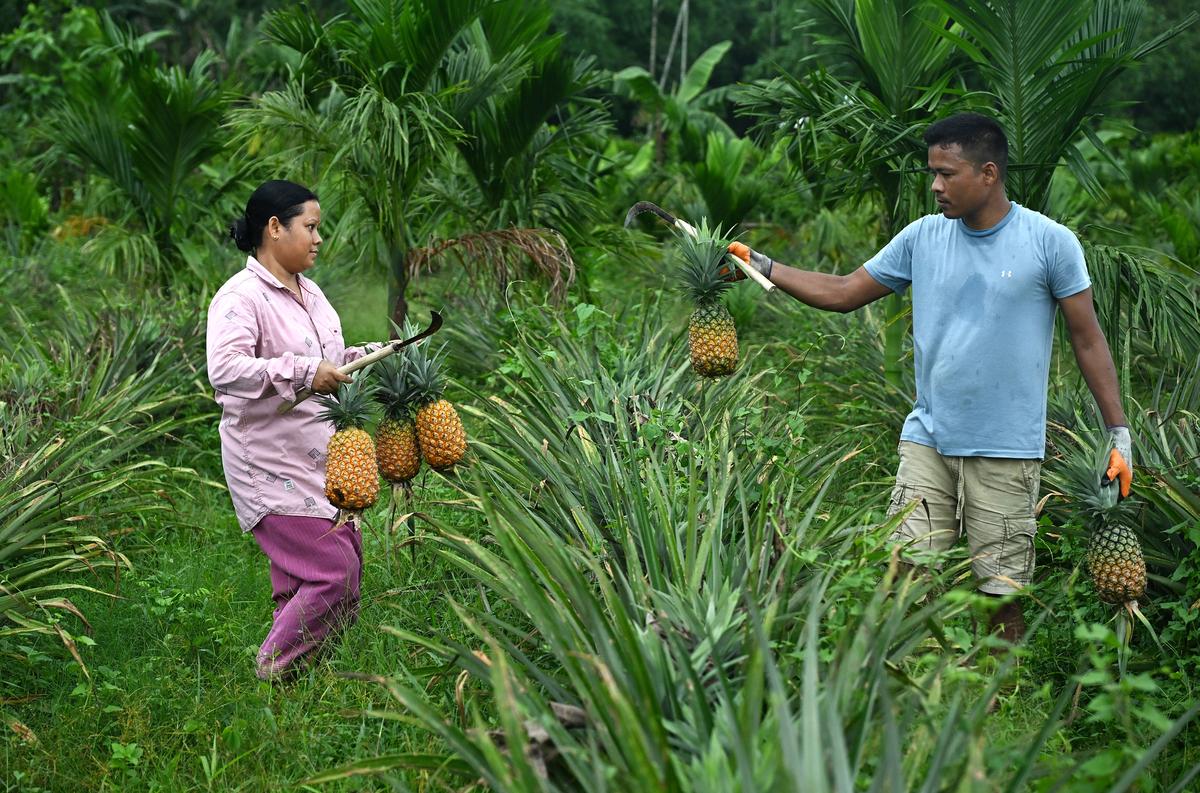
- Sohiong Trees: A farmer who previously earned ₹3,000 per tree now makes approximately ₹15,000 per season due to the steady demand from wineries.
- Commercial Crops: Farmers growing kiwi, plum, peach, and pineapple have seen their seasonal income jump from ₹30,000 to over ₹3 lakh.
Winemakers are now "booking" trees and farms a year in advance, providing farmers with financial predictability that was previously non-existent.
The Cultural and Environmental Legacy
The industry also plays a role in conservation. Many of these wild fruits are found in and around the "sacred groves"—forests protected by local communities for centuries. By giving these indigenous fruits commercial value, the industry provides an economic incentive to preserve the local biodiversity.
Furthermore, it honors the tradition of the Garo community’s bitchi (rice beer) while evolving it into a bottled, carbonated product that can be exported. As Andrew Nongdhar, grandson of Captain Hunt, prepares to reopen his grandfather’s historic winery, he notes that failing to capitalize on this trend would be an injustice to the history of the land.
Conclusion
Meghalaya’s fruit wine industry is a rare example of a successful "soil-to-glass" economy. By combining indigenous botanical knowledge with modern viticulture science and supportive government policy, the state has created a unique niche in the global beverage market. As urban wine startups like Dajied Shabong’s Kynjai Wine begin to supply stores across the Northeast, the "fruit with a dot in its name" is no longer just a jungle curiosity—it is the signature of a region coming into its own.
