

By [Your Name/Journalist Name]
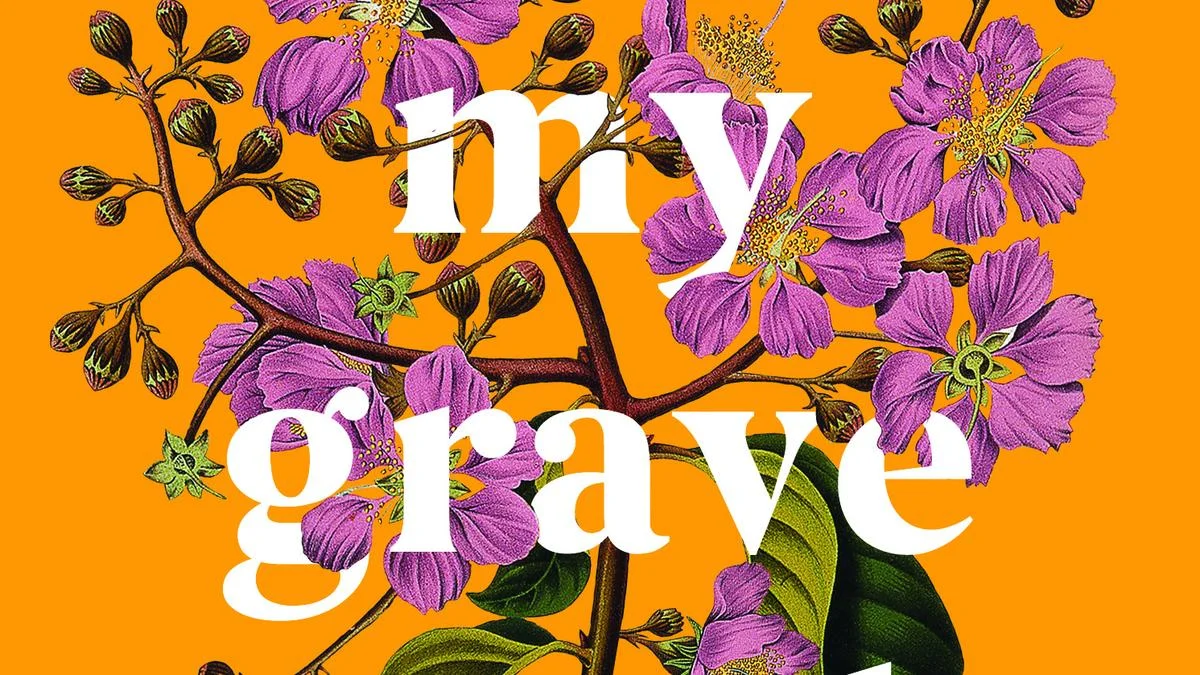
GUWAHATI — In the landscape of Indian English literature, the voices from the Northeast have often been relegated to the peripheries, or worse, distilled into a singular narrative of conflict and tragedy. However, with the release of Colour My Grave Purple, a debut short story collection by Shehnab Sahin, a more nuanced, kaleidoscopic portrait of Assam is emerging. Published by Niyogi Books, the anthology serves as both a historical record and a deeply personal exploration of a region that is as complex as the "meandering Brahmaputra" that defines its geography.
Sahin, a former humanitarian worker whose career has taken her from the war-torn landscapes of Syria and Lebanon back to the verdant hills of her homeland, brings a unique global perspective to her writing. Her collection of ten stories does not merely seek to inform; it seeks to dismantle long-standing prejudices and offer a seat at the table for the lived experiences of Assamese people across nearly two centuries.
Main Facts: A Tapestry of Time and Human Emotion
Colour My Grave Purple is not a contemporary snapshot but a sprawling historical journey. The stories are meticulously set in various epochs—1855, 1920, 1962, and moving through to 2019. This chronological breadth allows Sahin to explore the evolution of the Assamese identity through the lens of colonialism, the tea economy, wildlife conservation, and the intimate grief of the individual.
The collection introduces a diverse cast of characters: a taxi driver on the road to Jorhat airport who finds philosophy in the migration of elephants; Ursula Graham Bower, the "Jungle Queen" who documented Naga life in the 1940s; and a grieving daughter who seeks solace in her late father’s journals. Through these figures, Sahin addresses the "mainstream narrative" of the Northeast, which she argues has been historically flattened by the national media.
The book is also a tribute to a familial legacy. Sahin is the daughter of the late Khobir Ahmed, a distinguished police officer and a prolific Assamese writer who authored seven novels. For Sahin, writing is not just a creative choice but an ancestral inheritance—a way to process the world that she describes as being "in her veins."
Chronology: From the Banks of the Orontes to the Brahmaputra
The genesis of Colour My Grave Purple is as nomadic as its author’s career. The stories were penned over a tumultuous three-year period, beginning in the isolation of the COVID-19 pandemic and concluding while Sahin was stationed in Syria.
The Formative Years:
Sahin’s drive to write was ignited years ago during her time at St. Stephen’s College in Delhi. It was here that she encountered the "treehouse" stereotype—a fellow student’s assumption that coming from Assam meant living in a primitive state. Sahin recalls the sting of that moment, noting that her initial defensive response—pointing to the malls and roads of Guwahati—felt like an apology for her heritage. This experience became the catalyst for her mission to challenge stereotypes through literature.

The Writing Process (2020–2023):
As the world locked down in 2020, Sahin turned to the page to maintain her "sanity." The isolation of the pandemic provided the quietude necessary to delve into the historical archives of her home state. When she later moved to the Middle East for humanitarian work, the stark contrast between the desert landscapes of Syria and the lush wetlands of Assam sharpened her longing for home, fueling the descriptive richness of the anthology.
Publication (2024):
With the support of Niyogi Books, a publisher known for its commitment to regional and translated literature, the collection was finalized and released. The timing coincides with a growing national interest in "frontier literature," yet Sahin’s work stands apart by refusing to use the "bait of pity" to garner attention.
Supporting Data: The Literary and Socio-Political Context
To understand the weight of Colour My Grave Purple, one must look at the socio-political backdrop of Assam that Sahin navigates. For decades, literature coming out of the Northeast has been dominated by the "literature of conflict."
- The Conflict Narrative: Much of the existing English-language canon regarding Assam focuses on the Armed Forces Special Powers Act (AFSPA), the insurgency of the 1980s and 90s, and the "secret killings." While Sahin acknowledges these as vital parts of the region’s history, she argues that defining a people solely by their trauma is a form of "typecasting."
- The Tea Economy: In her story Two Leaves and a Bud, Sahin touches upon the tea plantation economy. Data suggests that Assam produces over 50% of India’s tea, yet the lives of the workers and the colonial origins of the industry are rarely explored in fiction with the depth Sahin provides.
- Human-Elephant Conflict: The story Animal Instinct highlights a pressing ecological issue. According to the Ministry of Environment, Forest and Climate Change, Assam frequently records some of the highest rates of human-elephant conflict in India. Sahin translates these statistics into a "charming" yet poignant narrative about shared space and mutual survival.
- Historical Documentation: By including figures like Ursula Graham Bower, Sahin bridges the gap between colonial anthropology and indigenous reality. Bower was one of the few women to document the Zeme Naga tribes, and Sahin’s fictionalization brings a feminist and post-colonial lens to this historical footnote.
Official Responses: The Author’s Perspective
In a series of candid reflections, Shehnab Sahin emphasizes that her book is a "love letter" to a home that is often misunderstood.
"The history of Assam and its people is as meandering as the mighty Brahmaputra," Sahin writes in her author’s note. Speaking about the "treehouse" incident in Delhi, she reflects on the psychological burden of representation: "I realized my response was actually, in a way, an apology. Just because my trajectory of development isn’t similar to yours, it has to come from a space of defense."
Sahin is particularly vocal about the dangers of being "typecast" by violence. "It was important that I represent [the violence], but at the same time, I was conscious about ensuring that other stories also travel outside. It’s not nice to be typecast."
On the influence of her father, Khobir Ahmed, she notes: "Being his daughter, it was inevitable that someday, I too would write because I feel it in my veins." This connection to her father’s Assamese-language oeuvre provides a bridge between the vernacular literary tradition and the global English-speaking audience.
Regarding her future work, Sahin confirmed she is currently working on a piece of historical fiction. While it will span several geographies—likely informed by her humanitarian travels—she asserts that "the crux of the story is Assam."

Implications: Changing the Narrative of the Northeast
The publication of Colour My Grave Purple has significant implications for how Northeast India is perceived within the broader Indian cultural fabric.
Challenging the "Mainland" Gaze:
By moving away from the "pity bait" and focusing on the everyday workings of the mind, Sahin forces the reader to engage with Assamese characters as complex individuals rather than political symbols. This shift is crucial for fostering genuine empathy and understanding between the "mainland" and the "frontier."
Cultural Preservation:
As oral histories fade and the younger generation of the Assamese diaspora moves further from their roots, Sahin’s use of historical fiction serves as a form of cultural preservation. By anchoring her stories in specific years like 1855 and 1962, she ensures that the milestones of Assamese history remain accessible to an English-reading public.
A New Wave of Literature:
Sahin joins a growing cohort of writers from the Northeast—such as Temsula Ao and Easterine Kire—who are reclaiming their narratives. Her work suggests that the future of regional literature lies in its ability to be "unapologetically local" while maintaining a "universal emotional resonance."
In conclusion, Colour My Grave Purple is more than just a debut; it is a sophisticated reclamation of identity. Shehnab Sahin has successfully navigated the transition from humanitarian aid to literary advocacy, proving that sometimes, the most effective way to help a region is to tell its stories in all their vibrant, purple, and meandering glory.
About the Publisher: Niyogi Books is an independent publishing house based in New Delhi, dedicated to high-quality illustrated books and diverse literary fiction that explores the rich heritage and contemporary issues of South Asia.
