

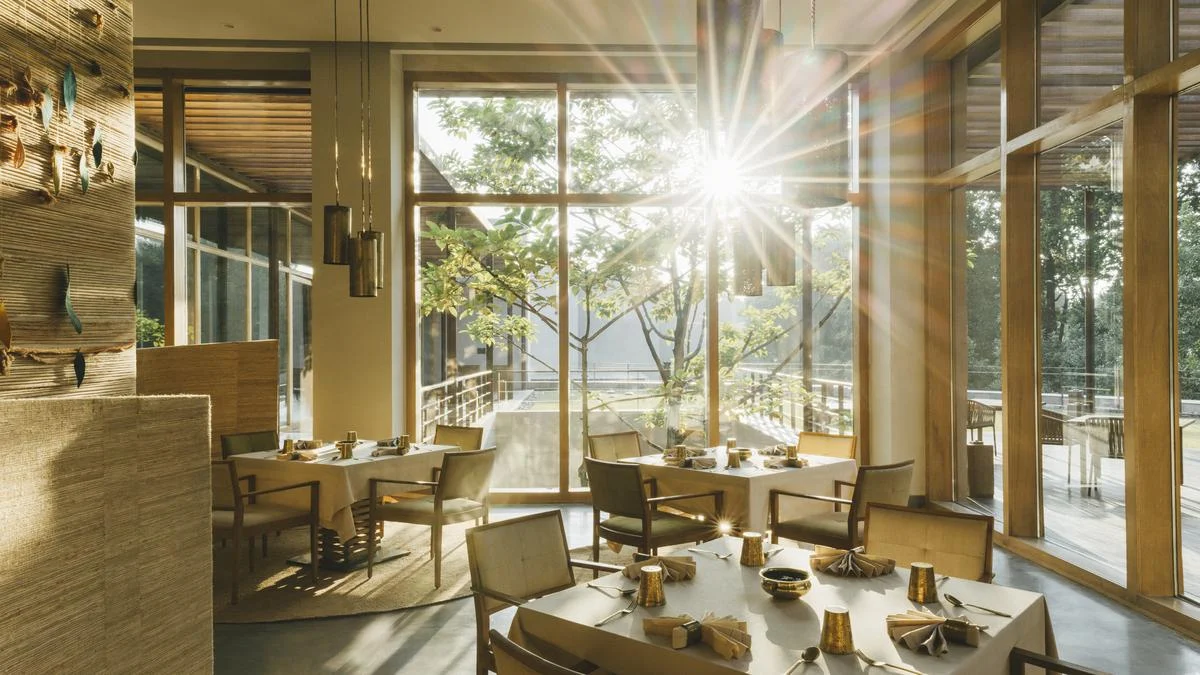
NEW DELHI — In a landmark moment for the global travel industry, the Michelin Guide officially integrated the Indian subcontinent into its prestigious "Key" recognition system in October 2025. While the Michelin name has been synonymous with culinary excellence for over a century, the formalization of the Michelin Key marks a tectonic shift in how the world’s most discerning travelers evaluate luxury accommodation.
Across the globe, Michelin awarded Keys to 2,457 hotels. In India, a nation where hospitality is often treated as a sacred duty (Atithi Devo Bhava), 36 properties were singled out for recognition. This elite group represents the vanguard of Indian hospitality, ranging from modern wellness retreats in the Himalayas to floating marble palaces in Rajasthan.
The introduction of the Key system clarifies a long-standing ambiguity in the hotel industry. While the traditional star-rating system (one to five stars) measures technical facilities and service thresholds—a process largely within a hotel’s control—the Michelin Key is an elusive accolade that distinguishes "the best among the best" based on character, soul, and a commitment to local culture.
The Five Pillars of Excellence: How Michelin Judges
Unlike traditional hospitality audits that focus on the thread count of linens or the speed of room service, Michelin inspectors evaluate properties across five holistic criteria:
- Architecture and Interior Design: The physical structure must be more than just functional; it must be evocative.
- Quality and Consistency of Service: Excellence must be a constant, not an occasional occurrence.
- Overall Personality and Character: The property must possess a "soul" that distinguishes it from a generic luxury box.
- Value for Price: The experience must justify the investment, regardless of the price point.
- Meaningful Contribution to the Setting: The hotel must enhance its local environment and culture rather than merely occupying space.
Chronology: From Tires to Trophies
The evolution of the Michelin Guide is one of history’s most successful brand pivots. Founded in 1889 by brothers André and Édouard Michelin, the guide was originally a marketing tool to encourage motorists to drive further, thereby wearing out their tires. By the early 1900s, the guide began recommending hotels and restaurants.
In 2024, Michelin formalized the "Key" system to do for hotels what the "Star" system did for restaurants. The October 2025 announcement for India represents the culmination of years of anonymous inspections across the country. The results—14 one-Key, 20 two-Key, and two three-Key properties—provide a roadmap for the future of Indian tourism.

A Deep Dive into the Tiers: One, Two, and Three Keys
To understand the nuance of these awards, we analyzed the guest experience at three representative properties, mapping their operations against Michelin’s rigorous criteria.
The One-Key Experience: Six Senses Vana, Dehradun
A One-Key rating signifies a "very special stay." At Six Senses Vana, the excellence is found in its unwavering commitment to a singular vision: holistic transformation.
Located on the outskirts of Dehradun, Vana acts as a "sealed oasis." Upon arrival, guests (referred to as vanavasis) are stripped of the distractions of modern life. Phones are restricted, and guests wear identical white kurta pyjamas to eliminate decision fatigue and social hierarchy.
Architecturally, Vana is modern and restrained, providing a neutral canvas for the ancient Indian philosophies—Ayurvedic, Tibetan, and natural healing—practiced within. At roughly ₹95,000 (USD $1,000) per night, it is an investment in self-actualization. Its One-Key status is a testament to its precision; it does not try to be everything to everyone, but it executes its wellness mission with absolute conviction.
The Two-Key Experience: The Imperial, New Delhi
A Two-Key rating denotes an "exceptional stay." The Imperial in New Delhi represents more than luxury; it is a custodian of national memory.
Known as the "Grand Dame" of Delhi, the hotel blends Victorian, Art Deco, and colonial styles. Its most significant asset is its museum-quality art collection, featuring over 5,500 works. This is a property where history was written—Table No. 14 at the 1911 restaurant remains "The Gandhi Table," preserved in honor of the Mahatma’s preference.

The Imperial earns its Two-Key status by balancing luxury with public life. It is not an isolated bubble but a living part of the city’s fabric. It offers a "Patiala Peg" in the bar and a Mughal-style hammam in the spa, proving that Two Keys are awarded to hotels that serve as cultural ambassadors.
The Three-Key Experience: Taj Lake Palace, Udaipur
A Three-Key rating is reserved for an "extraordinary stay," where the experience is inseparable from the site itself. The Taj Lake Palace, an 18th-century summer palace floating in Lake Pichola, is irreplaceable.
Accessible only by boat, the palace is a marvel of Makrana marble and hand-painted murals. Here, exclusivity is absolute; non-residents are not permitted on the island. The Three-Key designation recognizes that removing this hotel from its context would destroy its meaning. It is a living heritage site that sustains local craftsmanship and safeguards a floating architectural wonder. For ₹95,000 a night, guests aren’t just buying a room; they are stepping into a historical narrative that cannot be replicated anywhere else on Earth.
Supporting Data: The Full List of Winners
The 2025 awards highlight a significant geographical concentration in Rajasthan and the National Capital Region (NCR), signaling these areas as the current hubs of world-class Indian hospitality.
Three Michelin Keys (The Pinnacle)
- Taj Lake Palace, Udaipur
- Taj Falaknuma Palace, Hyderabad
Two Michelin Keys (Exceptional)
- The Oberoi Amarvilas, Agra
- Amanbagh, Alwar
- Suján Jawai, Bisalpur
- Raffles Jaipur, Jaipur
- The Leela Palace, Jaipur
- Sitara Himalaya, Manali
- The Imperial, New Delhi
- The Leela Palace, New Delhi
- Aman-i-Khás, Ranthambhore
- Six Senses Fort Barwara, Sawai Madhopur
- Raffles Udaipur, Udaipur
- The Oberoi Udaivilas, Udaipur
One Michelin Key (Special)
- The Kumaon, Almora
- Narendra Bhawan, Bikaner
- The Leela Palace, Chennai
- Six Senses Vana, Dehradun
- The Oberoi Gurgaon, Gurugram
- Taj Usha Kiran Palace, Gwalior
- Rajmahal Palace RAAS, Jaipur
- Taj Devi Ratn Resort & Spa, Jaipur
- The Johri, Jaipur
- The Oberoi Rajvilas, Jaipur
- Villa Palladio, Jaipur
- Soho House, Mumbai
- Taj Mahal Palace, Mumbai
- Taj Mahal Tower, Mumbai
- Additional recipients include: Taj Mahal (New Delhi), The Lodhi (New Delhi), Ran Baas (Patiala), Taj Rishikesh Resort & Spa, Suján Sher Bagh, The Oberoi Vanyavilas, RAAS Devigarh, and Nadesar Palace (Varanasi).
Industry Response: A New Benchmark for Growth
While the Michelin Guide operates independently, the Indian hospitality sector has reacted with a mix of celebration and renewed ambition. Executives from the Taj Group (IHCL) and The Oberoi Group have noted that these awards validate the "Indian way" of service—a blend of warmth and extreme attention to detail.
"The Michelin Key provides a global language for what we have known for decades," said a senior hospitality analyst in Mumbai. "It moves the conversation away from how many swimming pools a hotel has to how the hotel makes a guest feel. It is a victory for storytelling and heritage preservation."

Market analysts suggest that the inclusion of properties like The Johri and Villa Palladio—smaller, boutique-style hotels—shows that Michelin is looking beyond the traditional giants of the industry, encouraging a more diverse and creative hospitality landscape in India.
Implications: The Future of Luxury Travel in India
The introduction of Michelin Keys in India carries several long-term implications for the economy and the tourism sector:
- Elevated Global Standing: India is no longer viewed merely as a destination for "value" or "exoticism." These 36 Keys place Indian properties on equal footing with the finest hotels in Paris, Tokyo, and New York.
- Shift in Investment: Developers are likely to shift focus from "standardized luxury" to "contextual luxury." We can expect more investment in heritage restoration and boutique experiences that meet Michelin’s criteria for "personality and character."
- The Wellness Boom: The recognition of Six Senses Vana highlights India’s potential to lead the global wellness tourism market, which is projected to grow exponentially over the next decade.
- Pressure on Service Standards: With the benchmark now set by Michelin, other luxury properties will likely undergo rigorous internal audits to compete for a Key in the 2026 cycle.
In conclusion, the Michelin Keys are not a linear ladder where three is simply "better" than one. Instead, they represent different planes of fulfillment. Whether it is the focused precision of a One-Key wellness retreat or the irreplaceable majesty of a Three-Key floating palace, the Michelin Guide has confirmed that India has become the best possible version of itself in the world of luxury hospitality.
