

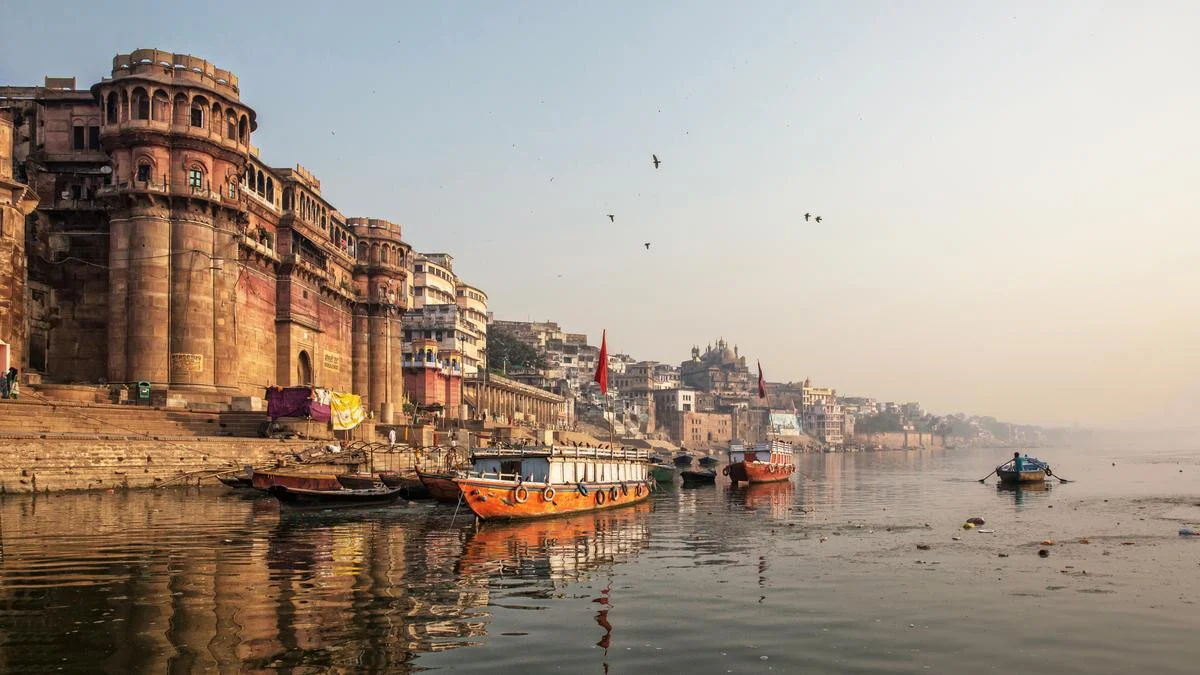
VARANASI, INDIA — In the labyrinthine heart of one of the world’s oldest living cities, a quiet revolution is taking place. Varanasi, a city traditionally defined by its sacred ghats and eternal pyres, is increasingly becoming a destination where high-concept gastronomy meets centuries-old heritage. The recent launch of a 10-course vegetarian tasting menu at the historic BrijRama Palace signifies a broader shift in the city’s identity: a move to balance its rugged, spiritual authenticity with the refined demands of global luxury tourism.

Main Facts: The Evolution of Heritage Hospitality
Varanasi, also known as Kashi or Benares, remains a sensory assault of heat, devotion, and flavor. During the peak of the summer season, where temperatures frequently exceed 45°C, the city’s atmosphere is as thick and "sticky" as its legendary street food. However, the hospitality sector is finding new ways to interpret this intensity.
The centerpiece of this evolution is BrijRama Palace, a 214-year-old fort-turned-hotel situated at Darbhanga Ghat. The property recently unveiled a 10-course vegetarian menu at its fine-dining restaurant, Aangan. This menu represents more than just a culinary offering; it is a strategic signal from the Brijrama Hospitality group that historic properties can innovate within the strictures of local tradition—specifically the prohibition of meat and alcohol within the vicinity of the holy Ganga.

The menu features avant-garde interpretations of local staples, such as "fortified heritage radish bricks" and a "Rasmalai tres leches cake," aiming to elevate the humble ingredients of the Uttar Pradesh plains to the standards of international Michelin-starred dining.
Chronology: A Journey Through the Gullies and Ghats
The experience of modern Varanasi is best understood through a chronological immersion into its daily rhythms, from the chaotic street markets to the serene heights of its palace balconies.

Day 1: The Sensory Immersion
The journey begins in the sweltering heat of the afternoon at Kashi Chaat Bandar, a legendary institution. Here, the tamatar chaat—a soupy, savory concoction of tomatoes and potatoes simmered in ghee—serves as the primary introduction to the city’s palate. The experience is one of proximity; diners are wedged between strangers on sweaty benches, a stark contrast to the air-conditioned luxury that awaits at the city’s higher-end establishments.
As dusk approaches, the focus shifts toward the river. A walk through the gullies (narrow alleys) reveals a city that lives in the gaps between the ancient and the modern. The scent of fresh flower garlands mingles with the aroma of frying kachoris. At Alka Hotel, overlooking the Dashashwamedh Ghat, the evening ritual begins. Over chilled glasses of thandai—a creamy, nut-based drink—visitors witness the Ganga Aarti. The synchronized movement of flaming lamps and the rhythmic chanting provide a temporal anchor to the city’s spiritual life.

Day 2: The Culinary and Historical Deep-Dive
The following morning provides a transition from the street to the palace. Accessing BrijRama Palace requires a boat journey from the modern Namo Ghat, floating past the incessant pyres of Manikarnika Ghat. The arrival at Darbhanga Ghat is a theatrical event, marked by conch shells and the presence of staff in traditional regalia.
The afternoon is dedicated to understanding the architectural and culinary weight of the palace. Lunch features the "Benares Thali," a more traditional but no less sophisticated array of local flavors, including khatta meeta kaddu (tamarind-laced pumpkin) and dimona (cumin-scented peas). This serves as the foundation for the evening’s main event: the 10-course tasting menu at Aangan, which pushes the boundaries of vegetarian cuisine through technique and presentation.

Day 3: Physical Culture and the Akhara
The final leg of the journey moves toward Tulsi Ghat to explore the city’s physical heritage. At the 450-year-old Swaminath Akhara, the focus is on the Hanuman gada (a traditional mace) and mud wrestling. This provides a glimpse into the "Pahalwan" culture of Varanasi—a lifestyle that balances extreme physical discipline with a diet of jalebis and lassi.
Supporting Data: The Restoration of BrijRama Palace
The transformation of BrijRama Palace from a dilapidated fort to a luxury landmark is a testament to the logistical challenges of operating in a UNESCO-protected zone.

- Origins: Originally constructed in 1812 by Shridhara Narayana Munshi, a minister for the Nagpur estate.
- Royal Acquisition: In 1915, it was acquired by King Rameshwar Singh Bahadur of Darbhanga, who installed Asia’s first manual elevator to navigate the steep climb from the riverfront.
- Restoration Period: After Brijrama Hospitality acquired the property in 1994, it underwent an 18-year restoration process.
- Logistical Hurdles: Because cars are prohibited within a kilometer of the ghats, all construction materials—including 90-kilogram sandstone pillars from Mirzapur—had to be transported via boat and hand-carried through the narrow gullies.
- Design Elements: The interiors utilize Makrana marble and Tehkari mirror work, combined with vintage furniture sourced from royal estate sales across India.
Official Responses: Balancing Heritage and Innovation
Manish Singh, General Manager of BrijRama Palace, emphasizes that the hotel’s mission is to act as a "guardian" of the city’s history while providing a contemporary experience.
"This is a labor of love," Singh notes. "We had to get the right sandstone and bring material through those small gullies. Being on an iconic ghat in one of the oldest living cities comes with a responsibility to balance luxury with the city’s soul."

Chef Devansh Seth, the architect of the new tasting menu, explains the philosophy behind the vegetarian-only kitchen. "Without meat or alcohol, we have to get creative with locally sourced produce. We pivot on traditional recipes but use modern techniques—smoke, siphons, and architectural plating—to tell the story of Varanasi on a plate."
The street-level perspective is equally vital. Ashutosh Choudhary, whose family has operated the Alka Hotel for generations, views the influx of luxury tourism as a natural extension of the city’s hospitality. "Varanasi brings everyone together—scholars, artists, and tourists. Our snacks, our chaat, and our paan are the common language," he says.

Implications: The Future of the "Living City"
The evolution of Varanasi’s hospitality scene has significant implications for the future of heritage tourism in India.
1. The Rise of "Sophisticated Spiritualism"
Varanasi is no longer just a destination for backpackers and pilgrims. The success of properties like BrijRama Palace suggests a growing market for "sophisticated spiritualism," where high-net-worth travelers seek authentic cultural immersion without sacrificing modern comforts.

2. Culinary Preservation through Innovation
By elevating local ingredients like radish, pumpkin, and local Langda mangoes to a fine-dining context, chefs are helping to preserve regional flavors that might otherwise be overshadowed by globalized cuisine. The "theatre" of the 10-course menu makes traditional vegetarianism exciting for a younger, global audience.
3. Infrastructure vs. Authenticity
The development of Namo Ghat and the restoration of heritage buildings show a city in transition. The challenge for Varanasi will be maintaining the "raw" appeal of its gullies and akharas while improving the infrastructure required for large-scale tourism. As demonstrated by the morning rituals at the Swaminath Akhara, the city’s strength lies in its people—the wrestlers, the flute players, and the student artists who continue to inhabit the ghats regardless of the luxury developments behind them.

Conclusion
Varanasi remains a city of contradictions. It is a place where one can struggle with a 68-kilogram stone gada in the morning and dine on saffron-infused malaiyo clouds in the evening. The "call of Kashi" is increasingly a call to experience this duality. As BrijRama Palace and its contemporaries prove, the city’s future lies not in changing its character, but in refining the lens through which the world views its ancient, enduring heart.
