

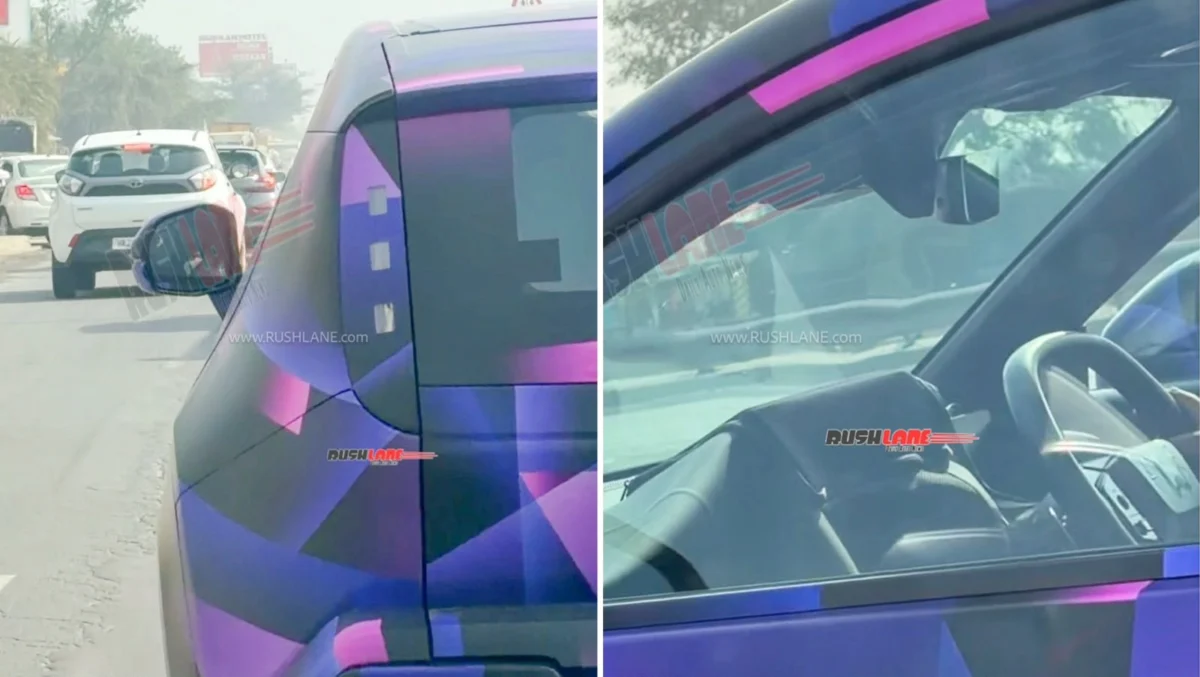
In a move that signals a profound transformation in the global automotive engineering landscape, Honda Motor Company has reportedly entered into a strategic partnership with Tata Technologies to develop an all-new vehicle platform. This collaboration marks a historic departure for the Japanese automaker, which has historically maintained a fiercely guarded, in-house approach to its core engineering, chassis development, and powertrain integration.
The partnership aims to leverage Indian engineering prowess to create a versatile architecture capable of underpinning a wide array of hybrid and electrified vehicles. Targeted primarily at Asian and other international markets, this move underscores Honda’s urgent need to balance innovation with cost-efficiency in an era defined by rapid electrification and intensifying global competition.
Main Facts: A Strategic Outsourcing Milestone
The collaboration between Honda and Tata Technologies is not merely a vendor-client relationship; it is a fundamental shift in how one of the world’s most respected engineering firms approaches product lifecycles.
Scope of the Agreement
According to reports first highlighted by Nikkei, Tata Technologies has been entrusted with the end-to-end engineering of a new vehicle architecture. This platform is designed to be "future-proof," supporting various degrees of electrification, including Full Hybrids (HEVs) and Battery Electric Vehicles (BEVs). While the platform is intended for global application, it will notably exclude the North American market, where Honda maintains separate developmental tracks, often in collaboration with domestic partners or through its high-end Acura division.
The Role of Tata Technologies
It is crucial to distinguish Tata Technologies from Tata Motors. While both fall under the umbrella of the Tata Group, Tata Technologies operates as an independent, publicly traded global engineering services firm. They provide Product Lifecycle Management (PLM) and Educational Service Outsourcing (ESO) to a blue-chip roster of clients in the aerospace, industrial, and automotive sectors. Their selection by Honda validates the maturing capabilities of Indian engineering firms to handle complex, "ground-up" vehicle development rather than just peripheral component design.
Geographic Focus
The new platform will serve as the backbone for Honda’s offensive in emerging markets and broader Asia. This includes high-growth regions like Southeast Asia and India, where the demand for affordable yet technologically advanced electrified vehicles is surging.
Chronology: The Road to Outsourcing
To understand why Honda—a company that prides itself on the "Honda Way" of internal innovation—has turned to an external partner, one must look at the turbulent events of the last 24 months.
2023: The EV Reality Check
Throughout 2023, Honda, like many traditional OEMs, faced the harsh reality of the "EV chasm." While initial projections for electric vehicle adoption were aggressive, the high cost of development and shifting consumer sentiment led to a strategic pivot. Honda began reassessing its capital allocation, realizing that internal resources were stretched too thin between maintaining internal combustion engine (ICE) excellence and chasing the EV frontier.
Early 2024: Program Cancellations and Financial Impact
In a significant strategic retreat, Honda announced the cancellation of three major electric vehicle programs originally slated for the North American and Japanese markets. This decision was not without cost. For the current fiscal year ending March 2027, Honda anticipates a staggering loss of approximately 520 billion yen (roughly $3.3 billion). This loss is primarily attributed to restructuring expenses, supplier compensation for cancelled contracts, and the sunk costs of abandoned R&D.
Mid-2024: The Birth of the "Triple Half" Strategy
In response to these financial pressures, Honda leadership unveiled the "Triple Half" strategy. This ambitious roadmap seeks to reduce vehicle development costs, engineering workloads, and total development time by 50% compared to 2025 benchmarks. Realizing that these targets were unattainable through internal processes alone, Honda began scouting for global engineering partners capable of delivering high-quality results at a fraction of the traditional cost.
Late 2024: The Tata Technologies Selection
Following a rigorous evaluation of global engineering service providers, Honda identified Tata Technologies as the ideal partner. The decision was influenced by Tata’s proven track record with other global OEMs and their ability to integrate software-defined vehicle (SDV) capabilities into physical hardware platforms.
Supporting Data: The Economics of Efficiency
The partnership is driven by hard numbers. The automotive industry is currently facing a "double whammy" of massive R&D requirements for electrification and thinning margins on traditional vehicles.
The 520 Billion Yen Headwind
The projected $3.3 billion loss serves as a catalyst for change. By outsourcing platform development to Tata Technologies, Honda can convert fixed R&D costs into variable costs. This allows the Japanese firm to mitigate the financial risks associated with platform-specific failures or market shifts.

Engineering Man-Hours
Under the "Triple Half" strategy, Honda aims to cut engineering man-hours by 50%. In Japan, the cost of a senior automotive engineer can be three to four times higher than a similarly qualified engineer in India. By leveraging Tata Technologies’ global delivery centers, Honda achieves an immediate and drastic reduction in the "cost-per-feature" of the new platform.
Time-to-Market
Traditional vehicle development cycles range from 48 to 60 months. Honda’s new goal is to bring vehicles from concept to production in under 30 months. Tata Technologies’ use of digital twins, advanced simulation, and modular architecture kits is central to achieving this accelerated timeline.
Official Responses and Strategic Stance
While Honda has remained tight-lipped about the specific technical specifications of the upcoming platform, their official communications hint at a broader cultural shift within the Tokyo-based headquarters.
Honda’s Corporate Statement
In a statement to Nikkei, a Honda spokesperson noted that the company is "always considering various possibilities for collaboration with external companies" to strengthen future competitiveness. This subtle language marks a departure from the traditional "In-House First" PR narrative, suggesting that the board of directors now views external collaboration as a necessity rather than an option.
Tata Technologies’ Positioning
While Tata Technologies generally maintains confidentiality regarding specific client projects, their recent investor communications emphasize their "End-to-End" vehicle development capabilities. The company has positioned itself as a "strategic integrator," capable of taking a concept sketch and delivering a production-ready platform, including the integration of complex battery management systems and hybrid controllers.
Implications: A New Era for India and the Global Market
The ramifications of this partnership extend far beyond the two companies involved. It signals a shift in the global division of labor within the automotive industry.
1. India as an Engineering Hub, Not Just a Factory
For decades, India was seen primarily as a source of low-cost manufacturing or basic software coding. The Honda-Tata Tech deal elevates India to the status of a global "Design and Engineering Office." If successful, this project will likely encourage other conservative OEMs (such as Toyota or Nissan) to consider similar deep-level engineering outsourcing to Indian firms.
2. Impact on the Indian Domestic Market
Honda has struggled to maintain market share in India against aggressive moves by Hyundai, Kia, and Tata Motors. The company recently announced plans to launch 10 new models in India by 2030, including:
- A sub-4-meter SUV to rival the Maruti Brezza and Tata Nexon.
- A midsize SUV to compete with the Hyundai Creta.
- The "0 Alpha" electric SUV.
The platform developed by Tata Technologies will likely be the cornerstone of this Indian revival. By using a platform engineered in India, Honda can ensure better localization of parts, leading to more competitive pricing—a historical pain point for the brand in the subcontinent.
3. The Hybrid vs. EV Balance
By tasking Tata Tech with a platform that supports both hybrid and electric powertrains, Honda is hedging its bets. While the world is moving toward BEVs, many Asian markets lack the charging infrastructure for immediate mass adoption. A flexible platform allows Honda to scale production of hybrids in the short term while seamlessly transitioning to full electric as market maturity evolves.
4. Pressure on Traditional Engineering Firms
European and Japanese engineering consultancies (such as AVL or Ricardo) now face a formidable competitor in Tata Technologies. The ability of Indian firms to offer "end-to-end" platform development at a competitive price point disrupts the traditional hierarchy of automotive consulting.
Conclusion: The "Honda Way" Reimagined
The partnership between Honda and Tata Technologies is a landmark event in the automotive world. It represents the intersection of Japanese quality standards and Indian engineering agility. For Honda, it is a pragmatic solution to a financial and competitive crisis, allowing the brand to meet its "Triple Half" goals while refreshing its lineup for the high-growth Asian markets.
For Tata Technologies, it is a "coming of age" moment, proving that they can handle the core DNA of a vehicle for one of the most demanding manufacturers on the planet. As the first vehicles from this collaboration begin to test on public roads in the coming years, the industry will be watching closely to see if this new model of "collaborative engineering" becomes the new global standard.
