

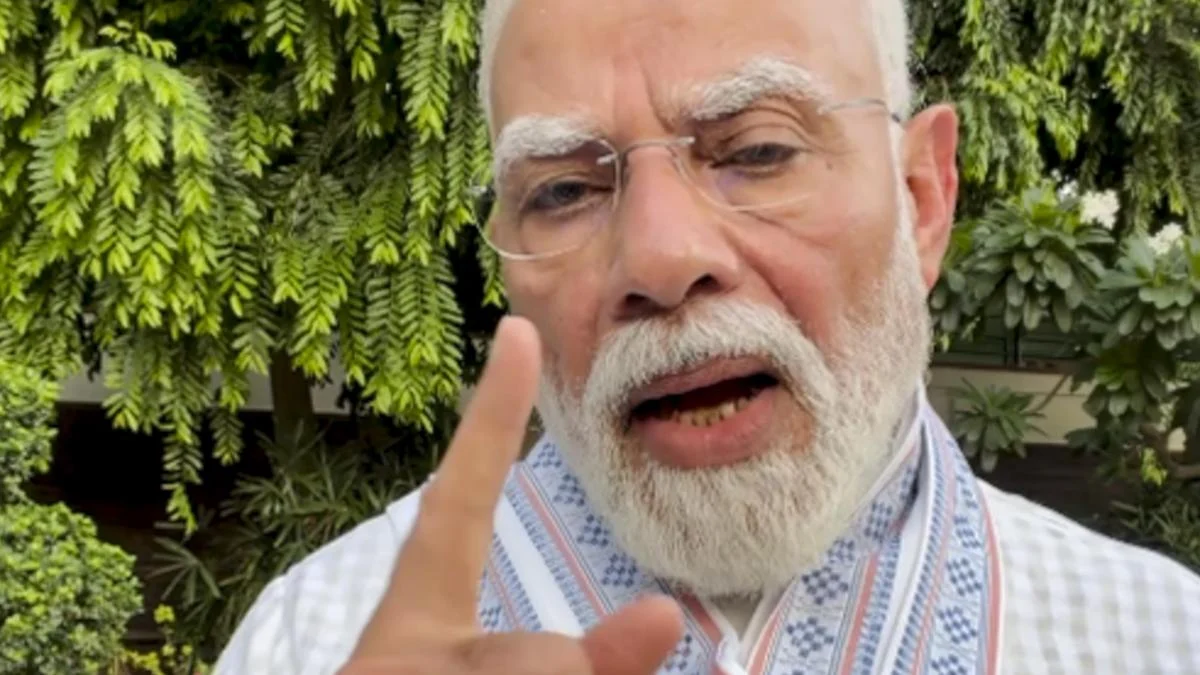
NEW DELHI, August 3, 2026 – Social media behemoth Meta finds itself embroiled in a deepening controversy with Indian authorities, as a parliamentary committee on Monday grilled its representatives over the brief restriction of a Facebook post by Prime Minister Narendra Modi. While Meta expressed readiness to issue an apology for what it termed a "technical glitch," a vocal section of the committee members vehemently demanded stringent legal action and immediate accountability for the incident, underscoring escalating tensions between global tech giants and India’s regulatory framework.
The contentious post, featuring a video message from Prime Minister Modi on July 26, 2026, addressed India’s youth and pledged robust measures against the pervasive issue of examination paper leaks – a subject of immense national importance and public concern. Its temporary removal from the platform triggered widespread alarm and swift condemnation from the Ministry of Electronics and Information Technology (MeitY), which had previously deemed Meta’s initial explanation "inadequate" and summoned its top executives.
Unpacking the Core Controversy: Main Facts
At the heart of the current dispute lies the brief, yet politically charged, restriction of Prime Minister Narendra Modi’s video message on Facebook. The incident, which occurred on July 26, 2026, saw the platform temporarily remove a post where the Prime Minister discussed crucial examination reforms and vowed decisive action against the widespread menace of paper leaks. This act of content moderation, regardless of its duration, ignited a firestorm of criticism from the Indian government, particularly given the high profile of the content’s author.
The primary actors in this unfolding drama are Meta Platforms Inc., the parent company of Facebook, and the Indian government, represented by the Ministry of Electronics and Information Technology (MeitY) and the parliamentary Standing Committee on Information Technology. The committee, led by BJP member Nishikant Dubey, convened a critical meeting on Monday, August 3, 2026, where Meta officials, alongside representatives from other major tech entities like Google, X (formerly Twitter), Snapchat, and YouTube, were summoned to provide explanations.
During this intense session, Meta reportedly conveyed its willingness to issue a formal apology for the "error" in content moderation. However, this conciliatory gesture was met with considerable skepticism and outright demands for more punitive action from a significant number of parliamentarians. Members of the committee did not mince words, asserting that mere apologies were insufficient and that concrete legal consequences and clear accountability were imperative. The overarching sentiment within the committee was that Meta, despite generating substantial revenue from India, was perceived as failing to adhere to the nation’s laws and regulatory expectations, particularly concerning content moderation and algorithmic transparency.
The incident is not merely about a single restricted post; it has become a flashpoint for deeper, systemic concerns regarding algorithmic bias, the handling of objectionable content, and the broader sovereignty of digital governance within India. The government’s firm stance signals a renewed commitment to ensuring that global digital platforms operate with greater responsibility and transparency within its jurisdiction.
A Detailed Timeline of Events
The confrontation between Meta and Indian authorities has escalated through a series of key events, each contributing to the current atmosphere of scrutiny and demand for accountability.
July 26, 2026: The Prime Minister’s Address and Subsequent Restriction
The genesis of the controversy traces back to July 26, 2026, when Prime Minister Narendra Modi released a video message addressing the pressing issue of examination paper leaks in India. In his address, he spoke directly to the nation’s youth, acknowledging their concerns and promising stringent measures to ensure fairness and transparency in competitive examinations. This message, delivered via his official Facebook page, was intended to reassure millions of students and their families grappling with the fallout of compromised examination systems. However, shortly after its publication, the post was briefly restricted on Facebook, rendering it inaccessible to a segment of its vast user base.
Immediate Aftermath: Meta’s Apology and MeitY’s Rejection
Following the swift public outcry and immediate government attention, Meta was quick to respond. The social media giant attributed the incident to a "technical glitch," stating that the content had been removed "in error" and was subsequently restored to the platform. Meta issued an apology, attempting to de-escalate the situation by characterizing the event as an isolated operational oversight.
However, the Ministry of Electronics and Information Technology (MeitY) found Meta’s explanation to be "inadequate." The Ministry viewed the incident with grave concern, particularly given the stature of the content’s author and the sensitive nature of the topic discussed. MeitY promptly summoned Meta’s top executives, demanding a more comprehensive and satisfactory explanation for the temporary restriction of official government communication. This move underscored the government’s unwavering resolve to hold digital platforms accountable for their content moderation practices, especially when they impact national leaders or public discourse on critical issues.
August 3, 2026: Parliamentary Committee Grilling and Calls for Legal Action
The controversy reached a critical juncture on Monday, August 3, 2026, when the department-related Standing Committee on Information Technology convened a high-stakes meeting. Officials from Meta, including representatives for Facebook, WhatsApp, and Instagram, appeared before the panel alongside executives from other major digital platforms like Snapchat, Google, X (formerly Twitter), and YouTube. The meeting was specifically called to discuss the subject of "Social and Digital platforms and their regulation," with the Meta incident taking center stage.

During the intense questioning, committee members highlighted the perceived disparity in Meta’s content moderation policies. They pointed out that while the platform often failed to remove genuinely objectionable content, such as pornography, it had inexplicably restricted a legitimate and significant post by the Prime Minister. "When Facebook has not removed a lot of other objectionable content, who removed Prime Minister Narendra Modi’s video from the platform?" an MP reportedly questioned Meta representatives, demanding to know, "Who bears the ultimate responsibility for this?"
The committee’s frustration was palpable, with members stressing that India generates substantial revenue for Meta, yet the company appeared to disregard Indian laws. Meta officials, facing relentless scrutiny, reiterated their regret over the incident and expressed their readiness to apologize once more. However, a BJP MP on the panel firmly stated that an apology alone was insufficient. "This isn’t just about offering an apology. Accountability must be fixed and legal action should be taken in this matter," the member asserted, reflecting the committee’s hardening stance. The questioning also extended to the capabilities of Meta’s algorithms, particularly concerning their effectiveness in detecting and managing deepfakes of public figures, including the Prime Minister, raising further concerns about the platform’s technological safeguards.
Parallel to these developments, government sources indicated that Meta CEO Mark Zuckerberg had also reportedly sent apologies for "errors in operating the platform," a broader acknowledgment that could be seen as an attempt to mend fences not just over the Modi incident but also other concerns like CSAM (child sexual abuse material) and deepfake content errors. This broader apology, while not directly addressing the Modi post, contributes to a narrative of Meta acknowledging systemic issues within its moderation frameworks.
Supporting Data and Broader Context
The incident with Prime Minister Modi’s Facebook post cannot be viewed in isolation; it is symptomatic of a larger, evolving landscape of digital governance in India and the growing assertiveness of the government in regulating global tech giants.
India’s Critical Importance to Meta: India represents one of Meta’s largest and most crucial markets globally, boasting hundreds of millions of users across its platforms like Facebook, WhatsApp, and Instagram. This massive user base translates into substantial advertising revenue and strategic growth opportunities for the company. Consequently, any friction with Indian authorities carries significant financial and operational implications for Meta. The parliamentary committee’s observation that Meta "earns huge revenue from India, [but] does not follow the law of the land" highlights this imbalance of economic gain versus perceived regulatory compliance. The sheer scale of India’s digital population means that any regulatory misstep or perceived disrespect for national norms can lead to profound consequences for platforms operating within the country.
The Algorithmic Bias Conundrum: A recurring theme during the committee’s discussions was the issue of "algorithmic bias." Members voiced serious concerns that Meta’s algorithms appeared to be inconsistently applied, leading to the removal of "genuine" content while allowing objectionable material, such as pornography, to proliferate. This selective moderation raises questions about the transparency, fairness, and potential political leanings embedded within these complex algorithms. Critics argue that if algorithms can mistakenly flag a head of state’s official communication, their reliability in moderating other forms of content, particularly those with sensitive or political undertones, becomes highly questionable. This concern extends beyond Meta, encompassing the broader challenge faced by all large language models and AI-driven content moderation systems in balancing accuracy, scale, and cultural context.
Deepfake Threats and Platform Capabilities: The committee also specifically questioned Meta’s capabilities in combating deepfakes, particularly those targeting high-profile individuals like Prime Minister Modi. The rapid advancement of AI-generated content poses a significant threat to information integrity and public trust. Lawmakers’ queries about the effectiveness of Meta’s deepfake detection algorithms underscore a growing demand for platforms to invest more robustly in technologies that can identify and mitigate such sophisticated misinformation campaigns. The fear is that if official communications can be mistakenly restricted, the potential for malicious deepfakes to spread unchecked could have far more severe societal implications.
A History of Tech-Government Tensions in India: The current incident is not an isolated event but rather fits into a broader pattern of increasing regulatory scrutiny and occasional clashes between the Indian government and global technology companies. Over recent years, India has introduced new IT rules (e.g., the Information Technology (Intermediary Guidelines and Digital Media Ethics Code) Rules, 2021) aimed at increasing accountability, mandating traceability of messages, and requiring platforms to appoint resident grievance officers. These regulations have often been met with resistance from tech companies citing privacy concerns or operational challenges. Past disputes have involved WhatsApp’s privacy policy updates, Twitter’s non-compliance with content removal requests during farmer protests, and broader debates over data localization and censorship. This historical context illustrates India’s determination to assert its digital sovereignty and ensure that foreign tech companies operate in alignment with its national interests and laws. The incident with PM Modi’s post serves as a potent reminder that the government is prepared to take decisive action when it perceives non-compliance or disrespect for its authority.
The Political Significance of Paper Leaks: The subject of Prime Minister Modi’s restricted post – examination paper leaks – carries immense political and social weight in India. Instances of paper leaks have repeatedly undermined the integrity of competitive examinations, affecting millions of students aspiring for government jobs or higher education. This issue touches a raw nerve among the youth and their families, often leading to widespread protests and calls for justice. Therefore, the Prime Minister’s direct address on this matter was not merely routine communication but a significant political statement aimed at reassuring a crucial demographic. Its brief restriction, regardless of the cause, inadvertently created a narrative of potential obstruction or censorship of a critical national message, thereby amplifying the government’s strong reaction. The government’s push for "stringent action against paper leaks" resonates deeply with the electorate, making any interference with this message particularly sensitive.
Official Responses and Demands for Accountability
The parliamentary IT committee meeting on August 3, 2026, served as a powerful platform for the Indian government to articulate its grievances and demands directly to Meta’s representatives. The tone was firm, and the expectations were clear.
Parliamentary IT Committee’s Unyielding Stance: The committee members did not shy away from expressing their profound dissatisfaction. Their questioning focused relentlessly on two key areas: accountability and the perceived double standards in content moderation.

- Direct Questions on Responsibility: Members probed Meta officials directly, asking, "Who removed Prime Minister Narendra Modi’s video from the platform?" and, more pointedly, "Who bears the ultimate responsibility for this?" These questions aimed to pierce through the corporate structure and identify individuals or specific teams responsible for the content moderation decision, signaling a desire to move beyond generic "technical glitch" explanations.
- Demands for Fixed Accountability: The sentiment within the committee was encapsulated by a member who reportedly stated, "In a democracy, if a video of the prime minister is not safe, then accountability needs to be fixed." This statement underscores the seriousness with which the government views the incident, equating the restriction of the Prime Minister’s message with a breach of digital security and democratic principles.
- Beyond Apologies: Calls for Legal Action: While Meta officials, according to sources, "expressed regret over the incident before the panel and stated they were ready to apologise," this offer was deemed insufficient by a BJP MP. The member asserted, "This isn’t just about offering an apology. Accountability must be fixed and legal action should be taken in this matter." This demand for legal recourse signifies a significant escalation, indicating that the government might be prepared to pursue punitive measures beyond mere verbal apologies, possibly including fines or stricter regulatory oversight.
- Algorithmic Scrutiny: The committee’s questioning also extended to the capabilities of Meta’s algorithms, particularly concerning their efficacy in identifying and preventing deepfakes of public figures like Prime Minister Modi. This line of questioning reflects a broader concern about the sophistication and reliability of AI-driven content moderation tools and the potential for these systems to be either flawed or manipulated.
MeitY’s Preceding Actions: Prior to the parliamentary committee meeting, the Ministry of Electronics and Information Technology (MeitY) had already taken a decisive stand. Upon learning of the incident, MeitY found Meta’s initial explanation of a "technical glitch" to be "inadequate." This assessment prompted the Ministry to summon Meta’s top executives, a clear indication that the government expected a more thorough and satisfactory account of the events. MeitY’s proactive intervention set the stage for the more extensive grilling by the parliamentary committee, demonstrating a coordinated governmental response to perceived digital platform overreach.
Meta’s Position: Throughout the ordeal, Meta has consistently maintained that the incident was an "error" or a "technical glitch" and has expressed regret. Their readiness to apologize, as reported during the committee meeting, indicates a strategic attempt to de-escalate tensions and perhaps avoid more severe regulatory repercussions. The broader apology from CEO Mark Zuckerberg for "errors in operating the platform," while not exclusively about the Modi post, suggests a company-wide acknowledgment of moderation challenges and a desire to rebuild trust with governments and users. However, the Indian government’s insistence on "legal action" and "fixed accountability" suggests that Meta’s current conciliatory approach may not be enough to resolve the issue to India’s satisfaction.
Far-Reaching Implications
The incident involving the restriction of Prime Minister Modi’s Facebook post, and the subsequent parliamentary scrutiny, carries significant implications for the future of digital governance, the relationship between global tech companies and national governments, and the broader digital landscape in India.
Stricter Regulatory Frameworks for Tech Giants: This episode is highly likely to catalyze the enactment of more stringent regulatory frameworks for social and digital platforms in India. The government’s strong reaction, coupled with the parliamentary committee’s demands for legal action, signals an intent to move beyond existing guidelines. Future regulations could potentially include higher penalties for content moderation errors, mandatory transparency reports on algorithmic decisions, clearer liability frameworks for platforms, and more robust mechanisms for redressal. The emphasis on "accountability" could lead to requirements for identifying specific individuals responsible for content moderation decisions, rather than allowing companies to hide behind generic corporate statements.
Re-evaluating Platform Autonomy vs. National Sovereignty: The clash highlights the ongoing tension between the perceived autonomy of global digital platforms in moderating content and the assertion of national sovereignty by governments. India’s stance reinforces the principle that platforms operating within its borders must comply with local laws and respect national leaders and democratic institutions. This incident could set a precedent, empowering other nations to demand similar levels of accountability and compliance from tech giants. The question of "who controls the narrative" on digital platforms, especially for official government communications, is now more pertinent than ever.
Impact on Meta’s Operations and Reputation in India: For Meta, the incident could have several adverse consequences. Beyond potential financial penalties, there’s a significant risk of reputational damage, which could erode user trust and affect its market position in India. The government’s scrutiny might also lead to increased operational overheads as Meta is forced to invest more in localized content moderation teams, enhanced algorithmic transparency, and stricter compliance protocols. Furthermore, a strained relationship with the government could jeopardize future expansion plans or lead to unfavorable policy decisions affecting its business. The "apology fatigue" expressed by some MPs suggests that goodwill has been significantly depleted.
The Delicate Balance of Free Speech and Platform Responsibility: The controversy also reignites the complex debate surrounding freedom of speech versus platform responsibility. While platforms are often seen as arbiters of online discourse, their power to restrict or amplify content, especially that of political leaders, comes with immense responsibility. The government’s position implies that platforms must exercise extreme caution when moderating content from democratically elected leaders, particularly on matters of national public interest. This delicate balance requires platforms to navigate cultural sensitivities, political contexts, and legal obligations with far greater nuance than a blanket "technical glitch" explanation allows.
Enhanced Scrutiny of Algorithms and AI in Content Moderation: The parliamentary committee’s questioning regarding algorithmic bias and deepfake detection capabilities suggests that the reliability and transparency of AI-driven content moderation will be under much greater scrutiny. Governments worldwide are grappling with the implications of AI in shaping public discourse. This incident will likely accelerate demands for platforms to open their algorithms to independent audits, provide clearer explanations for moderation decisions, and invest heavily in AI safety and ethics. The perceived failure of Meta’s algorithms in this high-profile case could lead to a broader loss of confidence in automated content moderation systems.
Political Capital and Digital Governance: For the Indian government, particularly Prime Minister Modi, this incident provides an opportunity to reinforce its commitment to digital sovereignty and protecting national interests in the online sphere. It allows the government to demonstrate its resolve in confronting powerful foreign entities, resonating with a nationalist sentiment and positioning itself as a guardian of digital rights and integrity for its citizens. This could further bolster public support for policies aimed at strengthening India’s digital governance framework.
In conclusion, the brief restriction of Prime Minister Modi’s Facebook post has become a crucible moment, forcing a re-evaluation of the terms of engagement between India and global tech giants. While Meta seeks to appease with apologies, the Indian Parliament’s demand for "legal action" and "fixed accountability" signals a pivotal shift, indicating that the era of unchallenged platform autonomy in India may be drawing to a close, ushering in a new chapter of heightened regulation and uncompromising demands for digital responsibility.
