

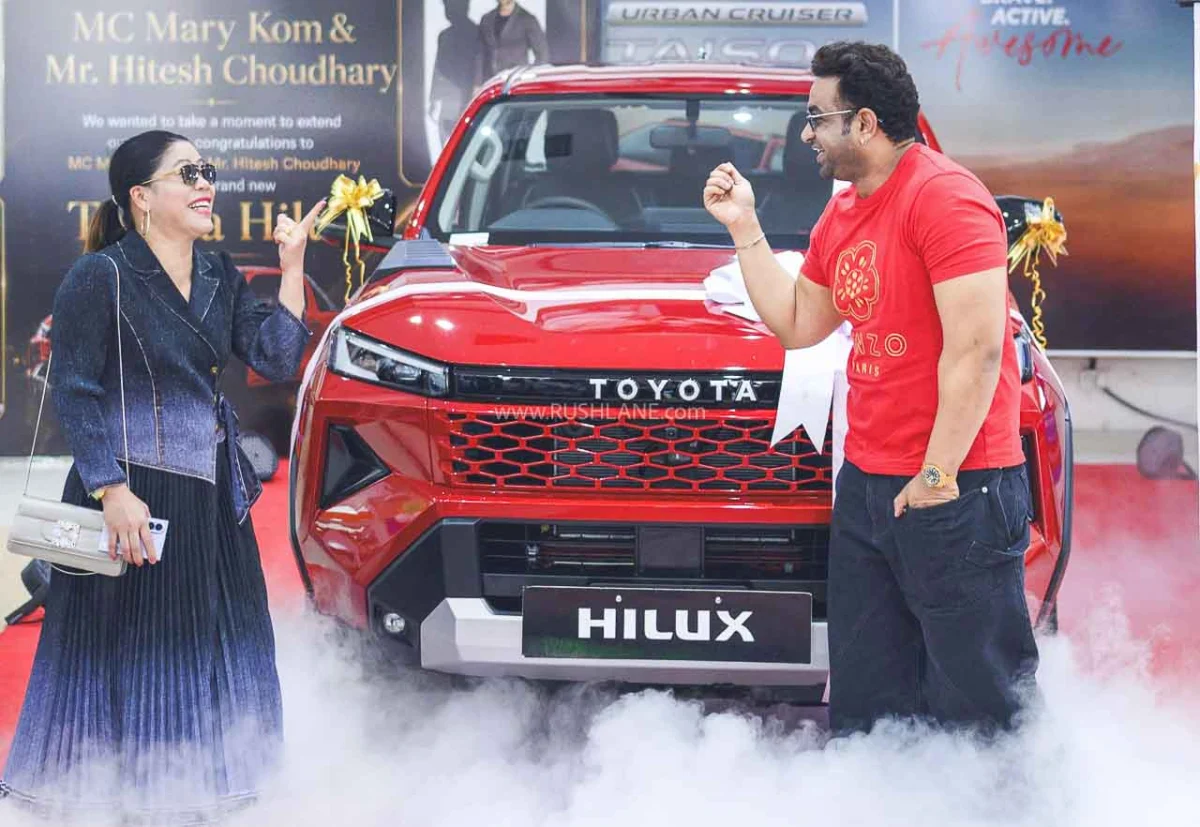
NEW DELHI – Toyota Kirloskar Motor (TKM) has officially signaled a new chapter in India’s burgeoning lifestyle utility vehicle segment by commencing customer deliveries of the highly anticipated 9th-generation Toyota Hilux. In a high-profile event that blended sporting excellence with automotive engineering, six-time World Amateur Boxing Champion and Olympic bronze medallist, M. C. Mary Kom, became one of the first owners of the new model, taking delivery of her vehicle at a flagship Toyota dealership in the Delhi National Capital Region (NCR).
The commencement of deliveries, strategically timed around India’s Independence Day period, marks a pivotal moment for Toyota as it seeks to solidify its dominance in the premium pickup market. The 9th-generation Hilux, which was launched on July 28, 2026, represents the most significant overhaul of the nameplate in nearly a decade, bringing global design standards, enhanced technology, and uncompromised off-road capability to Indian shores.
Main Facts: A Synergy of Icons
The association between Toyota and Mary Kom is being framed by the company as a "meeting of icons." Known globally as "Magnificent Mary," the boxer’s career has been defined by resilience, durability, and the ability to conquer the toughest of terrains—traits that have been the hallmark of the Toyota Hilux since its global debut in 1968.
Toyota’s decision to deliver the first set of keys to Mary Kom is a calculated move to position the Hilux not merely as a commercial workhorse, but as an aspirational lifestyle vehicle. The Hilux is built on the legendary IMV (Innovative International Multi-purpose Vehicle) platform, the same architecture that underpins the Toyota Fortuner and the Innova Crysta, ensuring a level of reliability that has earned the Hilux a reputation for being "indestructible" across the globe.
The 9th-generation model enters the Indian market at a starting price of Rs 31.99 lakh, climbing to Rs 36.69 lakh (ex-showroom). It is available in three distinct trims:

- GX 4X2 AT
- GX 4X4 AT
- VX 4X4 AT
Chronology of the 9th-Generation Launch
The journey of the 9th-generation Hilux in India has been swift, following its international reveal earlier this year.
- Early 2026: Rumors and spy shots of the updated Hilux began circulating, suggesting that Toyota was preparing to skip minor facelifts in favor of a comprehensive generational shift for the Indian market.
- July 28, 2026: Toyota Kirloskar Motor officially launched the 9th-generation Hilux. The launch was notable for introducing a more aggressive design language and a tech-heavy interior, addressing previous criticisms of the cabin being too utilitarian.
- August 1-14, 2026: Dealerships across India reported a surge in inquiries. TKM opened the order books, though specific booking numbers remain undisclosed.
- August 15, 2026: To coincide with Independence Day, Toyota began the logistics of moving stock to major metropolitan hubs.
- August 2026 (Present): Formal delivery ceremonies commence, headlined by Mary Kom’s vehicle handover, marking the official presence of the 9th-gen Hilux on Indian roads.
Supporting Data: Technical Specifications and Features
The 9th-generation Hilux is a departure from its predecessor in both form and function. Toyota has employed its "Tough & Agile" design philosophy, resulting in a vehicle that looks more muscular yet feels more refined.
Exterior and Design
The most striking change is the front fascia. The vehicle features a more upright, hexagonal grille with prominent "TOYOTA" lettering, moving away from the traditional logo badge on certain trims to evoke a retro-modern aesthetic similar to the Land Cruiser 300. The LED headlamps are sleeker, featuring integrated DRLs, while the redesigned bumpers improve the approach and departure angles for off-road enthusiasts. The vehicle sits on newly designed 18-inch alloy wheels that complement its flared wheel arches.
Interior and Technology
The cabin has undergone a "digital revolution." For the first time, the Hilux features:
- 12.3-inch Touchscreen Infotainment: A significant upgrade from the previous 8-inch unit, supporting wireless Apple CarPlay and Android Auto.
- Fully Digital Instrument Cluster: A customizable 10.25-inch display providing real-time off-road data, navigation, and vehicle health.
- Premium Comfort: Dual-zone automatic climate control, leather upholstery, and powered driver seats.
- Connectivity: The "Toyota i-Connect" suite, offering remote engine start/stop, vehicle tracking, and geo-fencing.
Performance and Drivetrain
Under the hood, Toyota has opted for the "tried and tested" over the "experimental." While international markets have seen the introduction of 48V mild-hybrid diesel systems, the India-spec Hilux retains the potent 2.8-litre, four-cylinder turbo-diesel engine.

- Power Output: 204 PS.
- Torque: 500 Nm (with the 6-speed Automatic Transmission).
- Transmission: A 6-speed torque converter automatic is standard across the range in India, optimized for both highway cruising and low-end torque delivery.
- Off-Road Hardware: The VX trim comes standard with a 4WD system, electronic differential lock, and a Limited Slip Differential (LSD). New to this generation is the Multi-Terrain Select (MTS), which allows drivers to choose between Sand, Mud, Rock, and Snow modes.
Official Responses and Strategic Positioning
In a statement following the delivery to Mary Kom, Toyota Kirloskar Motor emphasized the Hilux’s dual identity. A spokesperson for the company noted, "The Hilux is not just a vehicle; it is a legacy of over five decades. With the 9th-generation, we are bringing a level of sophistication that allows the vehicle to transition seamlessly from a rugged off-road trail to a premium urban environment. Having a legend like Mary Kom as one of our first owners validates the Hilux’s core values of strength and unbeatable spirit."
Industry analysts suggest that Toyota’s marketing strategy is shifting. By moving the Hilux into the Rs 32-37 lakh bracket, they are targeting the "adventure-lifestyle" segment—buyers who might otherwise consider a Jeep Meridian or a high-end Scorpio-N but want the utility of a flatbed for camping gear, motorbikes, or specialized equipment.
Toyota has also focused heavily on safety for the 9th-gen model. The vehicle comes equipped with:
- 7 Airbags (standard across variants).
- ABS with EBD and Brake Assist.
- Vehicle Stability Control (VSC) and Traction Control.
- Downhill Assist Control (DAC) and Hill Start Assist.
- 360-degree Panoramic View Monitor.
Implications for the Indian Automotive Market
The arrival of the 9th-generation Hilux and the commencement of its deliveries have significant implications for the Indian automotive landscape.
1. Strengthening the Premium Pickup Niche
For years, the Isuzu V-Cross was the sole occupant of the lifestyle pickup segment. Toyota’s aggressive push with the Hilux has expanded the market size. The Hilux’s success suggests that Indian consumers are finally warming up to the idea of a pickup truck as a primary family vehicle, provided it offers the luxury and safety of an SUV.

2. The Competitive Landscape
The timing of the Hilux deliveries is critical. Mahindra is set to unveil the production-ready version of its "Global Pik Up" (based on the Scorpio-N platform) today. By starting deliveries now, Toyota is attempting to capture the first-mover advantage in the new product cycle. While the Mahindra offering is expected to be more affordably priced, Toyota is banking on its superior brand equity and the legendary reliability of the Hilux badge to retain premium customers.
3. Resale Value and Total Cost of Ownership
The Hilux is expected to mirror the Fortuner in terms of resale value. In India, Toyota’s body-on-frame vehicles typically retain up to 70-80% of their value after three years of ownership. This "investment-grade" status of the Hilux makes the Rs 36 lakh price tag more palatable for fleet owners and high-net-worth individuals alike.
4. Impact on the SUV Segment
There is an emerging trend of "SUV fatigue," where buyers are looking for something more distinctive than the standard mid-size or full-size SUV. The Hilux offers a unique silhouette and "go-anywhere" capability that standard monocoque SUVs cannot match. This could potentially eat into the sales of premium D-segment SUVs.
Conclusion
The delivery of the first 9th-generation Toyota Hilux to Mary Kom is more than a celebrity endorsement; it is a signal of intent from Toyota Kirloskar Motor. As the company ramps up production and clears the initial backlog of bookings, the Hilux is poised to redefine what Indian consumers expect from a utility vehicle. With a blend of 21st-century technology and 20th-century ruggedness, the 9th-generation Hilux is well-equipped to handle both the urban jungles of Delhi and the treacherous trails of the Himalayas, cementing its status as the gold standard in its class.
