

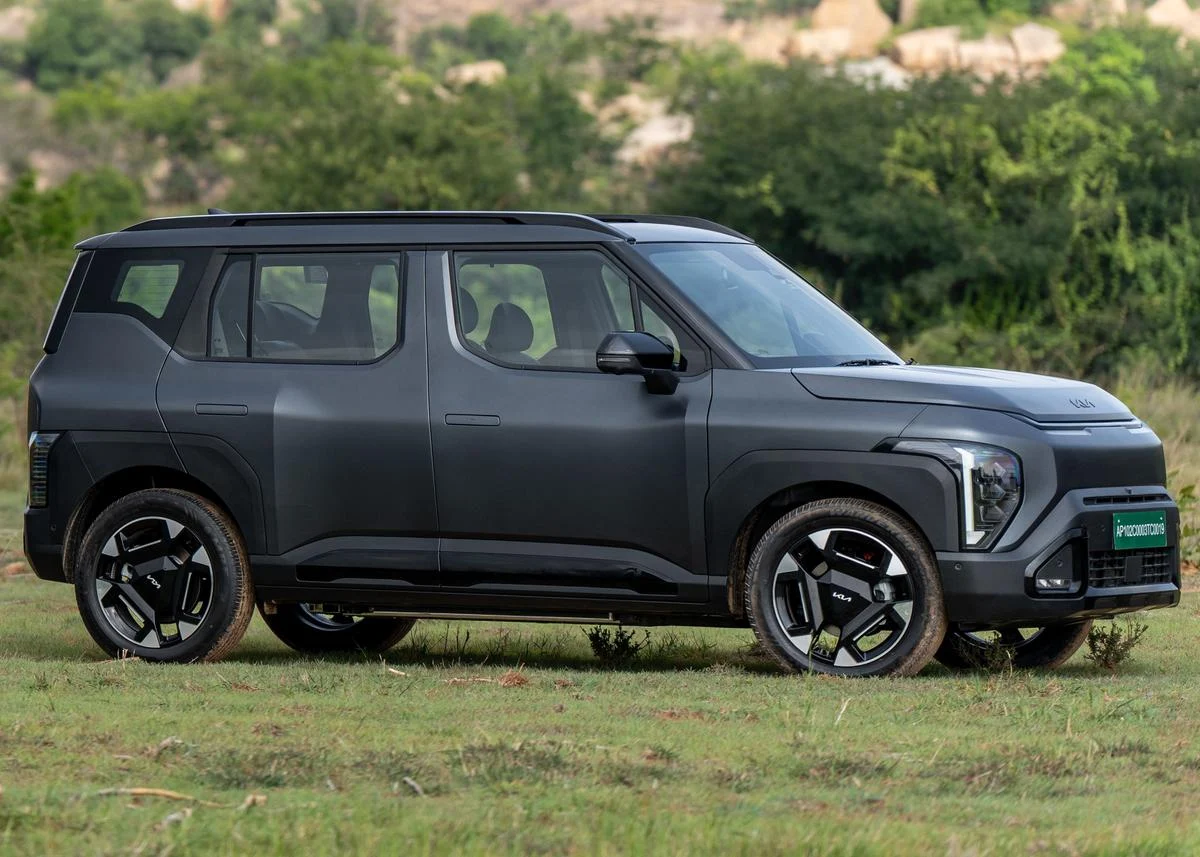
The Indian automotive landscape is currently witnessing a transformative era, transitioning from internal combustion engines (ICE) to sustainable electric mobility. At the heart of this transition lies the sub-four-metre category—a segment that balances tax efficiencies with urban practicality. Kia India, a brand that has consistently punched above its weight in terms of design and feature-loading, has now unleashed the Syros EV. Priced between ₹13.50 lakh and ₹20.00 lakh (ex-showroom), the Syros EV is not merely an electric derivative of a compact SUV; it is a calculated attempt to redefine what a "small" car can offer in terms of performance, technology, and interior versatility.
Main Facts: The Syros EV at a Glance
The Kia Syros EV enters the market with a clear mission: to challenge the notion that compact dimensions necessitate compromise. While it adheres to the sub-four-metre constraint to optimize its market positioning, its specifications suggest a vehicle from a segment above.
Key Specifications:
- Dimensions: Length of 3,995 mm with a class-leading wheelbase of 2,550 mm.
- Powertrain Options: Two battery variants—a 42 kWh unit and a high-performance 51.4 kWh pack.
- Performance: The 51.4 kWh version delivers 171 PS of power and 255 Nm of torque, enabling a 0–100 km/h sprint in just 8.1 seconds.
- Range: An ARAI-certified (MIDC) range of 526 km for the larger battery and 443 km for the 42 kWh version.
- Charging: 10% to 80% DC fast charging in approximately 39 minutes via a 100 kW charger.
- Cargo Capacity: A flexible boot offering up to 465 litres of space.
By offering a range that exceeds the 500-km psychological barrier in its top trim, Kia is targeting the "range anxiety" that remains the primary hurdle for EV adoption in India.

Chronology: From Concept to Electric Reality
The development of the Syros EV follows Kia’s global "Opposites United" design philosophy, tailored specifically for the nuances of the Indian market. The journey began with the standard Syros, which was designed to provide a "tall-boy" stance that maximizes vertical space.
When Kia decided to electrify the platform, the engineers did not merely swap the engine for a motor. They underwent a comprehensive recalibration of the chassis to accommodate the floor-mounted battery pack. This required a delicate balance: maintaining the vehicle’s high ground clearance and upright stance while ensuring the added weight of the lithium-ion cells did not negatively impact the center of gravity or ride quality.
The launch of the Syros EV marks a critical juncture in Kia’s Indian roadmap. It follows the success of the premium EV6, serving as a more accessible entry point into the brand’s electric ecosystem. The timing is strategic, coinciding with the arrival of competitors like the Maruti Suzuki e Vitara, signaling the start of a "volume-war" in the electric SUV space.
Supporting Data: Engineering, Design, and Interior Ergonomics
Aesthetic Evolution and Aerodynamics
The Syros EV retains the familiar, boxy silhouette of its ICE counterpart, but with "distinctly electric" enhancements. The front fascia features a closed-off "Tiger Nose" treatment, which is essential for reducing aerodynamic drag—a critical factor in extending EV range. Revised bumpers and specialized aerodynamic alloy wheels further differentiate the EV.

Kia’s design team opted for a sophisticated approach rather than a radical departure. The EV does not "shout" its electric identity; instead, it uses subtle cues like specialized lighting signatures and EV-specific color palettes to signal its contemporary nature.
The "Space-First" Interior Philosophy
The most significant achievement of the Syros EV is its interior packaging. Despite being under four metres in length, the 2,550 mm wheelbase allows for a cabin that rivals mid-size SUVs.
- Sliding and Reclining Rear Seats: This is a rarity in the compact segment. Passengers can prioritize legroom or cargo space depending on the requirement.
- Storage Excellence: With the seats adjusted, the 465-litre boot provides enough volume for family weekend trips, a feat that many larger SUVs struggle to match.
- Tech-Loaded Dashboard: The cockpit is dominated by dual 12.3-inch integrated displays—one for the digital instrument cluster and one for the infotainment system.
Performance and Drivability
The 171 PS electric motor provides a level of responsiveness that ICE vehicles in this price bracket cannot replicate. The instantaneous torque of 255 Nm ensures that the Syros EV feels "light on its feet," particularly in stop-and-go urban traffic.
Kia has also introduced a sophisticated regenerative braking system. Using steering-mounted paddles, drivers can toggle between different levels of energy recuperation. The "i-Pedal" mode allows for near-total one-pedal driving, which significantly reduces driver fatigue in congested Indian cities.

Official Responses: Kia’s Strategic Vision
While official quotes often focus on market shares, Kia’s engineering choices reflect an "official response" to Indian consumer feedback. Kia executives have previously noted that Indian buyers are "value-conscious but feature-hungry."
The inclusion of a separate interface for climate control is a direct response to the growing criticism of "screen-only" interiors. By keeping physical or dedicated touch controls for essential functions, Kia is prioritizing driver safety and ergonomic ease.
Furthermore, Kia’s investment in a 100 kW DC fast-charging compatibility speaks to their commitment to long-distance usability. While most home chargers operate at much lower speeds, the hardware readiness for high-speed public infrastructure positions the Syros EV as a "future-proof" asset. Kia has also emphasized their comprehensive battery warranty and ownership programs, aimed at reassuring first-time EV buyers about the long-term viability of the technology.
Implications: Challenging the Status Quo
The arrival of the Syros EV has profound implications for the Indian automotive market, specifically for the burgeoning rivalry between Kia and Maruti Suzuki.

1. The "David vs. Goliath" Competitive Landscape
The Maruti Suzuki e Vitara is physically larger than the Syros EV. However, Kia is betting that "smart packaging" will trump "raw size." By offering a sliding rear bench and a more premium interior, the Syros EV makes a compelling case for buyers who want luxury and flexibility without the difficulty of maneuvering a larger vehicle in tight urban spaces.
2. Redefining Premium in the Compact Segment
The Syros EV’s price ceiling of ₹20.00 lakh puts it in direct competition with larger ICE SUVs. Kia is testing the hypothesis that Indian consumers are willing to pay a premium for a smaller vehicle if it is equipped with high-end features like Level 2 ADAS (Advanced Driver Assistance Systems), ventilated seats, and a panoramic sunroof. The ADAS suite, including forward collision avoidance and adaptive cruise control, brings safety technology to the masses that was previously reserved for luxury imports.
3. Highway Capability and NVH Levels
The shift to electric propulsion changes the Refinement, Noise, Vibration, and Harshness (NVH) profile of the vehicle. In the city, the Syros EV is exceptionally quiet. However, the "tall-boy" design presents a challenge on the highway, where wind noise becomes more apparent due to the lack of engine roar. The Syros EV’s performance on the highway—specifically its ability to maintain stability despite its height—will be a key factor in its adoption as a primary family car rather than just a secondary city runabout.
4. Environmental and Economic Impact
At a starting price of ₹13.50 lakh, the Syros EV is positioned to convert mid-segment sedan and hatchback buyers to electric SUVs. If Kia achieves the projected sales volumes, it will contribute significantly to the reduction of urban tailpipe emissions. For the consumer, the lower cost-per-kilometre of electricity versus petrol or diesel remains the strongest long-term economic incentive, provided the initial premium can be justified through the vehicle’s high equipment levels.

Conclusion: A Benchmark for the Next Generation
The Kia Syros EV is a masterclass in "right-sizing." It acknowledges the constraints of the Indian road—the need for a small footprint for parking and traffic—while refusing to settle for a cramped or underpowered experience.
By delivering 171 PS and a range of over 500 km in a sub-four-metre package, Kia has set a high bar for its competitors. The Syros EV proves that the future of electric mobility in India does not have to be an "experiment" or a "compromise." Instead, it can be a well-judged, premium, and genuinely versatile tool for the modern family. As the infrastructure for fast charging continues to expand across the subcontinent, the Syros EV is perfectly positioned to lead the charge into a cleaner, more efficient automotive future.
