

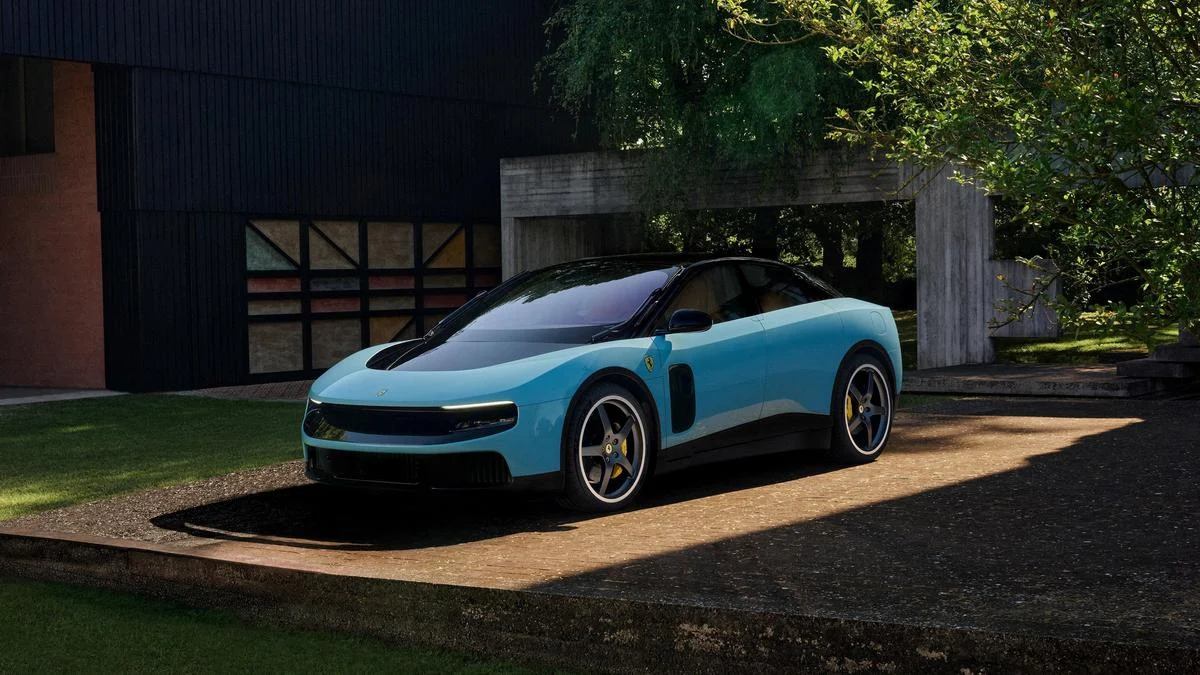
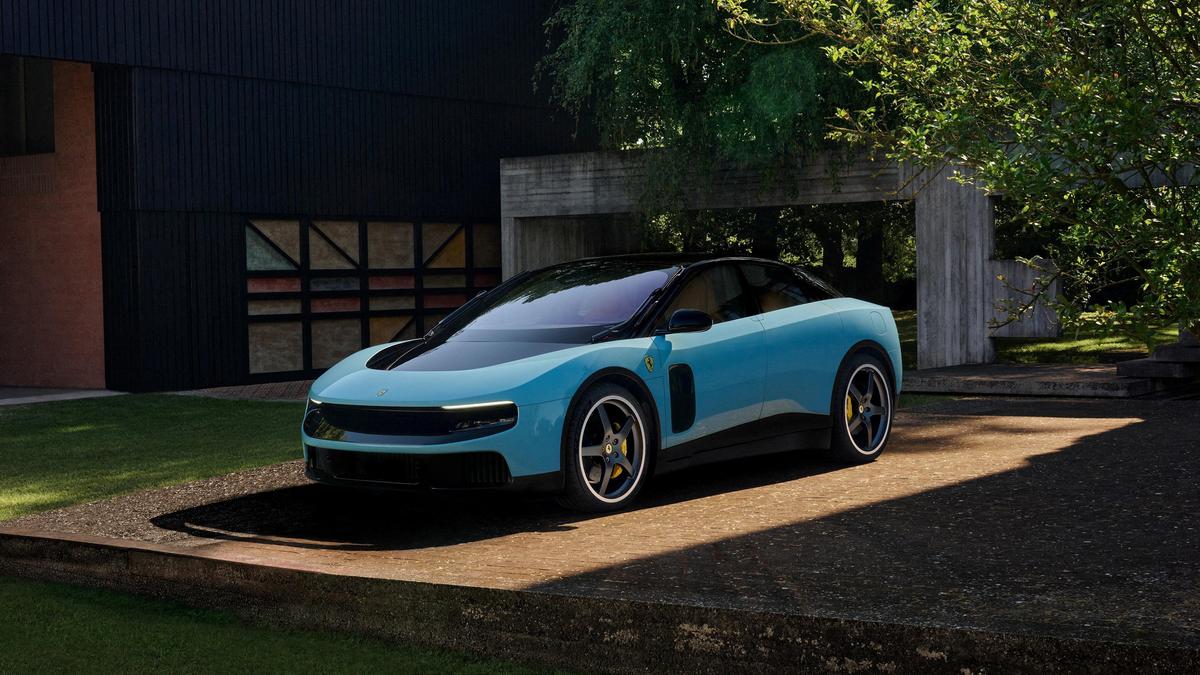
MARANELLO, ITALY — In a move that signals a historic pivot for the world’s most iconic automotive brand, Ferrari has officially pulled the silk off its first-ever fully electric vehicle (EV), the "Luce." The unveiling, held at the company’s newly inaugurated "e-building" in Maranello, marks the end of a decades-long resistance to pure battery power and the beginning of a high-stakes gamble on the future of luxury mobility.
The Luce—meaning "Light" in Italian—represents a radical departure from the high-decibel V12 engines that defined the "Prancing Horse" for nearly eight decades. As the automotive industry grapples with a cooling global demand for electric vehicles and shifting regulatory landscapes, Ferrari’s entry into the segment is being viewed by analysts as both a necessary evolution and a risky preservation of brand prestige.
Main Facts: A New Breed of Prancing Horse
The Ferrari Luce is not merely a battery-powered version of an existing chassis; it is a ground-up reimagining of what a Ferrari can be in the 21st century. The technical specifications released late Monday confirm that Ferrari has prioritized performance parity with its internal combustion engine (ICE) counterparts, albeit with a significantly different physical footprint.
Performance and Powertrain
The Luce is equipped with a massive 122 kWh battery pack, one of the largest in the passenger vehicle segment, which powers a tri-motor setup. This configuration allows the Luce to achieve a top speed exceeding 310 kilometres per hour (192 mph). More impressively, the instantaneous torque of the electric motors propels the car from 0 to 100 kph in just 2.5 seconds, placing it firmly in the upper echelon of the world’s fastest accelerating production cars.
Despite the focus on speed, Ferrari has addressed the "range anxiety" often associated with high-performance EVs. The Luce boasts a range of over 530 kilometres (approximately 330 miles) on a single charge, utilizing a sophisticated thermal management system to ensure performance does not degrade during spirited driving.
Dimensions and Utility
In a surprising shift for a brand synonymous with cramped, two-seat cockpits, the Luce is the first five-seater in Ferrari’s history. It is also only the second four-door model ever produced by the marque, following the recent success of the Purosangue.
However, this utility comes at a literal cost: weight. The Luce weighs in at 2.26 tonnes (approximately 4,982 lbs), making it the heaviest vehicle Ferrari has ever produced. Engineers have reportedly utilized advanced torque vectoring and active suspension systems to mask this mass, aiming to retain the "flickable" handling characteristics expected by the Tifosi.
Chronology: The Road to Maranello’s Electric Era
The journey to the Luce has been marked by strategic hesitation followed by rapid industrialization.
- 2013-2019: The Hybrid Foundation: Ferrari began its electrification journey with the LaFerrari hybrid, followed by the SF90 Stradale and the 296 GTB. These models served as "proof of concept" that electric motors could enhance, rather than dilute, the driving experience.
- 2022: The Capital Markets Day Declaration: CEO Benedetto Vigna officially confirmed that a fully electric Ferrari would arrive in 2025 (later pushed to 2026). At this time, the company set an ambitious goal: 40% of its lineup would be fully electric by 2030.
- 2024-2025: The "e-building" Construction: Ferrari invested hundreds of millions of euros into a dedicated "e-building" at its Maranello headquarters. This facility was designed to produce electric motors, battery packs, and power inverters in-house, ensuring that the "soul" of the car remained proprietary.
- Late 2025: The Strategic Pivot: Amidst a global slowdown in EV adoption, Ferrari executives quietly adjusted their 2030 targets. The company announced that electric models would likely account for 20% of sales by the end of the decade, down from the initial 40%, opting instead for a "tri-fuel" strategy (ICE, Hybrid, and EV).
- May 25, 2026: The official world premiere of the Luce.
Supporting Data: The Weight of Innovation
The transition to electric power presents a unique set of data-driven challenges for Ferrari. To maintain its luxury margins, the company must balance the high cost of battery chemistry with the performance expectations of its ultra-wealthy clientele.
Battery and Charging
The 122 kWh battery uses a high-silicon anode chemistry, developed in partnership with leading European battery firms, to increase energy density while keeping the pack as slim as possible. The Luce utilizes an 800-volt architecture, allowing for ultra-fast charging. Ferrari claims the car can recoup 80% of its charge in less than 18 minutes at a 350kW DC fast charger.
Weight Distribution
The 2.26-tonne weight is distributed 48% at the front and 52% at the rear. By mounting the battery pack low in the floorpan, Ferrari has achieved a center of gravity that is actually lower than that of the V12-powered Purosangue. This "skateboard" architecture is critical to preventing the Luce from feeling "top-heavy" in corners.
Market Context
Ferrari’s entry comes as the luxury EV market sees mixed results. While the Porsche Taycan has been a commercial success, other high-end manufacturers have struggled to convince traditionalists to ditch the roar of an engine for the hum of a motor. Ferrari’s decision to include five seats and four doors is a calculated move to tap into the growing "daily driver" luxury segment, where practicality is as valued as performance.
Official Responses: Shaping the Vision
The leadership at Ferrari has been careful to frame the Luce not as a concession to environmental regulations, but as a new frontier of performance.
John Elkann, President of Ferrari, emphasized the continuity of the brand’s mission during the launch event. "We are inaugurating a chapter that turns our vision into reality, strengthening Ferrari’s tradition of anticipating and shaping the future," Elkann stated. "The Luce is the embodiment of our commitment to innovation without compromising the emotion that makes a Ferrari a Ferrari."
Benedetto Vigna, Ferrari’s CEO and a former tech executive, addressed the "sound" of the car—a point of contention for many enthusiasts. "An electric Ferrari must have its own voice," Vigna noted. "We have worked extensively on the acoustic signature of the Luce. It is not an artificial engine noise, but a genuine expression of the electric motors’ power, tuned to resonate with the driver’s soul."
Industry analysts have reacted with cautious optimism. "Ferrari is the last of the Mohicans to join the EV party," said one automotive analyst based in Milan. "By waiting, they have avoided the early-adopter pitfalls. However, the 2.2-tonne weight is the elephant in the room. They have to prove that a car this heavy can still dance like a ballerina."
Implications: A High-Voltage Future
The launch of the Luce carries profound implications for the automotive industry, the environment, and the Ferrari brand itself.
The "Soul" of the Brand
The greatest challenge for Ferrari will be maintaining its brand equity. Ferrari is built on "emotion," often defined by the visceral sound and mechanical vibration of an engine. If the Luce fails to deliver a distinct emotional experience, Ferrari risks becoming "just another EV maker" in a market increasingly crowded by high-performance Chinese and American competitors.
Regulatory and Environmental Impact
As the European Union moves toward a ban on new internal combustion engine sales by 2035 (with some exceptions for e-fuels), the Luce is Ferrari’s insurance policy. By developing the technology now, Ferrari ensures it will not be left behind if the regulatory environment tightens. Furthermore, the "e-building" is powered entirely by renewable energy, aligning with Ferrari’s goal to be carbon neutral across its entire value chain by 2030.
The Shift in Consumer Demographics
The Luce is clearly aimed at a younger, tech-savvy generation of "new money" buyers who value sustainability and cutting-edge technology as much as heritage. The inclusion of four doors and five seats suggests that Ferrari is looking to capture more of the "lifestyle" market, potentially siphoning off customers who would otherwise buy a top-tier Tesla, Lucid, or Porsche.
The "Tri-Fuel" Hedge
By revising its 2030 EV targets downward to 20%, Ferrari is signaling that it believes the internal combustion engine still has a long runway. The Luce is not intended to replace the V12; it is intended to exist alongside it. This "tri-fuel" strategy—offering ICE, Hybrids, and EVs simultaneously—allows Ferrari to remain flexible as global infrastructure and consumer preferences evolve.
In conclusion, the Ferrari Luce is more than just a car; it is a cultural and technical milestone. It represents the moment when the world’s most famous carmaker finally accepted that the future of speed is electric. Whether the Luce will be remembered as the light that led Ferrari into a new golden age, or a departure from the fire that made it legendary, remains to be seen. For now, Maranello has proven that even in silence, the Prancing Horse can still make a significant amount of noise.
