

Main Facts: The Evolution of Heritage Tourism in Kashi
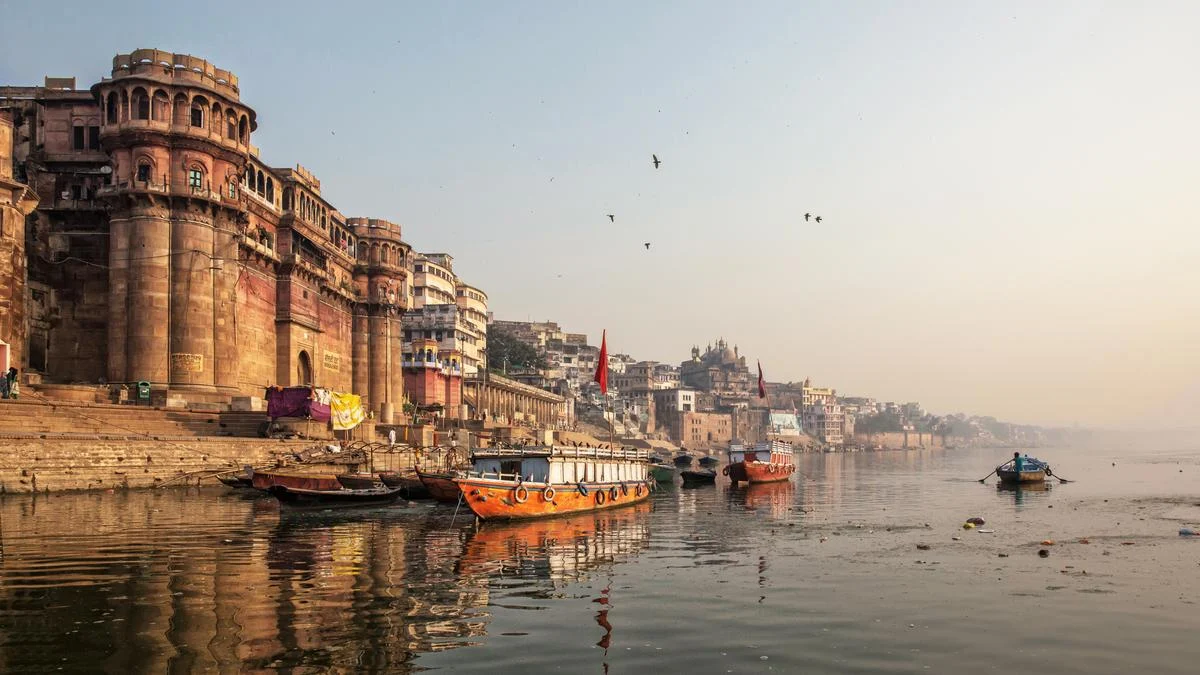
Varanasi, often referred to as Kashi or Benares, stands as one of the world’s oldest continuously inhabited cities. Historically, it has been a destination for pilgrims, scholars, and those seeking spiritual liberation. However, a new wave of heritage tourism is redefining the city’s profile, balancing its raw, visceral energy with high-end, contemporary luxury. At the heart of this transformation is the BrijRama Palace, a 214-year-old fort-turned-hotel located at the iconic Darbhanga Ghat.

The hotel recently signaled a significant shift in the city’s gastronomic landscape by launching a sophisticated 10-course vegetarian tasting menu at its fine-dining restaurant, Aangan. This menu, designed by Chef Devansh Seth and his team, attempts a daring feat: translating the chaotic, vibrant flavors of Varanasi’s streets into an avant-garde culinary experience. In a city where meat and alcohol are largely prohibited near the sacred river, BrijRama Palace is proving that creative constraints can lead to world-class innovation. This development comes at a time when Varanasi is seeing increased accessibility through infrastructure projects like Namo Ghat, further cementing its status as a premier global travel destination.
Chronology: A Journey Through Heat, Heritage, and Haute Cuisine
The journey into the heart of Varanasi often begins with a sensory shock. During the peak of summer, the city experiences what locals might call "tamatar chaat weather"—days so warm and humid they mirror the city’s favorite street snack: a soupy, steaming bowl of tomatoes and potatoes simmered in ghee.

Day One: The Street and the Sacred
The immersion begins at Kashi Chaat Bandar, a legendary establishment where visitors find themselves wedged between strangers on sweaty benches. Here, the traditional tamatar chaat, finished with butter and crisp namkeen, serves as an introduction to the city’s bold palate. For those overwhelmed by the 45°C heat, the dahi bhalla, smothered in cool yogurt, offers a necessary reprieve under the hum of an aging air conditioner.
As evening descends, the focus shifts toward the Ganga. At the Alka Hotel, which overlooks the river, the atmosphere transitions from the frantic energy of the gullies (narrow alleys) to the rhythmic chanting of the Ganga Aarti. Over glasses of chilled thandai—a creamy concoction of milk and soaked cashews—visitors witness the sunset over Dashashwamedh Ghat, where flaming lamps and incense smoke create a spiritual tableau that has remained largely unchanged for centuries.
Day Two: The Palace and the Plate
The second day marks a transition from the rustic to the regal. Arrival at BrijRama Palace is a choreographed event. Guests are picked up by boat from Namo Ghat, sipping tulsi chai as they float past the burning pyres of Manikarnika Ghat—a stark reminder of the city’s relationship with mortality. Upon docking at Darbhanga Ghat, the arrival is heralded by the blast of a conch shell and a reception committee led by staff in traditional attire.

The centerpiece of this visit is the 10-course tasting menu at Aangan. The meal is a theatrical display of "palace on a plate," featuring "fortified heritage radish bricks" served in a moat of chilled chaas (buttermilk) and "cauliflower croquettes" unveiled in puffs of savory smoke. The meal concludes with a "Rasmalai tres leches cake" and a siphoned malaiyo, a fluffy cloud of saffron-infused sweetness that pays homage to a seasonal local delicacy.
Day Three: Strength and Stillness
The final leg of the journey moves toward Tulsi Ghat and the 450-year-old Swaminath Akhara. Here, the focus is on the physical heritage of the city. Traditional wrestlers grapple in mud enriched with turmeric, mustard oil, and sandalwood, while visitors are taught the ancient art of swinging the Hanuman gada (mace). The experience concludes with a walk through the southern ghats, visiting pocket-sized Japanese roasteries and the city’s oldest pizzerias, illustrating the cosmopolitan layer that now rests atop Kashi’s ancient foundation.
Supporting Data: The Architecture of Restoration

The BrijRama Palace is not merely a hotel; it is an architectural triumph. Originally constructed in 1812 by Shridhara Narayana Munshi, the minister to the Nagpur estate, it was later acquired in 1915 by King Rameshwar Singh Bahadur of Darbhanga.
The restoration of the property, undertaken by Brijrama Hospitality, was a monumental task:
- Duration: The restoration took 18 years to complete after the building was acquired in a dilapidated state in 1994.
- Logistics: Because the palace is located in a UNESCO-protected zone with no car access, every piece of construction material, including 90-kilogram sandstone pillars, had to be transported via boat or carried through the narrow gullies.
- Materials: The renovation utilized authentic Mirzapur sandstone and Makrana marble to maintain historical integrity.
- Innovation: The palace famously houses Asia’s first elevator, a hand-pulled contraption installed by the King of Darbhanga to avoid the steep climb from the ghat to the upper floors.
Today, the 32-room hotel features varied room sizes due to its original fort structure. The "Varuna Burj," a restored cannon room, offers a 180-degree view of the Ganga, blending military history with luxury hospitality.

Official Responses: Perspectives from the Guardians of Heritage
The stakeholders involved in Varanasi’s tourism and cultural sectors emphasize that the city’s appeal lies in its ability to bring disparate groups together.
Manish Singh, General Manager of BrijRama Palace, notes that the hotel’s mission is to balance "contemporary luxury with the responsibilities that come with being a historic property on an iconic ghat." He highlights that the restoration was a "labor of love," prioritizing historical preservation over immediate economic return. According to Singh, the new tasting menu is a "signal" that the hotel can innovate within the strictures of local tradition.

Ashutosh Choudhary, whose family has operated the Alka Hotel for generations, views the city’s snacks—chaat, paan, jalebis—as the great equalizers. "It brings so many people together—tourists, scholars, students, artists," he says, pointing to the century-old bel tree on his property as a symbol of the city’s enduring nature.
Gyanshankul Singh, a certified strength coach and poet at the Swaminath Akhara, explains the philosophy behind the traditional wrestling pits. The mud used by the wrestlers is not mere dirt; it is a complex mixture of "buttermilk, turmeric, mustard oil, alum, sandalwood powder, camphor, lemon juice, and Gangajal." He views the physical training of the gada and the subsequent consumption of jalebis and lassi as a holistic approach to staying healthy.
Implications: The Future of the "Living City"

The evolution of Varanasi’s hospitality sector has several long-term implications for the region and the broader heritage tourism industry in India.
- Sustainable Luxury: The 18-year restoration of BrijRama Palace provides a blueprint for how dilapidated heritage sites can be salvaged. By using local materials and respecting the UNESCO-protected status of the ghats, the project demonstrates that luxury does not have to come at the cost of historical authenticity.
- Culinary Identity: The introduction of high-end vegetarian tasting menus suggests a maturing food scene. As international travelers seek more refined experiences, Varanasi is proving that its traditional vegetarian diet can be elevated to the level of global fine dining, potentially sparking a "vegetarian revolution" in Indian heritage hotels.
- Cultural Integration: Unlike many luxury "enclaves" that isolate guests from their surroundings, the current trend in Varanasi encourages "experiential" travel. By promoting visits to akharas and local cafes, hotels are ensuring that the local economy and culture are supported, rather than bypassed.
- Economic Diversification: The shift from purely religious pilgrimage to a blend of heritage, wellness, and culinary tourism is attracting a younger, more affluent demographic. This diversification is likely to drive further infrastructure investment and job creation in the Uttar Pradesh region.
Varanasi remains a city of contradictions—where the smell of fresh flower garlands mingles with the smoke of funeral pyres, and where 19th-century elevators coexist with siphoned saffron foams. As the city "calls" a new generation of visitors, it does so by offering a rare commodity: a place where one can wallow in the past while enjoying the absolute pinnacle of the present.
