

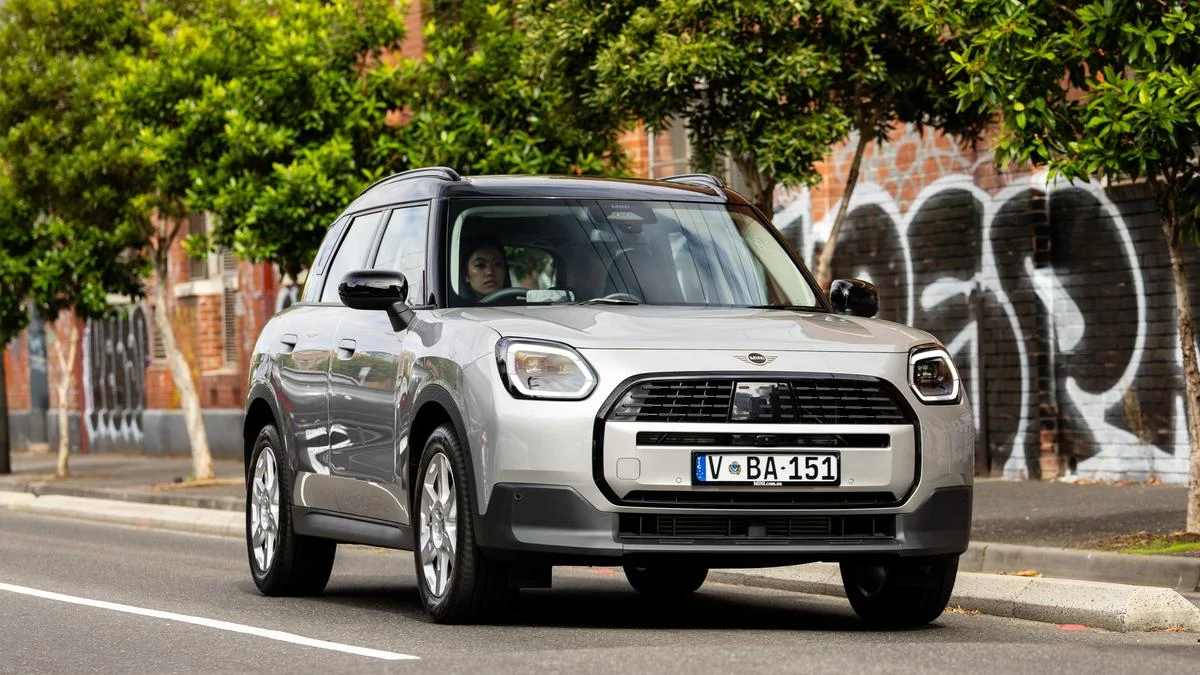
The landscape of the Indian luxury automobile market has long been defined by a binary choice: the sensible, spacious SUV or the spirited, compact performance car. For over a decade, MINI has occupied a unique, albeit niche, position in this ecosystem. It was the brand for those who prioritized "go-kart" handling and iconic aesthetics over rear-seat legroom or luggage capacity. However, the arrival of the new MINI Countryman C signals a paradigm shift. No longer content with being a "niche within a niche," the latest iteration of the Countryman has grown—literally and figuratively—into a vehicle that seeks to challenge the dominance of established luxury crossovers.
The new MINI Countryman C is larger, more technologically advanced, and significantly more practical than its predecessors. It represents a strategic pivot for BMW Group India, aiming to capture a broader demographic that demands the flair of the MINI brand without compromising on the utility required for the Indian urban and inter-city driving experience.
Main Facts: A New Dimension of "Maximum MINI"
The core narrative of the new Countryman C is one of growth. Traditionally, the "MINI" moniker was a literal description of the vehicle’s footprint. With the new Countryman C, the brand embraces a "Maximum MINI" philosophy.
Dimensional Growth and Exterior Design
The new Countryman C has undergone a significant growth spurt. It is approximately 13 centimeters longer and 6 centimeters taller than the model it replaces. This increase in dimensions is not merely cosmetic; it fundamentally alters the vehicle’s stance and interior volume. The design language, termed "Charismatic Simplicity" by the brand, strips away superfluous chrome and complex lines, opting instead for a cleaner, more muscular silhouette. The octagonal grille and redesigned LED headlamps—which offer three different light signatures—give the car a more commanding presence on the road, moving it firmly into the territory of a "proper" premium SUV.
Performance and Powertrain
Under the hood, the Countryman C (where ‘C’ now denotes the entry-level combustion engine variant) features a refined 1.5-liter three-cylinder turbocharged petrol engine. Integrated with 48V mild-hybrid technology, the engine produces approximately 170 hp and 280 Nm of torque. Power is sent to the front wheels via a 7-speed dual-clutch transmission (DCT). While the numbers might seem modest compared to high-performance variants, the focus here is on efficient power delivery and a smooth urban driving experience.
Interior Revolution
The most radical changes occur inside the cabin. MINI has introduced the world’s first circular OLED display. This 240mm high-resolution screen serves as both the instrument cluster and the infotainment hub, running the new MINI Operating System 9. Furthermore, the brand has moved toward sustainability, utilizing high-quality recycled polyester for the dashboard and door panels, replacing traditional leather with "Vescin" (a high-end synthetic alternative).
Chronology: The Journey to the Third Generation
To understand the significance of the new Countryman C, one must look at the brand’s trajectory in the Indian market.
- 2012: The Indian Debut: MINI officially entered the Indian market at the 2012 Delhi Auto Expo. At the time, the Countryman was the "big" MINI, but it was still relatively cramped and served primarily as a lifestyle accessory for the urban elite.
- 2013: Local Assembly Begins: Recognizing the potential of the Indian market, BMW Group began local assembly of the Countryman at its Chennai plant. This move was crucial in making the brand more competitive against rivals like the Audi Q3 and Mercedes-Benz GLA.
- 2018: The Second Generation: The second-generation Countryman arrived in India with a more rugged look and improved interior quality. It began to find favor with young families who wanted something different from the standard German luxury trio.
- 2021: The Facelift and Digital Shift: A mid-life refresh introduced the digital instrument cluster and updated LED lighting, keeping the model relevant in an increasingly tech-heavy market.
- 2024-2025: The Global Reveal and Indian Transition: The third-generation Countryman was revealed globally, showcasing a radical departure in design and a heavy emphasis on electrification.
- June 2026: The Launch of the Countryman C: The introduction of the Countryman C in India marks the arrival of the most practical internal combustion engine (ICE) version yet, catering to a market that is transitioning toward EVs but still relies heavily on petrol infrastructure.
Supporting Data: By the Numbers
The shift from a "raised hatchback" to a "premium SUV" is backed by empirical data that highlights the Countryman C’s newfound utility.
Space and Utility
- Wheelbase: The extended wheelbase provides an additional 25mm of legroom in the rear, a critical metric for the chauffeur-driven or family-oriented Indian buyer.
- Cargo Capacity: The boot space now stands at 450 liters, which can be expanded to a massive 1,450 liters with the rear seats folded. The rear bench itself is adjustable, sliding forward or backward by 13 centimeters to prioritize either passenger comfort or luggage space.
- Ground Clearance: With an unladen ground clearance of approximately 202mm, the Countryman C is better equipped than ever to handle the unpredictable Indian road conditions, including monsoon-damaged tarmac and oversized speed breakers.
Technology and Safety
- OLED Display: The 240mm diameter screen utilizes a high-frequency refresh rate, making it as responsive as a modern smartphone.
- Safety Suite: The new model comes equipped with Level 2 Advanced Driver Assistance Systems (ADAS), including Lane Keeping Assistant, Blind Spot Detection, and Active Cruise Control—features that were previously absent or limited in the MINI lineup.
- Experience Modes: The vehicle offers up to eight "MINI Experience Modes." These modes do more than just change throttle response; they alter the ambient lighting, the "earcon" (synthetic engine sounds), and the visual theme of the OLED display to match the driver’s mood.
Official Responses: The Brand’s Vision
BMW Group India has been vocal about the strategic importance of the new Countryman. While official press releases emphasize the "Big Love" marketing campaign, the underlying message from leadership suggests a move toward volume and versatility.

In various briefings, spokespersons for BMW Group India have highlighted that the new Countryman is designed to be the "primary car" in a household. Historically, a MINI was often the second or third car in a luxury garage. By increasing the size and comfort, the brand is positioning the Countryman C as a viable alternative to the BMW X1, with which it shares its underlying UKL2 platform.
"The new MINI Countryman C is for the adventurer who doesn’t want to leave anything behind," noted a senior marketing executive during a pre-launch event. "We have listened to our Indian customers who loved the MINI character but needed more ‘car.’ This model is the answer to that demand. It retains the soul of a MINI but offers the bones of a robust SUV."
Designers at MINI have also defended the move away from leather and chrome, stating that "Charismatic Simplicity" is about "doing more with less." They argue that the use of recycled textiles in the interior provides a "homely, warm atmosphere" that differentiates the Countryman from the cold, clinical interiors of some competitors.
Implications: Changing the Luxury Narrative in India
The launch of the Countryman C has several long-term implications for the Indian automotive market and the MINI brand’s identity.
1. Market Cannibalization or Expansion?
Sharing a platform with the BMW X1—India’s highest-selling luxury SUV—is a double-edged sword. On one hand, the Countryman C benefits from proven mechanicals and economies of scale. On the other hand, it risks cannibalizing sales from its cousin. However, the distinct "quirky" branding of MINI usually attracts a different psychographic profile. The Countryman C is likely to expand the market by attracting buyers who find the X1 too "conservative" but previously found the MINI too "small."
2. The Dilution of the "Go-Kart" Heritage
Purists have expressed concerns that the increased height and weight of the new Countryman will dilute the sharp, agile handling that defines a MINI. While the Countryman C remains one of the most engaging drives in its segment, there is no denying that it feels more like a refined cruiser than a point-and-shoot hatchback. This is a calculated trade-off; MINI is betting that for every one purist lost, they will gain five families looking for a stylish, practical daily driver.
3. A Stepping Stone to Electrification
By launching the Countryman C alongside the all-electric Countryman SE, the brand is providing a "comfort bridge" for Indian consumers. The Countryman C allows buyers to get used to the new design language, the radical new interior, and the larger dimensions while sticking to a familiar petrol powertrain. As the charging infrastructure in India matures, these buyers will be the prime candidates for the next generation of electric MINIs.
4. Resale Value and Brand Perception
Historically, MINIs have held their value well due to their niche appeal. By becoming more "mainstream" and practical, the Countryman C might see even stronger residual values, as the pool of second-hand buyers for a practical SUV is much larger than that for a cramped hatchback.
Conclusion
The new MINI Countryman C is a testament to the brand’s evolution. It acknowledges that in a market as competitive and diverse as India, style alone is no longer enough to sustain growth. By embracing practicality, advanced technology, and a more imposing SUV stance, MINI has transformed the Countryman from a lifestyle statement into a legitimate contender in the premium SUV segment. It is a car that finally offers "Maximum MINI" for a market that has always demanded more. As it hits Indian roads, the Countryman C isn’t just a new model; it’s a bold declaration that MINI is ready to grow up.
