

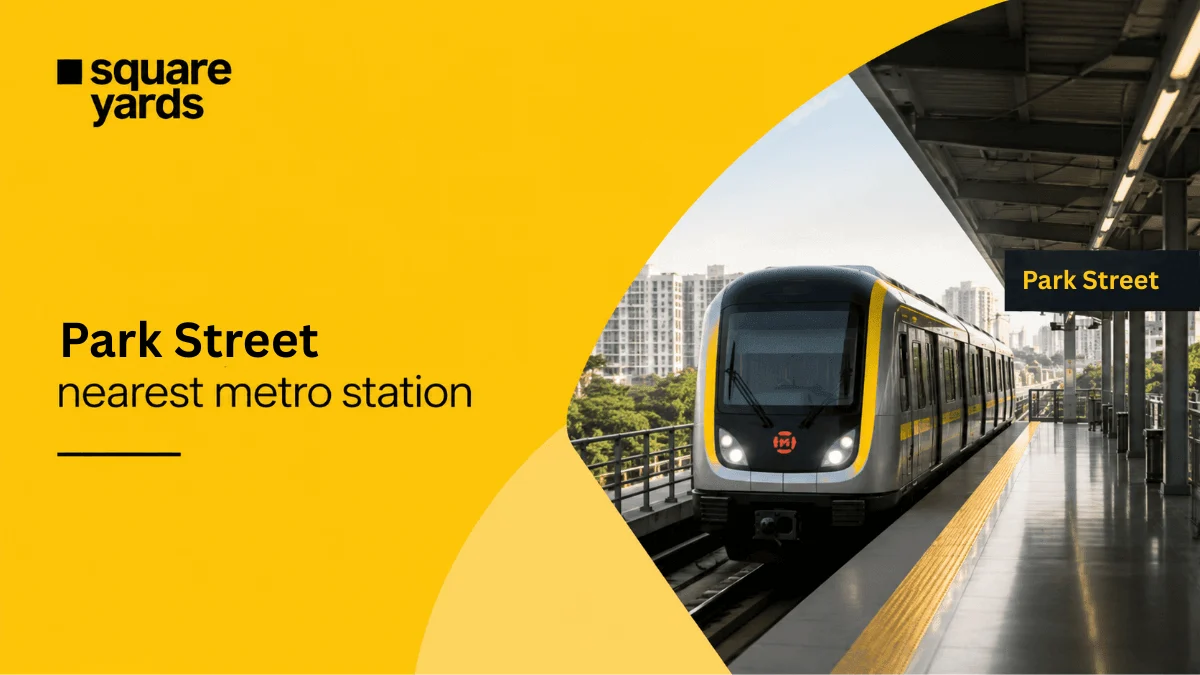
Introduction: The Rare Distinction of an Unambiguous Address
In the complex tapestry of Kolkata’s urban landscape, few names carry as much cultural, commercial, and logistical weight as Park Street. While many metro stations across India’s burgeoning networks require secondary identifiers—junction names, checkposts, or nearby landmarks—Park Street stands as a rare exception. It possesses the distinct honor of being a destination that needs no further explanation. You exit the station, and you are exactly where you intended to be: in the heart of Kolkata’s "Street That Never Sleeps."
As the oldest metro system in India, the Kolkata Metro has evolved from a single experimental line into a multi-corridor lifeline. At the center of this evolution is the Park Street station. Currently a vital node on the North-South Blue Line, the station is poised to undergo a transformative expansion as it prepares to become a dual-line interchange with the arrival of the Purple Line. This transition represents more than just an infrastructure upgrade; it is a recalibration of Central Kolkata’s connectivity, with profound implications for commuters, businesses, and the high-stakes real estate market surrounding the Chowringhee-Park Street corridor.
1. Main Facts: The Current State of Connectivity
Park Street metro station serves as the primary gateway to the city’s most prestigious commercial and dining district. Situated on the Blue Line (Line 1), it is strategically "sandwiched" between the Maidan and Esplanade stations. This positioning places it at the absolute epicenter of the city’s North-South axis, facilitating movement from the northern suburbs of Dakshineswar and Dum Dum to the southern residential hubs of Tollygunge and Garia.
The Strategic Advantage
Unlike neighboring localities like Park Circus, which remains dependent on surface transport or short-distance commutes to reach the nearest metro gate, Park Street residents and office-goers enjoy "zero-mile" connectivity. The station exits open directly onto the intersection of Chowringhee Road (Jawaharlal Nehru Road) and Park Street (Mother Teresa Sarani), providing immediate access to:
- The Dining Spine: Iconic establishments like Flurys, Peter Cat, and Mocambo.
- The Corporate Hub: Major office buildings, including the Apeejay House and various bank headquarters.
- The Cultural Corridor: Proximity to the Asiatic Society, the Indian Museum, and the Academy of Fine Arts.
Current Technical Specifications
- Line: Blue Line (Line 1).
- Depth: Underground.
- Interchange Potential: Currently a single-line station; soon to be an interchange with the Purple Line (Line 3).
- Frequency: Peak hours see trains every 5–7 minutes; off-peak intervals range from 10–12 minutes.
2. Chronology: The Evolution of a Transit Giant
The history of Park Street’s metro connectivity is a reflection of Kolkata’s pioneering spirit in urban transit, as well as the modern challenges of subterranean engineering in a densely populated deltaic city.
- 1984: The Genesis. Kolkata Metro begins operations as India’s first underground railway. Park Street becomes one of the original functional stations, redefining how the city’s elite and working class alike accessed the Central Business District (CBD).
- 2010–2020: The Expansion Era. While the Blue Line remained the sole operator, the conceptualization of the East-West (Green) and Joka-Esplanade (Purple) lines began to take shape. Park Street was identified as a critical interchange point for the Purple Line.
- 2022: Purple Line Breakthrough. Construction on the Joka-Esplanade stretch intensifies. The project is divided into phases to manage the immense engineering hurdles of tunneling through the heritage-rich zones of Central Kolkata.
- 2025: Partial Operationality. The Joka-Majerhat stretch of the Purple Line begins operations, providing a glimpse into the future of the corridor, though it remains disconnected from the central hub at Park Street.
- 2026 (Projected): The Tunneling Milestone. Authorities target May 2026 for the completion of tunneling toward Victoria Memorial, with the underground stretch to Park Street slated for completion by the end of the year.
- 2027–2029: The Full Integration. The final completion of the Purple Line, including the "cut-and-cover" construction toward Esplanade, is expected to be finalized, making Park Street a fully realized multi-line nexus.
3. Supporting Data: Transit Metrics and Last-Mile Logistics
To understand the impact of the metro on Park Street, one must look at the comparative data regarding travel times and accessibility. The following tables provide a granular view of how the metro functions as the neighborhood’s primary circulatory system.
Table 1: Proximity of Key Stations to the Park Street Core
| Metro Station | Line | Distance | Walking Time | Practicality |
|---|---|---|---|---|
| Park Street | Blue | 0 km | 0-5 mins | Primary access for the entire stretch. |
| Maidan | Blue | 1.0 km | 12-15 mins | Best for the southern end/Academy of Fine Arts. |
| Esplanade | Blue/Green | 1.2 km | 15-20 mins | The major interchange for Salt Lake/Howrah. |
| Rabindra Sadan | Blue | 1.8 km | 25+ mins | Requires a cab/bus for practical access. |
Table 2: The Last-Mile Ecosystem
For those traveling beyond the immediate vicinity of the station, Park Street offers a robust variety of transit feeders.
| Mode | Availability | Typical Fare | Ideal For |
|---|---|---|---|
| Yellow Taxi | High (24/7) | ₹60 – ₹200 | Quick hops to Camac Street or Wood Street. |
| App Cabs | High (24/7) | ₹80 – ₹250 | Direct door-to-door comfort during monsoons. |
| WBTC Buses | High (Daytime) | ₹10 – ₹25 | Budget travel along Chowringhee/AJC Bose Road. |
| Walking | High | Free | Exploring the restaurant and retail cluster. |
4. Official Responses and Engineering Challenges
The development of the Purple Line at Park Street has not been without its critics or its hurdles. The Kolkata Metro Rail Corporation (KMRC) and Rail Vikas Nigam Limited (RVNL) have had to navigate a "minefield" of heritage structures and geological complexities.
The Heritage Hurdle
Official statements from project engineers highlight the extreme caution required when tunneling near the Victoria Memorial and the historic buildings of Chowringhee. Unlike the "Cut-and-Cover" method used in the 1980s for the Blue Line—which involved digging up entire roads—modern tunneling uses Tunnel Boring Machines (TBMs) to minimize surface disruption. However, the final stretch from Park Street to Esplanade will revert to "cut-and-cover" due to the specific alignment requirements and the need to integrate with the existing deep-level stations.
Addressing the Timeline
Officials have been candid about the "shifting goalposts" of the Purple Line. While 2026 is the current target for reaching Park Street, bureaucratic delays in land acquisition near the Mominpur stretch and the technical difficulties of tunneling through soft alluvial soil have led to a more conservative estimate of 2027–2028 for full commercial operations.
The Monsoon Factor
A perennial concern raised by both the Kolkata Municipal Corporation (KMC) and metro officials is the issue of waterlogging. Park Street is notorious for flooding during heavy rains. KMRC has officially stated that the new station designs include advanced pumping systems and raised entry points to ensure that the underground network remains operational and dry even when the surface roads are submerged.
5. Implications: Real Estate and Economic Impact
The presence of a high-functioning metro station does more than just move people; it anchors property values and dictates the economic character of a neighborhood.
The Premium Valuation
Park Street remains one of the most expensive real estate markets in East India. Property rates currently hover between ₹15,000 and ₹25,000 per square foot. In this context, the metro is not a "value-adder" in the traditional sense—it does not make the area "up-and-coming." Instead, it acts as a "value-sustainer." In a city plagued by traffic congestion, the ability to walk from a premium apartment or a Grade-A office to a metro station is the ultimate luxury.
Rental Yields and Commercial Vitality
The area boasts a healthy rental yield of 4% to 6%, significantly higher than the city average of 2-3%. This is driven by:
- Corporate Demand: Multi-national firms prefer the central location for its accessibility to the workforce via the Blue Line.
- Retail Resilience: The high footfall generated by the metro station ensures that retail spaces on Park Street command some of the highest lease rates in the country.
The "Purple Line" Upside
For investors, the current construction phase represents a strategic window. While the Blue Line is already priced into property values, the future connectivity of the Purple Line—which will link the high-density residential areas of Joka and Behala directly to Park Street—is not yet fully factored in. Once the interchange becomes operational, the influx of a new demographic of commuters from the south is expected to further boost retail volumes and demand for boutique office spaces.
6. Comparative Analysis: Park Street vs. The Neighbors
To understand Park Street’s dominance, one must compare it to nearby hubs that lack its specific transit profile.
| Locality | Price Range (sq.ft) | Transit Profile | Market Character |
|---|---|---|---|
| Park Street | ₹15k – ₹25k | Direct Blue/Future Purple | Elite Commercial/Dining |
| Park Circus | ₹9k – ₹14k | No Metro; Bus/Auto reliant | Dense Residential/Medical |
| Camac Street | ₹14k – ₹22k | Walkable to Park St Metro | Upscale Corporate/Retail |
| Salt Lake Sec V | ₹8k – ₹10k | Green Line Terminus | IT/Tech Hub |
While Salt Lake Sector V is the modern face of Kolkata’s economy, it remains a "destination" hub. Park Street, by contrast, is a "central" hub. The metro connectivity ensures that it remains the bridge between the "Old Calcutta" of the North and the "Modern Kolkata" of the South.
Conclusion: A Legacy Reinforced by Steel Rails
Park Street’s relationship with the metro is symbiotic. The street provides the station with its prestige and high footfall, while the station provides the street with the oxygen of accessibility. As the network expands to include the Purple Line, the locality is set to transition from a vital stop to a grand interchange.
For the resident, it means a lifestyle where the car is optional. For the business owner, it means a guaranteed stream of patrons. For the investor, it means an asset that is shielded from the volatility of peripheral markets. While the timeline for the Purple Line remains subject to the realities of underground engineering, the Blue Line continues to offer Park Street a level of convenience that few other premium addresses in India can match. In the final analysis, Park Street remains the gold standard of "location, location, location," reinforced by the silver and blue of the Kolkata Metro.
