

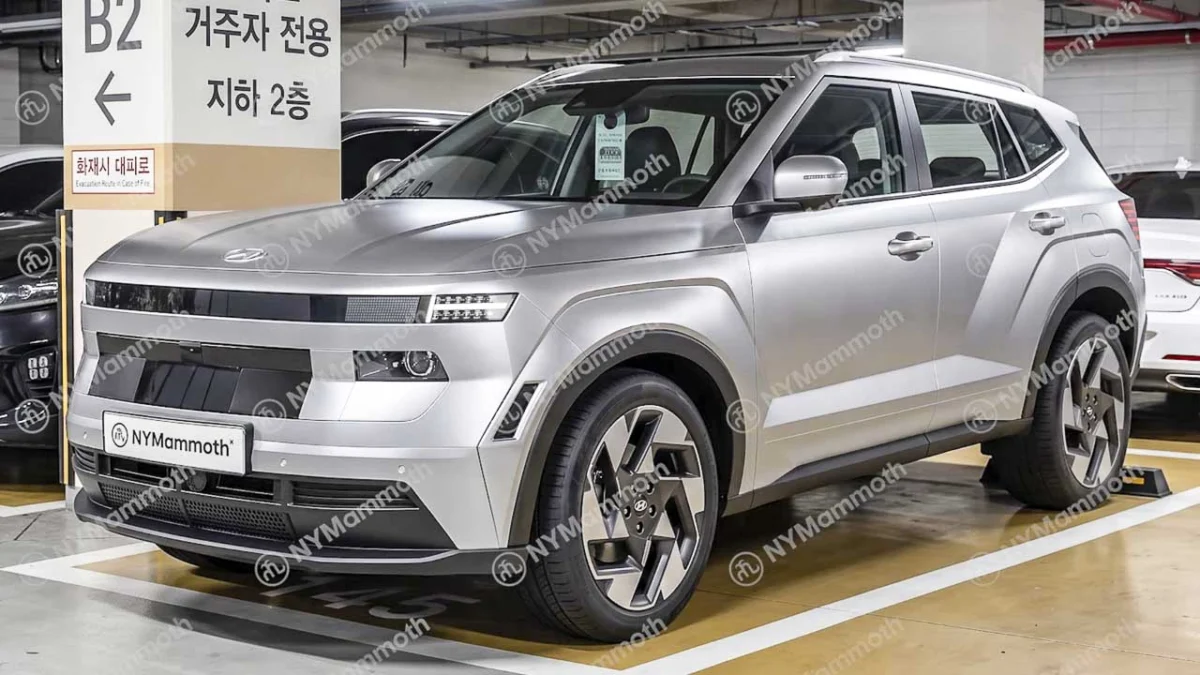
The automotive landscape in India and several emerging markets has been dominated by a single nameplate for nearly a decade: the Hyundai Creta. Since its inception, the Creta has not merely participated in the mid-size SUV segment; it has defined it. As competitors sharpen their tools, Hyundai is preparing its most significant counter-move yet. Codenamed the SX3, the next-generation Hyundai Creta is currently undergoing rigorous testing, and recent digital renders—heavily influenced by the newly debuted Hyundai Tucson—provide a tantalizing glimpse into a future defined by the "Art of Steel" design philosophy.
Main Facts: A Paradigm Shift in Design and Tech
The upcoming next-gen Creta (SX3) represents a departure from the "Sensuous Sportiness" design language that characterized Hyundai’s portfolio over the last five years. Instead, it embraces a more rugged, architectural, and "boxy" aesthetic. Based on the latest spy shots from South Korea and India, the digital renders produced by NYMammoth suggest an SUV that prioritizes road presence and geometric precision.
Key Highlights of the SX3 Project:
- Design Philosophy: Adoption of the "Art of Steel" direction, mirroring the 2027 Hyundai Tucson.
- Stance: A move toward a more upright, vertical front fascia and squared-off wheel arches.
- Technology: Integration of the "Pleos Connect" infotainment system and a transition toward Software-Defined Vehicle (SDV) architecture.
- Powertrain: The introduction of a flagship strong-hybrid variant to rival the Toyota Hyryder and Maruti Suzuki Grand Vitara.
- Global Branding: While India retains the "Creta" moniker, international markets are expected to see this vehicle as the next-generation "Kona."
Chronology: From Segment Creator to Future Icon
To understand the weight of the SX3 project, one must look at the timeline of the Creta’s evolution, which explains why Hyundai is taking such a radical approach with the 2027 model.
2015 – The Genesis
Hyundai launched the first-generation Creta in India, effectively creating the premium mid-size SUV segment. Its "Fluidic Sculpture 2.0" design was an instant hit, offering a "mini-Santa Fe" vibe that resonated with buyers.

2020 – The Polarizing Revolution
The second-generation Creta (SU2) debuted with a radical, trio-beam LED headlamp setup and a more rounded, curvaceous body. While initially polarizing, it became the best-selling SUV in its class, proving that Hyundai’s bold design risks often pay off.
2024 – The "Parametric" Facelift
Earlier this year, Hyundai updated the SU2 with a more rectangular grille and connected LED bars, aligning it with the Venue and Exter. This facelift was designed to bridge the gap until the arrival of the all-new platform.
2025-2026 – The SX3 Testing Phase
The first heavily camouflaged test mules of the SX3 began appearing on international roads in late 2024. These mules revealed a significantly larger footprint and a more "upright" silhouette, sparking rumors of a massive design overhaul.
2027 – The Anticipated Launch
The next-generation Creta is expected to make its global debut in late 2026, with an official Indian market launch scheduled for early 2027.

Supporting Data: Aesthetic and Mechanical Analysis
The transition from the current model to the SX3 is not just skin-deep. It involves a total reimagining of the vehicle’s proportions and mechanical heart.
Exterior Design: The "Art of Steel" Influence
The renders indicate that the SX3 will borrow heavily from the 2027 Tucson. The "Art of Steel" philosophy focuses on cleaner surfaces and high-tension lines.
- The Front Fascia: The bonnet is noticeably flatter and higher than the current model, giving it a more muscular, traditional SUV look. A slim, full-width LED DRL strip sits at the edge of the hood, while the primary LED projector lamps are housed in vertical pods lower down the bumper.
- The Silhouette: The rounded wheel arches of the current Creta are replaced by squared-off, flared arches. This change, combined with a more angular C-pillar, gives the vehicle a more planted and rugged appearance.
- The Rear: Following the trend of "Connected Lighting," the rear features a massive black panel that houses a pixelated LED light bar, similar to the Ioniq series and the new Santa Fe.
The Interior: A Software-Defined Future
Spy shots of the interior suggest that Hyundai is moving away from the traditional dashboard layout.
- Pleos Connect: This is Hyundai’s next-generation infotainment ecosystem. It is expected to offer a more seamless, smartphone-like interface with deep integration of AI-driven voice commands.
- SDV Architecture: The SX3 will likely be a "Software-Defined Vehicle," meaning most of its features—from engine maps to ambient lighting and ADAS calibrations—can be updated over-the-air (OTA).
- Premium Amenities: Expect a dual 12.3-inch screen setup (cluster and infotainment), a 360-degree camera with "blind view" monitors, and an upgraded Level 2+ ADAS suite with evasive steering assist.
Powertrain: The Hybrid Masterstroke
Perhaps the most significant data point is the expected shift in engine strategy. While the 1.5-litre naturally aspirated petrol and the 1.5-litre U2 CRDi diesel engines are expected to continue (to satisfy diverse market demands), the headline act will be the Strong Hybrid.

- The Setup: Hyundai is reportedly developing a 1.5-litre Atkinson cycle petrol engine paired with an electric motor and a small lithium-ion battery pack.
- The Goal: This powertrain aims to deliver a fuel efficiency figure north of 25 kmpl, directly challenging the dominance of Japanese rivals in the "green" SUV space.
Official Responses and Industry Positioning
While Hyundai Motor India and Hyundai Global have remained tight-lipped regarding specific technical details of the SX3, their recent corporate presentations hint at the strategy.
Hyundai’s Global Strategy
During the recent "Hyundai Way" investor day, the company emphasized "HEV (Hybrid Electric Vehicle) expansion." The SX3 is a cornerstone of this strategy. By offering a strong hybrid in the Creta/Kona segment, Hyundai aims to capture the "transitional buyer"—those not yet ready for a full EV but seeking better efficiency than a traditional Internal Combustion Engine (ICE).
Market Positioning
In India, the Creta has maintained a market share of nearly 30% in its segment. However, the arrival of the Mahindra XUV400, the Tata Curvv, and the updated Maruti Suzuki Grand Vitara has pressured Hyundai to innovate. An official spokesperson recently noted that "Hyundai remains committed to bringing world-class technology to the Indian market," which many industry analysts view as a nod to the upcoming hybrid and SDV features of the SX3.
Implications: How the SX3 Changes the Game
The launch of the next-gen Creta will have far-reaching consequences for the automotive industry, particularly in developing economies.

1. The "Death" of the Boring SUV
The move toward a boxy, high-tech design signals the end of the "soft-roader" look. If the SX3 succeeds, expect rivals like Kia and Honda to follow suit with more aggressive, architectural designs for their future mid-size SUVs.
2. Democratization of Hybrid Technology
Currently, strong hybrid technology is viewed as a premium feature. By integrating it into the Creta—a high-volume seller—Hyundai will achieve economies of scale that could eventually bring the price of hybrid vehicles closer to that of traditional diesel variants.
3. The Diesel Dilemma
The SX3 might be the last generation of the Creta to offer a diesel engine. As emission norms (BS7 and beyond) become stricter, the cost of making small diesel engines compliant may become prohibitive. The SX3’s hybrid system is designed to be the spiritual and functional successor to the diesel torque-and-efficiency combo.
4. Brand Consolidation
The convergence of the Creta and Kona design languages suggests that Hyundai is moving toward a more unified global identity. This allows for faster development cycles and shared components, ensuring that a buyer in Delhi gets the same level of tech and safety as a buyer in Berlin.

Conclusion
The 2027 Hyundai Creta (SX3) is more than just a car; it is a statement of intent. By blending the ruggedness of the "Art of Steel" design with the futuristic efficiency of a strong-hybrid powertrain and the intelligence of an SDV, Hyundai is not just looking to maintain its lead—it is looking to move the goalposts entirely. As we move closer to 2027, the SX3 stands as a symbol of the industry’s pivot from traditional mechanics to a software-and-electricity-driven future.
