

Chennai, India – Beyond the bustling theaters and grand apartment complexes often associated with architectural heritage, a quiet yet profound testament to Chennai’s Art Deco legacy stands proudly on the city’s arterial Mount Road. Kasturi Buildings, the long-standing home of The Hindu, is not merely an office space; it is a meticulously preserved embodiment of an era that celebrated modernity, geometric precision, and a distinct artistic flair. This article delves into the architectural marvel that is Kasturi Buildings, exploring its Art Deco origins, its significance within Chennai’s urban landscape, and its enduring relevance today.
A Newspaper Office of Stately Grandeur
The first impression of Kasturi Buildings, home to The Hindu since 1939, is one of undeniable presence. Sweeping cantilever canopies, ornate grilles that dance with light, and elegant fluted columns immediately evoke a sense of stately grandeur. For many who have worked within its walls for decades, the building transcends its utilitarian purpose. K. Purnachandran, a familiar face in The Hindu‘s security department, recalls his initial awe upon joining 20 years ago. "When I walked into this cream-white office after spending 17 years in the Army, I thought that it looked stately. Like a colonial-era administrative building," he shares, his voice tinged with nostalgia.
This sentiment of reverence is echoed by KG Gurumurthy, who heads the pre-press department. "When I was a junior employee, the premises looked like a venerated institution – one that demanded reverence. I still feel that way when I enter the space," he states. This palpable respect for the building underscores its inherent architectural merit, transforming it from a mere workspace into a symbol of institutional dignity and artistic achievement.

The fact that Kasturi Buildings, a commercial structure, remains actively in use and a prominent example of Art Deco heritage is a significant point of pride for Chennai. Its enduring presence on Mount Road serves as a constant reminder of an architectural style that, while perhaps less celebrated than in other Indian cities, has left an indelible mark on the city’s skyline.
The Architect’s Vision: Crafting Charm and Dignity
An archival article from The Hindu‘s own records, dated December 7, 1939, two weeks after the newspaper’s relocation to Kasturi Buildings, sheds light on the architect’s intent. H. Fellowes Prynne envisioned a structure that would exude "a soft charm and a quiet dignity – one that would hold the eye of the visitor and delight the heart." This aspiration is evident in every meticulously crafted detail of the building.
The beauty of Kasturi Buildings lies not just in its scale but in its sophisticated design elements. Its clean-cut vertical lines, the extensive use of geometric patterns, its ability to harness natural light, and its perfect symmetry all contribute to its aesthetic appeal. For those who allow themselves a moment of imaginative immersion, a Midnight in Paris-esque journey back to the Roaring Twenties, one can envision Chennai’s streets adorned with buildings of similar flair – a city embracing new architectural forms characterized by columns, sunburst motifs, and geometric designs. While many such structures have succumbed to the pressures of rapid urbanisation, Kasturi Buildings stands as a vibrant testament to this era.

Deconstructing Art Deco: A Global Movement’s Madras Manifestation
Art Deco, a style born in Paris in 1925, was a celebration of modernity, embracing new materials like reinforced cement concrete and steel-frame construction. It drew inspiration from the burgeoning fascination with motorized travel, evident in the streamlined forms of ocean liners and early aircraft. As architect and co-founder of Madras Inherited, Tahaer Zoyab, explains, "You’ll see vertical lines accentuated, plaster bands, portholes like the ones on airplanes and ships, and geometry. This was possible because cement could be cast and moulded."
The movement’s journey across the globe first landed in Bombay (Mumbai), where it profoundly shaped the city’s cinemas and iconic seafront apartments along Marine Drive. Mumbai now boasts the second-largest collection of Art Deco buildings worldwide, a testament to its significant influence. The UNESCO World Heritage status bestowed upon the Victorian Gothic and Art Deco Ensembles of Mumbai in 2018 further highlights the style’s global recognition.
By the late 1930s, Art Deco had made its way south, finding one of its most striking expressions in Madras (Chennai), particularly in the George Town area. While Mumbai’s Art Deco is often characterized by its grand cinemas and residential blocks, Chennai’s Art Deco heritage, though perhaps less concentrated, is equally significant and diverse.

Chennai’s Art Deco Enclaves
Today, Chennai’s Art Deco heritage is most visibly concentrated around Parry’s Corner, the Esplanade, and NSC Bose Road. Prominent examples include the iconic Dare House, now home to the Murugappa Group’s offices, a structure that exemplifies the bold lines and geometric detailing characteristic of the style. The Oriental Insurance Building on Armenian Street, notably designed by an Indian architect, L.M. Chitale, showcases the adaptation of Art Deco principles within a local context. Other significant buildings include the National Insurance Building, the State Bank of Mysore, the Bombay Mutual Building along NSC Bose Road, and the United India Building.
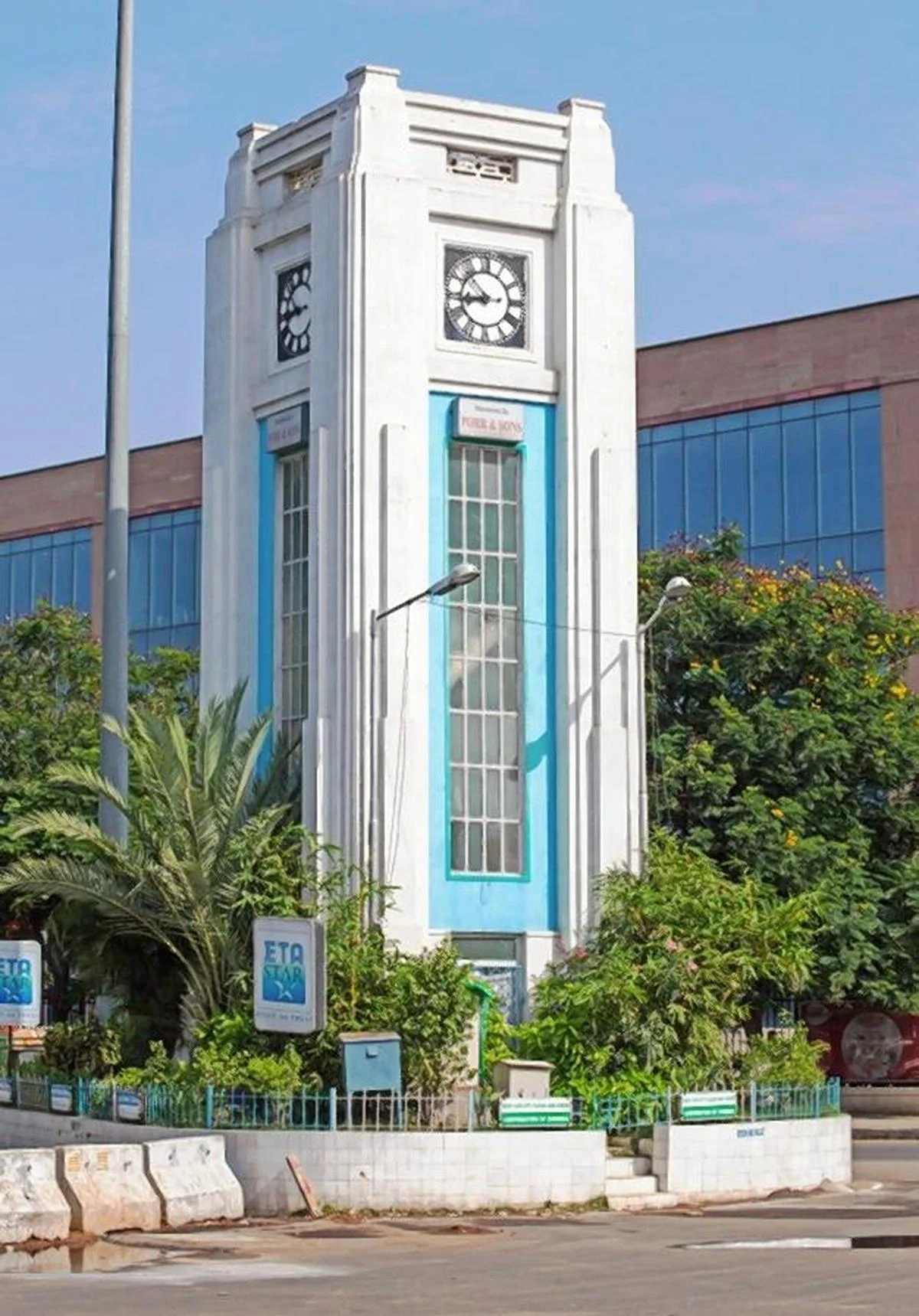
Beyond these commercial hubs, standalone Art Deco landmarks like the Royapettah and Mint Clock Towers stand as solitary reminders of the style’s reach. While many other structures, such as the Casino Cinema Hall and Curzon & Co., have seen their Art Deco features fade or be overshadowed by subsequent development, these remaining examples offer glimpses into a richer architectural past.
Sujatha Shankar, an architect and convenor of INTACH, Chennai Chapter, articulates the difficulty in choosing a favorite among the city’s Art Deco treasures. She expresses particular admiration for the LIC Building on Esplanade, citing its symmetry, elegant entrance, soaring vertical lines, fins, and ziggurat-like crowning feature as "an amazing rendering of Art Deco." Dare House in Parry’s Corner is another personal favorite, with its distinctive curved corner and "pins and pistons on top," symbolic of the industrial progress of the era.

Ashmitha Athreya, a trustee at Madras Inherited, notes that visitors on their guided walks are often surprised by the sheer volume of Art Deco buildings that Chennai still possesses. She further points out that in Madras, the prevalent style is often a variation known as Streamline Moderne, a North American interpretation of Art Deco characterized by sleek, aerodynamic forms. While many residential Art Deco buildings are sadly disappearing due to urban sprawl, their influence can still be discerned.
Bespoke Adaptations: Weaving Indian Sensibilities into Art Deco
A fascinating aspect of Art Deco’s presence in India is its adaptation to local cultural sensibilities. Ashmitha Athreya highlights instances where Art Deco buildings have been personalized to reflect Indian contexts. "I have seen a house in Mylapore where there is a central bust of Mahatma Gandhi on the facade. It is because the style flourished during India’s freedom struggle. This is just one such example," she remarks, illustrating how the style has been infused with nationalistic and local identities.
This spirit of bespoke adaptation is also evident in the architectural choices made for culturally significant buildings. Kapil Chitale, proprietor of Chitale and Sons, one of Chennai’s oldest architecture firms and grandson of L.M. Chitale, shares how his grandfather, when designing the Tamil Isai Mandram on Esplanade, skillfully integrated a temple-like sensibility. The hall was conceived to celebrate Tamil music and its distinct traditions, a movement that aimed to offer an alternative to the Sanskrit and Telugu performances prevalent in other sabhas. "The motifs and the embellishments on the pillars would be distinctly Tamil in nature," explains Sujatha Shankar, underscoring the successful fusion of Art Deco principles with local artistic expressions.

Even within Kasturi Buildings itself, this blend of international style and local adaptation is apparent. Thirupurasundari Sevvel, an architect and historian, describes the building as an "Indo-deco structure." She elaborates, "Several customizations have taken place, keeping with the style of the original building. It is why the grandeur of the structure remains. Inside The Hindu office, you will find mixed floors, polished stairways, and hallways that carry its own colour and mood. A mint green, pink, and a gold, each suited for a different floor." This thoughtful interior design, with its distinct color palettes for each level, adds a unique character to the building while respecting its Art Deco origins. The Art Deco typography evident in the building’s lifts further enhances this immersive experience.
The Enduring Legacy: More Than Just Decoration
The investigation into the Art Deco elements of Kasturi Buildings and research at Chitale and Sons reveals a consistent architectural language. Bold black glass piers banded in cream, intricately designed grilles, sweeping cantilever canopies, and geometric ironwork all speak the same visual vocabulary found across Chennai’s Art Deco structures. These clean, confident lines, characteristic of the style, continue to captivate and delight.
The Art Deco movement, which eventually gave way to the International Style and Modernism, was never solely about ornamentation. It was deeply rooted in functionality and the way a city tells its stories through its built environment. Kasturi Buildings, with its enduring elegance and continued active use, exemplifies this principle. Behind its ornamental facade lies a dynamic hub of journalistic activity, where individuals dedicate their time and energy to crafting meaning in their lives and contributing to the narrative of their city and nation.

Peer into the Past: An Invitation to Experience Heritage
For those eager to witness this architectural marvel firsthand and delve deeper into Chennai’s cultural history, an opportunity awaits. Visitors are invited to explore Kasturi Buildings, the headquarters of The Hindu, to experience its Art Deco heritage. Furthermore, an archival photo exhibition titled "Madras On Stage," drawn from The Hindu‘s extensive archives, is on display until September 10th. This exhibition offers a captivating journey through Chennai’s vibrant cultural life, showcasing performances, conversations, festivals, and everyday gatherings that have shaped the city’s identity.
Entry to the exhibition is free, and registration can be completed by visiting madeofchennai.thehindu.com. This presents a unique chance to connect with Chennai’s past, appreciate its architectural treasures, and understand how a style born in a different era continues to resonate and inspire today. Kasturi Buildings, in its quiet dignity, stands as a powerful reminder that true heritage lies not just in preservation, but in continued relevance and the stories it continues to tell.
