

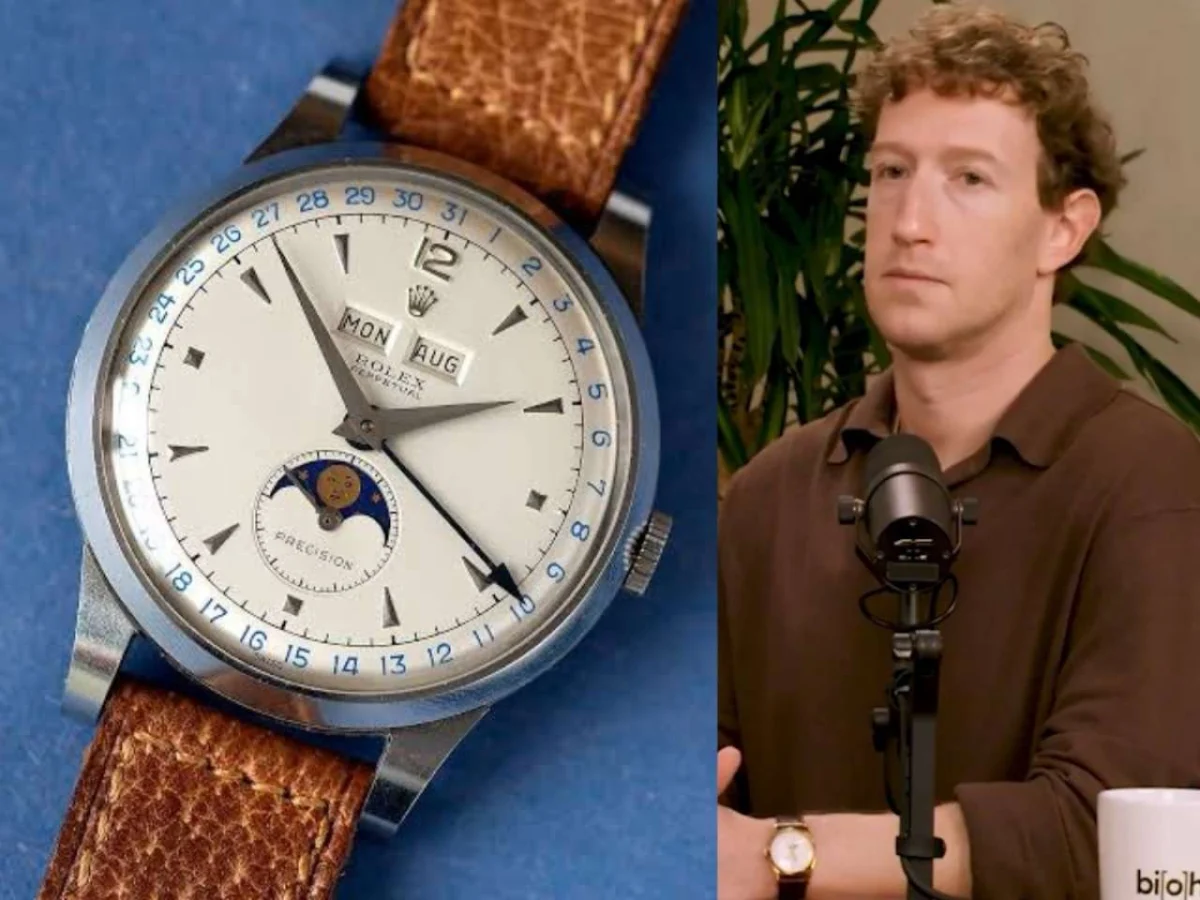
In a rare public appearance discussing the future of AI in biomedical research, Meta CEO Mark Zuckerberg inadvertently turned the spotlight onto a horological marvel: a vintage Rolex Ref. 6062 "Stelline," reportedly valued at a staggering $2 million. This exquisite timepiece, renowned for its intricate moon phase complication, offers a fascinating counterpoint to Zuckerberg’s deep dive into cutting-edge digital science, sparking intrigue and admiration within both the tech and luxury watch communities.
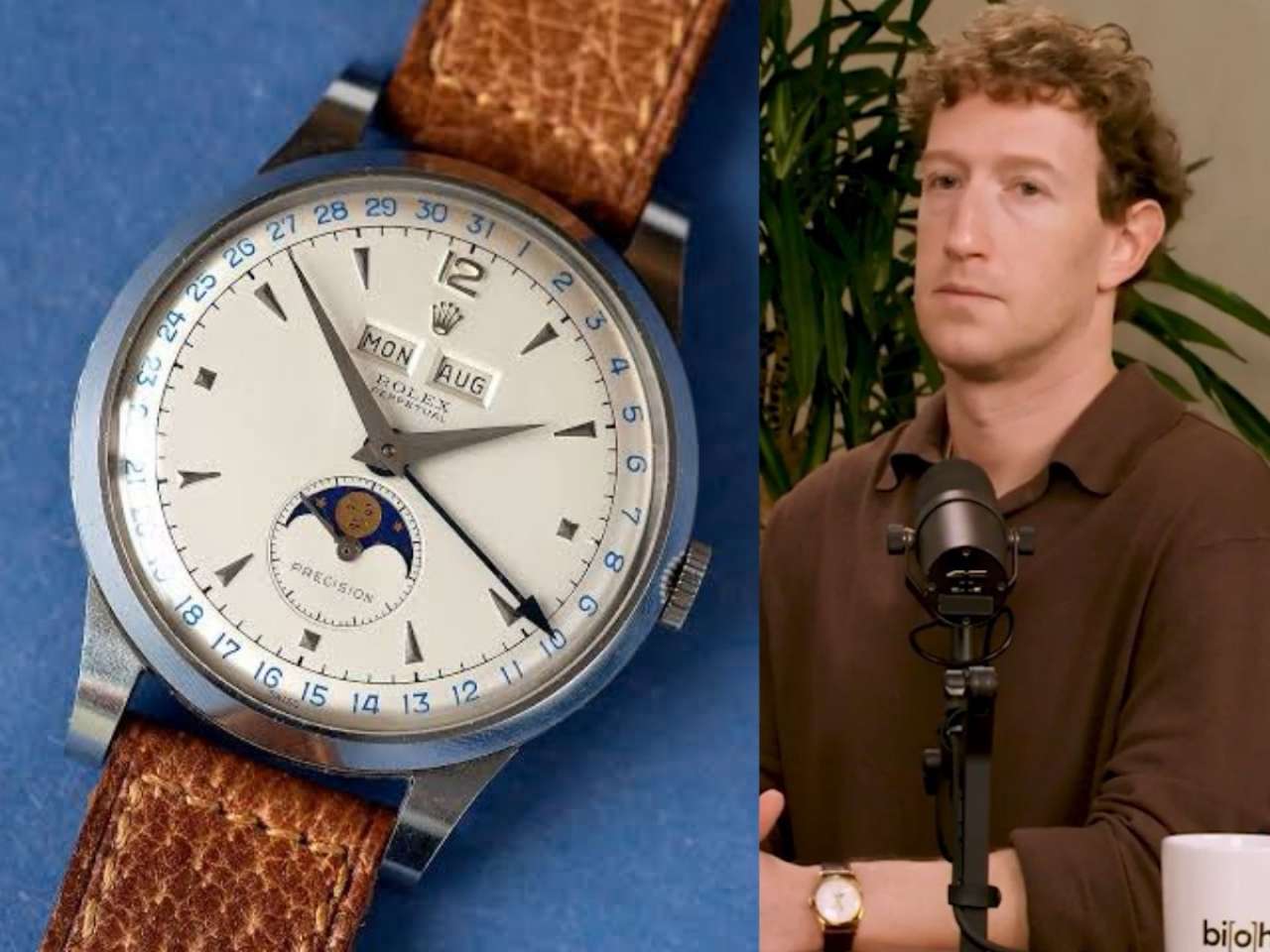
The Meta co-founder, known for his pragmatic approach and often understated style, was a guest on the "No Priors" podcast alongside his wife, Priscilla Chan. While the conversation delved into the ambitious goals of the Chan Zuckerberg Initiative’s Biohub – aiming to revolutionize disease eradication through advanced AI and computational models – it was the glint of a legendary Rolex on Zuckerberg’s wrist that captured the attention of many. The Ref. 6062 "Stelline," a model steeped in horological history, serves as a tangible link to a bygone era of mechanical ingenuity, standing in stark contrast to the digital frontier he champions.
)
The Allure of the "Stelline": A Celestial Complication
The Rolex Ref. 6062, particularly the "Stelline" variant, is not merely a watch; it’s a testament to Rolex’s early foray into complex complications and its pursuit of sophisticated design. The "Stelline," meaning "little star" in Italian, refers to the distinctive star-shaped hour markers found on some dials of this reference, adding an extra layer of visual intrigue. However, its most celebrated feature is its highly sophisticated triple calendar complication, which includes a date, day, and month display, all synchronized with a remarkably accurate moon phase indicator.

This moon phase complication, a hallmark of the Ref. 6062, is a mechanical marvel. It tracks the lunar cycle with exceptional precision, a feature that was both functionally significant and aesthetically captivating in the mid-20th century. For watch enthusiasts, a well-preserved moon phase complication on a vintage Rolex is the epitome of horological artistry. It represents a painstaking dedication to intricate gearing and meticulous craftsmanship, a stark departure from the mass-produced, digital displays of today.
)
A Glimpse into Horological History: The Ref. 6062’s Genesis
The Rolex Ref. 6062 emerged in the early 1950s, a period when Rolex was beginning to solidify its reputation beyond robust tool watches. While the Submariner, Explorer, and GMT-Master would later define Rolex’s professional watchmaking prowess, the Ref. 6062 showcased the brand’s ambition in creating elegant, complication-driven timepieces for a discerning clientele. It was one of the first Rolex models to feature an automatic movement with a triple calendar and moon phase complication, a bold move that positioned Rolex at the forefront of luxury watchmaking.
)
The production of the Ref. 6062 was relatively limited, contributing significantly to its rarity and desirability. Over its production run, Rolex experimented with various dial configurations, case materials, and bracelet options. The "Stelline" moniker is often associated with specific dial variations, particularly those featuring the distinctive star indices, making them even more sought after by collectors.
)
The value of these vintage pieces is intrinsically linked to their condition and originality. A Rolex Ref. 6062 that has retained its original dial, case, and movement, and has been meticulously preserved, can command prices well into the seven figures at prestigious auction houses like Phillips, Christie’s, and Sotheby’s. The rarest configurations, especially those with exceptional provenance or unique dial treatments, have been known to reach or even surpass the $2 million mark, as is reportedly the case with Zuckerberg’s timepiece.
)
The Contrast: A Mechanical Icon in a Digital Age
The presence of such a significant vintage timepiece on the wrist of Mark Zuckerberg, a titan of the digital age and a fervent advocate for artificial intelligence, presents a compelling dichotomy. While his work at Meta and the Chan Zuckerberg Initiative is dedicated to harnessing the power of AI to solve complex, future-oriented problems, his choice of a mechanical, analogue instrument from the 1950s speaks volumes.
)
This choice can be interpreted in several ways. It might signify an appreciation for enduring craftsmanship and timeless design, a recognition of the mechanical artistry that predates the digital revolution. In a world increasingly dominated by disposable technology, a $2 million Rolex serves as a symbol of permanence and legacy. It’s an object that has been meticulously engineered to function for generations, a testament to human ingenuity and the pursuit of perfection in a tangible form.
)
Furthermore, it could be seen as a personal statement of discernment and appreciation for heritage. Even for individuals at the pinnacle of technological innovation, there remains a profound respect for the foundational principles of engineering and the aesthetic beauty that can be achieved through mechanical means. The intricate dance of gears, springs, and levers within the Ref. 6062 "Stelline" is a micro-universe of precision that, in its own way, reflects the complex systems Zuckerberg aims to build and understand with AI.
)
The Chan Zuckerberg Initiative’s Vision: AI as a Force for Good
While the Rolex served as an unexpected focal point, the substance of the "No Priors" podcast discussion was profoundly important. Mark Zuckerberg and Priscilla Chan articulated a clear and ambitious vision for how artificial intelligence can serve as a transformative force in biomedical research. Their Chan Zuckerberg Initiative (CZI), and specifically its Biohub projects, are dedicated to accelerating scientific discovery and ultimately eradicating human diseases.
)
The Biohub’s approach is multifaceted, leveraging cutting-edge AI to:
)
- Identify Disease Mechanisms: By analyzing vast datasets of genomic, proteomic, and clinical information, AI algorithms can identify subtle patterns and correlations that might elude human researchers, leading to a deeper understanding of disease origins and progression.
- Develop Novel Treatments: AI can be employed in drug discovery and development, predicting the efficacy and potential side effects of new compounds, thereby accelerating the path to clinical trials and approved therapies.
- Personalize Medicine: By analyzing individual patient data, AI can help tailor treatment plans to specific genetic profiles and disease manifestations, moving towards a future of truly personalized healthcare.
- Enhance Diagnostic Capabilities: AI-powered image analysis and pattern recognition can lead to earlier and more accurate diagnoses of various conditions, improving patient outcomes.
Zuckerberg emphasized the power of computational models and AI in this endeavor, highlighting the potential to unlock new avenues for tackling some of humanity’s most persistent health challenges. The Biohub’s commitment to open science and collaboration further underscores their dedication to accelerating progress for the benefit of all.
)
The Unforeseen Impact: A Symbol of Enduring Value
The sighting of Zuckerberg’s Rolex Ref. 6062 "Stelline" has undeniably brought renewed attention to this iconic timepiece. For watch collectors and enthusiasts, it serves as a powerful reminder of the enduring appeal of vintage luxury watches and the stories they tell. The astronomical value attributed to such pieces is not solely based on the precious metals they contain, but on their rarity, historical significance, mechanical complexity, and the craftsmanship that went into their creation.
)
In a world often characterized by rapid technological obsolescence, the "Stelline" stands as a beacon of enduring value and timeless artistry. It represents a tangible link to a past where mechanical precision was paramount, and the appreciation of fine craftsmanship was deeply ingrained. The fact that a leading figure in the digital revolution chooses to adorn his wrist with such a piece suggests a broader appreciation for the tangible and the enduring, even as he pushes the boundaries of the digital frontier.
)
The conversation between innovation and heritage, between the cutting edge of AI and the meticulous mechanics of a 1950s Rolex, makes for a fascinating narrative. Mark Zuckerberg, a man shaping the future of technology, wearing a symbol of horological excellence from a bygone era, is a compelling image that resonates with the enduring human desire for both progress and timeless beauty. The $2 million "Stelline" is more than just a watch; it’s a conversation starter, a symbol of legacy, and a testament to the enduring allure of mechanical mastery in a digital world.
