

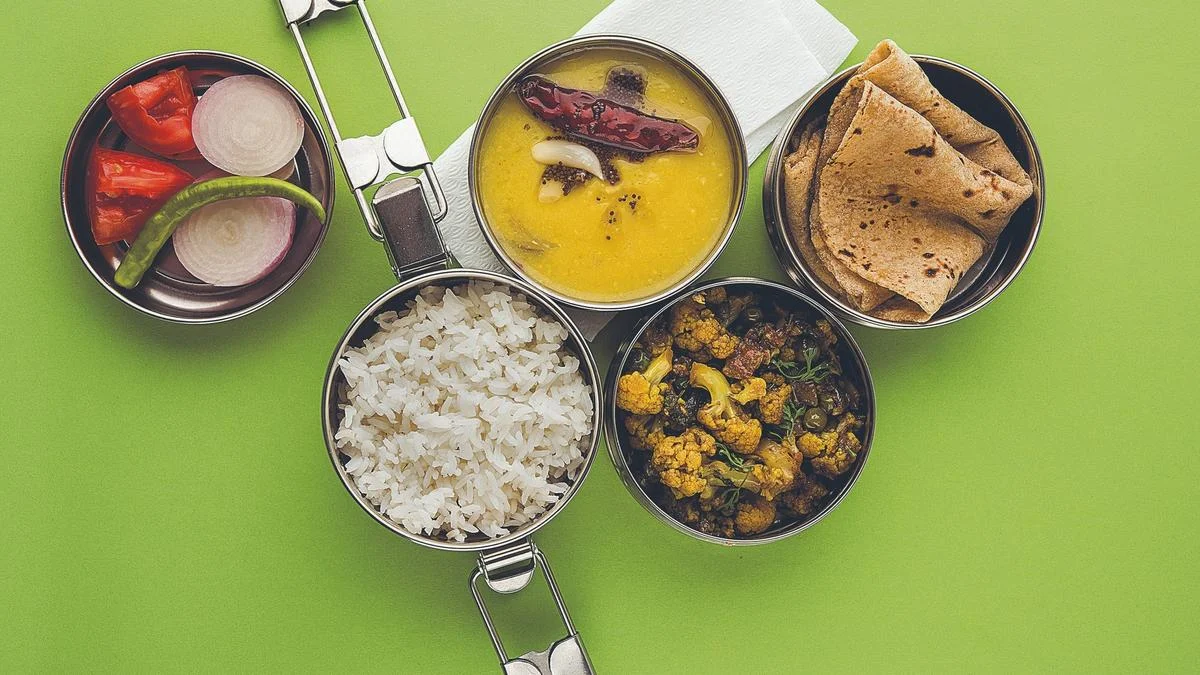
The rhythmic clinking of a three-tiered stainless-steel tiffin carrier was once the morning soundtrack of Madras. For decades, this metallic vessel served as a bridge between the domestic hearth and the professional world, carrying the warmth of home-cooked sambar, poriyal, and rice through the humid corridors of the city. However, as Chennai evolves into a sprawling technopolis, the gleaming "ever-silver" tiffin carrier is increasingly becoming a relic of the past.
In its place, a complex ecosystem of neighborhood eateries, high-end cafés, cloud kitchens, and the omnipresent glow of food-delivery smartphone applications has taken over. This shift represents more than just a change in eating habits; it signals a fundamental transformation in the socio-economic fabric of one of India’s most traditional metropolitan hubs.
Main Facts: The Decline of a Culinary Institution
The transition from the home-packed tiffin to the commercial meal is driven by several intersecting factors: urbanization, the rise of the dual-income household, and the digital revolution.
In the mid-20th century, the tiffin carrier was a non-negotiable accessory for the office-goer and the student alike. It represented the "health-first" philosophy of the South Indian household, where the quality of ingredients was controlled and the cooking methods were ancestral. Today, industry data suggests that Chennai has one of the highest densities of cloud kitchens in South India, with areas like Adyar, T. Nagar, and Velachery seeing a 40% increase in food delivery volumes over the last five years.
Writer and chronicler Sivasankari, 82, notes that while the tiffin was the staple, the city always had a flirtation with luxury dining. Her reminiscences of the 1960s and 70s highlight a Madras that was beginning to experiment with international standards of leisure. "Gaylord on Anna Salai, close to my office, and Jaffers, also on Anna Salai, were known for their ice creams, which were of international standard," she recalls. "Peach melba at Jaffers was my all-time favorite."
This duality—the reliability of the home-cooked tiffin and the occasional glamour of the Mount Road (Anna Salai) eateries—defined the culinary landscape for decades. Now, that balance has tilted heavily toward commercial consumption.
Chronology: From Salem Steel to Silicon Chips
The Era of the "Ever-Silver" (1950s – 1980s)
During this period, the stainless-steel industry in Tamil Nadu, bolstered by the Salem Steel Plant, made high-quality kitchenware affordable. The "Ever-silver" (as stainless steel is colloquially known in the South) tiffin carrier became a symbol of middle-class stability. Carrying a tiffin was a sign of a "settled" life. The morning routine involved a meticulous assembly of layers: the bottom for rice, the middle for lentils or sambar, and the top for a vegetable sauté or curd.
The Rise of the Iconic Eateries (1960s – 1970s)
While the tiffin ruled the weekdays, the weekends belonged to a few select institutions. Anna Salai was the epicenter. Establishments like Gaylord and Jaffers introduced Madras to the concept of "continental" treats. These were spaces of social aspiration where the city’s elite and the growing middle class rubbed shoulders over sundaes and milkshakes. This era planted the seeds of "dining out" as a recreational activity rather than a necessity.
The Liberalization Shift (1990s – 2000s)
With the opening of the Indian economy, global fast-food chains began to enter the Chennai market. This period saw the rise of the "quick service restaurant" (QSR). The convenience of a burger or a pizza began to compete with the traditional lunch. Simultaneously, the IT boom in Chennai (the "Gateway to South India") brought a massive influx of migrant workers who lacked the domestic infrastructure to maintain a "tiffin culture," leading to a boom in "Mess" culture and small-scale canteens.
The Digital Disruption (2015 – Present)
The arrival of Swiggy, Zomato, and Uber Eats fundamentally altered the logistics of food. The "tiffin" was no longer something you carried from home; it was something you ordered to your desk. The "subscription kitchen" emerged as a hybrid model, offering home-style food in disposable packaging, further marginalizing the reusable steel carrier.
Supporting Data: The Economics of the Plate
Recent market surveys and urban studies provide a quantitative look at this shift:

- The Packaging Pivot: Sales of traditional multi-tier steel tiffin carriers in T. Nagar and Parry’s Corner—Chennai’s retail hubs—have reportedly seen a 25-30% decline over the last decade. Conversely, the demand for "microwave-safe" plastic and biodegradable containers has surged.
- The Time Poverty Factor: The average commute time in Chennai has increased by an estimated 15 minutes over the last decade. For many, the 30 minutes required to prepare and pack a traditional tiffin is now spent in traffic, making pre-packaged or delivered meals a "time-saving" necessity.
- The Cost of Convenience: While a home-cooked meal remains cheaper (averaging ₹40–₹60 per meal), the average "thali" ordered via an app in Chennai costs between ₹150 and ₹250. Despite the 3x-4x price increase, the "convenience premium" is one that a growing segment of the Chennai workforce is willing to pay.
- The Cloud Kitchen Explosion: Chennai currently hosts over 2,500 registered cloud kitchens. These establishments have no storefront and exist solely to serve the delivery market, effectively replacing the "home kitchen" for thousands of young professionals.
Official Responses and Expert Perspectives
The shift away from home-cooked food has caught the attention of health officials and urban planners.
The Public Health Standpoint:
Dr. Aruna Muralidhar, a nutrition consultant based in Chennai, expresses concern over the nutritional profile of the "new tiffin." "The traditional tiffin carrier enforced a balanced meal—carb, protein, and fiber in fixed portions. When people order in, they are more likely to choose calorie-dense, high-sodium options. We are seeing a direct correlation between the decline of the tiffin carrier and the rise of lifestyle diseases like hypertension and Type-2 diabetes among Chennai’s youth."
The Culinary Historian’s View:
V. Sriram, a noted historian of Madras/Chennai, views this as an inevitable part of urban evolution. "The tiffin carrier was a product of a specific social structure where one person—usually the homemaker—dedicated hours to food preparation. As gender roles evolve and both partners work, the ‘steel box’ becomes a logistical burden. However, we are losing the ‘sensory geography’ of the city—the specific smells and rituals that defined our midday."
The Industry Response:
Spokespersons from major food-delivery platforms argue that they are not destroying home cooking but "democratizing access" to diverse cuisines. "We see ourselves as an extension of the kitchen. Many of our top-selling vendors in Chennai are ‘Home-Style’ kitchens that provide the same rasam and kootu that one would find in a tiffin, just delivered with modern efficiency," says a regional manager for a leading delivery firm.
Implications: The Future of Chennai’s Food Identity
The disappearance of the tiffin carrier carries several long-term implications for the city.
1. Environmental Impact
The most immediate casualty of the move away from stainless steel is the environment. The tiffin carrier was a zero-waste vessel, used for decades and then recycled. The modern delivery economy relies heavily on single-use plastics, aluminum foil, and cardboard. Despite the push for "green packaging," the carbon footprint of delivering a single meal via a fossil-fuel-burning two-wheeler is significantly higher than carrying a reusable box.
2. The Loss of "Culinary Continuity"
When food is standardized by commercial kitchens, the "secret recipes" of families begin to fade. The tiffin was a vessel for regional identity—a specific way of tempering dal or a unique mango pickle. As Chennai moves toward a "global palette," the nuances of South Indian sub-regional cuisines (Chettinad, Kongunad, Thanjavur styles) risk being flattened into a generic "South Indian" menu.
3. The Social Isolation of Dining
The tiffin era was a social one. Opening a tiffin in an office lunchroom often led to "tiffin sharing," where colleagues exchanged tastes of their home-cooked specialties. Digital ordering is often an individualistic experience, frequently consumed at one’s desk while scrolling through a screen, leading to a decline in workplace social cohesion.
4. A New Nostalgia
Just as Sivasankari looks back at the "international standard" ice creams of Gaylord and Jaffers with a sense of loss, the current generation may one day look back at the "authentic" tiffin services of the 2020s. We are seeing a nascent "Tiffin Revival" movement in some boutique circles, where high-end restaurants are serving meals in brass or steel carriers to evoke a sense of heritage.
Conclusion
The evolution of Chennai’s food habits from the humble stainless-steel carrier to the high-tech delivery ecosystem is a mirror of the city’s broader journey. It is a story of a city that is growing faster than its traditions can keep up with. While the convenience of the modern era is undeniable, the fading of the clink of the steel tiffin marks the end of an era of mindfulness in eating.
As we look toward 2026 and beyond, the challenge for Chennai will be to integrate the efficiency of the digital age with the nutritional wisdom and sustainability of the "ever-silver" past. Sivasankari’s memories of Jaffers and Gaylord remind us that while the venues change, the human desire for a "favorite" meal remains constant. The question is whether that meal will come from a hand-packed box or a plastic bag.
