

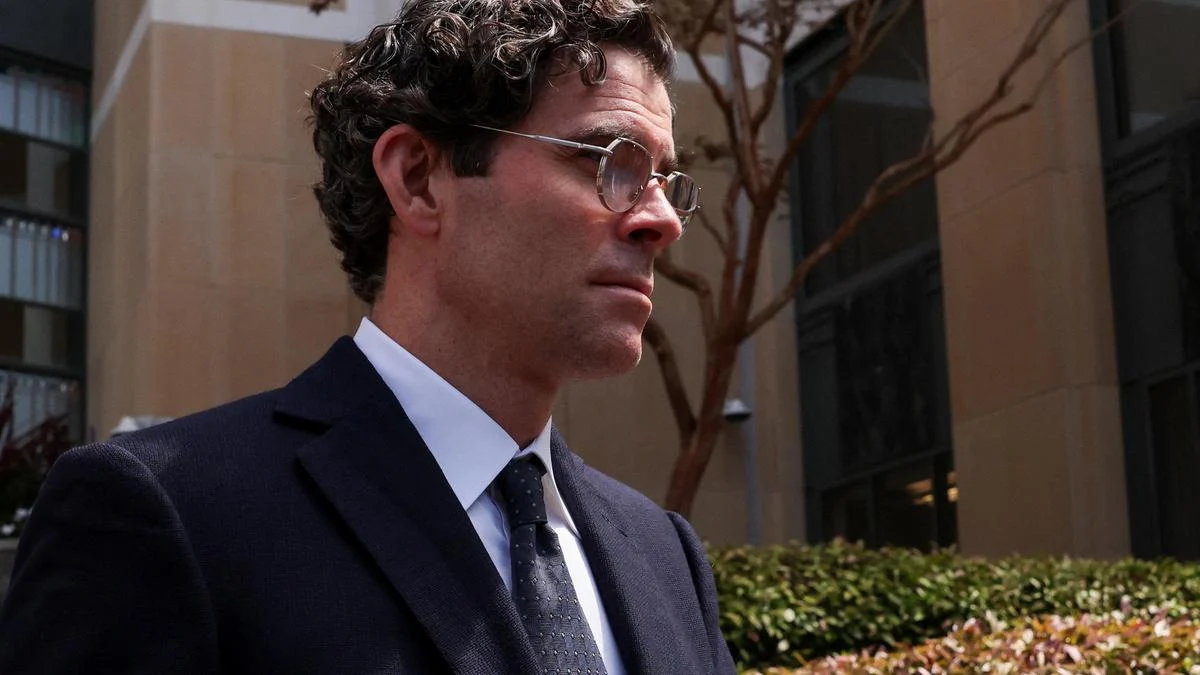
OAKLAND, CALIFORNIA – October 2, 2024 – In a potentially pivotal moment for a landmark lawsuit challenging Meta Platforms Inc.’s practices, Adam Mosseri, the head of Instagram, admitted under oath on Tuesday that the company promoted newly launched safety tools for teenagers without disclosing their alarmingly low adoption rates from early testing. This admission came during the second week of a high-stakes trial in a California court, where a coalition of 29 U.S. states is accusing Meta of deliberately designing its ubiquitous platforms to addict children and surreptitiously harvest their data, all while misleading the public about its commitment to youth well-being.
The revelations from Mosseri, who oversees a platform boasting over three billion global users, cast a stark light on the internal workings and public communications strategies of one of the world’s most influential technology companies. The ongoing legal battle is poised to scrutinize Meta’s ethical responsibilities, its business model, and the extent to which it may have prioritized user engagement and data collection over the mental health and safety of its youngest users. The stakes are immense: a potential $200 billion in penalties and the forced imposition of fundamental changes to Meta’s core business operations, which could send significant shockwaves throughout the entire social media industry.
Main Facts: A Glimpse into Alleged Deception
The core of the current legal challenge revolves around Meta’s alleged deceptive practices concerning its youth-oriented safety features. Adam Mosseri, Instagram’s top executive, confessed in court that the company publicly touted the efficacy of tools like "Take a Break" and "Quiet Mode" without simultaneously revealing internal data that showed minimal uptake among its target demographic. This omission, according to the states’ legal team, constitutes a deliberate effort to mislead both the public and policymakers about the true impact of these "safety" initiatives.
The lawsuit, initiated by a bipartisan group of U.S. states, paints a grim picture of a tech giant intentionally crafting addictive algorithms and user interfaces to ensnare young users, capitalizing on their developing minds and vulnerabilities. They argue that Meta’s products are not merely passively consumed but are actively designed to foster dependency, often at the expense of mental health and privacy. Mosseri’s testimony, particularly his admission regarding the undisclosed low adoption rates, directly supports the states’ narrative of corporate obfuscation and a disconnect between public assurances and internal realities.
The trial, expected to continue through late September, has already featured a parade of witnesses, including former Meta employees and current executives, whose testimonies have largely reinforced the prosecution’s claims. These witnesses have provided internal data and personal accounts suggesting that the much-publicized safety features were either ineffective by design or intentionally under-promoted to avoid impacting user engagement—a critical metric for Meta’s advertising-driven revenue model.
Chronology of Events: From Congressional Hearings to Courtroom Admissions
The unfolding legal drama is rooted in a series of events spanning several years, illustrating a pattern of public promises contrasted with internal data.
Early Initiatives and Public Statements (2021-2023)
The genesis of the current controversy can be traced back to December 2021, a period when Meta, and the broader social media industry, faced intense scrutiny over the impact of their platforms on young people.
- December 7, 2021: One day prior to a critical Congressional hearing, Meta published a blog post authored by Adam Mosseri. This post announced the rollout of new safety features for teens, including "Take a Break," which allows users to set reminders to stop scrolling. Crucially, the blog post claimed: "Early test results show that once teens set the reminders, more than 90% of them keep them on." This statement would later become a focal point of the current lawsuit.
- December 8, 2021: Adam Mosseri testified at a Congressional hearing, where he addressed concerns about the negative impacts of social media on young people. His testimony echoed the sentiments of the blog post, emphasizing Meta’s commitment to youth safety and the introduction of new tools.
- 2021: The "Take a Break" feature was officially launched on Instagram, designed to prompt users to disengage from the app after a set period.
- 2023: "Quiet Mode," another safety feature intended to silence late-night notifications, was subsequently launched, further expanding Meta’s suite of ostensibly youth-protective tools.
The Lawsuit Unfolds and Key Testimonies (2024)
The lawsuit brought by the coalition of states has steadily progressed, bringing internal company data and executive decisions under intense legal scrutiny.

- September 2024 (Trial Commencement): The trial against Meta entered its second week, with proceedings anticipated to last until late September.
- Ongoing Testimonies (First Week): Early witnesses, including a lawyer from the Colorado Attorney General’s office, Jason Slothouber, began to challenge Mosseri on the actual usage rates of "Take a Break" and "Quiet Mode." Other witnesses, including former Meta employees, provided early testimony suggesting the ineffectiveness of these tools.
- Tuesday, October 1, 2024 (Mosseri’s Admission): Adam Mosseri took the stand and admitted that Meta did not disclose the low adoption rates of its safety features. He was questioned directly about the misleading "90% retention" figure from the 2021 blog post, clarifying that this figure referred to users who kept the feature on after having already turned it on, not the overall percentage of teens who adopted it initially. He conceded that the actual adoption rate for these features was only around 1% to 2% of accounts.
- 2024 (Post-Launch Adjustments): Mosseri stated that safety features were later turned on by default in "Teen Accounts," which were launched in 2024 and incorporated parental controls. However, he was unable to recall if Meta had ever disclosed the percentage of teen accounts that actually have parental controls activated.
- Upcoming Testimonies: Mosseri is scheduled to continue his testimony on Wednesday. Significantly, Meta’s founder and CEO, Mark Zuckerberg, is also expected to testify, though the exact date remains unconfirmed.
Supporting Data and Internal Disclosures: A Pattern of Low Efficacy
The states’ case is heavily buttressed by internal Meta documents and the candid testimonies of current and former employees, painting a consistent picture of features that were known internally to be largely ineffective, yet publicly presented as robust solutions.
The Core Deception and Adoption Rates
The discrepancy between Meta’s public narrative and its internal data is central to the prosecution’s argument of deception. Mosseri’s 2021 blog post claimed that "more than 90% of them keep [reminders] on" once teens set them. This figure, while technically accurate in its narrow definition, was highly misleading in the broader context of overall adoption. When pressed, Mosseri admitted that the actual initial adoption rate for "Take a Break" was a mere 1% to 2% of accounts. The failure to disclose this critical distinction forms a significant part of the states’ accusation of misleading the public.
Internal Meta documents, presented to jurors on Tuesday, provided concrete figures for the adoption rates of these tools:
- Take a Break: Reached an adoption rate of a paltry 1.8 percent.
- Quiet Mode: Achieved a slightly higher, but still low, adoption rate of 8.7 percent.
These figures stand in stark contrast to the public image Meta sought to project regarding its commitment to youth safety.
Witness Accounts: Inside Perspectives on Feature Effectiveness
The testimonies of several witnesses, including current and former Meta employees, have further illuminated the internal understanding of these features’ limitations.
- Francesco Fogu, Meta’s Director of Product Design at Instagram: Under questioning from state lawyers, Fogu stated he was unaware of the specific low adoption numbers for "Take a Break" and "Quiet Mode." However, he conceded a crucial point: the company "knew adoption rates would be lower" if these tools were not turned on by default. This admission underscores the understanding within Meta that active user choice was unlikely to drive significant engagement with these features, suggesting a passive approach to their implementation. Judge Yvonne Gonzalez Rogers, who presides over the case and will use the jury’s verdict as guidance, visibly expressed her surprise at Fogu’s lack of awareness regarding such critical internal data.
- Arturo Bejar, Former Meta Engineering Director: Bejar, who testified last week, offered a scathing assessment: "In my experience, Take a Break is a feature that’s designed to fail." This powerful statement suggests an intentional design flaw or a lack of genuine commitment to making the feature impactful.
- George Volichenko, Data Scientist (Instagram Safety Features, 2022-2023): Volichenko’s testimony on Monday painted a picture of widespread internal disappointment regarding the features’ performance. He described adoption rates as "very low and disappointing" and merely "a drop in the ocean." More damningly, Volichenko characterized Meta’s leadership as "uninterested in meaningfully boosting their use." He revealed that leadership explicitly did not approve turning on "Quiet Mode" by default for younger teens, a decision that significantly hampered its adoption because the setting was difficult to locate within the app.
- The Engagement-Revenue Conflict: Volichenko explicitly linked the decision not to enable safety features by default to Meta’s core business model. He stated that switching these features on by default would have caused a "notable negative impact" on user engagement. This testimony highlights the fundamental tension within Meta: its advertising revenue model is directly tied to the amount of time users spend on its apps. Any feature that encourages users to spend less time on the platform, even for their own well-being, directly threatens this revenue stream. This inherent conflict of interest forms a powerful undercurrent to the prosecution’s argument that Meta prioritized profit over safety.
Official Responses and Defense: Navigating the Allegations
Meta’s defense, as articulated through Mosseri’s testimony and the broader context of the lawsuit, attempts to mitigate the damage while fending off the serious allegations.
Mosseri’s Counter-Arguments and Nuances
Adam Mosseri, despite his admission, sought to qualify the severity of the initial low adoption rates and highlight subsequent improvements. He stated, "This is one feature with a disappointingly low usage rate which since this time has significantly improved." This indicates a strategy of acknowledging past shortcomings while asserting a trajectory of improvement.
His primary defense concerning the low initial adoption centered on the subsequent implementation of "Teen Accounts" in 2024. In these accounts, he testified, safety features are now turned on by default. This suggests a move towards a more proactive approach to youth safety, albeit several years after the initial launch and only under the shadow of intense legal and public pressure. However, his inability to recall whether Meta had ever disclosed the percentage of teen accounts with parental controls activated undermines the completeness of this defense, raising further questions about transparency.

Meta’s Broader Stance
Meta’s overall defense against the coalition of 29 U.S. states is that it is actively working to address the complex challenges of youth safety online. The company aims to portray itself as a responsible actor that is continuously evolving its products and policies to protect its younger users. However, the lawsuit argues that these efforts have been insufficient, performative, and often introduced only after significant external pressure, rather than as an inherent priority. The sheer scale of the accusations – that Meta deliberately designed its products to be addictive and to gather data from children – demands a comprehensive and robust defense that extends beyond the efficacy of individual safety features.
Implications and Future Outlook: A Shifting Landscape for Tech
The outcome of this trial carries monumental implications, not just for Meta, but for the entire social media industry and the future of digital product design for children and adolescents.
Potential Penalties and Business Model Overhaul
If Meta is found liable, the financial repercussions alone are staggering. The U.S. states are seeking approximately $200 billion in penalties. Such a sum would represent a significant blow to Meta’s financial standing and could severely impact its ability to invest in new technologies and ventures, including its ambitious metaverse project.
Beyond financial penalties, a court loss could force fundamental changes to Meta’s business model. This is perhaps the most significant threat. If the court mandates changes to how Meta designs its algorithms, how it collects and uses data from minors, or how it defaults safety settings, it could fundamentally alter the company’s advertising revenue engine. A business model that thrives on maximizing user engagement and screen time would be directly challenged by mandates to promote disengagement or restrict data collection. Such an outcome would undoubtedly send shockwaves through the industry, forcing other social media companies to re-evaluate their own practices regarding youth engagement, data privacy, and product design.
Legal Precedent and Industry Impact
The trial is poised to set a critical legal precedent regarding the corporate responsibility of social media platforms towards their younger users. The jury’s verdict, which will guide Judge Yvonne Gonzalez Rogers’ final decision, could establish new standards for transparency, accountability, and ethical design in the tech sector.
This case is part of a broader, global reckoning with the power and influence of tech giants. Governments worldwide are increasingly scrutinizing the mental health impacts of social media on youth, data privacy, and monopolistic practices. A decisive victory for the states in this lawsuit could embolden regulators and legislators to pursue more aggressive measures against tech companies, potentially leading to new laws, stricter regulations, and increased oversight. The ongoing debate between corporate freedom and user protection, particularly for vulnerable populations like children, is at the forefront of this legal battle.
The Road Ahead
The courtroom drama is far from over. Adam Mosseri’s continued testimony on Wednesday is expected to delve deeper into Instagram’s operational decisions and communications strategies. The anticipated testimony of Mark Zuckerberg, Meta’s CEO, will be particularly significant, as it will provide insight into the company’s highest level of decision-making regarding product development and public messaging.
The trial’s expected duration until late September underscores the complexity and gravity of the issues at hand. While the possibility of a settlement between Meta and the states remains a continuous undercurrent, the current proceedings suggest a firm resolve from the plaintiffs to pursue a judicial resolution. The outcome will undoubtedly reshape the landscape of social media, influencing how platforms are built, how they interact with their users, and how they are held accountable for their impact on society’s youngest and most impressionable members.
