

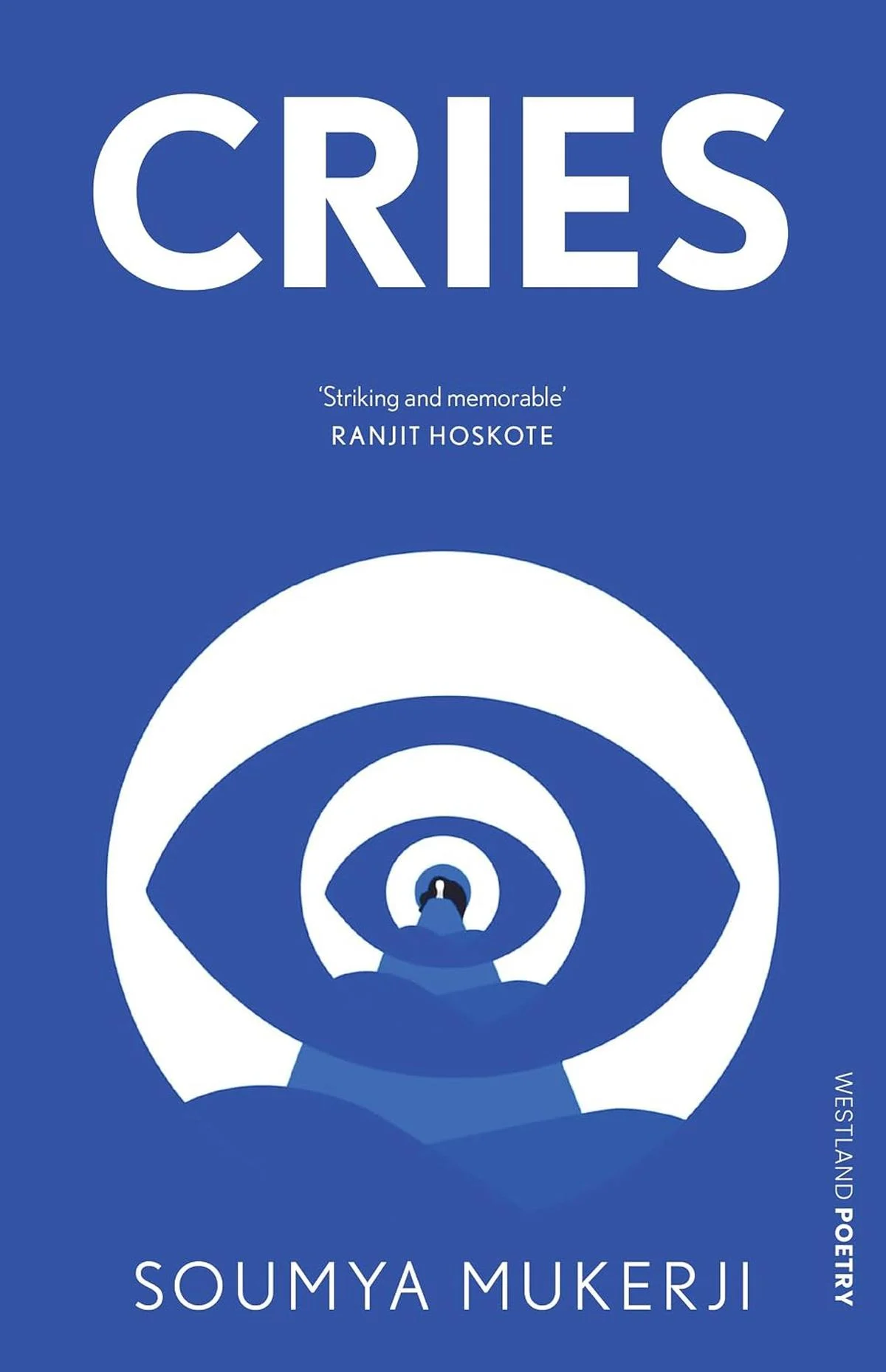
Introduction: The Transition from Reportage to Reflection
In the contemporary literary landscape, the transition from the rigorous, fact-based world of journalism to the abstract, emotive realm of poetry is a journey fraught with both challenge and opportunity. For Soumya Mukerji, a veteran narrative journalist with nearly two decades of experience, this transition is not merely a change in format but a profound expansion of her communicative reach. Having spent twenty years documenting the intricacies of culture, nature, arts, and design, Mukerji has recently unveiled her debut poetry collection, titled Cries (Westland).
The publication raises a pivotal question: What can a journalist, trained to observe the external world with objectivity, offer a readership through the subjective and often visceral medium of poetry? The answer lies in the collection’s structure and its unflinching gaze at the "crises of our times." Cries is more than a rhythmic exercise; it is a meticulously crafted mirror held up to a society caught between the desire for radical change and the seductive safety of the status quo.
Chronology: A Two-Decade Evolution of Observation
To understand the depth of Cries, one must first look at the trajectory of Mukerji’s career. For twenty years, she has operated at the intersection of narrative and news. Her reportage on culture and design was never merely about aesthetics; it was about the human stories behind the structures and the environmental context of artistic creation.
This long-form engagement with the "real world" provided the scaffolding for her poetic debut. The chronology of her work suggests a gradual distillation of observation. Where her journalism provided the "who, what, where, and when," her poetry now seeks to address the "why" and the "how it feels."
The shift to poetry, as evidenced in Cries, appears to be a response to the limitations of traditional prose. In her introduction, aptly titled ‘The Beginning,’ Mukerji notes, “Perfection is plastic. A poem, pure element.” This philosophy suggests that after twenty years of polishing prose to a professional sheen, she found a need for the raw, elemental honesty that only verse can provide. The collection, published in late 2026, marks a definitive milestone in her career, moving from the role of a witness to that of an interpreter of the human condition.
Main Facts: The Tripartite Structure of ‘Cries’
Cries is strategically organized into three principal sections: ‘Cries of Us’, ‘Cries of You’, and ‘Cries of I’. This structural choice is significant, moving the reader through a funnel of perspective—from the collective social experience to the interpersonal, and finally to the internal psyche.
- Cries of Us: This section tackles the socio-political landscape. It explores the collective anxieties of a generation living in an era of rapid change and digital saturation. It is here that Mukerji’s journalistic roots are most visible, as she critiques the "urban circus" and the performative nature of modern protest.
- Cries of You: Here, the focus shifts to the ‘Other.’ These poems deal with relationships, the perception of the individual by society, and the masks we wear in our interactions. It explores the "othering" of humans and the breakdown of empathy.
- Cries of I: The final section is the most intimate, dealing with the poet’s own dilemmas of identity, freedom, and the search for meaning. It addresses the internal conflict of a writer who has spent a lifetime looking outward and must now look inward.
Supporting Data: An Analysis of Key Verses and Themes
The power of Mukerji’s work lies in her ability to use simple imagery to convey complex philosophical dilemmas.
In ‘The Great Urban Circus,’ she utilizes the metaphor of a performance to critique the lack of genuine risk in modern social movements. She writes:
“the lion jumps into the ring of fire/ but the fox still outperforms/ the clown is cruel behind that mask/ he fools everyone but not foolishly.”
The closing lines of this poem provide a stinging indictment of the modern comfort zone:
“tightrope walkers fall and rise/ and everyone does the trapeze with perfect ease/ there’s nothing to be scared of/ the net is everywhere, closed and safe.”
The emphasis on the word “safe” is a recurring theme in the collection. Mukerji argues that in the social media-driven era of 2026, the stakes of protest have been lowered. The "net" represents the digital and social safety blankets that prevent individuals from taking the kind of life-altering risks that defined previous generations of activists.
In the poem ‘Seeker,’ Mukerji explores the paradox of language—a struggle familiar to any long-time journalist:

“I went looking for words/ and worlds appeared/ I went looking for the world/ and the words disappeared.”
This sentiment resonates with the legendary Bengali composer and poet Salil Chowdhury’s ethos of finding the path by walking it (Pothe ebar namo sathi). Mukerji suggests that true freedom and understanding cannot be found in the comfort of a home or a pre-defined role, but in the "homelessness" of constant seeking.
Further, in ‘1.20 am,’ she touches upon the dehumanization inherent in urban isolation:
“the dogs/ barking/ seem like screaming humans/ or is it screaming humans/ sounding like dogs… isn’t that how monsters are born?”
This observation highlights her concern with the "morphing" of the human spirit when it is disconnected from communal empathy, a theme that aligns her with other contemporary observers of urban decay.
Official Responses and Literary Context
Critical reception of Cries has noted its "aesthetic" approach to social issues. Unlike "protest poetry" that can sometimes lapse into polemic, Mukerji’s work remains grounded in melody and elegance.
The collection has been compared to the work of Manu S. Kurup, particularly his 2026 collection Tea and Tombs. Kurup, known for his belief that "language is the tea seller asking where you vanished," shares Mukerji’s commitment to the vernacular of the everyday. Both poets reject the "plastic perfection" of academic grammar in favor of the raw, lived experience of the street.
Reviewers have highlighted that Mukerji’s background in covering nature and design allows her to describe the "concrete sky" and "neon glow-stars" of the urban environment with a precision that younger, less experienced poets might lack. Her work is seen as a bridge between the "hollow" aesthetic of social media poetry and the "profound" philosophical inquiries of traditional literature.
Implications: The Role of the Poet in the "Social Media Era"
The publication of Cries carries significant implications for the role of the writer in the mid-2020s.
The Critique of "Safe" Activism
One of the most profound implications of Mukerji’s work is her challenge to the efficacy of modern dissent. By highlighting that the "net is everywhere," she forces the reader to confront whether their digital engagement is a form of genuine change or merely a performance within a safe enclosure. This critique suggests a need for a return to "elemental" action—risks that exist outside the safety of the screen.
The Rejection of "Plastic" Perfection
Mukerji’s assertion that "Perfection is plastic" serves as a manifesto for a new wave of South Asian poetry. In an age of AI-generated content and highly curated social personas, the "pure element" of a poem—with all its jagged edges and honest vulnerabilities—becomes a radical act of truth-telling. This implies a shift in literary values, where authenticity is prized over technical flawlessness.
The Survival of the Soul
Perhaps the most urgent implication of the collection is found in the poem ‘Hanging In.’ Mukerji warns against confusing one’s "role" with one’s "whole." In a professionalized world, she argues that the loss of individual soul-searching has a cumulative effect on society: “for every soul that gives up/ kills a little of those that didn’t.” This places a heavy responsibility on the individual to maintain their inner life as a means of collective survival.
Conclusion: A Voice for the Crises of Our Times
Soumya Mukerji’s Cries is a testament to the enduring power of the observed word. By stripping away the conventions of narrative journalism and embracing the "pure element" of poetry, she has provided a vital document for 2026.
The collection does not offer easy answers or comforting platitudes. Instead, it offers a mirror—sometimes cold, sometimes melodious, but always honest. For a readership navigating the "urban circus" of the 21st century, Cries is an invitation to step off the safe trapeze and rediscover the world through words that refuse to be "plastic." Mukerji has successfully transitioned from telling us what is happening to showing us who we are becoming, marking her as a crucial voice in contemporary Indian literature.
Bibliographic Note:
Cries by Soumya Mukerji
Published by Westland, 2026
Price: ₹350
The collection marks the debut of a writer whose career has spanned two decades and multiple disciplines, offering a profound reflection on the socio-political and personal crises of the current era.
