

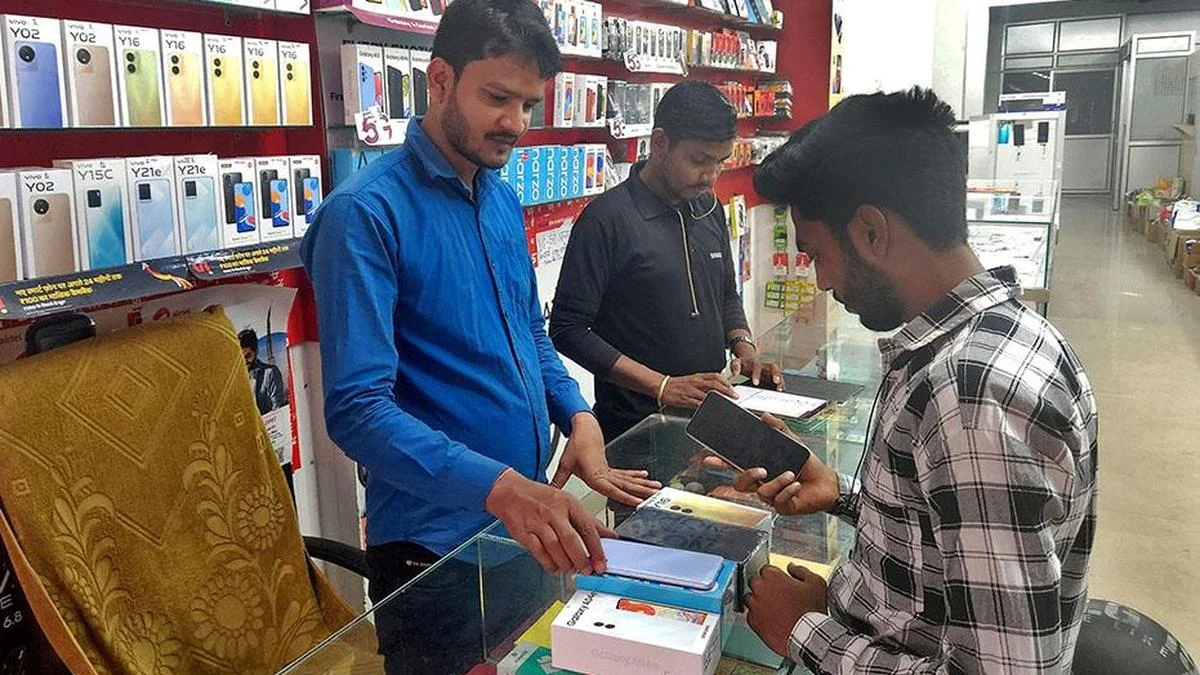
New Delhi, [Date] – India’s crucial sub-₹10,000 (approximately sub-$100) smartphone segment, long the bedrock of digital inclusion for millions, is teetering on the brink of collapse. A severe and prolonged memory chip crunch, manifesting in unprecedented price hikes, is forcing brands to abandon the ultra-affordable tier, leaving consumers with dwindling options and the market reshaped irrevocably. Once a vibrant battleground for manufacturers, this segment is now described by industry experts as facing an "existential crisis," with its very survival hanging in the balance.
The implications extend far beyond mere pricing adjustments; they threaten to widen the digital divide, slow the adoption of advanced technologies like 5G and generative AI, and fundamentally alter how a vast swathe of the Indian populace accesses the digital world. The shift signals a strategic pivot by smartphone makers towards higher-margin mid-range and premium segments, prioritizing value over the sheer volume that once defined India’s mobile market.
A Crisis Unfolds: The Disappearance of Sub-₹10,000 Smartphones
The core of the problem lies in the relentless surge in memory chip prices, a critical component in every smartphone. With manufacturing costs spiraling, manufacturers find it increasingly untenable to produce devices that can be retailed profitably below the ₹10,000 mark. This segment, always characterized by razor-thin margins, is the first casualty of the current supply chain pressures.
The numbers paint a stark picture of decline. According to estimates from IDC, a staggering 173 million sub-₹10,000 smartphones shipped last year are now part of a category facing an imminent wipeout. The second quarter of 2026 witnessed an almost 60% year-over-year (YoY) drop in this crucial segment, a downturn that analysts predict will persist through the remainder of the year. This precipitous fall is not just a temporary blip but rather the symptom of a deeper, systemic challenge that is forcing a re-evaluation of business models across the industry.
The budget tier has historically served as the entry point for first-time smartphone users and those upgrading from feature phones, making its contraction a significant impediment to broader digital literacy and economic participation. The affordability factor has been paramount in India, a market where even small price increases can deter millions of potential buyers. The current scenario, however, suggests that this fundamental principle of accessibility is being severely challenged by global supply chain dynamics.
The Ticking Clock: A Chronology of Decline
The trajectory of the sub-₹10,000 segment’s decline has been alarmingly rapid. Just a year ago, in Q2 2025, this segment commanded a respectable 19% share of the overall smartphone market. Fast forward to Q2 2026, and that share has plummeted to a mere 4%. This represents an 81% YoY decline in sales, underscoring the severity and speed of the segment’s contraction.
The ripple effects are already being felt in adjacent price brackets. Even the ₹10,000-₹20,000 segment, traditionally considered the sweet spot for many Indian consumers, has experienced a 7% decline. This is largely due to devices that previously fell within this range now migrating above the ₹20,000 threshold following price adjustments, effectively pushing affordability boundaries higher across the board.
Industry experts warn that this isn’t a short-term phenomenon. Memory prices, which have seen an unprecedented 300% YoY increase, are projected by IDC to continue their upward trajectory until at least 2028. This extended period of elevated component costs means that the pressure on the budget segment will remain "immense for the next 18 months," as noted by Tarun Pathak, Research Director at Counterpoint. Such a prolonged squeeze renders traditional budget manufacturing models unsustainable, necessitating fundamental changes in market strategy for all players.
The historical context further emphasizes the gravity of the situation. For years, manufacturers engaged in fierce competition to offer the most feature-rich devices at the lowest possible prices, often operating on single-digit profit margins in the budget category. This competitive intensity fostered innovation and drove widespread smartphone adoption. However, the current environment has inverted this dynamic, turning what was once a volume-driven race into a value-driven retreat, as companies seek refuge in segments where profitability is more achievable.
The Data Speaks: Unpacking the Numbers Behind the Crisis
The granular data paints a sobering picture of the economic forces at play. The staggering 300% YoY increase in memory prices, as reported by IDC, is the primary antagonist in this unfolding drama. To put this into perspective, consider the economics of a ₹10,000 smartphone. Tarun Pathak of Counterpoint explains, "To make a ₹10,000 phone now, you have to first buy a memory worth ₹4,000 to ₹4,500 and then think of adjusting BoM (bill of material) like display, SoC, camera, battery and then also make some room for margins which look extremely difficult."
This means that nearly half the manufacturing cost of a budget device is now consumed by a single component – memory. The remaining ₹5,500 to ₹6,000 must then cover the costs of the System-on-Chip (SoC), display, camera modules, battery, casing, research and development, marketing, distribution, and crucially, a viable profit margin. With such an allocation, achieving any meaningful profit becomes virtually impossible, let alone justifying the continued investment in product development and market support for this tier.
The sheer volume of devices impacted further highlights the scale of the crisis. The 173 million sub-₹10,000 smartphones shipped in the previous year represent a massive installed base that now faces an uncertain upgrade path. This large consumer base is now effectively orphaned by the market’s shift, left to contend with rising prices or fewer, less capable options.
The market share erosion from 19% to 4% in just one year is not merely a statistical anomaly; it signifies a structural change. It reflects not only a reduction in new device launches but also a significant drop in consumer purchasing power within this segment. Consumers are either unable or unwilling to absorb the increased costs, leading to a dramatic contraction in sales volumes. The 81% YoY sales decline in Q2 2026 is a direct consequence of this delicate balance between manufacturing costs, retail prices, and consumer affordability breaking down.
Furthermore, the pressure on the ₹10,000-₹20,000 segment, which saw a 7% decline, indicates that the problem is not isolated to the ultra-budget category. It’s a cascading effect, where price increases in the lower tier push devices into higher brackets, forcing consumers to either compromise on features or stretch their budgets significantly. This phenomenon is gradually reshaping the entire affordable smartphone landscape, making "affordable" a relative term that now implies a considerably higher price point than before.
Industry Voices: Official Responses and Expert Perspectives
The industry’s leading analysts and executives are unanimous in their assessment of the gravity of the situation. Their insights offer a bleak outlook for the immediate future of the budget segment.
Tarun Pathak, Research Director at Counterpoint, minces no words in his prognosis. "Hence, it won’t be wrong to say that sub-₹10k category staring at a complete wipeout unless someone sells them at loss or change business model," he states, emphasizing the critical need for a paradigm shift. Pathak further clarifies that "this segment will under immense pressure for the next 18 months," indicating a prolonged period of difficulty. He anticipates a significant behavioral change among consumers, suggesting that "some older phones may still be sold or even second-hand phones will find [a place] in sub-₹10,000 [segment]," as viable alternatives become scarce. This highlights a potential regression in the market, where consumers are forced to compromise on the latest technology in favor of basic accessibility.
Upasana Joshi, Senior Research Manager at IDC India/SEA, echoes this sentiment with an even more urgent tone. "The sub-₹10,000 segment isn’t just under pressure; it’s disappearing in real time," she warns, underscoring the rapid and irreversible nature of the market transformation. Joshi explains the strategic response from manufacturers: "Brands have responded [to the memory chip price rise] by cutting model launches and pulling back-channel support rather than eating the increase themselves." This illustrates the commercial imperative driving brands away from unprofitable ventures, even if it means abandoning a significant consumer base. The lack of new product introductions and reduced marketing support further accelerates the segment’s decline.
In an attempt to maintain some presence in the affordable tier, some manufacturers have resorted to reintroducing or extending the lifecycle of 4G models. "Several brands have reintroduced or extended 4G models as a stop gap to hold their footing in this tier, and that has lifted 4G’s share to 11.1% this quarter," Joshi notes. However, she quickly clarifies the temporary nature of this strategy: "But that’s a cushion, not a fix. Once existing inventory runs dry, there’s little room left to keep offering devices this cheap." This stop-gap measure is a testament to the desperate search for solutions but ultimately points to an unsustainable path. The long-term implication, Joshi adds, is that "buyers who would have picked up a sub-₹10,000 phone are now holding on to older devices for longer or turning to second-hand and refurbished options instead." She concludes with a grim outlook, stating that the segment’s recovery "depends on memory prices easing, and that isn’t likely to happen fast enough to change the picture through the rest of 2026."
Amidst this challenging landscape, the refurbished smartphone market is emerging as a critical alternative. Nakul Kumar, Co-Founder of Cashify, highlights its growing importance. "For budget-conscious consumers, refurbished smartphones are becoming a considered choice," he observes. Kumar points out the value proposition: "As new device prices rise, a budget that once bought a well-specced phone may now only stretch to an entry-level new device. Refurbished smartphones, however, provide access to higher-tier devices with better chipsets, cameras and 5G performance at a similar price." He attributes the accelerated shift towards refurbished options to increased trust, with companies offering "standardised quality checks, transparent grading, warranties and return policies making the experience more reliable and predictable." This signifies a maturation of the refurbished market, transforming it from an unorganized sector into a credible and attractive option for consumers facing budget constraints.
Collectively, these expert opinions paint a consistent picture: the sub-₹10,000 segment is undergoing a fundamental and likely permanent restructuring. The market is consolidating towards higher price points, driven by unavoidable cost pressures, and consumers are being forced to adapt their purchasing habits, with refurbished and older models becoming increasingly relevant.
Navigating the New Landscape: Implications for Consumers, Brands, and the Market
The disappearance of the ultra-budget smartphone segment carries far-reaching implications for various stakeholders, reshaping the digital ecosystem in India.
For Consumers:
The most immediate impact is on choice and affordability. Millions of Indian consumers, particularly those in rural areas or with lower disposable incomes, will find it increasingly difficult to acquire new smartphones. The options will either be significantly more expensive than before, forcing them to stretch their budgets considerably, or they will have to compromise heavily on specifications and features, opting for older, less capable devices. This means delayed access to newer technologies like 5G connectivity and generative AI features, which are becoming standard in higher segments. The digital divide, which India has worked hard to bridge, risks widening, potentially leaving a significant portion of the population behind in terms of digital access and opportunities. Furthermore, crucial financial instruments like financing options are scarcely available for these lower price points or for refurbished devices, creating an additional barrier for budget-constrained buyers.
For Smartphone Manufacturers:
The crisis necessitates a strategic realignment. Brands that once competed fiercely in the sub-₹10,000 category are now forced to either exit it entirely or fundamentally change their business models, potentially selling at a loss for market share, an unsustainable long-term strategy. The prevailing trend will be a heightened focus on the mid-range (₹15,000-₹30,000) and premium (above ₹30,000) segments, where profit margins are healthier and can absorb the increased component costs. This shift will lead to fewer new model launches in the budget category, reduced innovation at the entry level, and a potential loss of market share for brands heavily reliant on the mass market. The reintroduction of 4G phones, while a temporary measure to retain some footing, highlights the industry’s struggle to balance cost pressures with market demand. Ultimately, manufacturers will prioritize growing market "value" over "volume," focusing on selling fewer, more expensive devices.
For the Overall Market:
The Indian smartphone market is undergoing a significant transformation. While overall smartphone shipments might see a dip in volume due to the contraction of the largest segment, the total market value could still grow as average selling prices (ASPs) increase. The refurbished smartphone market is poised for significant expansion, transitioning from a niche or informal sector into a mainstream alternative. This growth, however, also brings challenges related to standardization, quality assurance, and consumer trust. The slower adoption of 5G and AI-enabled features at the mass market level could impact India’s broader digital transformation goals. As basic smartphone access becomes more expensive, it could hinder efforts towards digital literacy, mobile banking, and e-governance initiatives, all of which rely heavily on widespread smartphone penetration. The market will become less democratic in its offerings, potentially creating a tiered system where access to cutting-edge technology is increasingly linked to purchasing power.
The Road Ahead: An Uncertain Future for Affordable Connectivity
The current confluence of soaring memory prices, thin margins, and shifting manufacturing priorities paints a challenging future for India’s budget smartphone segment. While refurbished phones offer a viable, albeit limited, alternative and the reintroduction of 4G devices provides a temporary reprieve, these are symptomatic solutions rather than a cure for the underlying economic pressures.
The sub-₹10,000 category, once the engine of India’s digital revolution, is now undeniably inching towards extinction. Its fate hinges precariously on a significant and sustained easing of memory chip prices, a development that is not anticipated in the near term. Until then, Indian consumers will face a difficult choice: continue to prolong the life of their older devices, navigate the burgeoning refurbished market, or significantly stretch their budgets to access the ever-shrinking pool of affordable new smartphones. The dream of universal smartphone access, which seemed within reach just a few years ago, is now confronted with a formidable economic barrier, threatening to redefine the landscape of digital inclusion in one of the world’s largest and most dynamic markets. The industry, consumers, and policymakers alike will need to adapt to this new reality, which promises a less accessible, albeit potentially higher-value, smartphone ecosystem.
