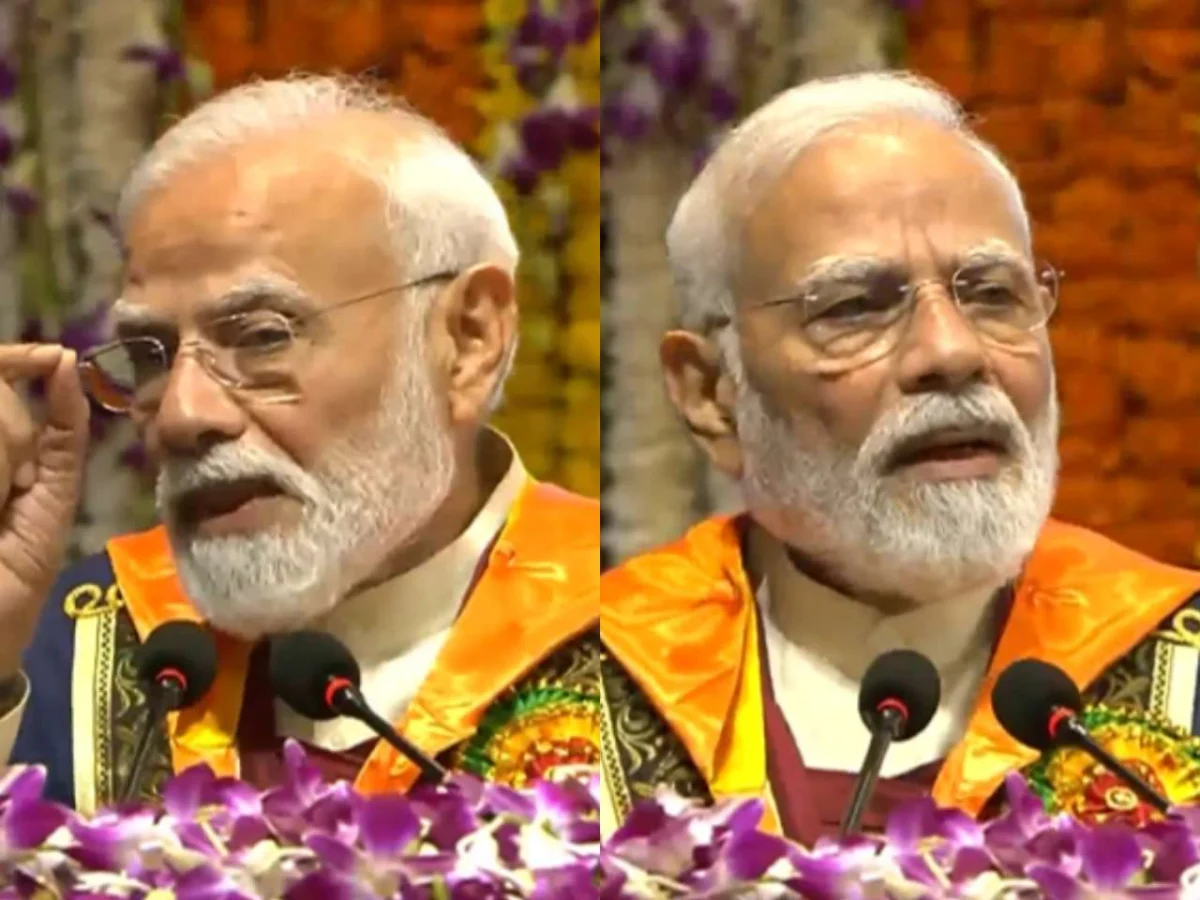
New Delhi: Prime Minister Narendra Modi graced the 57th Convocation ceremony of the Indian Institute of Technology (IIT) Delhi on Saturday, marking a significant occasion for the graduating students and the esteemed institution. Addressing a sea of bright young minds, the Prime Minister not only congratulated them on their monumental achievements but also unveiled the state-of-the-art ‘Param Pragya’ AI supercomputing facility, a crucial step in bolstering India’s technological prowess. His address resonated with a powerful message: "The one who learns will win," a clarion call for continuous learning in an era of rapid global transformation.
The convocation ceremony, held at the IIT Delhi campus, was a culmination of years of rigorous academic pursuit for hundreds of students across various disciplines. Prime Minister Modi, a familiar face at IIT Delhi’s convocations, recalled his virtual attendance during the challenging COVID-19 pandemic. "The last time I attended this convocation, the entire country was going through the period of COVID. Back then, I had joined virtually, but today, I am present here among all you young friends, and that is why I am feeling very good," he expressed, highlighting the return to in-person celebrations and the palpable energy of the graduating class.
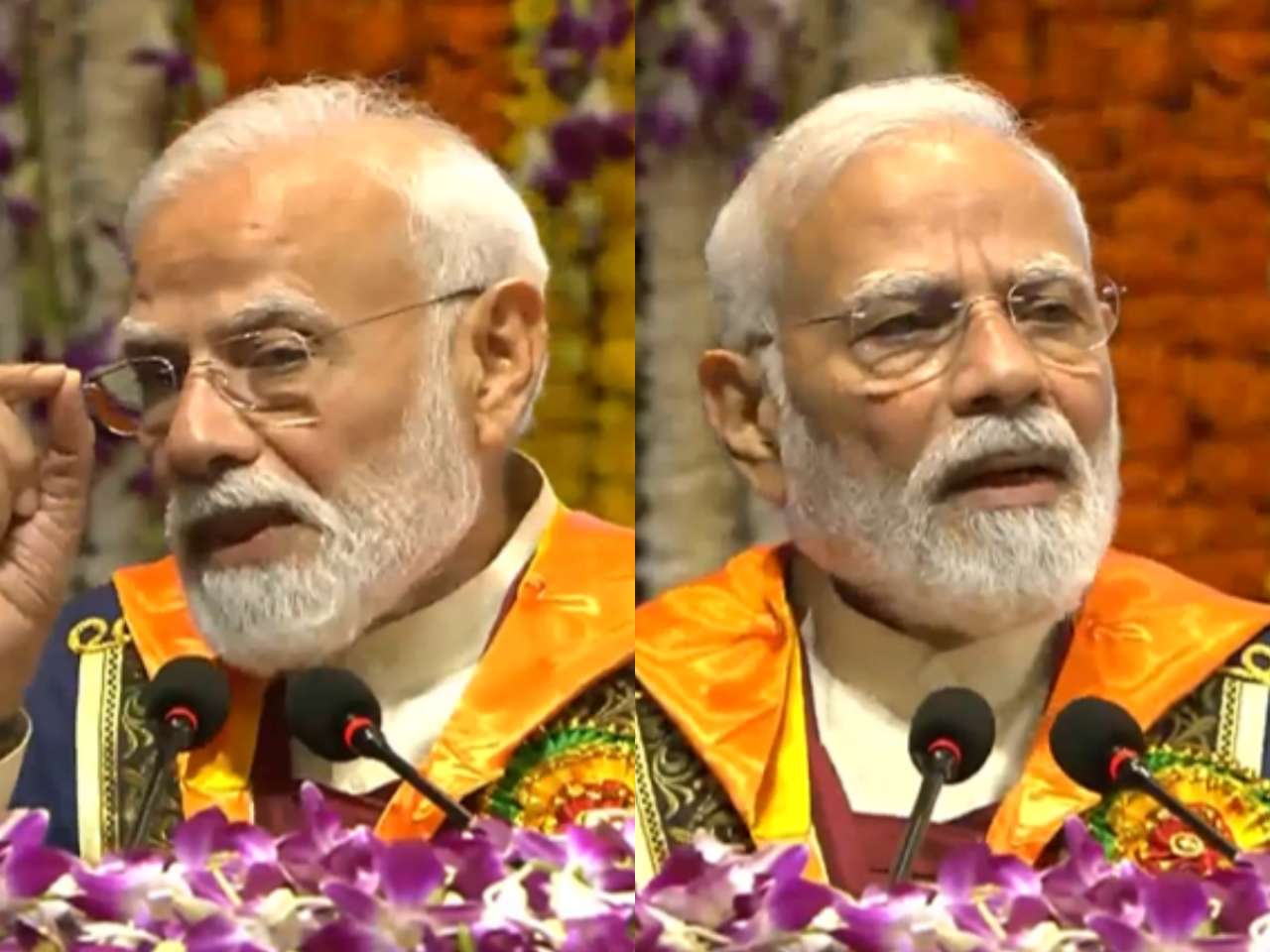
The Prime Minister personally presented medals to meritorious students, acknowledging their hard work and dedication. In a poignant observation, he gently nudged for greater female representation among the awardees. "Today, several students have received medals for their achievements. I congratulate all of you very much for this. But it would have been even better if there were one or two more daughters among them… Actual situation, you know!" he remarked, sparking a thoughtful reflection on gender parity within academic excellence.
Inauguration of ‘Param Pragya’: A Leap Towards AI Supremacy
A cornerstone of the Prime Minister’s visit was the inauguration of ‘Param Pragya’, a cutting-edge AI-powered high-performance supercomputing facility. Located at IIT Delhi’s Sonipat campus, this advanced infrastructure is poised to significantly accelerate India’s research and development capabilities in artificial intelligence and related fields. The facility represents a substantial investment in India’s ambition to become a global leader in AI, a technology that is rapidly reshaping industries and societies worldwide.
)
The ‘Param Pragya’ supercomputer is expected to empower researchers with unprecedented computational power, enabling them to tackle complex problems in areas such as climate modeling, drug discovery, advanced materials science, and the development of sophisticated AI algorithms. Its establishment underscores the government’s commitment to fostering innovation and providing researchers with world-class tools to push the boundaries of scientific knowledge.
The Imperative of Lifelong Learning in a Dynamic World
Prime Minister Modi’s central message to the graduating cohort was a profound emphasis on the enduring value of learning. He articulated a vision for the future where adaptability and continuous knowledge acquisition are paramount. "The world will change, technology will change, industries will change, professions will change, but amid all of this, remember my words – the one who learns will win," he declared, encapsulating the essence of success in the 21st century.

He painted a vivid picture of the rapidly evolving global landscape, characterized by swift shifts in technology, industries, and geopolitical power dynamics. The Prime Minister acknowledged the inherent uncertainty of predicting the precise contours of the world two to three decades hence. However, he remained resolute that the fundamental principle of learning would be the constant differentiator. This message resonated deeply with the graduates, who are stepping into a professional arena marked by unprecedented change and innovation.
Fulfilling the Destiny of a Developed India: A Call to Action
Beyond individual success, Prime Minister Modi underscored the profound responsibility that each graduating student carries towards the nation. Drawing parallels with the sacrifices made during India’s freedom struggle, he urged the young engineers and scientists to actively contribute to India’s ambitious journey towards becoming a developed nation by 2047.
)
"The choices you make over the next 30 to 35 years could influence the country’s development," he emphasized, placing the onus on their generation to shape India’s trajectory. He encouraged them to critically assess how their skills, knowledge, and innovations could address the pressing needs of the nation, from sustainable development and technological self-reliance to social progress and economic prosperity. This call to action serves as a powerful reminder that their education is not merely a personal attainment but a national asset.
Navigating the New Beginnings: Acknowledging Diverse Aspirations
In a more personal and relatable segment of his address, the Prime Minister acknowledged the diverse thoughts and aspirations swirling in the minds of the graduates on their special day. He humorously speculated on their immediate futures, envisioning some eagerly awaiting their first salary, others planning to relocate to new cities, some gearing up to launch their entrepreneurial ventures, and yet others preparing for further competitive examinations.
)
"Every student will follow a different path, but the beginning of a new phase of life is equally exciting for all," he observed, validating the myriad of journeys that lie ahead. This empathetic acknowledgement fostered a sense of camaraderie and understanding, recognizing that while their paths may diverge, the thrill of embarking on a new chapter is a shared experience.
Education Minister Highlights Transformative Growth in Higher Education
Union Education Minister Prahlad Joshi, who also addressed the convocation, echoed the Prime Minister’s sentiments and provided a compelling overview of the significant strides made in India’s higher education sector. He congratulated the graduating students, their families, and the faculty of IIT Delhi, acknowledging their collective contribution to academic excellence.
)
Minister Joshi credited Prime Minister Modi’s visionary leadership for fostering a more learner-centric, research-oriented, and future-ready education system in India. He remarked, "After taking the additional charge as the Education Minister, this is my first-ever public programme in an education institution with the Prime Minister. I am so happy and blessed by you all."
Key Statistics on Higher Education Growth:
)
Minister Joshi presented data illustrating the substantial expansion of India’s higher education landscape since 2014, a period marked by a concerted push for educational reform and accessibility:
- Student Enrollment: Over 4.5 crore students are currently enrolled in higher education, reflecting a significant increase in access and participation.
- University Expansion: The number of universities in India has witnessed a remarkable surge, increasing by nearly 70%.
- Establishment of New Institutions: Since 2014, India has established a substantial number of new educational institutions, including:
- Over 650 new universities.
- More than 14,000 new colleges.
- Over 4,000 new Industrial Training Institutes (ITIs).
- Nine new Indian Institutes of Management (IIMs).
- Seven new Indian Institutes of Technology (IITs).
- Thirteen new All India Institutes of Medical Sciences (AIIMS).
These figures underscore a strategic and sustained effort to democratize higher education, enhance its quality, and ensure that India’s youth are equipped with the skills and knowledge necessary to thrive in a globalized world.
)
Implications for India’s Technological Future and Global Standing
The inauguration of the ‘Param Pragya’ supercomputing facility at IIT Delhi is a potent symbol of India’s commitment to advancing its capabilities in artificial intelligence. This investment is crucial for several reasons:
- Accelerated Research and Innovation: The enhanced computational power will allow Indian scientists and researchers to undertake more complex simulations and data analyses, leading to breakthroughs in various scientific and technological domains.
- AI Development and Deployment: A robust supercomputing infrastructure is foundational for developing and deploying advanced AI models, from natural language processing to complex predictive analytics. This will be vital for sectors like healthcare, agriculture, finance, and national security.
- Talent Development: The availability of such advanced facilities will attract and retain top talent in AI research within India, fostering a vibrant ecosystem of innovation.
- Global Competitiveness: By investing in cutting-edge AI infrastructure, India is positioning itself to compete on the global stage in the development and application of artificial intelligence, a technology that is increasingly defining economic and strategic power.
Prime Minister Modi’s emphasis on lifelong learning directly addresses the dynamic nature of the modern workforce. As technology continues to evolve at an unprecedented pace, the ability to adapt, upskill, and reskill will be paramount. This message serves as a vital reminder for graduates, educators, and policymakers alike to foster a culture of continuous learning and professional development.
)
The call to contribute to India’s development as a developed nation by 2047 is an ambitious yet achievable goal. The nation’s demographic dividend, with a large young population, represents a significant asset. By empowering this generation with quality education, advanced research facilities, and a clear vision for national progress, India is poised to harness its potential and emerge as a global powerhouse. The IIT Delhi convocation, with its blend of celebration, technological advancement, and forward-looking guidance, marks a pivotal moment in this ongoing journey.