

Main Facts: The Intersection of Aesthetics and Nutrition in North Indian Cuisine
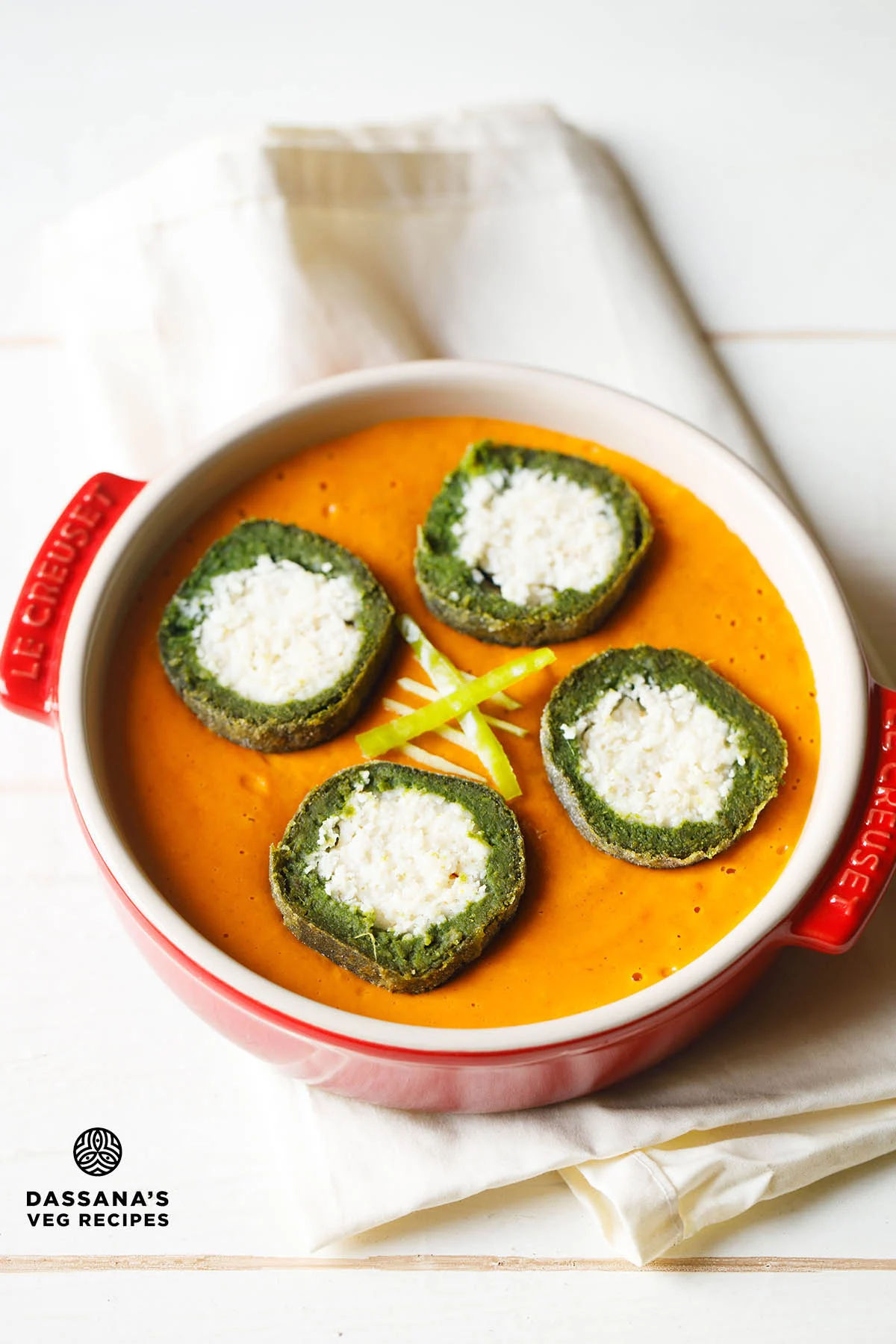
In the pantheon of North Indian vegetarian cuisine, few dishes command as much visual and gastronomic respect as Palak Kofta, colloquially and poetically known as "Shaam Savera." This sophisticated dish, which translates to "Evening and Morning," represents a masterclass in culinary contrast, featuring deep-green spinach dumplings (koftas) stuffed with a stark white core of paneer (Indian cottage cheese), all submerged in a vibrant, velvety orange gravy.

The dish is not merely a meal but a conceptual representation of the transition from dusk to dawn. The outer layer, a mixture of finely pureed spinach and roasted gram flour (besan), symbolizes the darkness of "Shaam" (evening), while the delicate, spiced paneer center represents the "Savera" (morning). Beyond its poetic nomenclature, the dish has become a staple for special occasions, celebrated for its complex textures—ranging from the crisp, fried exterior of the kofta to the creamy, tangy notes of the onion-tomato-cashew gravy.

Recent culinary shifts have seen a move away from the heavy, cream-laden versions of this dish typically found in high-end restaurants. A growing movement of home-style adaptations, such as the one popularized by culinary experts like Dassana, emphasizes the use of whole ingredients and plant-based fats. By substituting traditional butter and heavy cream with cashew-based emulsifications, the modern Palak Kofta offers a nutrient-dense profile without sacrificing the luxurious mouthfeel that defines the dish.

Chronology: From Television Screens to Global Kitchens
The history of Shaam Savera is intrinsically linked to the rise of the celebrity chef culture in India during the late 20th century. To understand its current status, one must trace its evolution through three distinct eras:

The Era of the Signature Creation (1990s)
Shaam Savera was pioneered by Chef Sanjeev Kapoor, a figure often credited with revolutionizing the way Indian households perceive professional cooking. The dish gained national fame through his long-running television show, Khana Khazana, on Zee TV. In this era, the dish was presented as a high-art "signature creation," teaching home cooks that vegetarian food could be as visually stunning and technically demanding as meat-based fine dining.

The Academic and Domestic Integration (2000s)
As the recipe proliferated, it began appearing in Home Science curricula and hospitality management courses across the subcontinent. It became a benchmark for student luncheons and guest menus, symbolizing a cook’s ability to balance delicate textures and intricate stuffing techniques. During this period, the dish transitioned from a "restaurant-only" luxury to a challenge that ambitious home cooks sought to master.

The Modern Health Adaptation (2010s–Present)
In the last decade, the digital revolution and the rise of food blogs have facilitated a new iteration of the recipe. This current phase prioritizes accessibility and health. Modern versions, such as the homestyle Palak Kofta detailed in recent culinary publications, have deconstructed the original recipe to make it more "heart-healthy." This involves reducing oil consumption through shallow frying or air-frying and eliminating dairy fats (butter and cream) in favor of the natural richness found in cashews.

Supporting Data: Technical Specifications and Nutritional Profiles
The success of a Palak Kofta relies on a series of precise chemical and culinary interactions. Data gathered from standardized homestyle recipes reveals a complex nutritional and procedural framework.

The Anatomy of a Kofta
A standard serving of Palak Kofta involves a sophisticated layering process:

- The Spinach Matrix: Approximately 200 grams of fresh spinach are pureed without water to maintain a high fiber-to-liquid ratio. This is bound with approximately 0.5 cups of roasted gram flour (besan). The roasting process is critical; it removes the raw aroma of the flour and ensures a structural integrity that prevents the kofta from disintegrating during frying.
- The Paneer Core: 100 grams of grated paneer are typically enhanced with rice flour (for moisture absorption) and aromatics like saffron and cardamom.
Nutritional Breakdown
Based on a five-serving analysis, the homestyle version of this dish provides a balanced macro-profile that caters to modern dietary requirements:

- Caloric Density: 291 kcal per serving.
- Proteins and Fats: 6g of protein and 25g of fat (primarily monounsaturated and polyunsaturated fats from cashews and oil).
- Micronutrients: The dish is exceptionally high in Vitamin A (4356 IU) and Vitamin K (199 µg) due to the concentrated spinach content. It also provides significant amounts of Calcium (149 mg) and Iron (2 mg).
The Gravy Emulsification
The "velvet" texture of the gravy is achieved through a cashew-tomato emulsion. Unlike traditional gravies that rely on high-fat dairy, the use of 12 large cashews per batch provides enough body to coat a spoon—a standard professional metric for gravy quality—while keeping the saturated fat content at a manageable 7g per serving.

Official Responses: Expert Insights on Culinary Technique
Culinary analysts and professional chefs have weighed in on the nuances that separate a successful Shaam Savera from a mediocre one. The consensus emphasizes three critical areas: moisture control, temperature management, and timing.

On Moisture Management:
"The most common failure in Palak Kofta is a ‘loose’ spinach mixture," notes a culinary instructor. "Professional standards dictate that spinach must be blanched or pureed dry. Any additional water during the blending phase necessitates an over-reliance on besan, which dulls the vibrant green color and creates a ‘doughy’ taste."

On Temperature Control:
Chefs emphasize the "moderately hot" oil rule. If the oil is below 170°C (340°F), the rice-flour coating on the koftas will absorb excess fat, leading to a greasy finish. Conversely, oil that is too hot will brown the spinach covering before the paneer center can warm through, resulting in a textural mismatch.

On Presentation and Service:
The official recommendation for high-end service is to never immerse the koftas in the gravy during the cooking phase. Experts suggest that the gravy should be heated separately and the koftas sliced and placed on top only at the moment of service. This preserves the "crisp-to-smooth" contrast that defines the Shaam Savera experience.

Implications: The Future of Indian Heritage Cooking
The evolution of Palak Kofta from a chef’s television "gimmick" to a homestyle staple has broader implications for the future of Indian cuisine and global food trends.

The Democratization of Fine Dining
The fact that such a technically demanding dish can now be prepared over a two-day "make-ahead" schedule suggests a democratization of gourmet cooking. By breaking down the preparation into manageable steps—making the gravy on day one and the koftas on day two—the barrier to entry for complex traditional cooking is lowered for the working class.

The "Clean Label" Trend in Ethnic Cuisine
The shift toward butter-free and cream-free gravies aligns with the global "clean label" trend. As consumers become more wary of hidden fats and processed additives, the ability of Indian cuisine to adapt its "royal" (Shahi) recipes into "homestyle" (Ghar ka) versions ensures its continued relevance in a health-conscious market.

Visual Identity as a Marketing Tool
In the age of social media, the visual appeal of Shaam Savera acts as its own marketing. The high-contrast green, white, and orange palette makes it an "Instagrammable" dish, which has led to its adoption in fusion restaurants globally, often served as a "vegetarian scotch egg" or a "spinach-paneer terrine."

Conclusion
Palak Kofta, or Shaam Savera, stands as a testament to the resilience and adaptability of North Indian culinary traditions. It is a dish that successfully bridges the gap between the poetic past and the pragmatic, health-focused present. As home cooks continue to refine these techniques, the dish remains a vibrant example of how food can serve as both a source of nutrition and a medium for artistic expression. Whether served with a simple roti or an elaborate saffron pulao, it continues to define the "gold standard" of the vegetarian dining experience.
