

KOLKATA — On the second floor of the Altitude Building on Lee Road, a curious architectural choice presents visitors with a psychological fork in the road. Two doors stand side-by-side, identical in their proximity but gateway to diametrically opposed realities. To open one is to embrace the warmth of a rose-scented, feminine-forward sanctuary of "Dance and Dine"; to open the other is to step into a neon-soaked, speculative future where mixology serves as a timeline for the next century.
Tua and Synthe, the city’s newest dual-concept destination, represent a sophisticated evolution in Kolkata’s hospitality landscape. Though they share a single address and a trio of founders, the two establishments refuse to borrow from each other’s identity, functioning instead as parallel universes that cater to the diverse emotional needs of the modern urbanite.

Main Facts: The Dual-Concept Identity
The project is the brainchild of founders Aman Bansal, Umaid Ahmed, and Tabrez Nadeem. Spanning the sprawling second floor of one of Lee Road’s most prominent commercial buildings, the venture is split into two distinct entities:
- Tua: A 3,000-square-foot, 75-seater restaurant designed with an "emotional architecture" focused on femininity, intimacy, and the revival of the "dine then dance" culture.
- Synthe: A minimalist, 32-seater cocktail laboratory that utilizes a Japanese Omakase-style setup to explore futuristic beverage narratives and avant-garde small plates.
While Tua operates on a philosophy of "yours" (the Latin translation of its name), offering comfort and relatability, Synthe (derived from "synthesizer") focuses on the "unlearning" of traditional flavors. Together, they represent a combined investment in high-concept dining that moves away from the generic "multicuisine" templates that have long dominated the Kolkata market.

Chronology: From Karaoke to Concept
The genesis of Tua and Synthe is as serendipitous as the "Alice in Wonderland" moment the entrance provides. The three founders—Bansal, Ahmed, and Nadeem—originally met during karaoke sessions in the very space they now own. At the time, the location housed a different establishment, but the chemistry between the trio led to a lighthearted pact: in another life, they would transform the space together.
That "other life" arrived in early 2024. The development of the dual concepts took several months of intensive planning, with a heavy emphasis on differentiating the guest experience.

Synthe was the first to greet the public, beginning operations on May 27, 2024. It served as a soft launch for the founders’ vision of a tech-forward, minimalist bar. Less than a month later, on June 24, 2024, Tua opened its doors, completing the dual-core experience and offering a larger, more traditional—yet refined—dining environment.
Supporting Data: Philosophies of Space and Taste
Tua: The Emotional Architecture
Aman Bansal describes Tua as a space built around the women who have shaped the founders’ lives. This is not achieved through stereotypical design tropes like "Barbie pink" interiors, but through a palette of warm reds, hushed amber lighting, and recurring floral motifs.

The attention to detail is granular. Every guest finds a unique message embroidered on their table napkin—a conversation starter intended to lower social barriers. Phrases like "Drinks Before Decisions" set a playful tone for an evening that transitions from a quiet dinner to a high-energy dance floor.
The culinary direction, overseen by consultant chef Vaibhav Bhargav and executed by Sous Chef Shobuj Sheikh, eschews the "usual suspects" of Kolkata’s Indo-Chinese repertoire. Instead, the menu focuses on:

- Modern Asian & Robatayaki: Utilizing traditional Japanese charcoal grilling methods.
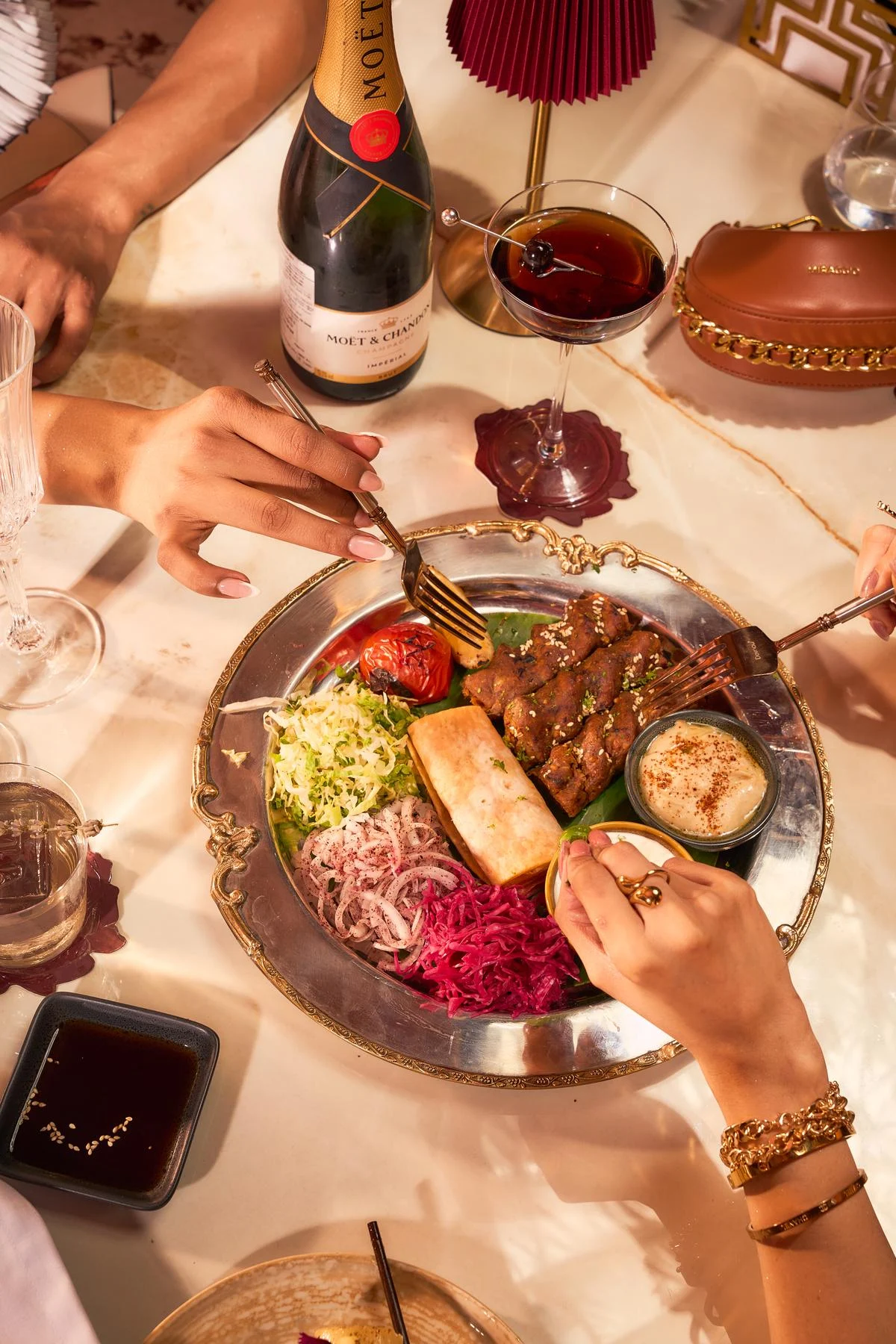
- West Asian Influence: Highlighted by a signature Turkish kebab platter featuring smoky meats, house-made tzatziki, and "Turkish chili" that emphasizes depth over heat.
- Continental Innovation: Dishes like the prawn har gow in dan dan sauce bridge the gap between dim sum tradition and bold, spicy richness.
Synthe: The Speculative Timeline
If Tua is a celebration of the present, Synthe is a meditation on the future. The name is a tribute to the Daft Punk track "Giorgio by Moroder," specifically the line describing the synthesizer as the "instrument of the future."
The aesthetics here are metallic and neon, mirrored by the mismatched black-and-white spectacles of head mixologist Abhishek Das. The menu at Synthe is a "Timeline of Humanity," with cocktails categorized by the years they represent:

- 2030 (Reclamation): Focusing on fresh greens, shiso, and cucumber, representing a return to health.
- 2060 (Restrain): A minimalist Old Fashioned reflecting a future of scarcity, using Johnnie Walker Black Label and chamomile.
- 2130 (Unlearn): A surrealist concoction of tomato juice, strawberry, and vinegar, featuring a cherry tomato frozen inside a clear ice block—visible but untouchable.
Official Responses: The Founders and Mixologists Speak
The founders emphasize that the two spaces are meant to coexist without competing. "The city has forgotten how to dance," says Tabrez Nadeem. "Our idea at Tua is simple: dine first, dance later. Good food should naturally put you in the mood to celebrate."
On the beverage front, Tua’s bar manager, Akash James Mondal, highlights a "zero-waste" policy and a focus on "sessionable" drinks. "The cocktails are built around the stages of a night out. They’re easy-going—drinks you can comfortably have four of," Mondal explains. The bar uses specialized "Yukina ice," which is designed to maintain temperature without over-diluting the spirit or irritating the throat.

At Synthe, the approach is more intellectual. Mixologist Abhishek Das explains the Omakase influence: "We leave it to you." The beverage program, curated by consultant Ankur Chawla, took three months of experimentation to perfect. "Sometimes you have to look at things differently," Das says, referring to the ‘Unlearn’ cocktail. "The narrative-driven menu is about deconstructing what a cocktail can be."
Chef Shobuj Sheikh adds that the culinary experience at Tua is meant to be tactile. During the presentation of the Turkish platter, he often assists guests in assembling the "perfect wrap," ensuring the juices of the grilled meats are properly absorbed by the pillowy flatbread.

Implications: A Shift in Kolkata’s Gastronomy
The opening of Tua and Synthe signals several significant shifts in the Kolkata hospitality market:
- The Decline of "Generalist" Menus: By focusing on specific niches—Modern Asian/West Asian at Tua and futuristic small plates at Synthe—the founders are betting that Kolkata diners are ready for specialized, high-quality menus rather than 20-page books that try to please everyone.
- Narrative-Driven Mixology: Synthe’s "timeline" approach elevates the bar experience from simple service to a form of storytelling. This follows a global trend seen in cities like London and Singapore, where the "story" behind the drink is as important as the flavor profile.
- The "Third Space" for Women: Tua’s explicit focus on creating a "safe and comfortable" environment for women reflects a growing demand for nightlife spaces that prioritize atmosphere and "emotional architecture" over loud, aggressive clubbing environments.
- Zero-Waste and Quality Ingredients: The integration of kitchen by-products into the bar (banana oleo, plum liqueurs) and the sourcing of premium ice indicate a move toward sustainability and craft that justifies the higher price point (approximately ₹4,000 for two).
Conclusion: Two Doors, One Vision
The juxtaposition of Tua and Synthe at the Altitude Building offers a unique case study in modern branding. While one offers the "blanket of relatability" and the physical release of the dance floor, the other offers a cerebral, neon-lit journey into the unknown.

Ultimately, the success of this dual-concept venture lies in its refusal to compromise. By splitting the 3,000-square-foot floor into two distinct identities rather than one large, diluted space, the founders have created a destination where the hardest decision isn’t what to order, but which world to inhabit for the night. Whether one chooses the roses of the present or the neon of the future, Lee Road’s newest additions suggest that in Kolkata’s evolving dining scene, the most important ingredient is a clear and distinct point of view.
Fact Box: At a Glance
- Location: 2nd Floor, Altitude Building, Lee Road, Kolkata.
- Average Cost: ₹4,000 for two (including alcohol).
- Key Contact: 9230197489.
- Specialties: Turkish Kebab Platter (Tua), Blackout Futomaki (Synthe), Timeline Cocktails (Synthe).
