

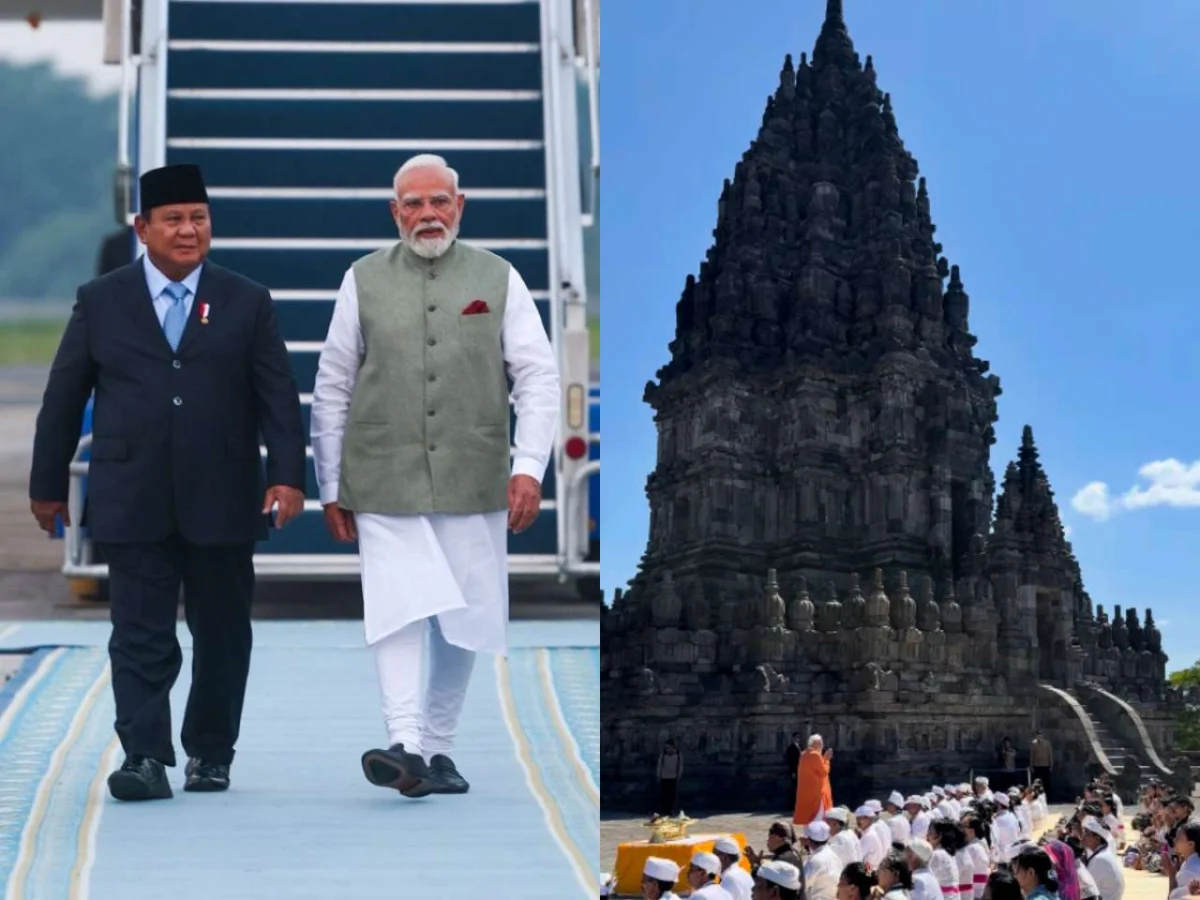
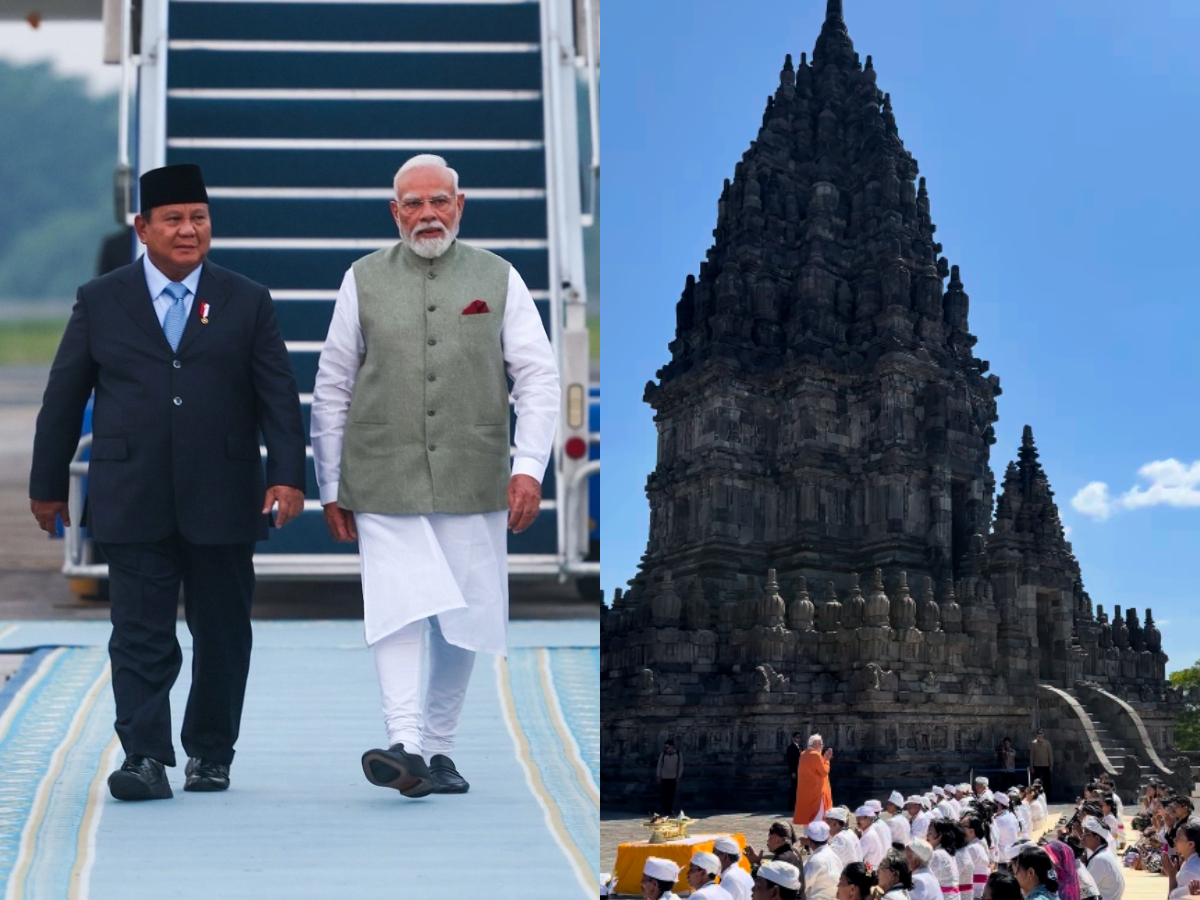
Yogyakarta, Indonesia – During his significant state visit to Indonesia, Prime Minister Narendra Modi paid a poignant visit to the magnificent Prambanan Temple complex, a UNESCO World Heritage Site that stands as a profound testament to the deep-rooted cultural and historical ties between India and Indonesia. The visit underscored not only the shared heritage but also the mutual commitment to preserving these invaluable links for future generations.
A Pilgrimage of Cultural Significance: The Core of the Visit
Prime Minister Modi’s presence at Prambanan was more than just a diplomatic stop; it was a symbolic reaffirmation of the centuries-old cultural exchange that has shaped the identity of both nations. Nestled near the cultural heartland of Yogyakarta in Central Java, Prambanan is not merely a collection of ancient stones, but a vibrant narrative etched in architecture, a living echo of India’s spiritual and artistic influence on the Indonesian archipelago.
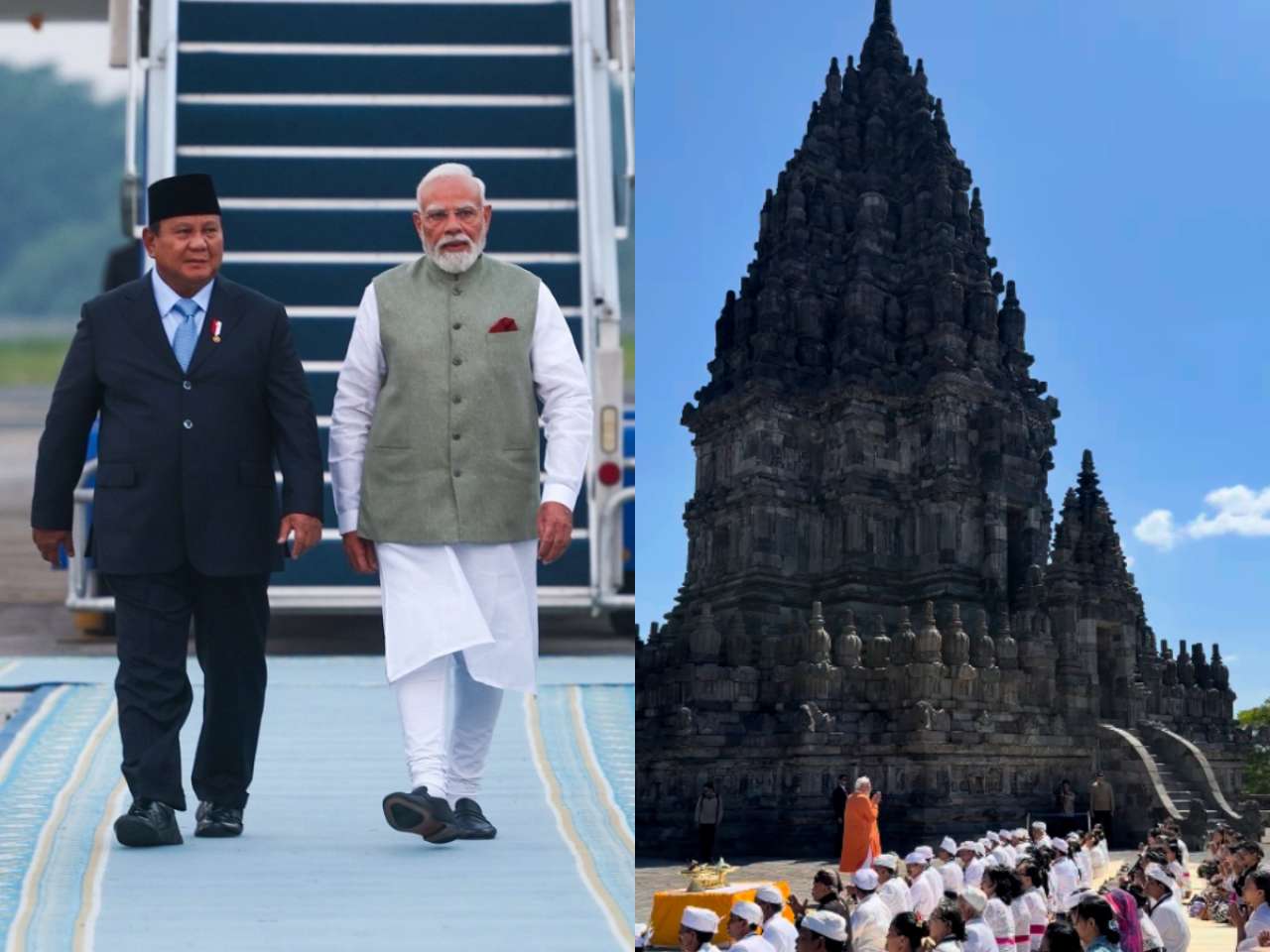
Indonesia, while being the world’s most populous Muslim-majority nation, proudly hosts Prambanan, a sprawling testament to its significant Hindu past. This duality is a crucial aspect of Indonesia’s rich tapestry of religious and cultural history, showcasing a remarkable coexistence and evolution of traditions. The Prime Minister’s visit served to highlight this unique aspect, drawing attention to the shared spiritual roots that transcend modern religious demographics.
The potential for collaborative efforts in the conservation of this UNESCO World Heritage Site was also a key takeaway from the visit. Both nations, recognizing the universal value of Prambanan, are poised to engage in joint initiatives aimed at its meticulous preservation, ensuring that its grandeur and historical significance are safeguarded against the ravages of time and environmental factors.
)
A Journey Through Time: The Historical Tapestry of Prambanan
The origins of Prambanan are deeply embedded in the annals of ancient Javanese history, tracing back to the 9th and 10th centuries. It was during the reign of the Sanjaya dynasty, under the auspices of the ancient Mataram Kingdom, that this colossal temple complex began to take shape. The architectural marvel was conceived as a dedication to the Hindu Trimurti – the supreme trinity of Lord Shiva, Lord Vishnu, and Lord Brahma – representing the cosmic functions of creation, preservation, and destruction.
Prambanan is often discussed in conjunction with the nearby Borobudur Temple, which stands as a monumental representation of Indonesia’s equally significant Buddhist heritage. Together, these two iconic structures offer an unparalleled glimpse into the vibrant religious and cultural landscape of ancient Java, a period characterized by a dynamic interplay of different spiritual traditions.

The profound historical and architectural importance of the Prambanan Temple Compound was formally recognized by UNESCO in 1991, when it was inscribed as a World Heritage Site. This designation underscores its global significance as a cultural treasure, a physical manifestation of human creativity and historical continuity.
Architectural Grandeur and Spiritual Resonance: The Design of Prambanan
The immediate impression upon encountering Prambanan is one of awe-inspiring verticality, with its towering spires reaching towards the heavens. The heart of the complex comprises three principal temples, each dedicated to one of the members of the Trimurti. The central and most imposing is the Temple of Shiva, soaring to an impressive height of approximately 47 meters.
)
Within the sanctum of the Shiva temple, devotees and visitors are greeted by the majestic statues of Lord Shiva, accompanied by Goddess Durga, Lord Ganesha, and the sage Agastya. The entire temple complex is meticulously arranged in a symmetrical square layout, a design philosophy deeply rooted in Hindu cosmology, symbolizing the order of the universe.
Originally, Prambanan was a vast expanse, encompassing an estimated 240 temples spread across nearly 40 hectares. While many of the subsidiary shrines now lie in ruins, a testament to the passage of centuries and the forces of nature, the principal temples have undergone extensive and painstaking restoration, allowing their original splendor to be appreciated once again.
)
The Ramayana Unveiled: A Narrative in Stone
Beyond its architectural magnificence, Prambanan is renowned for its intricate and detailed stone carvings. The inner walls of the temples are adorned with exquisite bas-reliefs that meticulously narrate the epic tale of the Ramayana, one of Hinduism’s most revered and foundational scriptures. Traditionally, visitors embark on a clockwise circumambulation of the temple, following the visual progression of the Ramayana story carved into the stone.
These captivating carvings serve as a powerful visual testament to the profound influence of Indian culture on the region. However, they also exhibit a distinct local Javanese artistic sensibility, a fusion that is characteristic of the cultural assimilation that occurred over centuries of interaction.
)
The legacy of the Ramayana at Prambanan extends beyond its static carvings. Even today, the temple precinct hosts breathtaking open-air Ramayana ballet performances. These captivating spectacles, blending dance, music, and theatre, are performed against the dramatic backdrop of the illuminated temple complex, offering a truly immersive cultural experience that brings the ancient epic to life.
The Legend of Princess Roro Jonggrang: Folklore and Faith
Prambanan is inextricably linked to a beloved Javanese legend that imbues the site with an additional layer of mystique and local folklore. The tale centers on Princess Roro Jonggrang, who, according to the story, agreed to marry the formidable warrior Bandung Bondowoso on the condition that he erect one thousand temples within a single night.
)
The ambitious prince, leveraging supernatural assistance, reportedly came remarkably close to fulfilling this daunting task. However, the clever princess, determined to thwart the union, resorted to trickery. She orchestrated a ruse to deceive the spirits assisting Bandung Bondowoso, instructing villagers to light fires and pound rice, thereby creating the illusion that dawn had broken prematurely. Disoriented and dismayed, the spirits vanished, leaving the thousandth temple incomplete.
Enraged by this deception, Bandung Bondowoso, in his fury, cursed Princess Roro Jonggrang, transforming her into stone. Local tradition holds that the statue of Goddess Durga housed within the Shiva temple is, in fact, the petrified form of the princess. While historians generally regard this narrative as folklore, it remains a deeply ingrained part of the local lore and adds a poignant human dimension to the temple’s history.
)
From Obscurity to Global Recognition: The Restoration of Prambanan
Following a period of significant political upheaval in the 10th century, Prambanan, like many ancient structures, gradually succumbed to the forces of nature and neglect. Catastrophic volcanic eruptions, seismic activity, and prolonged periods of disuse led to the widespread decay of the temple complex, with many structures buried beneath volcanic ash and dense vegetation.
The site remained largely forgotten until its rediscovery in the 19th century, marking the beginning of a concerted effort towards its restoration. Despite these efforts, the temple faced further challenges, including significant damage sustained during the devastating 2006 Yogyakarta earthquake. Nevertheless, ongoing restoration projects, undertaken with meticulous care and historical accuracy, have been instrumental in preserving this invaluable monument.
)
Today, while the ongoing rebuilding of several smaller temples continues, the principal shrines have been meticulously restored to their former glory. Prambanan stands as not only a vital historical landmark but also as one of Indonesia’s most significant and captivating tourist attractions, drawing visitors from across the globe.
A Resilient Legacy: Prambanan as a Symbol of Indonesia’s Hindu Heritage
Even in contemporary Indonesia, where the majority of the population adheres to Islam, the enduring influence of Hindu traditions remains an integral and celebrated aspect of the nation’s rich cultural heritage. The seeds of Hindu influence were first sown in the Indonesian archipelago over 1,500 years ago, primarily through vibrant trade routes and dynamic cultural exchanges with India.
)
This period witnessed the rise and flourishing of several powerful Hindu and Hindu-Buddhist kingdoms that held sway over significant portions of Java, Sumatra, and Bali. These kingdoms left behind a remarkable legacy in the form of awe-inspiring temples, intricate inscriptions, and enduring cultural traditions that continue to resonate today. While Bali has emerged as the contemporary epicenter of Hinduism in Indonesia, monuments like Prambanan serve as powerful and enduring custodians of the nation’s profound Hindu past, a heritage that continues to enrich Indonesia’s multifaceted identity.
Prime Minister Modi’s visit to Prambanan Temple was a profound moment, not just for the bilateral relations between India and Indonesia, but for the global recognition of shared cultural heritage. It underscored the enduring power of historical connections and the collective responsibility to preserve these invaluable links for the enlightenment and enrichment of future generations. The visit served as a potent reminder that cultural diplomacy can be a powerful force in fostering understanding and strengthening bonds between nations.
