

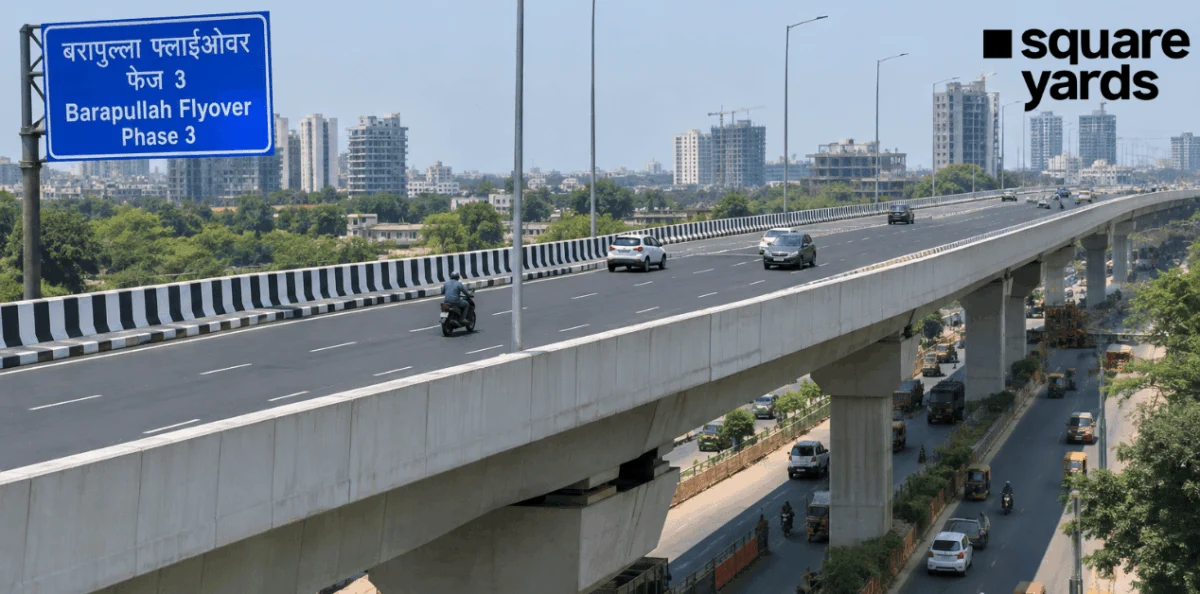
NEW DELHI – In a move set to redefine the commuting landscape of the National Capital Region (NCR), the long-awaited Barapullah Phase-III elevated corridor is officially scheduled for inauguration on September 29, 2026. This 3.5-kilometer stretch, a critical engineering feat spanning the Yamuna River, serves as the final link in a grand vision to provide a seamless, signal-free transit between East Delhi and South Delhi.
For over a decade, the Barapullah project has been the subject of intense public interest and administrative scrutiny. Its completion marks the end of chronic bottlenecks at the Ashram intersection and the narrow bridges across the Yamuna, promising to slash travel times and integrate disparate parts of the metropolis into a cohesive urban network.
I. Main Facts: The Final Link in Delhi’s Elevated Spine
The Barapullah Phase-III project is an extension of the existing Barapullah Elevated Road (Phases I and II), which currently connects Sarai Kale Khan to the All India Institute of Medical Sciences (AIIMS) and INA Market. The newly completed Phase-III extends this corridor from Sarai Kale Khan across the Yamuna River to Mayur Vihar Phase-I in East Delhi.
Key Project Specifications:
- Total Length: 3.5 kilometers.
- Corridor Type: Six-lane elevated highway.
- Primary Connectivity: Mayur Vihar Phase-I to Sarai Kale Khan.
- Strategic Integration: Links directly to the Delhi-Noida-Direct (DND) Flyway, the Delhi-Mumbai Expressway, and the existing Barapullah network toward South Delhi.
- Inauguration Date: September 29, 2026.
The primary objective of this phase is to bypass the heavily congested Ring Road and the perennially jammed roads leading to the Ashram Flyover. By providing a dedicated elevated route, the Public Works Department (PWD) aims to transition thousands of vehicles away from surface-level traffic, effectively creating a "bypass" for commuters traveling between the trans-Yamuna areas and the heart of the capital.
II. Chronology: A Decade of Engineering and Hurdles
The journey of Barapullah Phase-III has been a saga of technical brilliance met with significant bureaucratic and land-related challenges. To understand the magnitude of the September 29 inauguration, one must look at the timeline of its development.
2013–2015: Conception and Approval
Following the success of Phases I and II (originally built for the 2010 Commonwealth Games), the Delhi Government conceptualized Phase-III to bridge the gap between East and South Delhi. The project received formal approval in 2014, with an initial budget estimate of approximately ₹964 crore. Construction began in early 2015 with a projected completion date of 2017.
2017–2022: The Land Acquisition Standoff
The project faced a major stalemate due to a 700-meter stretch of land on the Yamuna floodplains. A group of farmers refused to surrender their land, leading to a protracted legal and administrative battle. While the bridge structures on either side of this "missing link" were completed, the central portion remained stagnant for years. This delay saw the project cost escalate significantly due to the rising price of raw materials and labor.
2023–2025: Breakthrough and Rapid Construction
After years of negotiations, the land acquisition issues were resolved in 2023. The PWD accelerated construction, employing advanced pre-cast technology to bridge the gap over the floodplains. Despite seasonal monsoon challenges and the ecological sensitivity of the Yamuna banks, the final pillars were cast in late 2025, paving the way for the 2026 launch.
September 2026: Final Safety Audits and Opening
In the months leading up to the inauguration, the corridor underwent rigorous load-testing and safety audits. Lighting, signage, and sound barriers were installed to meet international urban transit standards, culminating in the announcement of the September 29 opening.
III. Supporting Data: Quantifying the Impact
The Barapullah Phase-III is not merely a bridge; it is a time-saving machine for the average commuter. Data provided by urban planning experts and the PWD highlights the transformative nature of this corridor.
Travel Time Reduction
Currently, a commuter traveling from Mayur Vihar to AIIMS or South Extension during peak hours must navigate the Noida Link Road and the Ashram intersection. This journey typically takes 35 to 50 minutes depending on traffic.
- Post-Inauguration: The same journey is projected to take just 15 minutes.
- Distance Savings: While the physical distance remains similar, the elimination of five major traffic signals and three high-density intersections ensures a constant speed of 60–70 km/h.
Traffic Volume and Decongestion
It is estimated that over 1.5 lakh (150,000) vehicles will utilize the Barapullah Phase-III daily.
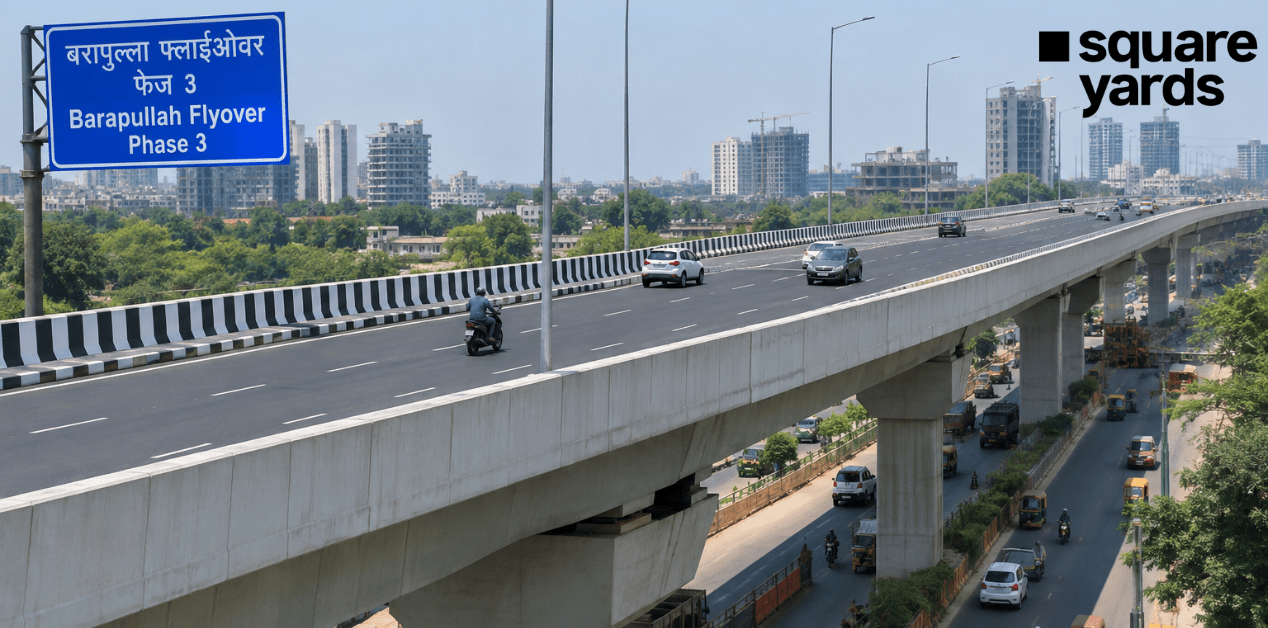
- Ashram Decongestion: Traffic volume at the Ashram intersection is expected to drop by 20-25%, as commuters from East Delhi and Ghaziabad will no longer need to use the Ring Road to reach South Delhi.
- Fuel Efficiency: The PWD estimates that the signal-free movement will result in a collective saving of thousands of liters of fuel daily, contributing to a reduction in the city’s carbon footprint.
IV. Official Responses: A Vision for a "Signal-Free" Delhi
Government officials and PWD engineers have hailed the completion of Phase-III as a victory for urban infrastructure.
A senior official from the Delhi Public Works Department stated:
"Barapullah Phase-III was the most challenging segment of the entire project. Building over the floodplains while respecting environmental norms required precise engineering. This corridor is more than just a road; it is the backbone of Delhi’s new transit strategy to move traffic vertically, away from the crowded streets below."
Urban planning experts have also weighed in on the "Multi-Modal Integration" aspect of the project. The Sarai Kale Khan end of the corridor is strategically positioned near a massive transport hub.
"The integration with the Sarai Kale Khan RRTS (Regional Rapid Transit System), the ISBT, and the Hazrat Nizamuddin Railway Station creates a seamless ecosystem," says Dr. Arvinder Singh, a transit consultant. "A traveler can now arrive from Meerut via the RRTS and reach South Delhi in minutes via the Barapullah link."
V. Implications: Real Estate, Economy, and Lifestyle
The opening of Barapullah Phase-III ripples far beyond simple commute times. It is set to trigger a socio-economic shift across several micro-markets in the NCR.
1. Real Estate Appreciation in East Delhi and Noida
Localities like Mayur Vihar, Patparganj, and Trilokpuri have long been considered "residential hubs," but their connectivity to South Delhi’s premium commercial districts was always a pain point.
- Mayur Vihar: Real estate consultants predict a 10-15% uptick in rental and property values as the area becomes a viable residence for professionals working in South Delhi and the AIIMS/Safdarjung healthcare hub.
- Noida Sectors 15, 16, and 18: These sectors gain a "backdoor" entry to South Delhi, making them even more attractive for corporate offices and high-end residential projects.
2. Strengthening the NCR Connectivity Grid
The corridor acts as a bridge between three states: Delhi, Uttar Pradesh (Noida/Ghaziabad), and Haryana (Faridabad).
- The Ghaziabad Connection: Residents of Indirapuram and Vasundhara can now take the NH-24 (NH-9), transition to the Barapullah Phase-III at Mayur Vihar, and reach South Delhi without hitting a single red light.
- The Faridabad Link: By connecting to the DND Flyway and the upcoming Delhi-Mumbai Expressway spurs, the corridor facilitates faster movement toward Faridabad and Sohna.
3. Environmental and Health Benefits
By reducing the "idling time" of vehicles at major intersections like Ashram and Sarai Kale Khan, the project contributes to better air quality. Vehicular emissions are highest during "stop-and-go" traffic; a steady-speed elevated corridor helps in maintaining optimal engine efficiency, thereby reducing the release of particulate matter.
4. Impact on Healthcare Access
One of the most significant yet overlooked benefits is the improved access to Delhi’s "Medical Square." AIIMS, Safdarjung Hospital, and several private healthcare facilities in South Delhi will now be reachable for East Delhi residents within minutes. In emergency situations, where the "Golden Hour" is critical, this 15-minute link could literally be a lifesaver.
Conclusion
The inauguration of Barapullah Phase-III on September 29, 2026, marks the completion of a decade-long endeavor to stitch together the disparate halves of India’s capital. As the ribbons are cut and the first vehicles traverse the Yamuna via this new elevated path, the project stands as a testament to the city’s resilience in the face of logistical and legal hurdles. For the millions of commuters in Delhi, Noida, and Ghaziabad, the "15-minute dream" is finally becoming a reality, signaling a new era of urban mobility in the NCR.
