

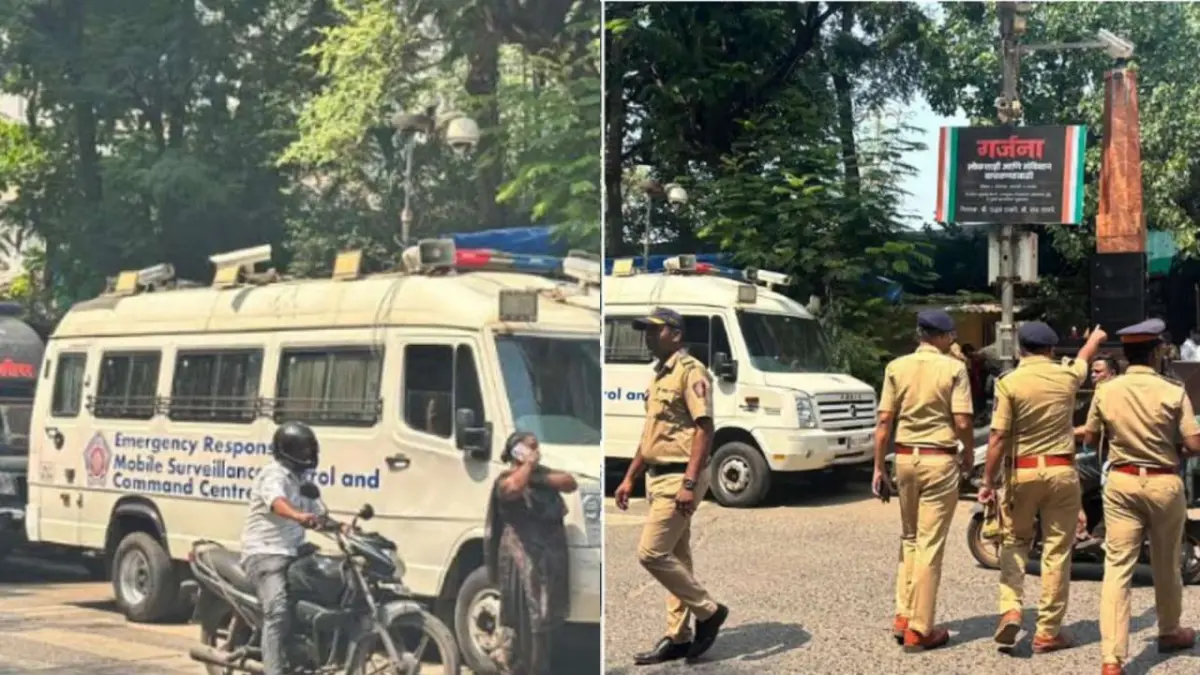
Mumbai, October 2, 2026 – Mumbai’s iconic Shivaji Park, a historical crucible of political and social movements, has been transformed into an impregnable fortress today as authorities brace for a planned ‘jail-filling’ protest by the Citizens for Justice and Peace (CJP). Despite explicit denials of permission by the Mumbai Police, the CJP has vowed to proceed with its demonstration, leading to an unprecedented security deployment that has effectively sealed off the vast public ground and its surrounding areas. The standoff highlights a tense equilibrium between the constitutional right to protest and the state’s prerogative to maintain public order.
Hundreds of police personnel, including specialized anti-riot units, Quick Response Teams (QRT), and dog squads, have converged on the Dadar area, turning the normally bustling locale into a zone of heightened vigilance. Barricades, strategically placed at all major entry points, restrict access, while senior police officers oversee an intricate security grid designed to prevent any unauthorized assembly and potential escalation. The city watches with bated breath as the clock ticks towards the planned demonstration, uncertain whether the CJP will succeed in mobilizing its supporters or if the police cordon will effectively stifle the protest before it can gain momentum.
The Unfolding Situation: A City on Edge
The atmosphere around Shivaji Park this morning is one of palpable tension, punctuated by the omnipresent sight of uniformed police officers and the rhythmic clatter of security vehicles. From the early hours, the usually vibrant morning routines of residents and commuters have been disrupted by the extensive security measures. The main entrances to Shivaji Park, typically open for joggers, walkers, and local residents, have been firmly shut, emblazoned with notices warning against unauthorized entry.
Nearly a dozen layers of barricades, some reaching chest height, have been erected along the perimeter of the ground, creating a formidable physical barrier. The entire area encompassing the park and its immediate vicinity, including arterial roads, has been systematically cordoned off. Pedestrian movement is restricted, and vehicle traffic has been diverted, leading to significant congestion in surrounding areas and frustrating daily commuters caught unaware by the scale of the deployment. Police officers, stationed at regular intervals, meticulously question anyone attempting to approach the cordon, underscoring the gravity of the situation.
)
Beyond the physical barriers, a sophisticated surveillance operation is underway. High-definition CCTV cameras, already a fixture in Mumbai’s urban landscape, have been augmented with additional temporary units. Authorities are also actively monitoring social media platforms, tracking posts and discussions linked to the proposed protest. This digital reconnaissance aims to preemptively identify potential flashpoints, gauge the level of mobilization, and disseminate official advisories. Plainclothes personnel have been strategically deployed within the crowds and public spaces adjacent to the park, their role being to gather intelligence and provide real-time updates to the command center, ensuring that no unauthorized gathering goes unnoticed. The aim is clear: to ensure public safety and prevent any breakdown of law and order, a stance consistently reiterated by police officials.
The Call to Action: CJP’s ‘Jail Bharo’ Andolan
At the heart of this security lockdown is the planned ‘Jail Bharo Andolan’ (Fill the Jails Movement) by the Citizens for Justice and Peace (CJP). The CJP, a prominent civil rights organization known for its advocacy on issues of human rights, social justice, and democratic freedoms, announced its intention to stage this protest several weeks ago. Their core demand stems from a controversial new legislative amendment, the "Public Order and Assembly Act, 2026," which the CJP and a coalition of allied civil society groups contend severely curtails fundamental rights to free speech and peaceful assembly. They argue that the Act, recently passed by the state legislature, imposes draconian restrictions on public gatherings, granting excessive discretionary powers to local authorities and effectively stifling dissent.

The ‘Jail Bharo Andolan’ is a time-honored form of non-violent civil disobedience in India, popularized during the freedom struggle. Its essence lies in participants voluntarily submitting to arrest, overwhelming the carceral system, and drawing national and international attention to their cause through the sheer scale of their collective defiance. The CJP’s leadership has publicly stated that despite the denial of permission, they feel morally compelled to proceed, viewing the protest as a necessary act of resistance against what they perceive as an erosion of democratic principles.
"We sought permission through official channels weeks ago, outlining our intentions for a peaceful, non-violent assembly," stated Adv. Meera Sharma, spokesperson for the CJP, in a press conference held yesterday. "However, the authorities have not only denied our request but have also chosen to militarize a public space, effectively criminalizing dissent. Our ‘Jail Bharo’ is a testament to our unwavering commitment to justice and our constitutional rights. We will not be silenced." She emphasized that the protest would remain peaceful, urging participants to adhere to strict non-violence even in the face of police action.
)
Chronology of Escalation: From Application to Deployment
The current standoff is the culmination of several weeks of escalating tensions and negotiations (or lack thereof) between the CJP and the Mumbai Police.
Early September 2026: The CJP formally submits its application to the Mumbai Police, seeking permission to hold a ‘Jail Bharo Andolan’ at Shivaji Park on October 2nd. The application outlines the purpose of the protest, the expected number of participants, and a commitment to maintaining peace and order.
)
Mid-September 2026: Initial reports from intelligence agencies suggest a significant turnout is anticipated, prompting the Mumbai Police to begin internal discussions regarding the logistics and potential challenges of managing such a large-scale event, especially given the sensitivity of the ‘Public Order and Assembly Act, 2026’ which is the subject of the protest.
Late September 2026: After careful review and consultations with various stakeholders, including local administration and traffic authorities, the Mumbai Police formally denies permission for the protest. The reasons cited include potential disruption to public order, significant traffic congestion in a critical urban artery, and intelligence inputs suggesting the possibility of anti-social elements exploiting the gathering. Police also emphasized the ongoing festive season, arguing that such a large protest could pose security risks.
)
September 29-30, 2026: CJP publicly rejects the police’s decision, announcing their firm intention to proceed with the protest, framing the denial of permission as an infringement on fundamental democratic rights. They issue a public call to action, mobilizing supporters through various online and offline channels.
October 1, 2026 (Thursday Evening): As the deadline for the protest loomed, senior police officers, including Joint Commissioner of Police (Law & Order) and the Deputy Commissioner of Police for Zone V, conducted a comprehensive on-site inspection of Shivaji Park and its surrounding areas. They meticulously assessed potential entry and exit points, traffic flow, and sensitive locations. This inspection served as a critical prelude to the full-scale deployment, allowing officers to finalize tactical arrangements and contingency plans. During this visit, officials briefed media personnel on the impending security measures, reiterating the unauthorized nature of the protest and warning against participation.
)
October 2, 2026 (Early Morning): The massive security deployment commences, transforming Shivaji Park into its current fortified state. All access points are sealed, barricades are erected, and specialized units take up their positions, signaling the authorities’ resolve to prevent any unauthorized assembly.
Robust Security Apparatus: A Multi-Layered Defense
The security operation currently underway at Shivaji Park is a meticulously planned, multi-layered defense designed to deter, contain, and if necessary, disperse any unauthorized gathering.
)
Personnel Deployment: Over 1,500 police personnel have been mobilized for this operation. This includes officers from the local police stations, specialized units of the Mumbai Police, contingents from the State Reserve Police Force (SRPF), and dedicated traffic police units. Their roles range from maintaining the outer cordon and managing traffic diversions to internal surveillance and rapid response. Each officer has been briefed on crowd management protocols, de-escalation techniques, and legal guidelines for dealing with civil disobedience.
Specialized Units on High Alert:
)
- Quick Response Team (QRT): Several units of the QRT, highly trained and equipped for rapid intervention in crisis situations, are strategically positioned. Their presence underscores the police’s preparedness for any unforeseen security threat or swift escalation.
- Anti-Riot Squads: These specialized units, identifiable by their protective gear and equipped with non-lethal crowd control tools such as shields, batons, and even potential access to tear gas launchers and water cannons (though not visibly deployed, they are ‘on alert’), are a clear deterrent against any attempt to breach the barricades or engage in confrontational behavior. Their presence signifies the police’s readiness to handle large, potentially unruly crowds.
- Dog Squad: The canine units, comprising highly trained police dogs, are deployed for detection purposes, particularly for sniffing out explosives or other prohibited items. Their presence also serves as a psychological deterrent.
Advanced Surveillance and Intelligence Gathering:
- CCTV Network: The existing extensive network of surveillance cameras around Shivaji Park has been supplemented, providing real-time visual feeds to a central command center. This allows senior officers to monitor the entire perimeter and interior spaces continuously.
- Drone Surveillance: Reports indicate that police drones are also being utilized to provide an aerial overview of the situation, offering an invaluable perspective on crowd movements and potential gathering points beyond the direct line of sight from the ground.
- Social Media Monitoring: A dedicated team is actively scanning social media for real-time updates from protesters, counter-protesters, or any individuals attempting to coordinate mobilization. This digital intelligence helps authorities anticipate moves and respond proactively.
- Plainclothes Personnel: A significant number of plainclothes officers are interspersed among the public, tasked with identifying key organizers, potential instigators, and gathering discreet intelligence on the ground. This covert operation is crucial for understanding the dynamics of the crowd and preventing any coordinated breaches.
Traffic Management and Public Convenience: In anticipation of major disruptions, the Mumbai Traffic Police have implemented extensive diversions around Shivaji Park. Commuters have been advised to seek alternative routes and use public transport where possible. While these measures are essential for public safety, they have inevitably caused inconvenience for local residents and businesses, who are experiencing reduced footfall and accessibility issues.
)
Official Stance and Justification
Mumbai Police officials have been unequivocal in their stance: the gathering is unauthorized, and all measures are being taken to prevent any breach of law and order.
Joint Commissioner of Police (Law & Order), Mr. Alok Singh, addressed the media this morning, reiterating the police’s commitment to public safety. "We respect the right to peaceful protest, but this gathering has not been granted permission," Mr. Singh stated firmly. "Our primary responsibility is to ensure the safety and security of all citizens and to maintain public order. The deployment at Shivaji Park is a preventive measure to ensure that no unauthorized assembly takes place, and to prevent any untoward incidents."
)
He further elaborated on the reasons for denying permission, citing intelligence reports of potential disruption, the already congested nature of the area, and the need to ensure smooth traffic flow. "We have repeatedly communicated with the CJP leadership, urging them to reconsider their plans and engage in dialogue. However, they have chosen to proceed without authorization. We appeal to all citizens to cooperate with the police and refrain from participating in any illegal gathering."
Deputy Commissioner of Police (DCP) for Zone V, Ms. Priya Sharma, who is directly overseeing the deployment, emphasized the professionalism and preparedness of her force. "Our officers are trained to handle such situations with utmost restraint and professionalism. Our goal is deterrence, not confrontation. However, we are fully prepared to take necessary action if public order is threatened or if there are attempts to forcibly breach the cordon." She also issued a stern warning against rumor-mongering and the dissemination of misinformation on social media, reminding citizens that such activities could attract legal action.
)
Perspectives from the Ground
The heavy security presence has elicited a mixed bag of reactions from local residents and various stakeholders.
A local resident, Mr. Prakash Desai, whose usual morning walk route takes him through Shivaji Park, expressed frustration. "We are not protesting. We are residents of Shivaji Park, and we are just taking a round of the area. There is such a large crowd here and so many police personnel, and a stage has been set up there… It’s an inconvenience. We understand the need for security, but this feels excessive for a peaceful protest." His sentiment echoes the disruption faced by many who live and work in the vicinity.
)
Conversely, some residents expressed relief at the strong police presence, citing concerns about potential chaos if the protest were to proceed unchecked. "It’s better to be safe than sorry," commented Mrs. Sarita Gupta, a shop owner near the park. "These large protests can sometimes turn unruly, and we cannot afford damage to our shops or disruption to our daily lives."
Legal experts are also weighing in on the delicate balance between the right to protest and the state’s responsibility for public order. Advocate Rohan Mehta, a constitutional law expert, noted, "While the right to peaceful assembly is a fundamental right enshrined in our Constitution, it is not absolute and can be subject to reasonable restrictions in the interest of public order, morality, or national security. The key lies in the ‘reasonableness’ of these restrictions. The police’s denial of permission must be based on genuine threats, not merely the inconvenience of a protest." He added that the CJP might have legal recourse to challenge the denial of permission, but such processes are often slow and may not offer immediate relief.
)
From the CJP’s perspective, the heavy deployment is seen as an attempt to intimidate and suppress legitimate dissent. "This level of security only validates our concerns about the ‘Public Order and Assembly Act’," said a CJP volunteer, requesting anonymity. "If a peaceful ‘Jail Bharo’ requires such a show of force, what hope do ordinary citizens have to voice their grievances? We are committed to our cause and believe that history is on the side of justice."
Broader Implications: A Test of Democratic Freedoms
The events unfolding at Shivaji Park today carry significant broader implications, extending beyond the immediate confrontation.
)
Civil Liberties vs. Public Order: This incident serves as a stark reminder of the perpetual tension between individual civil liberties, particularly the right to peaceful assembly and free speech, and the state’s legitimate interest in maintaining public order and safety. The outcome of today’s standoff will inevitably influence future interactions between civil society organizations and law enforcement agencies across the country.
Precedent for Future Protests: The assertive stance taken by the Mumbai Police could set a precedent for how unauthorized protests are handled in other major urban centers. If the police successfully deter the CJP from gathering, it might embolden authorities to adopt similar tactics in the future, potentially chilling dissent. Conversely, if the CJP manages to mobilize a significant number of participants despite the barricades, it could signal the resilience of civil society against perceived overreach.
)
Political Repercussions: The ‘Public Order and Assembly Act, 2026,’ which is the genesis of this protest, is already a politically charged issue. The government’s handling of the CJP protest will undoubtedly face scrutiny from opposition parties, human rights organizations, and international observers. It could further polarize public opinion and intensify the debate around democratic freedoms and state power.
Economic Impact: While difficult to quantify immediately, the extensive security measures and traffic diversions inevitably impact local businesses, daily commuters, and the city’s economic rhythm. The long-term economic consequences of frequent disruptions due to protests and security lockdowns can be substantial.
)
Media Coverage and Public Perception: The intense media coverage, both traditional and social, will shape public perception of both the CJP’s cause and the police’s response. The narrative that emerges from today’s events will be crucial in influencing future discourse on civil rights and governance.
As the morning progresses, the situation remains fluid. The heavily fortified Shivaji Park stands as a symbol of the democratic tug-of-war – a public space rendered inaccessible, a testament to the ongoing struggle for the right to dissent in a vibrant, yet often contested, democracy. The city waits to see how this chapter of civil disobedience will unfold, and what lessons it will offer for the delicate balance between individual freedoms and collective order.
