

The Indian automotive landscape is bracing for a significant transformation as Honda Cars India prepares to pull the wraps off the 2026 Honda Elevate facelift on October 6th. While the Elevate has already established itself as a cornerstone of Honda’s Indian portfolio, this mid-life refresh represents more than just a cosmetic update. It signals a sophisticated alignment between Honda’s Indian manufacturing prowess and its global design philosophy, specifically drawing inspiration from high-performance concepts showcased in Japan.
As the industry moves toward more aggressive, tech-laden, and lifestyle-oriented vehicles, the 2026 Elevate facelift aims to bridge the gap between a family-friendly commuter and an adventure-ready SUV. By integrating elements from the WR-V TrailSport HRC Concept, Honda is positioning the Elevate as a premium, design-forward contender in one of the most competitive segments in the world.
Main Facts: The Evolution of a Global Product
The 2026 Honda Elevate facelift is not merely a localized effort; it is a global phenomenon. Manufactured at Honda’s Tapukara facility in Rajasthan, the Elevate is exported to Japan, where it has been sold under the WR-V moniker since March 2024. This symbiotic relationship between the Indian production line and the Japanese market has allowed for a unique exchange of design DNA.

Key Highlights of the 2026 Facelift:
- Design Inspiration: The facelift draws heavily from the WR-V TrailSport HRC Concept, which debuted at the Tokyo Auto Salon in January 2026.
- Exterior Overhaul: New LED lighting signatures, a relocated brand emblem, and a more rugged, "TrailSport" inspired aesthetic.
- Interior Refinement: A shift toward premium materials, including lighter upholstery and a sophisticated orange ambient lighting scheme.
- Technological Integration: Anticipated features include a digital Internal Rear View Mirror (IRVM), a 360-degree camera system, and potentially a panoramic sunroof.
- Powertrain Stability: The tried-and-tested 1.5-litre i-VTEC naturally aspirated petrol engine remains the heart of the vehicle, paired with either a 6-speed manual or a CVT.
Chronology: From Concept to Production Reality
The journey to the 2026 Elevate facelift is a timeline of strategic global showcases and market-specific adaptations.
- September 2023: Honda launches the Elevate in India, marking its return to the high-volume SUV segment. The vehicle is praised for its ground clearance and robust suspension but criticized for a conservative feature list.
- January 2026: Honda Racing Corporation (HRC) and Honda’s design team showcase the WR-V TrailSport HRC Concept at the Tokyo Auto Salon. This concept emphasized off-road capability and aggressive lighting signatures.
- March 2024 (Retrospective Alignment): The Elevate begins its journey in Japan as the WR-V, finding immediate success as a value-driven, reliable SUV.
- September 2026: Honda India begins a teaser campaign for the Elevate facelift, revealing glimpses of design elements that mirror the Tokyo concept.
- October 6, 2026: The official launch date for the India-spec Elevate facelift, making India the first market globally to receive these specific updates.
Supporting Data: Decoding the Design DNA
The most striking aspect of the 2026 Elevate is its visual departure from the current model’s somewhat "boxy" and traditional look. The influence of the WR-V TrailSport HRC Concept is evident in several key areas.
The "TrailSport" Aesthetic
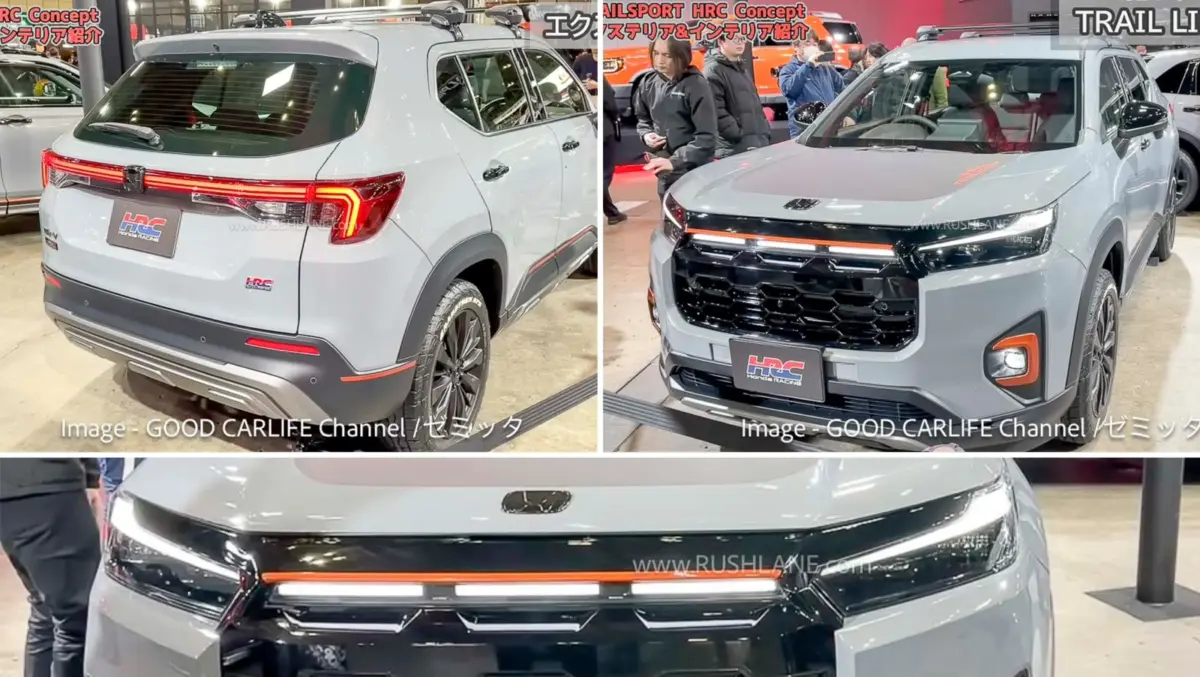
The WR-V TrailSport HRC Concept was designed to showcase an adventure-oriented theme. It featured a grey exterior, dark alloy wheels, and chunky all-terrain tires. While the production Elevate may not adopt the full off-road kit, it has inherited the "face" of the concept.

1. Front Fascia and LED Signatures:
Teasers reveal a new three-section horizontal LED arrangement across the upper grille. These illuminated elements sit between the slim headlamp assemblies, creating a wider, more authoritative stance. This matches the concept’s lighting layout, which was designed to improve visibility and brand recognition during twilight hours.
2. The Emblem Shift:
In a significant branding move, the Honda "H" badge has been moved from the center of the grille to the leading edge of the bonnet. This placement is typically reserved for more premium or rugged SUVs (reminiscent of Land Rover or Ford’s Raptor series), suggesting that Honda wants to elevate the vehicle’s perceived status.
3. Rear Lighting Evolution:
The rear of the vehicle now features twin-line LED signatures that stretch across the tailgate. These lines converge toward the central badge, creating a futuristic light bar effect that is currently trending in the premium SUV segment.

Interior Innovations
Inside, the Elevate is set to address one of its most frequent criticisms: the lack of "wow factor."
- Ambient Lighting: The inclusion of orange ambient lighting along the dashboard and door pads is a direct nod to the HRC (Honda Racing Corporation) colors. This adds a sporty, high-tech vibe to the cabin.
- Digital IRVM: The teaser of a digital rearview mirror suggests that Honda is finally embracing high-end camera-based technology. This feature is particularly useful when the rear window is obstructed by passengers or luggage.
- Material Quality: Expect a shift toward "Aclantara-like" finishes or higher-grade synthetic leathers in lighter tones to make the cabin feel more spacious.
Official Responses and Market Positioning
While Honda Cars India executives have remained tight-lipped about the exact pricing, the official stance from the company has been one of "evolution through listening." In previous press briefings, Honda officials have emphasized that the Elevate was designed to be a "global SUV with an Indian heart."
Industry analysts suggest that this facelift is a direct response to the aggressive feature-loading seen in competitors like the Hyundai Creta, Kia Seltos, and the Maruti Suzuki Grand Vitara. By incorporating the HRC-inspired design, Honda is attempting to capture the "lifestyle" buyer—someone who wants a vehicle that looks as good on a weekend trail as it does in a corporate parking lot.

"The Elevate has been a steady performer for us," a source close to Honda’s marketing team noted (anonymously). "With the 2026 refresh, we are looking to inject a sense of ‘excitement’ and ‘performance-inspired design’ that the HRC brand represents globally."
Implications: What This Means for the Industry
The launch of the 2026 Honda Elevate facelift carries several long-term implications for the Indian and global automotive markets.
1. Strengthening the India-as-an-Export-Hub Strategy
The fact that India is the lead market for this facelift reinforces the country’s importance in Honda’s global strategy. As Honda pivots toward electrification in Europe and North America, India remains a vital stronghold for internal combustion engine (ICE) innovation and manufacturing.

2. The Democratization of "Performance Brands"
By bringing HRC-inspired design to a mass-market SUV, Honda is following a trend set by Hyundai’s N-Line and Kia’s GT-Line. It allows enthusiasts to own a piece of a racing legacy without the high cost of a dedicated performance vehicle. This "halo effect" can significantly boost brand loyalty among younger buyers.
3. Feature Parity in the Mid-Size Segment
For years, Honda was seen as a brand that prioritized mechanical engineering over "gimmicky" features. However, the anticipated inclusion of a 360-degree camera, ventilated seats, and a panoramic sunroof in the Elevate facelift suggests a shift in philosophy. Honda is realizing that in the Indian market, the "feature list" is often as important as the "engine specs."
4. The Longevity of the i-VTEC
By sticking with the 1.5-litre i-VTEC engine, Honda is doubling down on reliability and fuel efficiency. While some may lament the lack of a turbocharged option, the i-VTEC’s reputation for longevity and its smooth power delivery remain its biggest selling points. In an era of downsizing and complex turbo-engines, Honda’s "refined simplicity" continues to find a dedicated audience.

Conclusion
The 2026 Honda Elevate facelift is a calculated move by a manufacturer that understands the balance between global standards and local desires. By leveraging the bold, adventure-ready aesthetics of the WR-V TrailSport HRC Concept and blending them with the practical, reliable foundation of the original Elevate, Honda is preparing to mount a serious challenge to the segment leaders.
When the curtains rise on October 6th, the industry will be watching closely. Will the new LED signatures and premium interior be enough to sway buyers away from the dominant Korean rivals? If the teasers are any indication, the 2026 Elevate is no longer just a sensible choice—it’s an aspirational one. For Honda, this facelift isn’t just about staying relevant; it’s about reclaiming its position as a leader in design and engineering excellence on the Indian road.
