

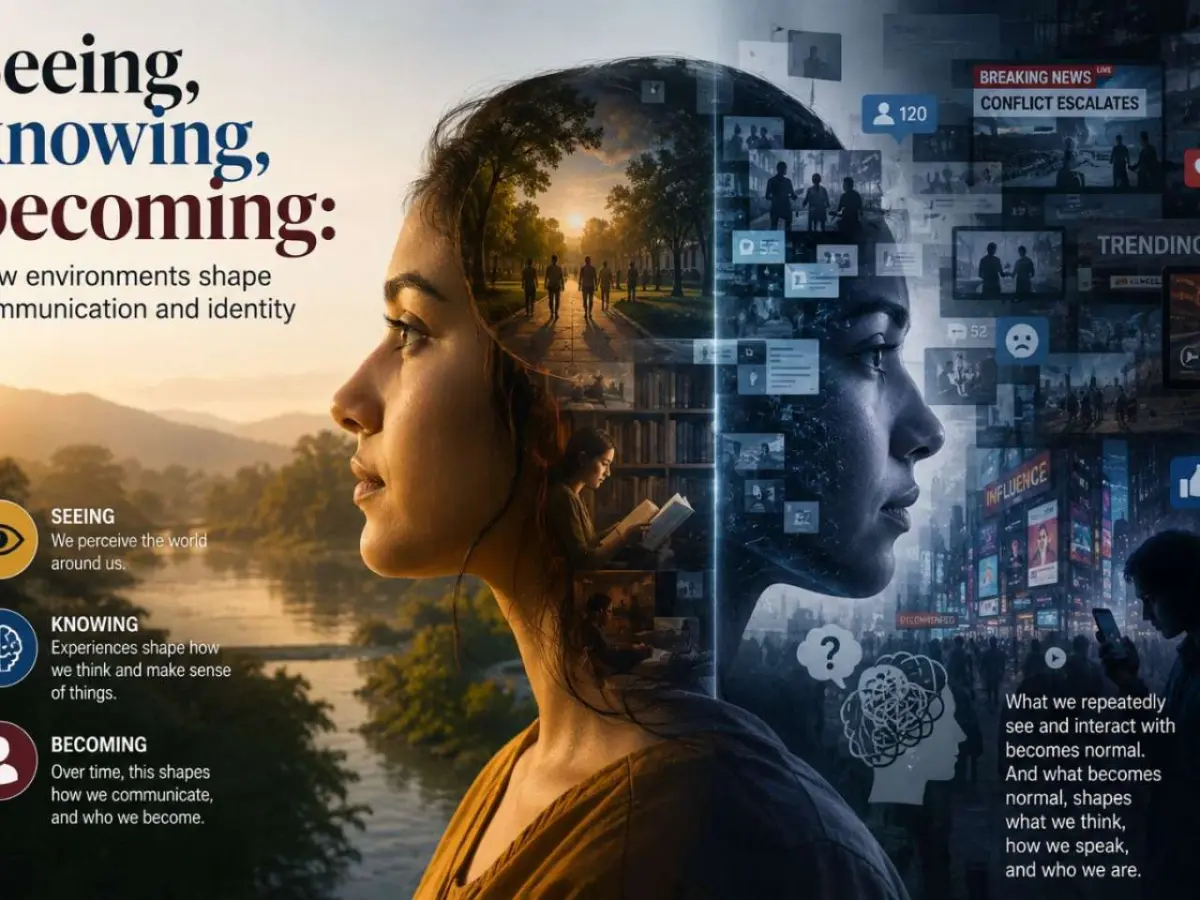
New Delhi, India – June 3, 2026 – In an era defined by the relentless hum of digital information and the constant visual barrage of curated content, a profound truth, recognized by ancient philosophers, is more relevant than ever: our communication and our very sense of self are not born solely from within. Instead, they are meticulously sculpted by the environments we inhabit, the stimuli we repeatedly encounter, and the narratives we absorb. This article delves into the deep-seated influence of our surroundings on shaping perception, reasoning, and ultimately, who we become, drawing upon timeless wisdom and contemporary realities.
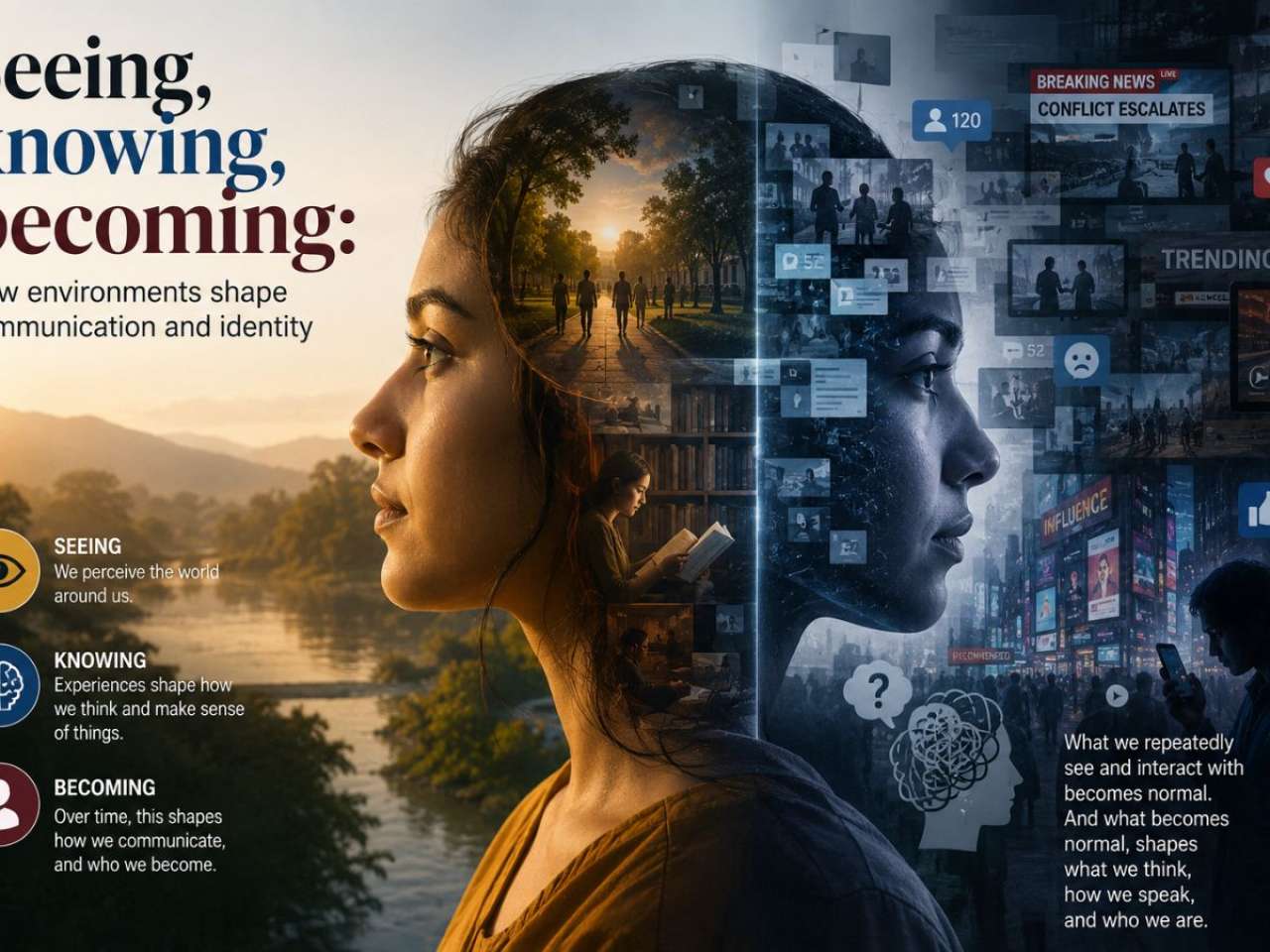
The Unseen Architects of Self: Understanding Environmental Influence
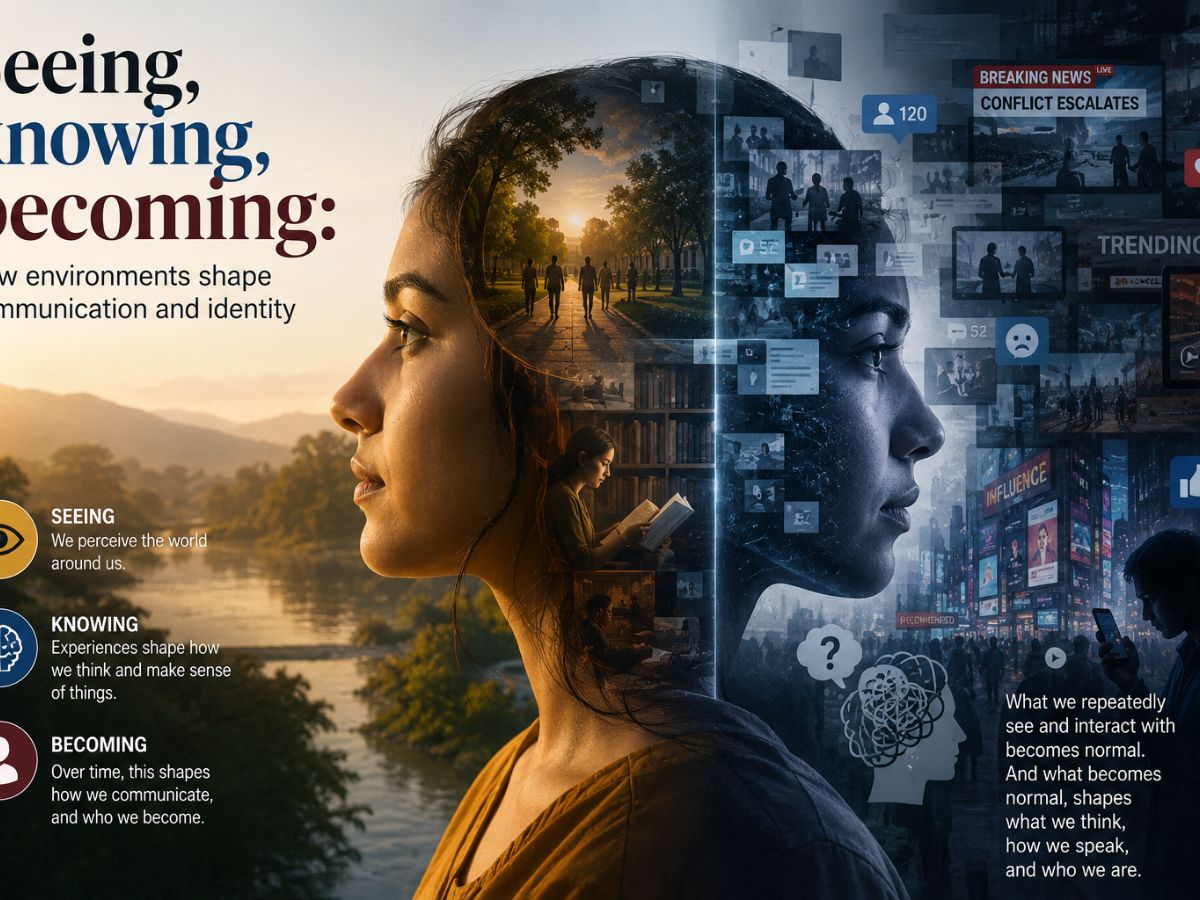
The prevailing notion often treats communication as a mere act of expression and identity as an immutable, internally generated construct. However, a deeper examination reveals a far more dynamic and contingent reality. Both are continuously, and often unconsciously, shaped by what individuals are exposed to, what they repeatedly encounter, and what they come to accept as the norm within their environment. The adage "you are what you consume" holds a profound truth when applied to our cognitive and communicative development. What we see, hear, and interact with does not simply inform our knowledge base; it fundamentally structures how we think, how we articulate our thoughts, and, over time, who we ultimately become.
)
This profound interconnectedness between external experience and internal formation is not a new revelation. Ancient philosophical traditions, spanning diverse cultures, have long grappled with this concept. However, the sheer intensity and pervasiveness of the contemporary media landscape have amplified its significance, making it a critical area of exploration for understanding human development and societal dynamics.

Ancient Roots of Modern Understanding: Echoes from the Nyaya and Yoga Sutras
The classical Indian philosophical tradition offers particularly insightful frameworks for understanding this intricate relationship between environment, cognition, and identity. The Nyaya Sutra, a foundational text in logic and epistemology, posits perception (pratyaksha) as the primary conduit for valid knowledge. This seminal idea asserts that all knowledge begins with the direct contact between our senses and the external world. What is visually perceived, audibly heard, and experientially felt forms the bedrock upon which all subsequent inference, judgment, and reasoning are constructed.
)
The sequence is unequivocally clear: external stimulus precedes cognition, and cognition informs articulation. This fundamental principle underscores the passive yet powerful role of our sensory intake in shaping our mental landscape.
)
Extending this insight into the realm of mental formation, the Yoga Sutra introduces the concept of vrittis, or mental fluctuations. The famous aphorism, "yogah chittavrittinirodhah" (Yoga Sutra 1.2), signifying the cessation of mental fluctuations, highlights the dynamic nature of the mind. These fluctuations, the Sutra explains, arise from impressions formed through sensory engagement and experience. As individuals are repeatedly exposed to certain stimuli or experiences, these impressions deepen, solidifying into samskaras – ingrained tendencies, preferences, and habitual patterns of response.
)
From this philosophical perspective, identity is not a fixed, self-originated entity. Instead, it is an accumulated construct, a mosaic pieced together from the myriad experiences and exposures that define our journey. The core tenet derived from these ancient frameworks is the potent way in which external environments mold internal states. What one repeatedly encounters becomes what one recognizes; what one recognizes becomes what one deems valid; and what one considers valid ultimately shapes what one expresses. Communication, therefore, transcends being a simple outward projection of thought; it emerges as the culmination of a layered process where the external world plays an indispensable formative role.
)
The Digital Deluge: Intensified Influence in the Modern Age
The philosophical underpinnings of environmental influence find their most potent manifestation in the contemporary world. Individuals today navigate an environment saturated with an unprecedented density of stimuli. Digital platforms, social media feeds, algorithmically curated content, and a ceaseless stream of information bombard our senses daily. These environments are far from neutral. They actively privilege certain forms of expression, amplify particular linguistic styles, and normalize specific frameworks for understanding the world.
)
Over time, the relentless exposure to these pervasive patterns subtly but powerfully shapes both how individuals communicate and how they perceive themselves. A salient example is the increasing standardization of language across digital platforms. Words, phrases, and expressions circulate with astonishing speed, rapidly acquiring shared meanings and serving as potent signals of belonging. What might initially function as a mere descriptor can, through repeated usage and association, morph into a marker of identity. Terms that once signified a preference or an activity now frequently serve as definitive statements of self-definition.
)
This linguistic convergence is not incidental. It is a direct reflection of the profound influence exerted by repeated exposure to particular linguistic patterns, which, over time, begin to feel natural, expected, and even indispensable for effective participation within these digital ecosystems.
)
The Narrowing of Thought: When Exposure Constricts Perception
The same evolutionary process is vividly observable in the formation of opinions and ideological stances. When individuals are primarily exposed to a narrow spectrum of perspectives, it can foster the illusion of consensus, even when dissenting views are prevalent. Conversely, constant engagement with specific narratives can powerfully shape what individuals perceive as credible, legitimate, or even factual.
)
The Nyaya emphasis on perception as the starting point of knowledge takes on a critical dimension here. When the range of what is perceived narrows, the scope of what can be reasoned and understood also contracts. In essence, thought follows exposure. If our sensory input is limited to a curated, homogenous set of information, our cognitive capacity to engage with complexity and diversity is inevitably diminished.
)
The Yoga Sutra’s insights into the deepening impact of repetition further illuminate this phenomenon. A single exposure might provide information, but sustained exposure forms deeply ingrained patterns. Over time, these patterns of interaction leave indelible cognitive and emotional residues that profoundly influence behavior. Preferences, which may have initially been adopted due to external influence, begin to feel intrinsic and self-generated. Identity, seemingly stable and self-derived, is in reality a continuously evolving construct, shaped by the cumulative effect of these ingrained impressions.
)
Implications for Institutions: Designing Environments for Critical Thought
This profound understanding of how environments shape cognition and expression carries significant implications for institutions, particularly those involved in education and communication. If our thoughts and our ways of communicating are inextricably linked to the environments in which we learn and interact, then the deliberate design of these environments becomes paramount. What is made visible, what is emphasized, and what is repeatedly presented will inevitably influence not only what individuals know but also how they think and how they articulate that thinking.
)
Consider the realm of higher education. While institutions often excel in content delivery and skill development, there is frequently less deliberate attention paid to the communicative environment within which learning transpires. Yet, if exposure demonstrably shapes cognition, then the quality of discourse, the diversity of perspectives presented, and the very nature of engagement become central pillars of the educational process. A learning environment that fosters intellectual curiosity, encourages critical debate, and exposes students to a wide array of viewpoints is far more likely to cultivate independent thinkers than one that promotes passive consumption of information.
)
The same principles apply with equal force to media and public communication. The increasing compression of information into short, easily digestible formats may enhance accessibility and engagement in the immediate term. However, it also carries a significant risk: the reduction of complexity. When exposure is limited to simplified representations and soundbites, the capacity for nuanced thought and in-depth understanding can be severely diminished. Communication may become more efficient, but it risks becoming less substantive, less reflective of the intricate realities of the world.
)
Cultivating Awareness: Navigating the Influential Landscape
The challenge, therefore, is not to eliminate influence altogether, as this is an impossible and perhaps undesirable outcome. Rather, the imperative lies in cultivating awareness of this influence. It is about recognizing the fundamental truth that what is seen repeatedly will shape what is thought, and what is thought will, in turn, shape what is said. In a contemporary context where our environments are increasingly mediated, curated, and algorithmically managed, this heightened awareness is not merely beneficial; it is essential for intellectual autonomy and informed decision-making.
)
Communication and identity do not emerge in a vacuum. They are forged at the dynamic intersection of exposure, interpretation, and repetition. The fundamental question is not whether we are influenced by the environments that surround us, but rather, whether we are attentive to the mechanisms through which that influence operates. Furthermore, it is about our collective and individual capacity to be deliberate in shaping the environments that, in turn, shape us, ensuring they foster critical thinking, diverse perspectives, and authentic self-expression. Only through such conscious engagement can we hope to navigate the complexities of the modern world and cultivate identities that are both robust and reflective of our deepest values.
