

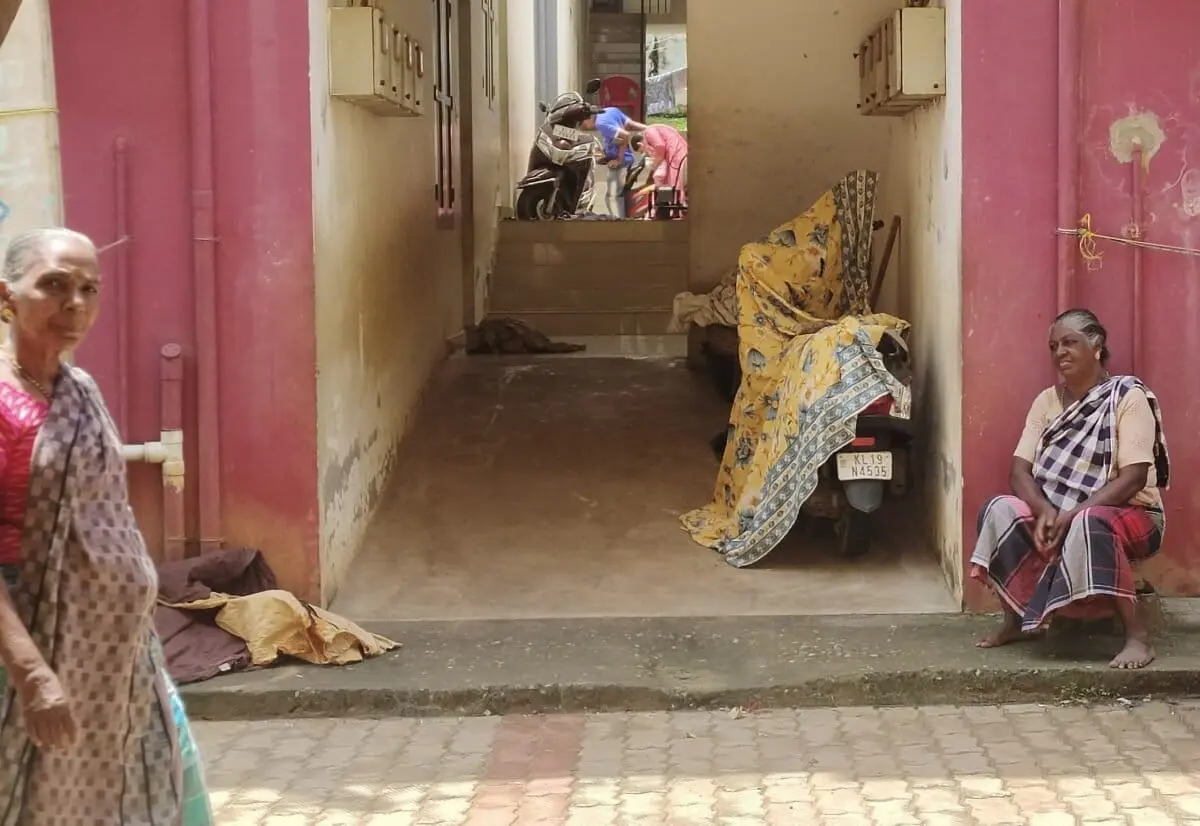
THIRUVANANTHAPURAM, KERALA — Standing before a green-painted house now secured by a rusted lock, 43-year-old Baby Titus points to what used to be her sanctuary. Today, it is a shell of a home, a casualty of the relentless Arabian Sea. On the right side of the structure, waves continue to crash with rhythmic violence.
“The sea kept entering and receding,” she recalls. “It caused a short circuit inside. You would get an electric shock wherever you touched the walls.”
The story of Baby Titus is not an isolated incident but a representative chapter in a larger, unfolding tragedy along the coast of Thiruvananthapuram. As the southernmost district of Kerala battles unprecedented coastal erosion, the crisis has transcended physical destruction, evolving into a profound mental health emergency characterized by "ecological grief" and the systematic disintegration of community identity.
Main Facts: A Coastline Under Siege
Kulathoor Grama Panchayat represents the front line of this environmental struggle. As the southernmost panchayat in Thiruvananthapuram, its coastal wards—Pozhipallivilakam, Mullassery, Kollamkode, Paruthiyoor, Pozhikara Beach, and Pozhiyoor—have been subjected to decades of severe erosion.

The physical transformation of these villages is staggering. In many wards, where there were once over 100 rows of houses stretching back from the beach, only seven or eight rows remain. Most of these survivors are abandoned, their skeletal remains battered by waves and the granite boulders unsuccessfully deployed as seawalls.
For the families who remain, life is lived in a state of "perpetual readiness." Baby Titus now lives in a rented two-bedroom house nearby, paying ₹2,000 a month—a significant sum for a fishing family. Her original home is structurally precarious, a victim of the sea’s encroachment. Every night, the sound of the surf is not a lullaby but a warning.
On September 28, the threat turned into a catastrophe once again when a massive sea surge caused the collapse of 40 houses in Pozhiyoor in a single day. This event underscored the inadequacy of current coastal defenses and the accelerating pace of land loss.
Chronology of Displacement: From Shoreline to Schoolroom
The timeline of coastal life in Thiruvananthapuram has been redefined by the frequency of "surges." For decades, the erosion was a gradual, seasonal phenomenon. However, in recent years, the frequency and intensity of the Arabian Sea’s incursions have increased, leading to a cycle of temporary and permanent displacement.

- The Era of Stability: Generations of artisanal fishermen lived within meters of the high-tide line, their lives dictated by the rhythm of the tides and the bounty of the sea.
- The Onset of Severe Erosion: Over the last 14 years, the rate of land loss accelerated. Pozhiyoor began recording erosion rates of over 10 meters per year—more than double the regional average.
- The Cycle of Temporary Shelters: As surges became more frequent, families began the routine of "emergency packing." Essential documents and clothes are kept in bags, ready to be moved to local government schools at a moment’s notice.
- The 2025 Medical Intervention: By 2025, the psychological toll became undeniable. A medical camp led by Dr. Shreyas Susan Varghese in Pozhiyoor revealed a community suffering from widespread trauma and clinical depression.
- The September 28 Surge: The recent collapse of 40 houses marked a turning point, forcing the government and local parishes to confront the reality that many coastal stretches are no longer habitable.
Supporting Data: The Science of a Retreating Coast
The environmental changes in Thiruvananthapuram are documented by both local experience and academic rigor. A 2022 study on climate-linked coastal changes revealed the following:
- Net Land Loss: Over a 14-year observation period, approximately 2.62 square kilometers of land along the Thiruvananthapuram coast were lost to erosion.
- Accretion Deficit: While 0.7 square kilometers of land were gained through accretion (the natural buildup of sand), the net loss remains overwhelmingly negative.
- Erosion Rates: The "normal" rate of erosion for this stretch of the Kerala coast is approximately five meters per year. However, Pozhiyoor has emerged as a "hotspot," recording a devastating 10.59 meters of loss annually.
The data suggests that the combination of natural climate variability and anthropogenic activities—such as harbor construction and offshore dredging—has disrupted the natural sediment flow, leaving villages like Pozhiyoor defenseless against the rising sea.
Official Responses: The Punargeham Scheme
In response to the mounting crisis, the Kerala government launched Punargeham, a flagship coastal rehabilitation scheme. The program is designed specifically for fisher families living within 50 meters of the shoreline—the most high-risk zone.
Under Punargeham, beneficiaries are eligible for up to ₹10 lakh (approximately $12,000 USD) to facilitate their relocation. Families have three primary options:

- Purchasing new land and building a house.
- Constructing a house on existing safe land.
- Moving into government-built apartment complexes, such as the Niravu Flats in Karode Panchayat.
In Kulathoor Panchayat, 128 families have already been rehabilitated to the Niravu Flats. However, while the program provides physical safety, critics and social workers argue that it fails to account for the socio-economic and psychological needs of the fishing community.
The Human Cost: Loneliness and Ecological Grief
The transition from a coastal hut to a concrete apartment seven kilometers inland is often described by residents not as a rescue, but as a different kind of tragedy.
The Loss of "The Commons"
Claudia Lang, an anthropologist specializing in ecological grief on the Kerala coast, notes that displacement involves more than the loss of a roof. "They lose the beach where community life happened," Lang explains. The beach was a "common" space—a place for repairing nets, curing prawns, playing football, and conducting community ceremonies. In the flats of Karode, these common spaces do not exist.
The Breakdown of Social Identity
Jose Thobias, 42, describes his new life at Niravu Flats as one of profound isolation. "Earlier, my friends and I would play cricket or football at the beach. Now, I hardly see them. This place feels like a medical ward. I spend my time scrolling through my phone. I feel lonely."

For elderly women, the move is even more disruptive. In the coastal villages, these women earned income and maintained social ties by collecting and curing fish. In the inland flats, there is no space for this work. They are left idle, their sense of purpose stripped away.
Psychological Distress and Trauma
Dr. Shreyas Susan Varghese, the psychiatrist who led the 2025 medical camp, identified a clear link between displacement and mental health. "Relocation has disrupted their important sources of social and emotional support," she says. The persistent fear of the sea, coupled with the stigma surrounding psychiatric care in traditional communities, has created a "silent epidemic" of depression and anxiety.
The Role of the Church and Community Repair
In the predominantly Catholic coastal villages of southern Kerala, the parish church has historically been the center of gravity. For generations, the churches of Kollamkode and Paruthiyoor provided not just spiritual guidance, but social safety nets and counseling.
Displacement has severed this connection. For elderly residents like 60-year-old Jenovi Thobias, the seven-kilometer distance to the church is an insurmountable barrier due to age and physical ailments. "If it were before, I could at least go to church and find some solace," she says.

Recognizing this, the church has taken an active role in "psychological repair." Father Davidson, the vicar of Kollamkode Church, initiated the Santhwana Project in collaboration with Thiruvananthapuram Jubilee Hospital. The project utilizes 150 trained volunteers to identify and support families facing mental health crises, bringing counseling services directly to the displaced.
Implications: The Need for Holistic Rehabilitation
The crisis in Thiruvananthapuram serves as a cautionary tale for coastal management in the era of climate change. The current model of rehabilitation, which focuses on physical relocation, often overlooks the "invisible" losses:
- Economic Inaccessibility: Moving inland increases the cost of commuting to the sea, which remains the primary source of livelihood for these men.
- Identity Erosion: When a community whose identity is "tied to the tide" is moved to a non-coastal environment, the resulting "ecological grief" can be as debilitating as physical injury.
- Fragmented Communities: The Punargeham scheme’s criteria have created a tiered system where some families move to flats, some buy land, and others stay behind in ruins. This fragmentation breeds resentment and destroys the collective resilience that once defined these villages.
As Claudia Lang suggests, "psychological repair cannot be separated from environmental repair." While the sea cannot be easily pushed back, the approach to moving people must change. Future rehabilitation efforts must include the creation of community spaces, the preservation of livelihood opportunities, and the integration of mental health support as a core component of disaster response.
For Baby Titus and thousands like her, the goal is no longer just to survive the next surge, but to find a way to feel "at home" in a world where the sea has taken everything they once knew.

This report was produced in collaboration with Mentality, exploring the intersection of environmental change and mental health in coastal communities.
