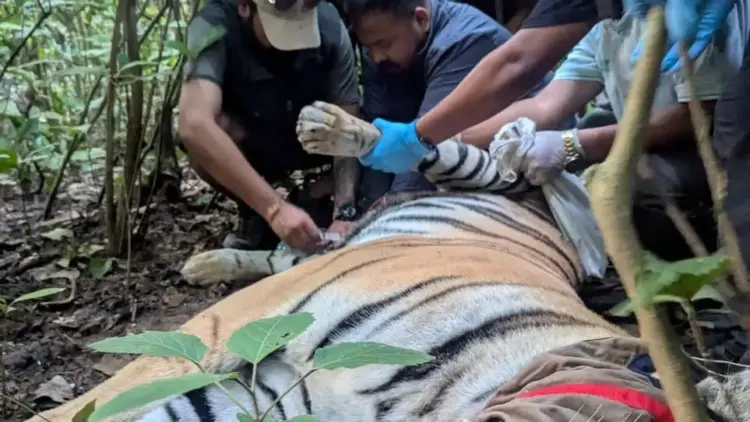
ALIPURDUAR, WEST BENGAL – On October 2, as India celebrated the birth anniversary of Mahatma Gandhi, a three-year-old tigress designated as T138 stepped out of a transport crate and into the lush, emerald canopy of the Buxa Tiger Reserve (BTR). For conservationists, the moment was a hard-won victory—the culmination of a decade of planning to restore an apex predator to a landscape where it had virtually vanished. However, as the tigress began her new life in the Terai-Dooars region, a different kind of roar emerged from the forest floor: the voices of thousands of local residents protesting a sudden freeze on their livelihoods.
The translocation of T138 from the Valmiki Tiger Reserve in Bihar to West Bengal’s Buxa marks a pivotal chapter in India’s ambitious tiger recovery program. Yet, the ensuing conflict with forest-dwelling communities highlights the delicate and often volatile balance between ecological restoration and the socio-economic rights of those living on the front lines of conservation.
I. Main Facts: A Milestone for the Dooars
The reintroduction of the tiger to Buxa is a joint initiative spearheaded by the West Bengal Forest Department in close coordination with the National Tiger Conservation Authority (NTCA). Buxa, which was declared a tiger reserve in 1983, had become a "paper park" regarding its namesake species. For years, official surveys and camera traps returned empty results, confirming fears that the resident tiger population had been wiped out by a combination of poaching, habitat fragmentation, and the depletion of prey.
The tigress, T138, was selected from the Valmiki Tiger Reserve due to the ecological similarities between the two regions. Both reserves are part of the Terai landscape, characterized by tall grasslands, scrub savannah, and moist deciduous forests. By moving an animal from a similar climate and terrain, biologists hoped to minimize the biological stress of the transition.

While the Union Cabinet Minister for Forest, Environment and Climate Change, Bhupender Yadav, hailed the move as a "landmark moment" for Indian wildlife, the ground reality is complicated. To ensure the tigress’s safety during her "acclimatization" period, the forest department imposed strict restrictions on tourism and vehicular movement. These measures have ignited a firestorm of protest among the 18 forest villages located within the reserve’s core and buffer zones, who claim they are being forced to pay the price for conservation.
II. Chronology: The Decade-Long Road to Reintroduction
The return of the tiger to Buxa was not an overnight decision. It was the result of a meticulously planned recovery strategy that began nearly ten years ago.
- 1970s–1980s: A steady decline in tiger sightings begins. Despite being named a Tiger Reserve in 1983, Buxa suffers from rampant dolomite mining and biotic pressure.
- 2010–2014: Senior forest officials, including then-Chief Wildlife Warden Pradeep Vyas, begin drafting a recovery plan in collaboration with the Wildlife Institute of India (WII).
- 2018: The All India Tiger Estimation report confirms the worst: zero tigers are recorded in Buxa.
- 2019–2021: Under NTCA directives, the forest department focuses on "prey base augmentation." Sambar deer are translocated from Jaldapara National Park to Buxa, and a captive breeding program is established to ensure the forest can support a large carnivore.
- Late 2021: A solitary male tiger is captured on a camera trap, likely a transient moving through corridors from Bhutan or Assam. This sighting provides hope that the habitat is once again viable.
- September 30, 2024: Tourism restrictions are announced in anticipation of the translocation.
- October 2, 2024: T138 is "soft-released" into a secure enclosure in Buxa.
- October 4, 2024: The tigress is released from the enclosure into the wild of the Hathipota range.
- October 5, 2024 – Present: Forest villagers launch a sit-in dharna at the Rajabhatkhawa entry point, protesting the extension of tourism bans.
III. Supporting Data: The Ecology of an Empty Forest
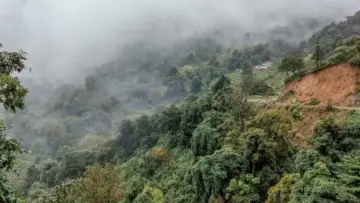
Buxa Tiger Reserve spans approximately 760.87 square kilometers in the Alipurduar district. Its geographical location is vital for regional biodiversity, serving as a corridor connecting the forests of Bhutan to the north, the Manas Tiger Reserve in Assam to the east, and Jaldapara National Park to the west.
The Vanishing Predator
Data from the 2023 Management Effectiveness Evaluation (MEE) report suggests that the "disappearance" of tigers was not a sudden event but a slow erosion. Unlike leopards, which are highly adaptable and can survive in "disturbed" forests near human settlements, tigers are sensitive to "biotic interference."

According to Pradeep Vyas, former Chief Wildlife Warden, the primary culprits were:
- Prey Depletion: Heavy poaching of deer species left tigers with nothing to hunt.
- Habitat Fragmentation: Decades of dolomite mining (now banned) and the presence of 34 tea gardens on the reserve’s fringes created a fragmented landscape.
- Human Footprint: BTR is home to 37 forest villages and 46 fringe villages. The constant movement of cattle and people for firewood collection drove the shy apex predators away.
The Translocation Strategy
To reverse this, the NTCA mandated a prey-to-predator ratio check before T138 could be released. Hundreds of Sambar and Spotted deer were released into the core area over three years. T138 herself is currently radio-collared, allowing a dedicated monitoring team to track her movements 24/7. Officials confirm she is currently moving within the Chuniajhora area of the Hathipota range.
IV. Official Responses: The Protocol of Silence and Safety
The Forest Department’s stance is rooted in the "Standard Operating Procedure" (SOP) for tiger reintroductions. Deputy Field Director of BTR, P.J. Harikrishnan, emphasized that the restrictions are temporary but essential.
"We have radio-collared the tigress and are giving it time to get acclimatized to its new environment," Harikrishnan told Mongabay-India. "We have restricted tourism so that it doesn’t get disturbed and venture outside the forest. This is about the safety of both the animal and the people."

However, when questioned about future releases—as rumors suggest more tigers are slated for translocation in the coming months—senior officials have remained tight-lipped. This lack of transparency has fueled anxiety among locals who fear a permanent shutdown of the tourism industry, which is the backbone of the regional economy.
Union Minister Bhupender Yadav’s social media celebration highlighted the federal government’s commitment to the project, viewing Buxa as a potential success story akin to Sariska in Rajasthan or Panna in Madhya Pradesh, both of which successfully recovered their tiger populations through translocation after total local extinction.
V. Implications: The Human Cost of Conservation
While the environmental community celebrates the return of T138, the human implications of the project have reached a boiling point. The protests at Rajabhatkhawa are not merely about a few days of closed gates; they represent a deep-seated fear of displacement and economic ruin.
The Livelihood Crisis
October marks the beginning of the peak tourism season in the Dooars. For the residents of Jayanti and other forest villages, the window for earning is narrow. Ayan Naidu, an executive member of the Maha Gram Sabha Joutha Sangram Committee, noted that the restrictions led to mass cancellations of hotel and homestay bookings.

"Agriculture is not possible here because of the terrain and the wildlife," Naidu explained. "Tourism is the only scope for employment. This restriction is affecting the livelihood of more than 10,000 people."
Beyond Tourism: The Fight for Rights
The protesters’ demands extend beyond lifting the tourism ban. They have tapped into long-standing grievances regarding the Forest Rights Act (FRA) of 2006. Key demands include:
- Revenue Village Status: Converting forest settlements into revenue villages to allow for permanent infrastructure and land rights.
- Toll Gate Removal: Residents currently pay ₹480 per vehicle and ₹150 per person to use the PWD road at the Rajabhatkhawa toll gate—a significant burden for those traveling 30 km to Alipurduar for basic healthcare and supplies.
- Fear of Relocation: There is a lingering suspicion that the tiger reintroduction is a precursor to the forced relocation of villages. Some protesters, like Kurbaan Khan, even fear that clearing the forest of humans might be a backdoor attempt to eventually resume lucrative mining operations.
A Precarious Future
The success of the Buxa translocation will ultimately depend on "social license"—the acceptance of the tiger by the local community. India’s history with tiger translocation is mixed. While Panna and Sariska are success stories, the Satkosia Tiger Reserve in Odisha saw a similar project fail spectacularly when local hostility and a lack of community engagement led to the death of a translocated tiger and the return of another.
If the West Bengal Forest Department cannot find a way to integrate the economic needs of the 18 forest villages with the biological needs of T138, the "milestone" of October 2 may become a footnote in a larger story of conflict. For now, the tigress roams the quieted woods of Hathipota, while just a few miles away, the people of the forest stand their ground, waiting for a future that includes both the stripes of the tiger and the survival of their villages.