

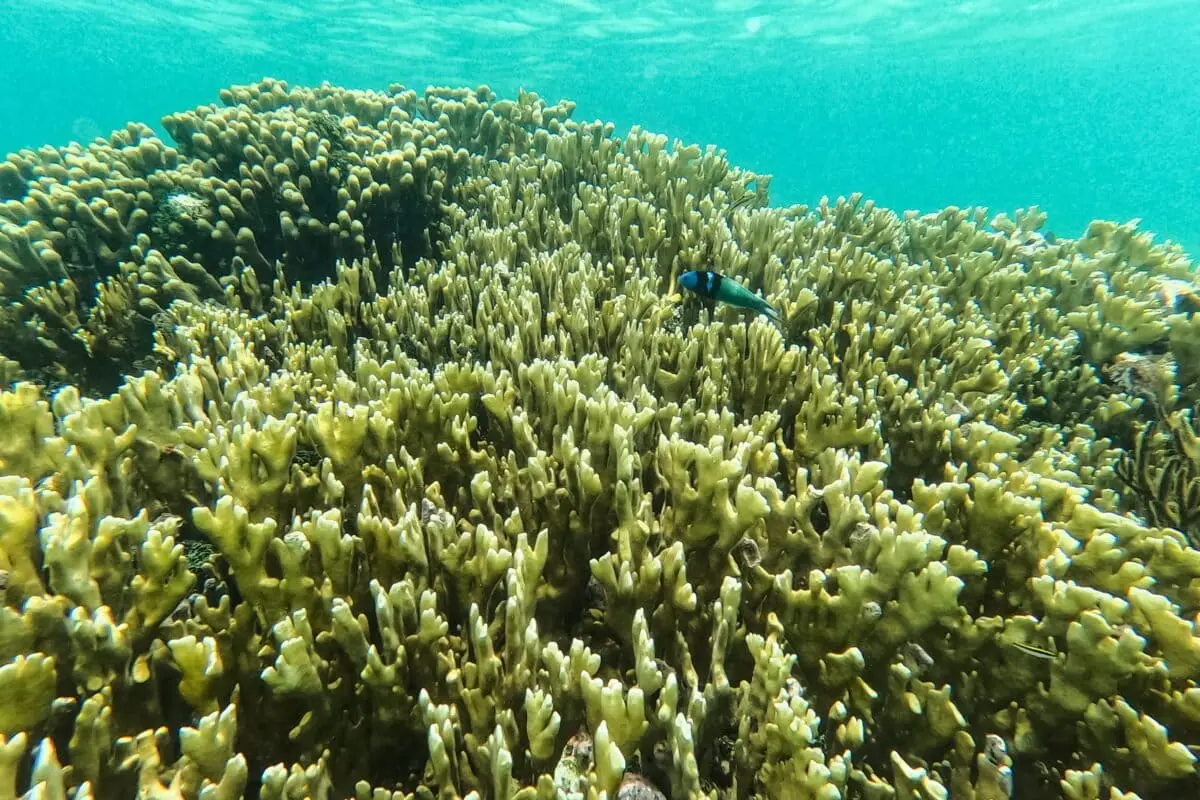
As the planet’s climate continues to shatter records, the world’s most diverse marine ecosystems are facing an existential crisis. UN Secretary-General António Guterres has warned that the natural phenomenon known as El Niño is being “supersized” by human-induced global warming, creating a lethal combination for coral reefs. The United Nations Environment Programme (UNEP) recently issued a sobering assessment, likening the world’s reefs to an “overmatched boxer” taking repeated, heavy blows without the time to catch its breath between rounds.
The crisis is no longer a distant threat; it is a present-day reality. According to the Global Coral Reef Monitoring Network (GCRMN) and the International Coral Reef Initiative (ICRI), the window for coral recovery has effectively collapsed. Where reefs once had decades to rebound from bleaching events, they are now lucky to receive a handful of years—a timeframe insufficient for the slow-growing organisms to rebuild their complex structures.
Main Facts: A Looming Mass Extinction
The statistical outlook for tropical coral reefs is increasingly grim. The Intergovernmental Panel on Climate Change (IPCC) has warned that even if the global community successfully constrains warming to 1.5°C above pre-industrial levels, between 70% and 90% of today’s warm-water coral reefs will likely disappear. Should warming reach 2°C, the loss is expected to be virtually total—over 99%.
The primary driver of this decline is the increasing frequency and intensity of marine heatwaves. Coral reefs rely on a symbiotic relationship with microscopic algae called zooxanthellae, which live in their tissues and provide food via photosynthesis. When water temperatures rise even slightly above the seasonal average for a prolonged period, corals become stressed and expel these algae. This process, known as bleaching, leaves the coral white and vulnerable. While bleached corals are not dead, they are starving; if the heat persists, they perish.
"Coral reefs once had decades to recover after major bleaching events. Today, they’re lucky to get five or six years," explains Manuel González Rivero, a reef expert at the Australian Institute of Marine Science and lead author of the recent GCRMN report. This narrowing window is the "headline" of the current crisis. For many reefs impacted by the unprecedented marine heatwaves of 2024, the impending 2026-2027 El Niño cycle means they will have had barely a year to begin the recovery process before being struck again.

Chronology: From 1982 to the "Supersized" Present
The history of mass coral bleaching is a timeline of accelerating frequency and expanding geographic scope.
The 1982-1983 Harbinger
The first large-scale mass coral bleaching event was recorded in the eastern tropical Pacific during the record-breaking 1982-83 El Niño. This event served as a "harbinger of the future," according to Derek Manzello, Coordinator of NOAA’s Coral Reef Watch. In the Galapagos Islands, coral mortality reached a staggering 95% to 99%, effectively eliminating reefs from the southern part of the archipelago.
1998: The First Global Event (GCBE1)
The 1998 El Niño triggered the first Global Coral Bleaching Event (GCBE1). It was a watershed moment for marine biology, as it was estimated that 8% of the world’s total coral cover died in a single year. The Indian Ocean was particularly hard-hit, with some regions losing nearly 90% of their live coral.
2014-2017: The Longest Siege
The third global event (GCBE3) lasted three years, making it the longest and most widespread bleaching event on record. During this period, an estimated 15% of global reefs experienced significant mortality. It was during this window that the Great Barrier Reef suffered back-to-back bleaching, fundamentally altering its ecological composition.
2023-2024: The Fourth Event (GCBE4)
We are currently navigating the fourth global event. Between 2023 and 2024, global coral cover declined by approximately 8.9%. This event was characterized by "off-the-charts" sea surface temperatures that persisted even during La Niña phases, which are traditionally cooler.

2026-2027: The Predicted Peak
The World Meteorological Organization (WMO) has confirmed that El Niño is now "firmly established." Seasonal forecasts indicate a near 100% probability that El Niño will persist through the end of 2026 and into early 2027, likely peaking in intensity during the final months of 2026. This "supersized" cycle threatens to deliver a knockout blow to reefs still reeling from the 2024 heatwaves.
Supporting Data: Regional Impact and the Indian Context
The data from the Indian subcontinent offers a granular look at how these global trends manifest in local ecosystems. A 24-year longitudinal study in Lakshadweep, conducted by the Nature Conservation Foundation (NCF), highlights the devastating impact of repeated thermal stress.
The Lakshadweep Decline
In Lakshadweep, coral cover has plummeted from approximately 37% in 1998 to under 20% today. Amruth P., an assistant professor at CHRIST University, Bengaluru, notes that these reefs have been subjected to a barrage of marine heatwaves that leave no room for natural resilience. The NCF study found that reefs only show significant recovery when they are granted at least six consecutive bleaching-free years—a window that has become increasingly rare in the 21st century.
Regional Variations and Anomalies
A nationwide collaborative study led by Wenzel Pinto of the NCF revealed that between 2023 and 2025, more than 80% of India’s tropical reefs experienced extreme heat stress. However, the impact was not uniform:
- Lakshadweep: Emerged as the most vulnerable, with up to 37% of coral cover bleached or dead.
- Andaman Islands: The Mahatma Gandhi Marine National Park saw a lower mortality rate of 11.5%.
- Palk Bay: In a surprising reversal of established biological patterns, the "hardy" boulder-like Porites corals suffered 61.8% mortality, while the usually sensitive Acropora (branching corals) saw only 13.6% loss.
This data suggests that local oceanographic conditions—such as turbidity, depth, and water movement—can sometimes buffer or exacerbate the effects of global warming, creating "hope spots" or "death zones" that defy general predictions.

Official Responses: A Call for Urgent Monitoring
The international scientific community and various UN bodies are sounding the alarm with increasing urgency. The WMO-designated centers are now issuing global seasonal forecasts with higher precision, allowing for better preparation, though preparation options for sessile organisms like corals remain limited.
In India, the response has been a mobilization of the scientific community. Recently, 188 ecologists and conservationists across the country signed a "Call to Action." This document seeks:
- Long-term Monitoring: Establishing permanent observation stations to track the ecological impacts of the 2026-27 El Niño in real-time.
- Research Funding: Increased investment into coral resilience and the potential for "assisted evolution" (breeding heat-tolerant coral strains).
- Local Protection: Reducing "secondary stressors" such as overfishing, plastic pollution, and coastal development to give reefs a better fighting chance against thermal stress.
Derek Manzello of NOAA emphasizes that the baseline has shifted. "Sea surface temperatures during current La Niña conditions are warmer than they were during El Niño events three to four decades ago," he noted. This "new normal" means that even the "cool" years are now stressful for marine life.
Implications: Beyond the Beauty of the Reef
The disappearance of coral reefs is not merely an aesthetic or environmental tragedy; it is a socio-economic catastrophe in the making.
Food Security and Livelihoods
Coral reefs are often called the "rainforests of the sea." They occupy less than 1% of the ocean floor but support more than 25% of all marine life. For nations like India, with a massive coastline and millions dependent on artisanal fishing, the collapse of reef ecosystems means the collapse of local fisheries. Without the nursery grounds provided by corals, fish stocks for species like snapper, grouper, and lobster will inevitably dwindle.

Coastal Protection
Reefs serve as natural breakwaters, absorbing up to 97% of wave energy. As El Niño events bring more intense storms and sea levels continue to rise, the loss of reefs leaves coastal communities vulnerable to erosion and catastrophic flooding. The cost of replacing this natural protection with artificial sea walls is estimated to be in the trillions of dollars globally.
The Economic Toll
The "Blue Economy"—comprising tourism, fisheries, and biotechnology—is heavily reliant on healthy reefs. In regions like the Maldives, Lakshadweep, and the Caribbean, coral-related tourism is a primary driver of GDP. As reefs bleach and die, the tourism appeal vanishes, leading to economic instability in vulnerable island and coastal nations.
The Biodiversity Gap
The loss of 70-90% of reefs would represent one of the fastest mass extinction events of a biological community in Earth’s history. The "narrowing window" for recovery described by González Rivero is a warning that we are reaching a tipping point. If the 2026-2027 El Niño behaves as predicted, the "supersized" heat may fundamentally break the regenerative capacity of the world’s oceans, leaving behind a "scrubland" of algae and rubble where vibrant ecosystems once thrived.
The message from scientists and the UN is clear: without immediate and drastic reductions in global greenhouse gas emissions, the boxer—our global coral reef system—will soon be unable to get back up off the canvas.
