

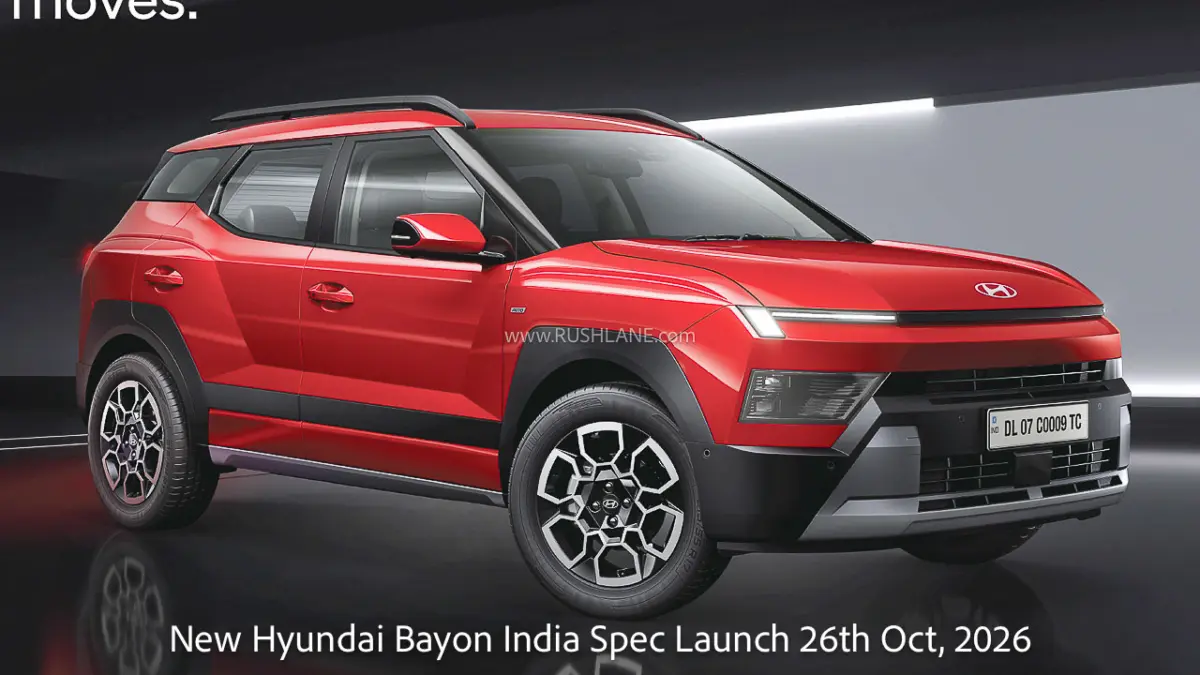
NEW DELHI – Hyundai Motor India Limited (HMIL) has officially pulled back the curtain on the India-spec Bayon, a mid-size SUV that promises to redefine the intersection of automotive engineering and artificial intelligence. Scheduled for a high-profile launch on October 26, 2026, the Bayon is positioned as a strategic bridge between the sub-four-meter Venue and the segment-leading Creta.
With a length of 4.2 meters, the Bayon enters one of the most competitive brackets in the Indian automotive landscape. However, Hyundai is not merely competing on dimensions; it is pivoting its strategy toward "Software Defined Vehicles" (SDVs), branding the Bayon as an "Intelligent Utility Vehicle" (IUV). This reveal follows Hyundai’s record-breaking sales performance in September 2024, signaling the brand’s intent to dominate the festive season.
Main Facts: The "Intelligent Utility Vehicle" Defined
The Hyundai Bayon is more than a scaled-down SUV; it is a showcase of Hyundai’s next-generation technological ecosystem. The primary highlights of the India-spec model include:

- Generative AI Integration: In a first for the Indian market, Hyundai has integrated a generative AI voice assistant powered by Perplexity and SoundHound AI.
- Powertrain: The SUV will be powered by a 1.5-litre MPi petrol engine, delivering 115 PS and 144 Nm of torque—the same reliable unit found in the Hyundai Creta.
- Transmission: Consumers can choose between a 6-speed manual transmission and an Intelligent Variable Transmission (IVT).
- Interior Architecture: A premium dual-tone cabin featuring a curved panoramic panel that houses two 12.3-inch high-resolution displays.
- Safety Standards: Built on the Global K Enhanced Platform, the Bayon is engineered to target a five-star rating from Bharat NCAP.
- Connectivity: Over 70 Bluelink connected features and 500+ offline voice commands.
Chronology: The Road to October 26
The journey of the Hyundai Bayon in India has been a calculated progression of teasers and strategic announcements designed to build maximum momentum ahead of the festive season.
- Early 2026: Rumors of a new mid-size SUV to fill the gap between the 3,995mm Venue and the 4,330mm Creta began to surface.
- September 2026: Hyundai India records its highest-ever monthly total sales of 77,916 units, providing a robust platform for a new product launch.
- October 10, 2026: Hyundai officially opens bookings for the Bayon with a token amount of Rs 11,000, available through both physical dealerships and the "Click to Buy" online platform.
- October 15, 2026: The first official images of the India-spec exterior and interior are released, confirming the 1.5L engine and the AI voice assistant.
- October 26, 2026: The official price announcement and commercial launch are set to take place, followed immediately by the commencement of deliveries to coincide with the peak of the Indian festive season.
Supporting Data: Design, Technology, and Engineering
Exterior Design: The "Sensuous Sportiness" Evolution
The India-spec Bayon adopts Hyundai’s global design language but with specific tweaks for the Indian palate. The front fascia is dominated by "H-Edge" LED Daytime Running Lights (DRLs) that sit atop a wide, aggressive grille. A sleek black strip connects the upper lighting elements, giving the vehicle a wider, more planted appearance.
The side profile emphasizes its SUV credentials with pronounced body creases and geometric alloy wheels. Substantial black cladding runs along the wheel arches and lower door panels, providing a rugged aesthetic. Bridge-type roof rails add to the utility aspect, while the rear features a vertical lighting theme with a black tailgate panel and distinct "BAYON" lettering.

Interior and Infotainment: The Digital Cockpit
Inside, the Bayon borrows heavily from the design language of the new-generation i20 recently unveiled in Brazil. The dashboard is characterized by horizontal lines that integrate the AC vents seamlessly.
The centerpiece is the "Connected Car Navigation Cockpit" (ccNC). This system uses NVIDIA-accelerated technology to ensure lag-free performance across the dual 12.3-inch screens. The interface supports:
- Split-screen functionality: Allowing the driver to view navigation while the passenger manages media.
- User Personalization: Individual profiles that remember seat positions (if electric), climate preferences, and radio presets.
- Language Versatility: The system supports 10 regional Indian languages and two international languages, ensuring accessibility across the diverse Indian subcontinent.
The AI Advantage: Perplexity and SoundHound
The most significant technological leap is the generative AI voice assistant. Unlike traditional voice commands that rely on a pre-set list of phrases, the Bayon’s AI can handle conversational requests.

By leveraging Perplexity AI, the car can provide real-time information such as:
- Complex travel itineraries based on current traffic and weather.
- Detailed restaurant and hotel recommendations with ratings.
- Sports updates and general knowledge queries.
While the generative AI currently supports English, Hyundai has provided a secondary layer of 500+ embedded voice commands that work without an internet connection in Hindi, Tamil, Bengali, Telugu, and "Hinglish."
Official Responses: "Intelligence That Moves"
In a statement following the reveal, Mr. Tarun Garg, Managing Director and CEO of Hyundai Motor India Limited, emphasized that the Bayon represents a shift in how the company views mobility.

"With Hyundai BAYON, we are introducing an Intelligent Utility Vehicle that places technology and convenience at the heart of the customer experience," Garg stated. "Guided by the philosophy of ‘Intelligence That Moves,’ BAYON seamlessly integrates Artificial Intelligence, advanced connectivity, and software-driven innovation to create a mobility experience that is intuitive, evolving, and deeply personalized."
Garg further highlighted the importance of the Indian market in Hyundai’s global strategy, noting that features like the NVIDIA-accelerated cockpit and C-OTA (Vehicle Controller Over-the-Air) updates were prioritized to meet the demands of tech-savvy Indian consumers.
Implications: Market Strategy and Competitive Landscape
Filling the "Goldilocks" Gap
For years, the Indian SUV market has been bifurcated into "compact" (under 4m) and "mid-size" (over 4.3m). By entering at 4.2 meters, the Bayon targets the "Goldilocks" zone—customers who find the Venue too small for family trips but find the Creta too large or expensive for city maneuvering.

Leveraging the 1.5L MPi Engine
By opting for the 115 PS 1.5L petrol engine instead of a smaller turbocharged unit for the base variants, Hyundai is prioritizing refinement and reliability. This engine is a known quantity in India, which will likely result in lower maintenance costs and higher resale value, two critical factors for Indian buyers.
The Safety Battle
With the Global K Enhanced Platform, Hyundai is making a clear play for the safety-conscious buyer. By aiming for a 5-star Bharat NCAP rating, Hyundai is directly challenging competitors like Tata Motors and Mahindra, who have traditionally used safety as their primary marketing lever. The inclusion of advanced high-strength steel (AHSS) and a suite of active safety features (likely including ADAS in higher trims) positions the Bayon as a premium, secure choice.
Competitive Pressure
The Bayon’s launch will put immediate pressure on several key players:

- Maruti Suzuki Brezza & Fronx: While smaller, the top-end variants of these models will overlap with the Bayon’s entry prices.
- Tata Nexon & Mahindra XUV 3XO: These models will now have to contend with a larger, more tech-heavy rival.
- Mid-size Entry Trims: The Bayon may cannibalize sales from the entry-level variants of the Kia Seltos, MG Astor, and even Hyundai’s own Creta.
Future-Proofing via OTA
The inclusion of Over-the-Air (OTA) updates for up to 19 vehicle controllers is a masterstroke in future-proofing. It allows Hyundai to improve braking performance, steering feel, or infotainment features long after the customer has driven the car off the lot. This "evolving" nature of the vehicle is expected to become a major selling point in the second-hand car market in years to come.
Conclusion
The Hyundai Bayon is a testament to the rapid evolution of the Indian automotive sector. It marks the transition from cars being judged solely on "mileage and metal" to being evaluated on "silicon and software." As October 26 approaches, the industry’s eyes are on Hyundai’s pricing strategy. If priced aggressively, the Bayon has the potential to not only become a volume driver for Hyundai but also to fundamentally shift consumer expectations for what a mid-size SUV should offer in the age of Artificial Intelligence.
