

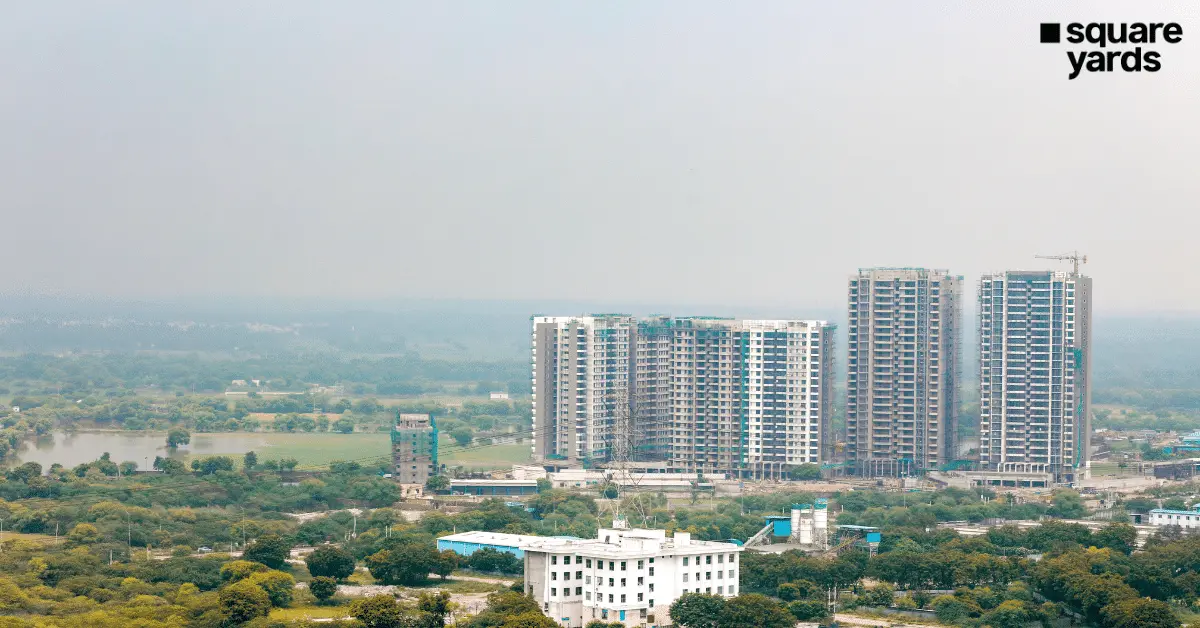
As the urban sprawl of Delhi-NCR continues to expand, the geographical and economic limits of existing hubs are being tested. Noida, once the poster child for planned industrial and residential growth in Uttar Pradesh, is reaching a critical tipping point. With approximately 90% of its 168 sectors already developed or allotted, the city is effectively running out of land. This scarcity has triggered a sharp escalation in property prices, pushing the dream of homeownership out of reach for the middle class within the city’s core.
In response to this looming saturation, the Uttar Pradesh government has unveiled its most ambitious urban project to date: the Dadri-Noida-Ghaziabad Investment Region (DNGIR), popularly known as New Noida. This massive expansion aims to redefine the regional economy, adding 20,000 hectares of fresh urban land—essentially doubling Noida’s current footprint.
Main Facts: The Blueprint of a Megacity
The New Noida Master Plan is not merely a residential extension; it is a strategic industrial and economic corridor designed to absorb the spillover from Noida and Greater Noida. The project is governed by a vision to create a self-sustaining ecosystem where "live-work-play" is not just a marketing slogan but a structural reality.
1. The Scale of Expansion
The addition of 20,000 hectares marks one of the largest greenfield urban developments in Northern India. To put this in perspective, New Noida will eventually house a population and industrial base comparable to the existing city, but with modern infrastructure designed for the requirements of 2040 and beyond.
2. Economic Targets and Job Creation
The state has set a rigorous target of generating 5 lakh to 6 lakh (500,000 to 600,000) jobs by the year 2030. This employment drive is centered around three core pillars:
- Industrial Manufacturing: Focusing on electronics, EVs, and semi-conductors.
- Logistics and Warehousing: Capitalizing on the proximity to the Dedicated Freight Corridor (DFC).
- Data Centers and IT: Continuing Noida’s legacy as a digital hub.
3. Investment Momentum
Unlike many master plans that remain on paper for decades, New Noida has already seen "grounded" investment. During the state’s 5th Ground-Breaking Ceremony, 120 projects worth approximately Rs 35,000 crore were transitioned from Memorandums of Understanding (MoUs) to actual site work. This signifies a high level of corporate confidence in the region’s viability.
Chronology: From Saturation to Expansion
The journey toward New Noida has been necessitated by the rapid lifecycle of Core Noida.
- 1976–2010: The Foundation Era. Noida was established as an industrial alternative to Delhi. Over three decades, it transformed into a residential and IT hub.
- 2010–2020: The Saturation Phase. Available land in sectors 1 through 168 began to dwindle. The focus shifted to "Greater Noida" and "Yamuna Expressway," but the core city’s prices began to decouple from the average buyer’s reach.
- 2023–2024: The Master Plan Approval. The DNGIR (New Noida) Master Plan received formal nods, identifying 80+ villages across Gautam Buddh Nagar and Bulandshahr for land acquisition.
- July 2025: Metro Breakthrough. The Central Government approved the 2.6 km Aqua Line extension to Bodaki, a vital link for the New Noida logistics hub.
- February 2026: Connectivity Milestone. The Union Cabinet approved the Sector 142 to Botanical Garden corridor, promising a seamless link between the new peripheries and Delhi’s metro heart.
- 2030 Target: The year by which the state expects the first major wave of industrial units and residential complexes in New Noida to be operational.
Supporting Data: The Economics of Scarcity vs. Opportunity
The shift toward New Noida and Greater Noida West is driven by a stark price delta. As supply in core Noida dries up, developers have pivoted toward the luxury segment to maximize the value of the limited land remaining.
Price Comparison: The Affordability Gap
To understand why the New Noida expansion is vital, one must look at the current market rates as of 2024-2026.
| Parameter | Core Noida (Legacy) | Greater Noida West | New Noida (Projected/Entry) |
|---|---|---|---|
| Avg. Asking Price | Rs 12,650 psf | Rs 8,500 – 8,750 psf | Rs 6,500 – 7,500 psf |
| New Launch Price | Rs 19,650 psf | Rs 9,500 – 11,000 psf | N/A (Initial Phase) |
| Base Cost (1,200 sq ft) | Rs 1.52 Cr – 2.36 Cr | Rs 1.02 Cr – 1.05 Cr | Under Rs 90 Lakh |
Note: Prices are base rates; taxes and statutory charges are additional.
The "1.5 Crore" Barrier
The data reveals a harsh reality for the middle-class homebuyer. A standard 1,200 sq ft apartment in Core Noida now demands a base price of at least Rs 1.52 crore, soaring to over Rs 2.3 crore for new premium launches. This has effectively pushed the "mid-segment" buyer—those with budgets between Rs 80 lakh and Rs 1.2 crore—toward Greater Noida West and the emerging sectors of New Noida.
Farmer Compensation: The Cost of Land
A critical data point in the New Noida rollout is the 53% hike in farmer compensation, now standing at Rs 6,459 per sq meter. While this increases the initial cost for the Authority, it serves as a "de-risking" mechanism. Higher compensation significantly reduces the likelihood of legal disputes and farmer agitations, which historically stalled projects like the Yamuna Expressway for years.
Official Responses and Policy Framework
The state’s approach to New Noida is characterized by a "regulation-first" mindset. Officials from the Noida and Greater Noida Authorities have emphasized that the mistakes of unplanned urbanization in other NCR pockets will not be repeated here.
UP Model Building Regulations 2026
A significant policy driver is the Uttar Pradesh Model Building Regulations 2026. These rules are designed to encourage high-rise luxury developments while mandating stricter environmental and structural safety norms. By allowing higher Floor Area Ratio (FAR) in exchange for better public amenities, the state is incentivizing developers to build "up" rather than "out," preserving green spaces in the New Noida plan.
Multi-Modal Connectivity
Official statements highlight the Bodaki Multi-Modal Transport Hub as the crown jewel of the DNGIR. This hub will integrate:
- Railway: A world-class station for long-distance trains.
- Metro: The Aqua Line extension.
- Bus: An Inter-State Bus Terminal (ISBT).
- Logistics: Direct access to the Eastern Peripheral Expressway and the Dedicated Freight Corridor.
According to authority officials, this "connectivity-first" infrastructure ensures that industrial investment precedes residential occupancy, creating a ready rental market for early investors.
Implications: What This Means for the Region
The emergence of New Noida and the strengthening of Greater Noida West have profound implications for residents, investors, and the broader NCR economy.
For the Real Estate Investor: The "Jewar" Effect
Investors are looking at New Noida through the lens of the Yamuna Expressway’s success. As the Noida International Airport at Jewar moved from a proposal to a construction site, land values in the vicinity skyrocketed. New Noida is currently in that "pre-visibility" phase. Those who enter the market before the first metro pillars are erected in the DNGIR stand to capture the highest capital appreciation.
For the Homebuyer: The Shift to the Periphery
For the end-user, the implication is a necessary shift in geography. With Core Noida becoming a luxury-only enclave, Greater Noida West has become the new "center" for affordable and mid-luxury housing. The upcoming metro links to Gaur City, Char Murti, and Botanical Garden will mitigate the "distance penalty" that residents currently pay in terms of commute time.
For the Industrial Landscape: A Logistics Powerhouse
New Noida is poised to become the logistics capital of North India. Its location at the junction of the Eastern and Western Freight Corridors makes it an irresistible destination for e-commerce giants and manufacturing firms. This industrial backbone provides a safety net for real estate; unlike "speculative" residential hubs, New Noida’s value is anchored in tangible jobs and production.
Risks and Challenges
However, no expansion of this scale is without risk.
- Execution Timelines: While the 2030 target is set, infrastructure projects in India often face bureaucratic and environmental hurdles.
- Infrastructure Lag: There is often a gap between residential possession and the arrival of basic amenities like piped water, sewage systems, and street lighting.
- Market Volatility: A sudden influx of supply (20,000 hectares) could lead to a temporary stagnation in price growth if industrial demand does not keep pace with residential construction.
Conclusion: A Strategic Outlook
The New Noida Master Plan is a definitive answer to the "land-lock" situation facing the original city. By doubling the urban footprint and integrating massive industrial grounded investments with a multi-modal transit network, the Uttar Pradesh government is attempting to create a second engine of growth for the NCR.
For the pragmatic homebuyer, the message is clear: the era of affordable housing in Core Noida is over. The future of value and growth has shifted East and South. As the metro lines extend and the Rs 35,000 crore investment begins to manifest as factories and office towers, New Noida will transition from a "plan on a map" to the most significant real estate story of the next decade. The strongest opportunities today lie where the metro tracks are planned, the industrial plots are grounded, and the entry prices remain below the psychological barrier of Rs 10,000 per square foot.
