The Indian automotive landscape is on the precipice of a monumental shift as the nation’s largest carmaker, Maruti Suzuki, prepares to transition from its long-standing dominance in internal combustion engines (ICE) to a future defined by electrification. While the company has been a late entrant to the pure Electric Vehicle (EV) space, its strategy appears to be one of "scale and versatility." Recent developments have brought to light a new protagonist in this strategy: a mysterious 7-seater electric MPV, internally codenamed the Maruti YMC.
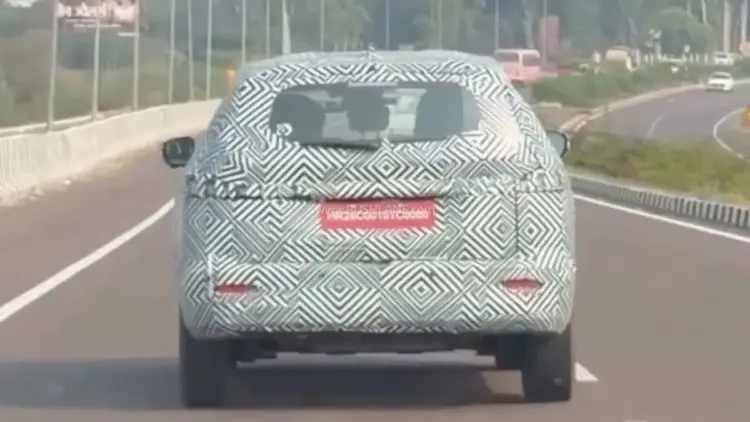
New spy shots captured by automotive enthusiast Aditya Yadav (carlord_767) have provided the most detailed look yet at this upcoming vehicle. These images, featuring a test mule undergoing rigorous road trials, offer a glimpse into Maruti’s plan to electrify the family-mover segment—a category it currently leads with the Ertiga and XL6.
Main Facts: The Anatomy of the YMC Test Mule
The latest sightings of the Maruti YMC reveal several critical details that confirm its electric identity and its positioning within the brand’s portfolio. Unlike previous, more obscured sightings, these high-clarity images focus on the rear and profile of the vehicle, allowing for a more technical analysis of its architecture.
1. Definitive Electric Underpinnings
The most significant takeaway from the recent spy shots is the confirmation of an all-electric powertrain. The test mule lacks an exhaust system, and observers have noted the presence of a substantial battery pack mounted beneath the floor. High-voltage orange cables—a standard safety and identification feature in modern EVs—are tucked neatly into the chassis, though visible upon close inspection of the undercarriage.
2. Design and Aesthetics
The YMC appears to adopt a design language that bridges the gap between a traditional MPV and a modern crossover. Key visual elements include:

- Rear Lighting: An end-to-end connected LED tail lamp design, which has become a hallmark of modern premium vehicles.
- Tailgate: A squarish, wide-opening tailgate designed for maximum utility and ease of loading, essential for a 7-seater.
- Glasswork: The presence of "Green Tint" UV-cut glass suggests a premium positioning. In Maruti’s current ecosystem, this feature is typically reserved for Nexa products, though there is ongoing speculation regarding whether the YMC will be sold via the Nexa or Arena retail channels.
- Exterior Features: The mule is equipped with a shark fin antenna, a high-mounted stop lamp, a rear defogger, and a rear wiper/washer assembly.
3. Platform Sharing
The YMC is widely believed to be built upon the Heartect-e platform (also known as the 27PL platform), which was co-developed with Toyota. This is the same dedicated EV architecture that underpins the upcoming Maruti eVitara (project YY8). By utilizing a dedicated EV platform rather than an ICE-conversion, Maruti can optimize cabin space, especially for the third row, and improve weight distribution.
Chronology: The Journey to 2027
Maruti Suzuki’s EV roadmap has been a subject of intense industry scrutiny for over half a decade. The timeline of the YMC’s development highlights the brand’s methodical approach:
- 2020–2022: The Concept Phase: Maruti Suzuki and Toyota finalized their agreement to co-develop a dedicated EV platform for emerging markets, focusing on cost-efficiency and durability.
- January 2023: Maruti Suzuki showcased the eVX Concept (the precursor to the eVitara) at the Auto Expo in Delhi, signaling that their first EV would be a mid-size SUV.
- Early 2024: Rumors of a "Project YMC" began to circulate within the vendor ecosystem. It was described as a derivative of the eVX, designed to accommodate three rows of seating.
- May 2026 (Projected): Initial test mules of a long-wheelbase EV were spotted in high-altitude regions like Shimla, suggesting cold-weather and grade-climbing tests.
- October 2026: The most recent spy shots emerged, showing a near-production-ready body shell, suggesting that the vehicle has moved into the final stages of road validation.
- 2027 (Expected Launch): Based on the frequency of sightings and the typical 18-month validation cycle for new platforms, the Maruti YMC is expected to make its commercial debut in 2027.
Supporting Data: Technical Specifications and Performance
While official specifications remain under wraps, the YMC’s relationship with the eVitara allows for educated projections regarding its performance and capabilities.
Battery and Range
To support the additional weight of a 7-passenger load, the YMC is expected to utilize the higher-capacity battery options from the Heartect-e bin.
- Standard Battery: A 48 kWh LFP (Lithium Iron Phosphate) pack.
- Extended Range: A 61 kWh LFP pack, which is expected to deliver a range of approximately 500 km on a single charge (under ARAI testing conditions).
- Charging: Support for DC fast charging is a certainty, likely capable of 0-80% charge in under 60 minutes to facilitate long-distance family travel.
Powertrain Options
The YMC will likely be offered in a Front-Wheel Drive (FWD) configuration as standard, utilizing a permanent magnet synchronous motor.

- Power Output: Estimates suggest a power range between 130 bhp and 172 bhp.
- Torque: Instant torque characteristic of EVs will be crucial for the YMC, particularly when fully loaded, with figures likely exceeding 250 Nm.
Dimensions
The YMC will feature a longer wheelbase than the eVitara to accommodate the third row. Observations of the "long rear overhang" in the spy shots support this. It is expected to measure roughly 4.5 meters in length, placing it in direct competition with the Kia Carens and the upcoming electric version of the Hyundai Alcazar.
Official Responses and Corporate Strategy
As is standard practice for Maruti Suzuki, the company has maintained a "no comment" policy regarding future product codenames like YMC. However, leadership at Maruti Suzuki India Limited (MSIL) has dropped significant hints during quarterly earnings calls and investor presentations.
Hisashi Takeuchi, MD and CEO of Maruti Suzuki, has previously stated that the company aims to have six EV models in its portfolio by FY2030. He emphasized that these models would cover various segments, from small hatchbacks to large SUVs and MPVs.
Furthermore, Suzuki Motor Corporation’s recent global unveiling of the e-Vitara in Milan serves as the "technological lighthouse" for the YMC. The company has confirmed that the Gujarat plant will serve as a global hub for these EVs, with a significant portion of production destined for export markets in Europe and Japan. This "Make in India" focus ensures that the YMC will benefit from local supply chains for battery assembly and motor production, potentially leading to competitive pricing.
Implications: Changing the Face of Indian Mobility
The introduction of the Maruti YMC carries profound implications for the Indian automotive market and the broader push toward sustainable transport.

1. Disruption of the MPV Segment
Maruti currently owns the MPV segment with the Ertiga (affordable family mover) and the XL6 (premium 6-seater). By introducing an electric alternative, Maruti is future-proofing its most loyal customer base. If priced correctly, the YMC could become the default choice for urban fleet operators and large families looking to escape rising fuel costs.
2. The "Range Anxiety" Barrier
By targeting a 500 km range, Maruti is addressing the primary concern of Indian car buyers. An electric 7-seater is often used for inter-city travel; a robust range combined with Maruti’s sprawling service network could provide the confidence necessary for mass adoption.
3. Competitive Landscape
The YMC will not enter an empty market. It will face stiff competition from:
- Tata Motors: Which is expected to launch an electric version of the Safari or a dedicated long-wheelbase EV based on the Acti.ev platform.
- Kia India: A rumored electric Carens is already in development.
- Mahindra: While focused on SUVs, Mahindra’s "Born Electric" (BE) range could eventually see an MPV derivative.
4. Technological Democratization
The YMC is expected to bring Advanced Driver Assistance Systems (ADAS), 360-degree cameras, and sophisticated telematics to the Maruti MPV lineup. This shift moves the brand away from its "budget-first" image toward a "tech-value" proposition.
Conclusion
The Maruti Suzuki YMC represents more than just a new car; it is a symbol of the "New Maruti." By leveraging a global platform, a dedicated EV architecture, and its unparalleled understanding of the Indian family’s needs, Maruti Suzuki is preparing to dominate the electric era just as it did the petrol era. While 2027 remains a few years away, the clarity of the recent spy shots suggests that the development is on the fast track, promising a versatile, long-range, and technologically advanced 7-seater that could redefine the Indian EV market.